So You Want to Stop Trading Hours for Dollars
If you've been a massage therapist for more than five minutes, someone has probably mentioned the phrase "passive income" to you. And if you're like most therapists, you nodded politely while thinking, "Sure, but my hands are the product." Fair point. But here's the thing — your brain is also the product, and unlike your hands, it doesn't need a recovery day after back-to-back deep tissue sessions.
Teaching continuing education (CE) workshops is one of the most underutilized revenue streams in the massage therapy world. You're already required to earn CE credits to maintain your license — which means your colleagues are required to spend money on education. That's not a market. That's a captive audience. And yet, most therapists never consider stepping to the other side of the massage table and becoming the one cashing the check instead of writing it.
This guide walks you through how to build a legitimate, profitable continuing education workshop business as a massage therapist — without quitting your day job (yet).
Building a Workshop Worth Attending
Finding Your Niche and Owning It
The CE space is not exactly hurting for "Introduction to Swedish Massage" courses. If you want to stand out and actually fill seats, you need to specialize. Think about what you do better than most therapists in your area. Maybe you've spent years working with prenatal clients, athletes, or patients recovering from surgery. Maybe you've trained extensively in myofascial release, cupping, or a modality that local therapists are hungry to learn.
Your niche should sit at the intersection of two things: what you genuinely know deeply, and what your target students actually want. Survey your therapist colleagues. Browse CE provider catalogs and note the gaps. Check state licensing board requirements — if your state requires ethics credits, a practical ethics workshop for massage therapists is almost guaranteed to fill up.
The narrower and more specific your topic, the easier it is to market, and the more premium a price you can charge. "Sports Massage Fundamentals" is fine. "Manual Therapy Protocols for Treating IT Band Syndrome in Runners" is a course athletes' therapists will drive two hours to attend.
Getting Approved as a CE Provider
This is the step that makes most therapists sigh deeply and close the browser tab. Yes, it involves paperwork. No, it's not actually that bad. The major approval body for massage therapy CE in the United States is the National Certification Board for Therapeutic Massage and Bodywork (NCBTMB), and their Approved Provider program is the gold standard most state boards recognize.
To become approved, you'll need to submit a course outline, learning objectives, instructor credentials, and your teaching methodology. The application fee runs a few hundred dollars, and renewal happens every two years. Some states also have their own provider approval processes, so check the requirements for your target market.
Yes, it's an investment of time and money upfront. But once you're approved, you can run the same course repeatedly, meaning your cost per student drops with every cohort while your expertise compounds. That's the economics of education, and they are very much in your favor.
Designing a Curriculum That Delivers Real Value
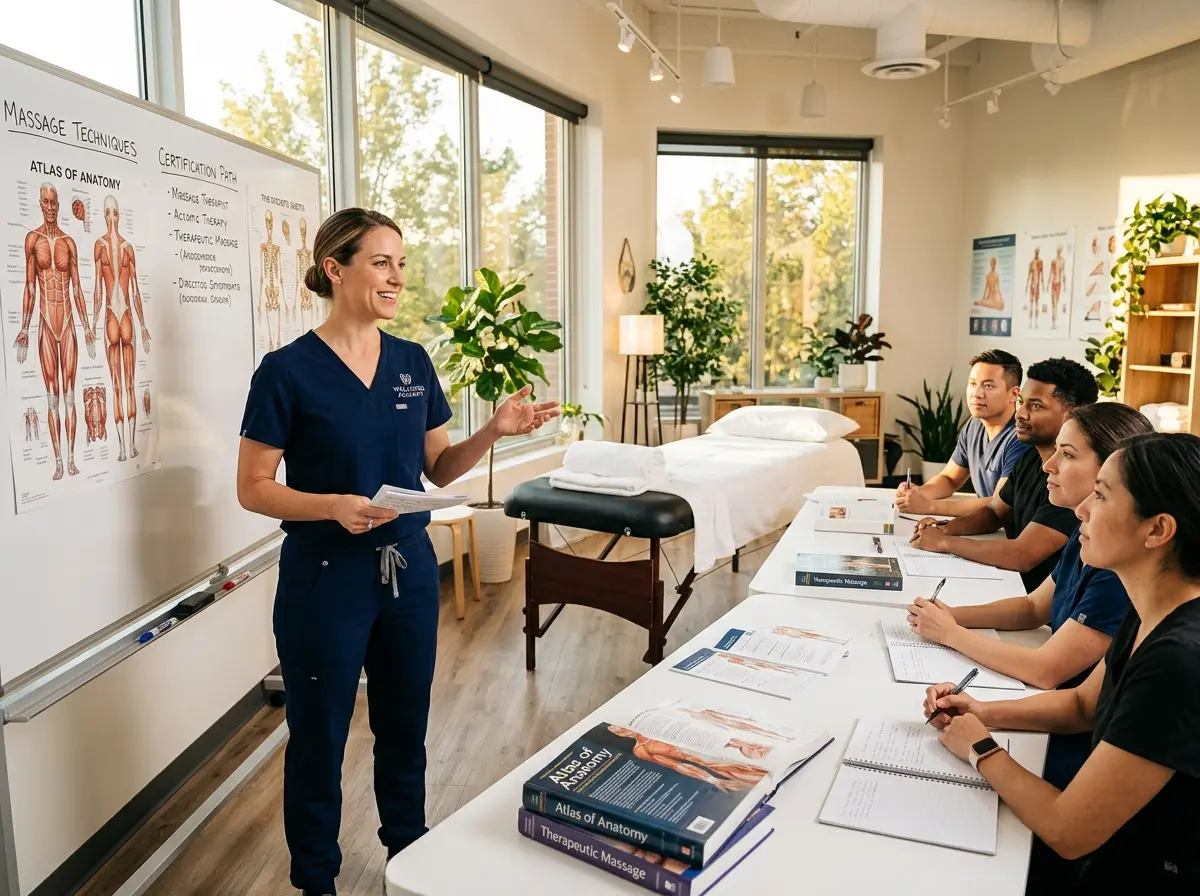
A CE course isn't a PowerPoint with a certificate at the end. Attendees are licensed professionals who can spot a fluff course from across the room, and they will leave you a review accordingly. Build your curriculum around clear, measurable learning outcomes. What will students be able to do after completing your workshop that they couldn't do before?
Balance theory with hands-on practice. Include case studies, demonstration, peer practice, and Q&A time. If you're teaching online, invest in quality video production and interactive elements — a talking head recorded on a webcam in bad lighting communicates "I threw this together last weekend," which is not the brand you're building.
Price your workshops appropriately. A six-hour in-person CE workshop taught by a credentialed specialist can reasonably run $150–$300 per student. If you fill a room of 20 therapists, that's $3,000–$6,000 for a single day of teaching a topic you already know cold.
Running Your Workshop Business Like an Actual Business
Managing Registrations, Inquiries, and the Chaos That Follows
Here's a scene that plays out constantly in the CE workshop world: you announce a course, interest spikes, your phone starts ringing with questions about dates, locations, prerequisites, and payment options — and you're elbow-deep in a client's trapezius when all of it happens. By the time you call back, three potential students have registered with someone else.
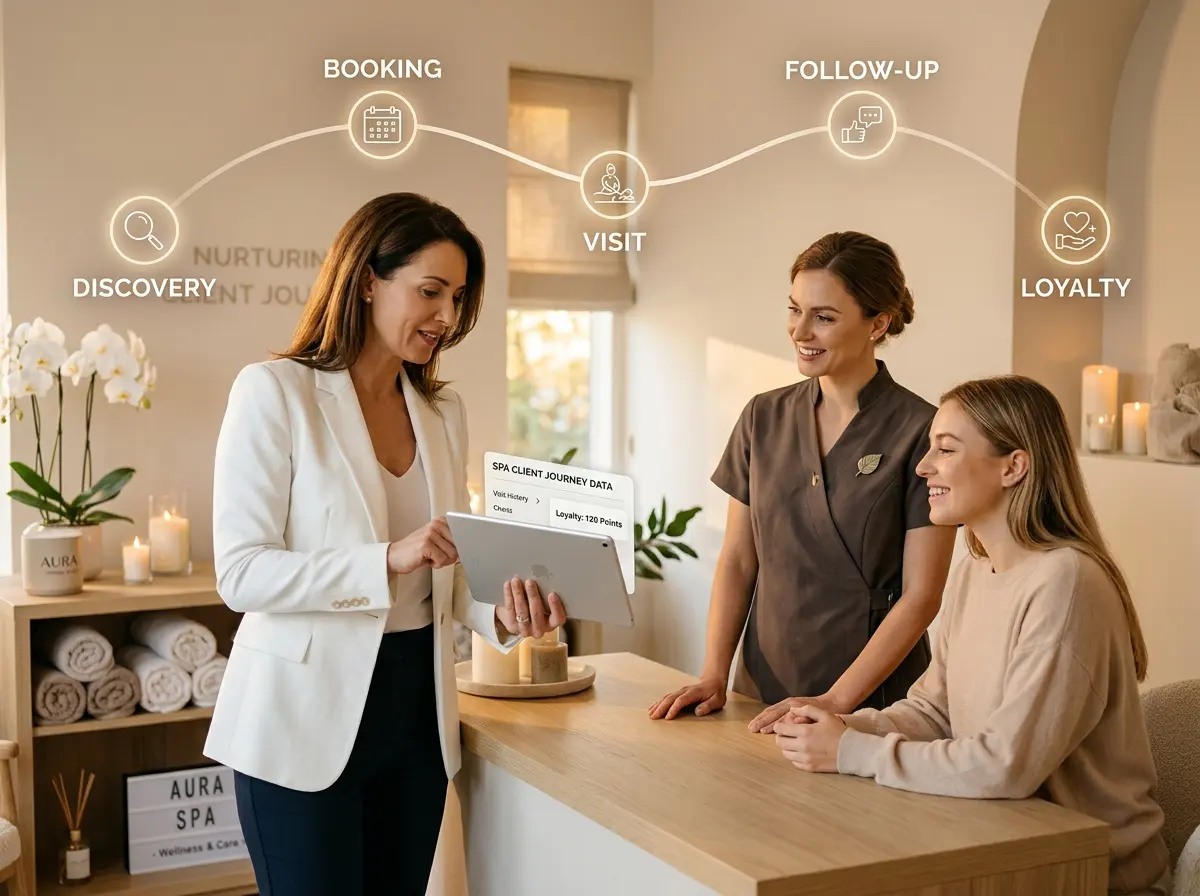
This is exactly the kind of operational chaos that Stella, the AI robot employee and phone receptionist, is built to handle. Stella answers your calls 24/7 with the same knowledge about your workshop offerings, pricing, registration details, and policies that you'd share yourself — without you having to step away from a client. For therapists with a physical studio or classroom space, Stella's in-person kiosk presence can greet walk-in inquiries and answer questions about upcoming workshops proactively. She can also collect registrant information through conversational intake forms and store it in her built-in CRM, so your attendee list is organized before you've even confirmed the date.
At $99/month, Stella costs less than most CE course fees — and she never takes a sick day, which is more than can be said for most front desk solutions.
Marketing Your Workshops and Scaling Up
Getting the Word Out Without a Marketing Degree
You don't need a massive following or a big advertising budget to fill a CE workshop. You need to be visible in the right places. Start with your existing professional network — local massage schools, therapist Facebook groups, your state AMTA chapter, and the colleagues you already know. Word of mouth moves fast in tight-knit professional communities, and a single glowing recommendation from a respected local therapist is worth more than a hundred social media impressions.
List your courses on popular CE platforms like CE Broker, NCBTMB's provider directory, and Body of Work. Create a simple landing page for each workshop with clear details, learning outcomes, instructor bio, and a registration link. Email marketing remains remarkably effective for professional audiences — build a list of past attendees and interested therapists from the start, because that list becomes an asset that appreciates over time.
Don't overlook massage schools. Instructors there are often well-connected, and partnering with a school to host your workshop gives you a built-in venue, credibility by association, and access to their student and alumni networks.
Expanding Your Reach with Online and Hybrid Formats
In-person workshops have energy and hands-on value that online formats can't fully replicate — but they're also geographically limited. Once your course content is polished and proven in a live setting, consider adapting it for online delivery. Many states accept a portion of CE hours completed online, and an asynchronous online course can generate revenue while you sleep, travel, or see clients.
A hybrid model — live in-person skills practice combined with pre-recorded lecture content — gives students flexibility while preserving the tactile learning that massage therapy education genuinely requires. Platforms like Teachable, Thinkific, or even a simple hosted video solution can handle delivery at low cost. Once built, an online course becomes a true passive income asset: you record it once and sell it indefinitely.
Turning Students into Repeat Attendees and Advocates
The best CE businesses aren't one-and-done transactions. Build a curriculum ladder — an "Introduction to Cupping" course that feeds into an "Advanced Cupping Protocols" course, which feeds into a small-group mentorship or mastermind. Students who trust your teaching will return, upgrade, and refer colleagues without being asked.
Follow up after every workshop with a feedback survey, a thank-you email, and information about your next offering. Small gestures matter in tight professional communities. The therapist who felt genuinely supported in your workshop becomes your most effective marketing channel — for free.
Quick Reminder About Stella
Stella is an AI robot employee and phone receptionist that works both as an in-store kiosk and a 24/7 phone answering solution for businesses of all types — including solo practitioners and service providers like massage therapists. She handles inquiries, promotes offerings, collects information, and manages contacts so you can stay focused on your clients and your teaching. At $99/month with no hardware costs, she's the team member most small businesses wish they could afford — and actually can.
Your Next Steps Start Now
Teaching continuing education workshops isn't a side hustle you can sort of try and abandon when it gets mildly inconvenient. It requires real investment — in your credentials, your curriculum, your marketing, and your operations. But the return on that investment compounds in ways that adding more massage appointments never will. You build authority in your field. You create income that isn't directly tied to how many hours your hands can work. You help other therapists grow, which is the kind of professional legacy that actually means something.
Start with one course. Pick the topic you know better than anyone in your immediate market. Get your NCBTMB provider application in motion. Build a simple landing page. Tell every therapist you know. Run the first workshop, collect the feedback, improve the course, and run it again.
The therapists who become the go-to CE educators in their region didn't get there by waiting until everything was perfect. They got there by starting — and then getting better every single time. Your expertise is already there. The only thing left is deciding to share it on your terms, at your price, on a schedule that works for you.
That's not just a revenue stream. That's a business.