Your Menu Is Talking to Customers — Is It Saying the Right Things?
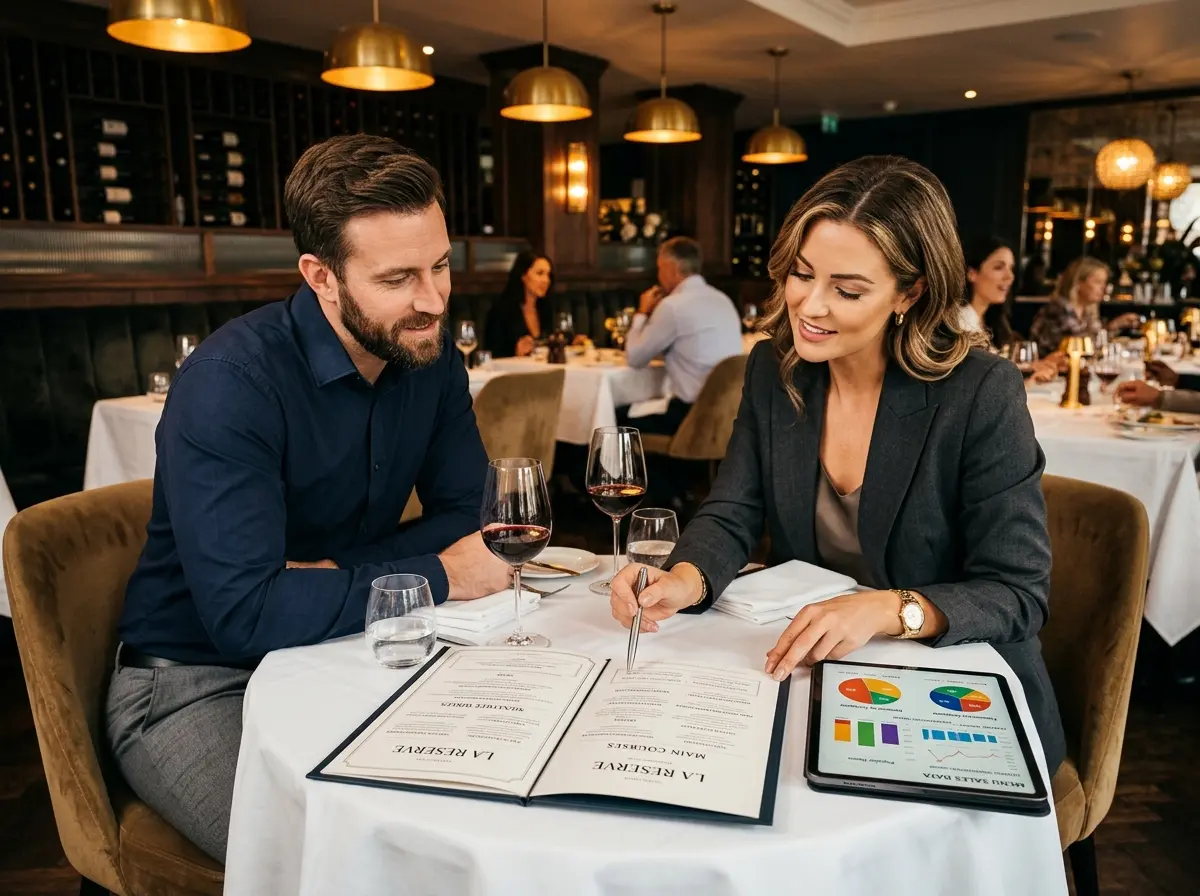
Here's a fun fact: your customers walk into your restaurant already primed to be influenced. They're hungry, slightly overwhelmed by choices, and — bless their hearts — remarkably predictable. The science of menu psychology has been around for decades, quietly shaping what people order and how much they spend, yet a surprising number of restaurant owners are still treating their menu like a simple list of food and prices. It's not. It's a sales tool. A very powerful one.
Menu engineering — the deliberate design of your menu to guide customers toward higher-margin, higher-value selections — isn't some dark art reserved for corporate chains. It's a set of practical, evidence-backed techniques that any restaurant owner can use. The best part? Most of them cost you nothing to implement except a little thought and a redesign. Let's dig in.
The Science Behind What Customers Actually See
The Golden Triangle and Eye-Tracking Research
Eye-tracking studies have shown that when customers open a menu, their eyes don't start at the top left like they would reading a book. Instead, they tend to travel to the center of the page first, then drift to the top right, and finally to the top left. This path is often called the "Golden Triangle." Whatever you place in those zones gets disproportionate attention — which means if your highest-margin dish is buried in the lower left corner between the soup and the side salads, you're essentially hiding money from yourself.
The fix is straightforward: identify your star items — the dishes with the best combination of high profit margin and high popularity — and position them deliberately within these prime zones. Use subtle visual cues like boxes, shading, or icons to draw the eye even further. Don't go overboard with decorative flair (nobody trusts a menu that looks like a scrapbook), but a clean visual anchor can meaningfully increase selection rates for your featured items.
The Paradox of Choice: Fewer Options, More Sales
Counterintuitive as it sounds, offering fewer items often leads to higher sales. Psychologist Barry Schwartz popularized this concept as the Paradox of Choice — when people are confronted with too many options, they experience decision fatigue and anxiety, which can lead them to default to the safest, cheapest, or most familiar choice. That's not where your margins live.
A well-engineered menu typically caps each category at around seven items. This isn't arbitrary — it aligns with cognitive research on working memory limits. Restaurants that have trimmed bloated menus have reported not only increased average ticket sizes but also faster table turns and reduced kitchen errors. Fewer items means your kitchen can execute them better, too. Everybody wins — except the 47-item menu, which frankly deserved what it got.
The Power of Anchoring With Price
Price anchoring is one of the most elegant tricks in the menu psychology playbook. When you place a very high-priced item at the top of a section, everything else on the list suddenly looks reasonably priced by comparison. A $58 wagyu steak at the top of your entrée section makes the $34 salmon feel like a bargain — even if the salmon is still your premium offering. Customers anchor their perception of "normal" price to the first number they see, and everything flows from there.
This technique works especially well with wine lists and tasting menus. Studies suggest that restaurants using price anchoring strategies see customers gravitate toward the second or third most expensive option — which, not coincidentally, is often where the best margins are. Price your anchor item as aspirationally as you can justify, and let it do the psychological heavy lifting.
How Smart Tech Can Support Your Upselling Strategy
Letting Technology Do the Recommending
Menu design gets customers to make better choices when they're seated and browsing. But what about the moments before they even walk through the door — or the phone calls asking about your specials, your hours, or whether you accommodate dietary restrictions? Those touchpoints are just as important, and they're opportunities that often fall through the cracks when your staff is slammed during a dinner rush.
That's where Stella, the AI robot employee and phone receptionist, fits naturally into a restaurant's operation. Stella can greet walk-in customers at the door and proactively mention the night's specials, highlight high-margin offerings, or promote a limited-time menu item — essentially acting as a knowledgeable, enthusiastic front-of-house presence that never has a bad shift. On the phone side, she answers calls 24/7, fields common questions, and can mention current promotions to callers who might otherwise just check your hours and hang up. It's passive upselling at scale, and it doesn't require your host stand to break a sweat.
Copywriting Your Menu Like a Marketer
Descriptive Language Sells More Food — Full Stop
A Cornell University study found that descriptive menu labels increased sales by 27% compared to their plainly-named counterparts. "Chocolate cake" is fine. "Warm Belgian chocolate lava cake with Madagascar vanilla bean cream" is an experience. Customers don't just eat food — they eat the story around it. Sensory words, geographic origins, and preparation methods all signal quality and justify higher price points in the customer's mind.
This doesn't mean you need to write a novel next to every dish. A single evocative sentence is enough. Focus on texture, aroma, origin, or the technique involved. Words like slow-roasted, hand-crafted, house-made, and locally sourced consistently outperform generic descriptions in both perceived quality and willingness to pay. Update your menu copy the same way you'd update your social media — thoughtfully and with your customer's imagination in mind.
Remove Dollar Signs and Watch Spending Go Up
This one sounds too simple to be real, but the research backs it up. A study from Cornell's Center for Hospitality Research found that diners spent significantly more when prices were listed without dollar signs or the word "dollars." The dollar sign acts as a psychological trigger — it reminds the customer they're spending money, activating a kind of spending guilt that nudges them toward cheaper options.
Instead of "$24," consider listing your price as simply "24" or writing it out in a smaller font beneath the dish description. Some upscale establishments spell prices out entirely — "twenty-four" — though that's a stylistic choice that needs to match your brand. At minimum, drop the dollar sign and see what happens to your average check over the next few months. You might be pleasantly surprised.
Strategic Placement of High-Margin Items Within Categories
Within any given section of your menu, the first and last items listed receive the most attention — a phenomenon borrowed from memory research called the serial position effect. The first item benefits from primacy (customers remember what they see first), and the last item benefits from recency (it's fresh in mind when they decide). Items buried in the middle of a long list are the menu equivalent of a middle child — present, but overlooked.
Use this to your advantage by placing your highest-margin items at the top and bottom of each section. Move your mediocre performers — the dishes that are popular but low-margin — into the middle where they'll still sell but won't steal attention from your stars. It's a small structural change that can meaningfully shift your sales mix without changing a single recipe.
Quick Reminder About Stella
Stella is an AI robot employee and phone receptionist built for businesses like yours — standing inside your location to engage customers in person, and answering phone calls around the clock so nothing falls through the cracks. At just $99/month with no upfront hardware costs, she's an affordable way to maintain a professional, always-on presence that greets, informs, and upsells without ever calling in sick.
Put Your Menu to Work Starting Today
Menu psychology isn't about manipulation — it's about communication. Your menu is already telling customers a story. The question is whether that story is driving them toward the choices that are best for your business, or just listing options and hoping for the best. With a few deliberate structural, visual, and copywriting changes, you can meaningfully increase your average ticket size, improve margin mix, and give your best dishes the spotlight they deserve.
Here's where to start:
- Audit your current menu for item placement — are your stars in the Golden Triangle?
- Trim categories to seven items or fewer where possible.
- Rewrite your item descriptions using sensory, evocative language.
- Remove dollar signs from your pricing.
- Add one high-price anchor item to your entrée and beverage sections.
- Reorder items within sections so high-margin dishes lead and close each category.
None of these steps require a designer, a consultant, or a significant budget. They require intention. And if you want to extend that same intentional, strategic communication to every customer who walks through your door or picks up the phone, tools like Stella make that easier than ever. Your menu works while customers are seated. Make sure everything else is working just as hard.