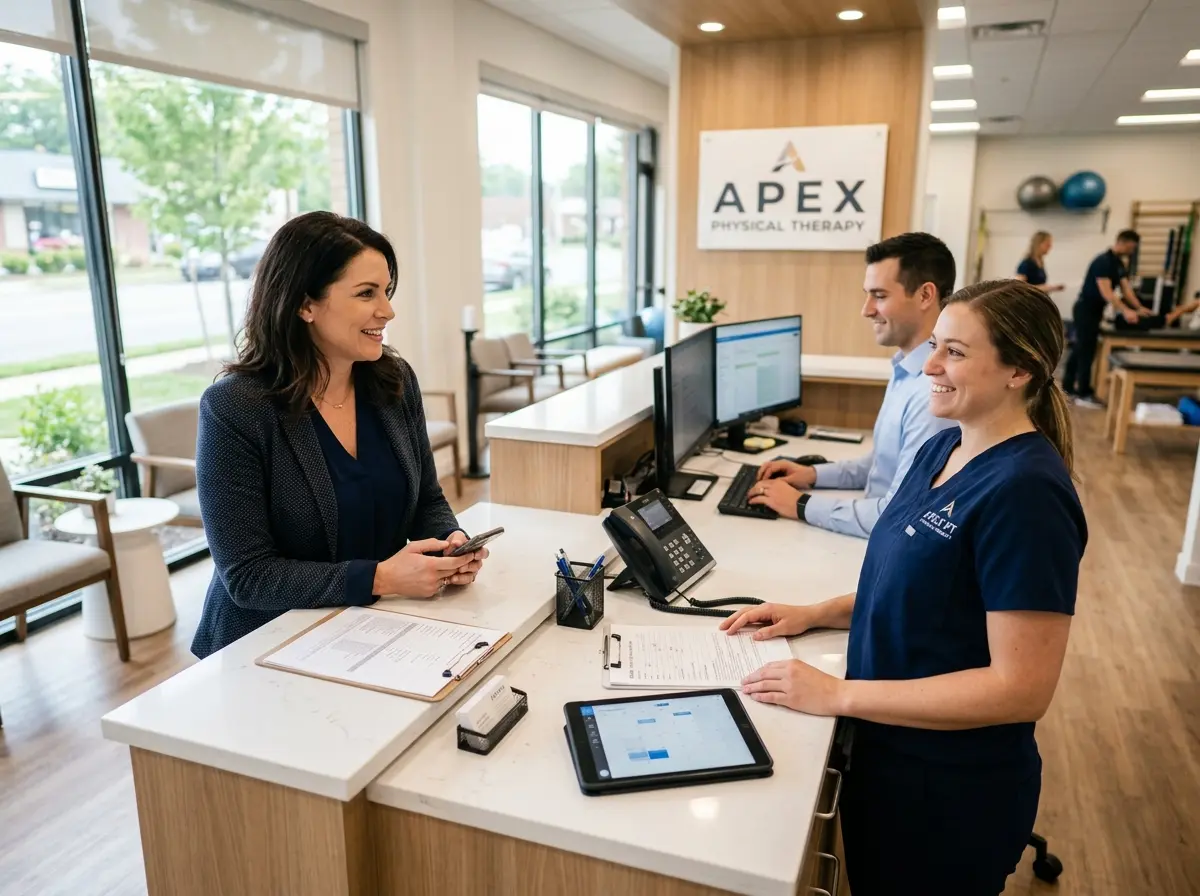
The Phone Call That Could Make or Break Your Practice
Picture this: a potential patient calls your physical therapy clinic, nervously asking, "Do you take my insurance?" Your front desk staff, juggling three other tasks and a waiting room full of patients, gives a rushed answer, fumbles through the verification process, and — congratulations — you've just lost a patient who walked straight to your competitor down the street. No appointment scheduled. No revenue generated. Just a missed opportunity wearing the costume of a routine phone call.
Here's the uncomfortable truth: insurance inquiries are not obstacles — they are opportunities. Every person who picks up the phone to ask about their coverage is already motivated. They're in pain, they've decided they need help, and they're one smooth conversation away from becoming a loyal patient. The difference between "we'll have to check and call you back" and a confirmed appointment on the books often comes down to your intake process, your staff's confidence with insurance questions, and how well your practice handles the critical moments in that first conversation.
Understanding Why Insurance Inquiries Stall Out
The Caller Is Already Anxious — Don't Make It Worse
The key is to project confidence and warmth simultaneously. Your front desk team should be trained to acknowledge the caller's concern immediately, provide a clear and honest answer about what your practice accepts, and — critically — pivot the conversation toward scheduling rather than letting it stall on billing uncertainty. Phrases like "Great news, we do work with that plan — let's get you set up" or "We can verify your specific benefits before your first visit, and the easiest way to do that is to get you booked" keep the momentum moving forward.
Vague Intake Processes Are Killing Your Conversion Rate
A structured intake process serves two purposes: it collects the information you actually need (insurance provider, policy number, referring physician, chief complaint) and it signals to the caller that your practice is organized, professional, and worth trusting with their recovery. When callers feel like they're talking to a competent, prepared team, they're far more likely to commit to an appointment on the spot. Build a standardized intake script. Train everyone on it. Then stop reinventing the wheel every time the phone rings.
The Follow-Up Gap Is Where Patients Disappear
Build a simple follow-up workflow: collect the caller's name and contact information during every inquiry call (even if no appointment is scheduled), set a follow-up task or reminder, and reach back out within one business day. A brief, friendly message — "Hi, just following up from our call yesterday — we'd love to help you get started" — can recover a surprising number of patients who were on the fence.
How the Right Tools Take the Pressure Off Your Front Desk
Automating the First Touch Without Losing the Human Feel
One of the most consistent pain points for PT practices is simply availability. Insurance inquiries don't respect business hours. Someone researching their options at 8 PM on a Tuesday deserves a response — or at minimum, a professional, informative first interaction — just as much as the person who calls at 10 AM on a Wednesday. That's a staffing problem that no amount of hustle can fully solve. Until now.
Stella, the AI robot employee and phone receptionist, is built exactly for this gap. She answers calls 24/7 with the same knowledge your front desk uses during the day — insurance questions, service offerings, scheduling information, clinic hours, and more. For practices with a physical location, she's also available as an in-clinic kiosk, greeting walk-ins and new patients with consistent, friendly information before a human staff member ever steps in. Her built-in CRM and conversational intake forms mean that even after-hours callers can have their information collected and organized automatically, complete with AI-generated contact profiles and push notifications to your managers — so nothing falls through the cracks overnight.
Crafting a Conversion-Focused Phone Script for Insurance Calls
The Four Phases of a Successful Inquiry Call
Phase 1: Warm acknowledgment. Thank the caller, use their name as soon as you have it, and confirm that you're happy to help with their insurance question. This takes ten seconds and immediately reduces tension.
Phase 2: Confident, honest insurance response. Answer what you can directly. If you accept their plan, say so clearly. If you need to verify specific coverage, be transparent: "We work with that carrier — I'll want to confirm your specific plan details before your first visit, which we can do once you're booked."
Phase 3: The pivot to scheduling. This is the most important phase, and the one most practices miss. Don't end the conversation after the insurance question is answered. Immediately bridge to the appointment: "The best next step is to get you on the schedule so we can confirm your benefits and get your evaluation set up — do mornings or afternoons work better for you?" Offer two options. Keep control of the conversation.
Phase 4: Capture and confirm. Whether or not they schedule, collect their contact information and confirm what happens next. If they're booked, send a confirmation. If they're not, tell them exactly when and how you'll follow up.
What to Say When the Answer Is "We Don't Know Yet"
Sometimes you genuinely can't confirm coverage on the spot — plans vary, benefit structures differ, and not every clinic has real-time verification software. That's okay. What's not okay is letting uncertainty become a reason to delay the appointment.
Train your staff to reframe coverage uncertainty as a reason to schedule, not a reason to wait. Something like: "Rather than leaving you with an unknown, let's get you booked and we'll run your benefits verification before your first visit — that way you'll know exactly where you stand before you come in." This approach builds trust, keeps the calendar filling, and turns an administrative limitation into a demonstration of your practice's thoroughness. Most patients respond very well to this framing.
Handling the "I'll Call Back" Objection
When a caller says they'll call back, they usually mean it in the moment — but life intervenes, pain subsides temporarily, or they simply find another clinic in the meantime. The best response is a gentle, low-pressure offer to schedule a tentative appointment that they can cancel if needed: "Totally understand — would it help to hold a spot on the schedule? It's easy to cancel or reschedule, and it means you won't have to worry about availability when you're ready." This approach dramatically reduces the number of callers who drift away, because it removes the friction of having to initiate contact again.
Quick Reminder About Stella
Stella is an AI robot employee and phone receptionist built for businesses like yours — available as an in-clinic kiosk and as a 24/7 AI phone receptionist. She handles insurance FAQs, collects patient intake information, manages contacts through her built-in CRM, and keeps your front desk free for the work that actually requires a human. At $99/month with no upfront hardware costs, she's the team member who never calls in sick and never puts a patient on hold by accident.
Turn Your Next Insurance Call Into a Scheduled Appointment
- Audit your current intake process. Is it consistent? Is it documented? Does every staff member handle insurance calls the same way?
- Build or refine your phone script using the four-phase structure above. Practice it until it sounds natural.
- Implement a 24-hour follow-up rule for every inquiry that doesn't convert to an appointment on the first call.
- Address your after-hours gap. If calls are going unanswered or to a generic voicemail outside business hours, you are losing patients every single week.
- Review your language around coverage uncertainty — make sure "we need to verify" always leads toward scheduling, not away from it.