The Phone Call That Either Saves or Loses the Appointment
Here's a fun fact nobody puts on their dental school diploma: the clinical work is only half the battle. The other half? Getting patients to actually show up. No-shows are the silent profit killer of dental practices everywhere — and yet most offices are still winging it on new patient phone calls with a loose script, a distracted front desk team, and a prayer.
One dental practice decided to stop praying and start scripting. By overhauling their new patient phone intake process with a structured, warm, and strategically designed script, they reduced no-shows by 40%. That's not a rounding error. That's a transformation. And the best part? The changes weren't expensive or complicated. They were just intentional.
Whether you run a dental office, a med spa, a law firm, or any business where appointments are the lifeblood of your revenue, this post will walk you through exactly what changed, why it worked, and how you can apply the same principles to your own operation.
Why Most New Patient Calls Fall Flat
The Front Desk Is Doing Too Many Things at Once
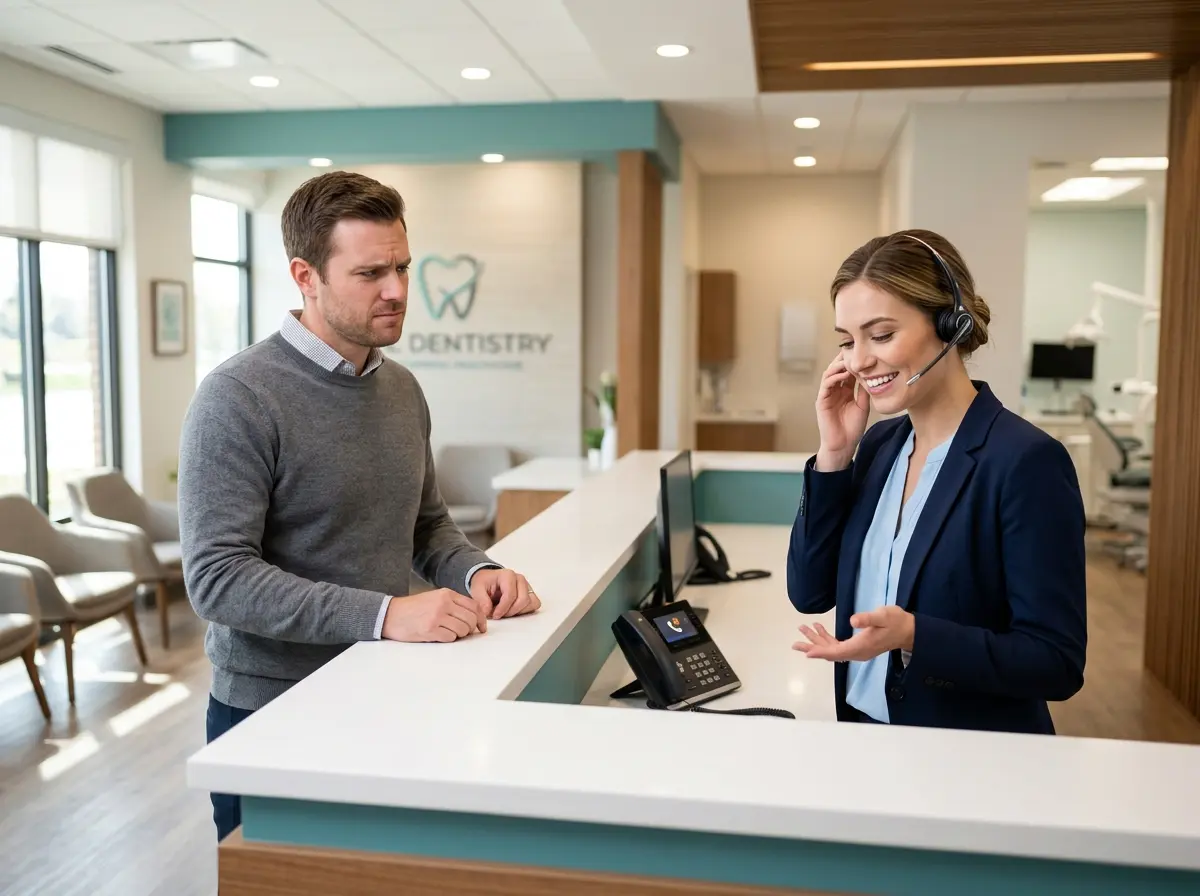
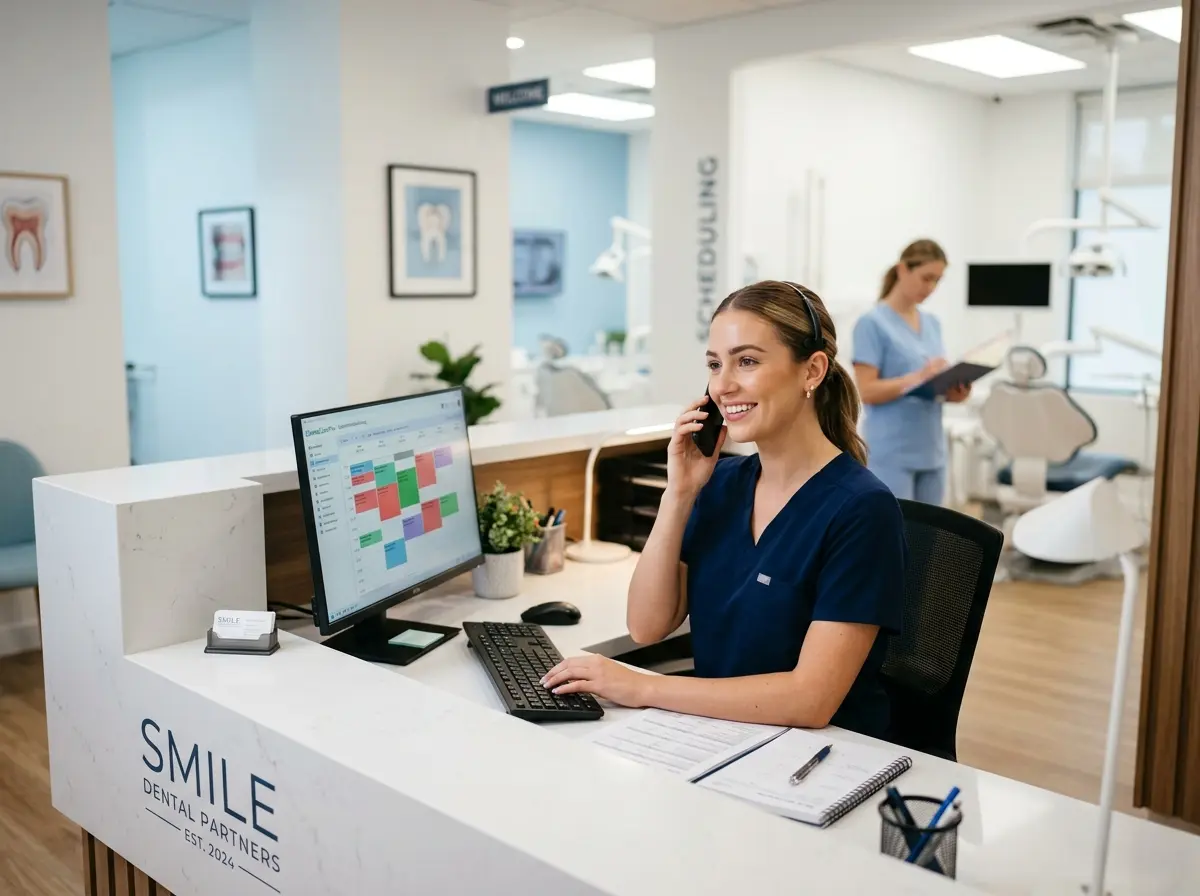
Let's be honest. Your front desk staff are remarkable multitaskers — they're checking in patients, processing payments, answering questions from the waiting room, managing the schedule, and somewhere in the middle of all that chaos, they're supposed to have a warm, focused, trust-building conversation with a nervous new patient calling for the first time. That's not a job description. That's a circus act.
When a new patient calls and gets a distracted, rushed, or robotic response, they don't feel welcomed — they feel processed. And a patient who doesn't feel connected to your practice before their appointment is a patient who has very little motivation to keep it when life gets busy. The no-show is practically baked in from the moment the call ends poorly.
Information Dumping vs. Relationship Building
The old-school approach to new patient calls is essentially a data transfer: name, date of birth, insurance carrier, preferred appointment time, okay see you Tuesday. That's not a script — that's a form. And forms don't build loyalty.
The practice that reduced no-shows by 40% made one fundamental mindset shift: they stopped treating the intake call as an administrative task and started treating it as the first clinical touchpoint. The goal wasn't just to get the information. The goal was to make the patient feel heard, valued, and genuinely excited (or at least comfortable) about coming in. Small shift in philosophy. Enormous shift in results.
No Confirmation Culture, No Accountability
Booking an appointment without a confirmation culture is like planting seeds without watering them. Many practices rely on a single automated reminder text sent the day before — which patients have become remarkably skilled at ignoring. The high-performing practices build in multiple touchpoints: a warm verbal confirmation at the end of the call, a follow-up email with what to expect, a reminder sequence, and a genuine human (or AI) connection that makes canceling feel like a bigger deal than just not showing up.
The Script That Actually Worked
The Opening That Sets the Tone
The original script opened with: "Thank you for calling, can I get your name and date of birth?" Clinical. Cold. Forgettable. The revised script opened with something far more human: "Thank you so much for calling — we're really glad you reached out. My name is [name], and I'd love to help get you set up as a new patient. Can I start by asking what brought you in today?"
That question — "What brought you in today?" — is doing a tremendous amount of heavy lifting. It signals that the practice cares about the patient's reason for calling, not just their insurance information. It opens a conversation rather than a transaction. And it gives staff the context they need to personalize the rest of the call. Patients who feel heard in the first 30 seconds are dramatically more likely to follow through on the appointment.
The Middle: Empathy, Expectations, and Commitment
The middle section of the revised script was built around three things: empathy (acknowledging any anxiety or concern the patient expressed), expectation-setting (briefly explaining what the first visit looks like so there are no surprises), and micro-commitments (asking questions that get the patient verbally invested in the appointment).
For example, after booking the time, staff would say: "Perfect. We'll send you a quick email with everything you need to know before you arrive. Is there anything specific you're hoping we can address at this first visit?" That question creates psychological investment. The patient starts mentally preparing for the appointment and associating it with something meaningful to them — not just a slot on a calendar.
The Close: The Warm Handoff and Confirmation Lock
The original script ended with "See you then!" The revised script ended with a confirmation lock: "We've got you all set for [day] at [time]. You'll get a confirmation email shortly, and we'll also send a quick reminder a couple of days before. Is there anything else I can help you with today? We're really looking forward to meeting you."
Simple? Yes. But the explicit mention of the confirmation sequence sets expectations and subtly communicates: we're going to follow up, we're organized, and we take this appointment seriously. That professionalism signals to the patient that their time — and yours — matters.
How Technology Can Strengthen Your Intake Process
Consistency Is the Enemy of No-Shows
Here's the uncomfortable truth about scripts: they only work when they're actually used. And when your front desk is juggling six things and the phones are ringing off the hook, even the best script gets shortcuts. That's where technology bridges the gap — not by replacing the human touch, but by ensuring that every new patient call gets the same quality of attention regardless of how busy things are.
Stella, the AI robot employee and phone receptionist, is built exactly for this. She answers calls 24/7 — including after hours, during lunch breaks, and on those chaotic Monday mornings when your front desk is already drowning — and conducts structured intake conversations using your practice's specific questions and tone. Her built-in CRM and conversational intake forms capture new patient information automatically during the call, generating AI-powered contact profiles that your team can review before the appointment. For practices with a physical location, Stella also operates as a friendly in-person kiosk, greeting patients when they arrive and answering questions — so the consistent, professional experience extends well beyond the phone call.
Building a No-Show Prevention System Beyond the Script
The Multi-Touch Reminder Sequence
A single reminder text is table stakes. High-performing practices build a layered reminder sequence: a confirmation email immediately after booking, a reminder 48 hours before the appointment, and a same-day confirmation. Each touchpoint reinforces the appointment as a real commitment — not an afterthought. The tone matters too. A message that says "We're looking forward to seeing you tomorrow!" hits differently than "Reminder: appointment 9/12 at 2pm." One sounds like a business that cares. The other sounds like an automated system that doesn't know you exist.
Reducing Friction for New Patients
A huge driver of no-shows is anxiety — specifically, anxiety about the unknown. New patients who don't know what to expect, where to park, how long the appointment will take, or what paperwork they'll need to fill out are patients who are already building subconscious excuses to cancel. Proactive communication that answers these questions before they're asked removes friction and builds confidence. Consider sending a "What to Expect at Your First Visit" email that covers the basics in a friendly, reassuring tone. It takes 30 minutes to write once and saves dozens of no-shows over time.
The Follow-Up Call for Unconfirmed Appointments
For any appointment that hasn't been confirmed 24 hours out, a brief personal call from a team member can make a significant difference. Not a robocall — a real, warm, two-sentence check-in: "Hi, this is [name] from [practice]. We just wanted to confirm we'll see you tomorrow at 2pm — is there anything you need before then?" This takes roughly 60 seconds per patient and has a measurable impact on show rates. It communicates that you noticed, you care, and the appointment is important enough to warrant a personal touch.
A Quick Reminder About Stella
Stella is an AI robot employee and phone receptionist that works 24/7 for just $99/month — no upfront hardware costs, no sick days, no turnover. She answers calls, collects patient information through conversational intake forms, manages contacts through a built-in CRM, and greets customers in person as a human-sized kiosk inside your location. For dental practices, medical offices, and any appointment-based business, she's the kind of front desk presence that never has an off day.
Putting It All Together: Your Action Plan
Reducing no-shows isn't about one magic fix. It's about building a system where every new patient feels welcomed from the first phone call, informed before they arrive, and accountable to an appointment they actually care about keeping. The 40% reduction at this dental practice didn't happen because they got lucky — it happened because they got intentional.
Here's where to start:
- Audit your current intake script. Listen to a few recorded calls (or sit with your front desk team) and honestly assess whether new patients are feeling welcomed or just processed.
- Rewrite your opening and closing. Add the "What brought you in today?" question and the confirmation lock at the end. These two changes alone can move the needle.
- Build a three-touch reminder sequence. Confirmation email, 48-hour reminder, and same-day message — each with a warm, personal tone.
- Create a "What to Expect" email. Reduce friction and anxiety for new patients before they ever walk through your door.
- Explore AI-assisted intake for consistency. Tools like Stella ensure that every call — including the ones that come in after hours or during your busiest moments — gets the same quality of experience.
Your phone is ringing right now. The question isn't whether new patients are calling — it's whether the experience they're getting is giving them every reason to show up. Fix the call, and you might just find that your schedule starts filling up in a whole new way.