When "Book Now" Actually Means "Good Luck Figuring This Out"
Picture this: a potential client is lying on their couch at 9:47 PM, finally ready to treat themselves to a spa day. They pull up your website, click "Book Now," and are immediately greeted by a five-step form, a calendar that shows every day as unavailable, and a confirmation email that may or may not arrive sometime before their appointment. They close the tab. You just lost a booking — and they didn't even have to talk to anyone to be disappointed.
Online booking is one of those things that looks deceptively simple from the outside. You slap a scheduling widget on your website and call it a day, right? Wrong. The design of your online booking experience — the flow, the friction, the language, the timing — has a direct and measurable impact on how many people actually complete a reservation versus quietly giving up and calling your competitor instead.
One spa owner discovered this the hard way. After noticing a frustrating gap between website traffic and actual bookings, she overhauled her entire online scheduling experience with a few targeted changes. The result? A 40% increase in same-week appointments. No ad spend increase. No viral moment. Just smarter design. Here's what she did — and what you can steal for your own business.
What Was Broken (And Why You Probably Have the Same Problem)
Too Many Steps, Too Much Thinking
The original booking flow asked customers to select a service category, then a specific service, then a provider, then a date, then a time, then enter their contact information, then create an account, then confirm. That's eight cognitive decisions before a single appointment is locked in. Conversion rate optimization research consistently shows that every additional step in a form can reduce completions by 10–20%. By that math, an eight-step process is essentially a polite way of telling customers to come back never.
The fix was radical simplification. The spa collapsed the flow into three steps: choose a service, pick a time, enter your name and number. That's it. Account creation was moved to an optional post-booking step. The result was a form that felt less like applying for a mortgage and more like ordering a pizza — which, honestly, is the energy you want.
The Calendar Was Lying
Here's a subtle but devastating UX mistake that many service businesses make: showing customers a calendar that defaults to a month view with almost no visible availability. To a client, a sea of grayed-out dates doesn't say "we're popular." It says "we don't want you here." The spa's original calendar was pulling live availability, but the visual presentation made it look like the next open slot was sometime in the next geological era.
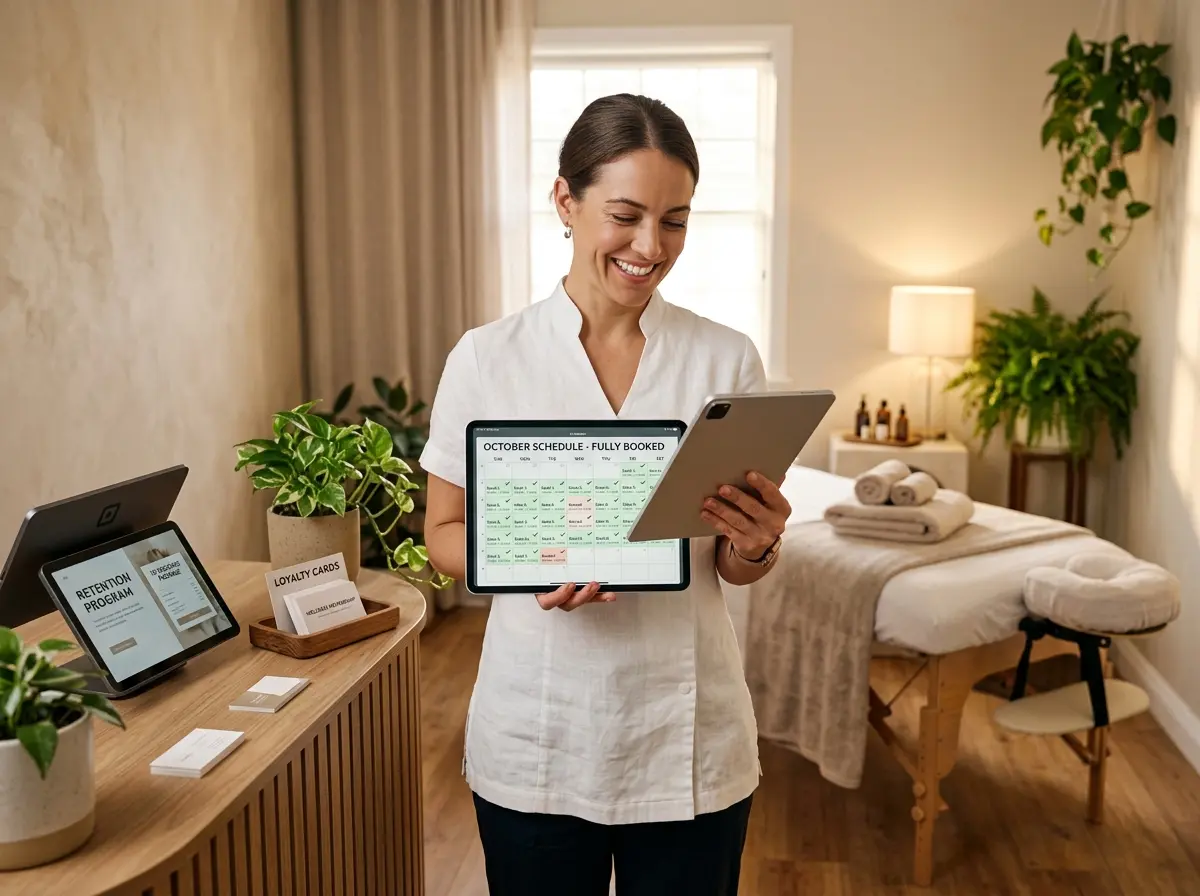
Switching to a week view — defaulted to the current week — and prominently highlighting same-day and next-day openings completely changed the perception of availability. Customers could immediately see that yes, there was a slot on Thursday at 2 PM, and yes, they could actually have it. Urgency and availability, presented visually, drove faster decisions.
No Confirmation, No Trust
The third piece of the puzzle was post-booking communication, or rather the lack of it. The old system sent a single confirmation email — plain text, generic, easy to miss in a busy inbox. There was no SMS confirmation, no calendar invite, no reminder 24 hours before the appointment. The no-show rate was high, which meant the spa was holding time slots that never converted to revenue.
Adding an immediate SMS confirmation, a calendar invite attachment, and a 24-hour reminder text brought the no-show rate down significantly and — perhaps counterintuitively — increased same-week bookings, because fewer cancellations meant more real availability on the books rather than ghost-held slots.
A Smarter Front Desk Can Help Fill the Gaps
Capturing the Customers Who Don't Book Online
Not everyone will book online, no matter how sleek your flow is. Some people want to ask a quick question before committing. Some are standing outside your door at 7 AM wondering if you have anything available. Some call at 8 PM because they finally have five minutes of peace and quiet. These are real customers with real intent — and if no one answers, or if they hit a clunky voicemail, that intent evaporates fast.
This is where Stella, the AI robot employee and phone receptionist, fits naturally into a spa's (or any service business's) workflow. For businesses with a physical location, Stella stands inside the store as a friendly, human-sized kiosk, ready to engage walk-in customers, answer questions about services and pricing, and guide them toward booking. For after-hours calls or overflow, she answers the phone with full knowledge of your services, availability windows, and current promotions — no hold music, no voicemail black hole. She can also collect customer intake information conversationally over the phone or at the kiosk and store it directly in her built-in CRM, so your staff starts every appointment already knowing who they're working with. It's the kind of seamless handoff that makes a business look significantly more put-together than it might actually be on a chaotic Tuesday.
Turning One-Time Bookers Into Repeat Clients
The Post-Appointment Follow-Up Nobody Sends
Getting someone to book once is a marketing win. Getting them to book again is a business model. The spa's redesign didn't stop at the booking flow — it extended into what happened after the appointment. A simple follow-up text sent 48 hours post-visit, thanking the client and offering an easy one-tap rebooking link, became one of the highest-converting touchpoints in their entire customer journey. It costs almost nothing to send, and it keeps the relationship warm while the experience is still fresh.
If you're not doing post-visit follow-up, you're leaving rebooking revenue entirely to chance. Clients who had a great experience want to come back — they just need a nudge and a frictionless path to do it. Make the rebooking link direct to their preferred service, pre-populated with their last provider if possible, and watch the return rate climb.
Using Availability Windows as a Marketing Tool
One underused tactic that the spa implemented was treating same-week availability as a promotional asset rather than a scheduling byproduct. Instead of passively waiting for clients to check the calendar, they started sending a short weekly SMS to their existing client list: "We have a few openings this week — grab one before they're gone." No discount required. Just honest, low-pressure availability awareness.
This worked for two reasons: it created genuine urgency (limited spots are limited spots), and it reminded past clients that the spa existed without being annoying about it. Consistent, relevant communication is the difference between a business that clients think of and one they've already forgotten. The same-week booking bump from this tactic alone accounted for nearly a third of the overall 40% lift.
Making Promotions Visible at the Right Moment
The final piece of the retention puzzle was surfacing promotions at moments of high intent rather than burying them in a newsletter that gets skimmed and archived. When a client lands on the booking page, that is peak intent. That is the moment to show them that a deep tissue add-on is 20% off this week, or that booking two services together unlocks a discount. Contextual upselling at the point of booking consistently outperforms email promotions for impulse-friendly services like spa treatments, salon visits, and fitness classes. Put the offer where the decision is being made.
Quick Reminder About Stella
Stella is an AI robot employee and phone receptionist that works 24/7 — greeting customers in person at your physical location, answering calls after hours, promoting deals, collecting intake information, and keeping your CRM updated without any effort from your team. She runs on a $99/month subscription with no upfront hardware costs, which makes her one of the more cost-effective hires you'll ever make (and she's never called in sick once).
Your Booking Experience Is a Revenue Decision
The 40% increase in same-week appointments didn't come from magic. It came from treating the booking experience like the conversion funnel it actually is — auditing every step for friction, making availability feel accessible, and following up with the human (or AI) touches that keep clients coming back. These are not complicated changes. They are mostly free or low-cost to implement. What they require is attention, which is the one resource most business owners are perpetually short on.
Here's where to start this week:
- Audit your booking flow. Walk through it yourself as if you were a new customer. Count the steps. Time how long it takes. If you feel frustrated, your clients definitely do.
- Check your calendar defaults. Are you showing same-week availability prominently? If not, fix the view settings today.
- Set up SMS confirmation and reminders. Most scheduling platforms support this natively. If yours doesn't, consider whether it's the right tool.
- Write one post-visit follow-up text. Keep it under 50 words. Include a direct rebooking link. Schedule it to send 48 hours after checkout.
- Send one availability text to your client list this week. Don't overthink it. Just tell people you have openings.
Your online booking system should be working as hard as your best employee — greeting clients warmly, answering questions proactively, and making the path to a confirmed appointment feel effortless. If it isn't doing that right now, you know what to do.