Introduction: Your Spa's First Impression Might Be Its Last
Let's paint a picture. A potential client has been scrolling Instagram for twenty minutes looking at before-and-after facials. She's convinced. She's ready. She picks up the phone to book an appointment at your spa — and gets a busy signal, a voicemail box that's full, or a hold experience so painful it rivals skipping leg day. She hangs up. She books somewhere else. You never knew she existed.
This is not a hypothetical. According to research from Forbes, 80% of callers who reach voicemail do not leave a message — they simply move on. In an industry built entirely on the promise of relaxation and personal care, a clunky, impersonal, or nonexistent intake process is a contradiction your business cannot afford.
The good news? The client journey from first call to first appointment doesn't have to be a gamble. With a few intentional redesigns — and the right tools — you can turn that initial touchpoint into a seamless, confidence-inspiring experience that gets clients in your doors and keeps them coming back. Let's walk through how.
Understanding Where the Client Journey Breaks Down
Before you can fix the journey, you have to know where it's falling apart. Most spa owners are surprised to learn that their biggest leakage points aren't in the treatment room — they're in the moments before a client ever steps through the door.
The Phone Call Problem
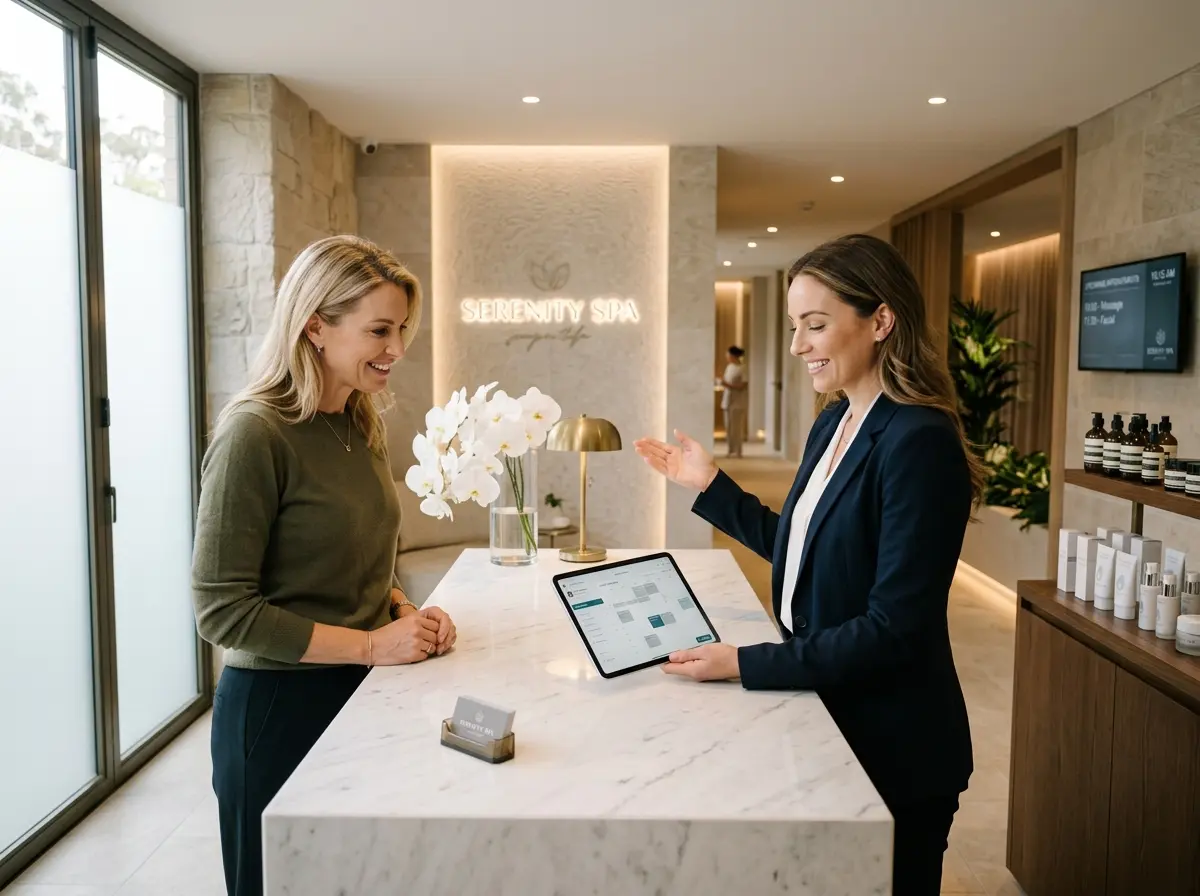
Phone calls remain the number one way clients book spa appointments, particularly for first-time visitors who have questions they don't trust a website FAQ to answer. What services do you recommend for sensitive skin? Do you offer couples massages on weekends? Is there parking? These are not unreasonable questions, but they are the kinds of questions that eat up your front desk staff's time — when someone actually answers the phone, that is.
Missed calls are more than a minor inconvenience. Each unanswered call represents a potential client who did the hard work of choosing your spa, only to be met with silence. In a world where your competitor is one Google search away, that silence is expensive. Your phone line isn't just a communication tool — it's a revenue channel, and it needs to be treated like one.
The Information Gap at Intake
Even when clients do get through, the intake process at many spas is surprisingly informal. Names are scribbled on paper. Service preferences are communicated verbally and forgotten. Allergies aren't documented until the client is sitting in the treatment chair. This isn't just inefficient — it's a liability.
A well-designed intake process collects the right information at the right time, before the appointment, so your staff can walk in prepared, personalized, and professional. Clients notice when you already know they prefer a firmer pressure or that they're coming in for a special occasion. That level of care is what turns a one-time visitor into a loyal regular.
The Follow-Through Gap
Many spas focus so heavily on the in-room experience that they neglect what happens before and after. A client books, receives no confirmation, gets no reminder, and either forgets or assumes something went wrong. No-show rates at spas can run as high as 20–30% without reminder systems in place. That's a significant portion of your booked revenue walking out before it ever walks in.
How the Right Technology Closes the Gap
Here's where things get practical — and where a little investment in technology pays for itself remarkably fast.
Always-On Availability Changes Everything
Stella, an AI robot employee and phone receptionist, is built precisely for this kind of challenge. For spas with a physical location, she functions as a friendly, knowledgeable kiosk presence — greeting walk-ins, answering questions about services and promotions, and engaging clients before they even reach the front desk. On the phone side, she answers calls 24/7, handles common questions about services, hours, and pricing, and collects client information through conversational intake forms that feel natural rather than bureaucratic.
What makes Stella particularly useful for spa owners is her built-in CRM, which automatically generates client profiles from intake conversations, stores custom fields and notes, and allows you to tag clients by preferences, visit history, or anything else that helps your team deliver a personalized experience. No more sticky notes. No more "wait, what was her name again?" moments five minutes before an appointment.
At $99/month with no upfront hardware costs, she's the kind of front desk upgrade that doesn't require a business loan to justify.
Redesigning the Journey: A Step-by-Step Framework
Technology is only as good as the process it supports. Here's how to thoughtfully redesign your client journey from the moment they discover your spa to the moment they're booked, prepared, and excited to arrive.
Step 1 — Audit Your First Contact Points
Start by calling your own spa. Seriously. Call during peak hours, during lunch, and after closing. What happens? Is the phone answered? Is the greeting warm and informative? Is someone available to answer a question about whether your hydrafacial is suitable for rosacea-prone skin?
Then walk in as a stranger would. Is anyone at the front desk? Are you greeted? Is there signage that explains your services or current promotions? This exercise is humbling for most spa owners, but it is also one of the most useful things you can do. You cannot improve what you haven't honestly assessed.
Step 2 — Streamline Your Intake Before the Appointment
Move your intake process upstream. Instead of collecting client information on a clipboard when they arrive, gather it during booking — whether that's by phone, through a web form, or at a kiosk. Ask the questions that actually matter for service delivery: skin concerns, allergies, areas to avoid, pressure preferences, occasion for the visit. Store that information somewhere your staff can actually access it before the appointment begins.
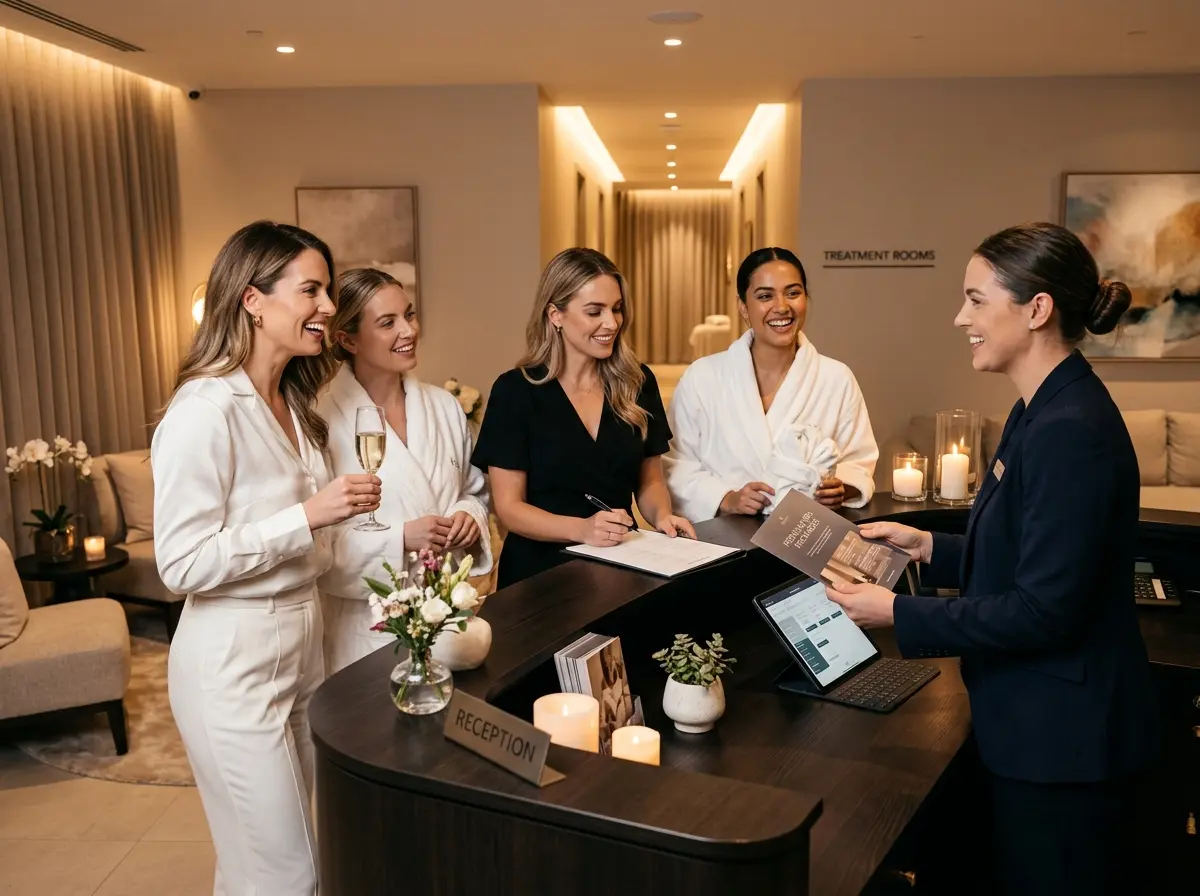
This single change — moving intake to before the appointment — dramatically improves the client experience on arrival. Instead of filling out paperwork, they're offered a beverage and walked to their room by a therapist who already knows their name and their goals. That is the experience worth paying for and posting about.
Step 3 — Build a Confirmation and Reminder System That Works
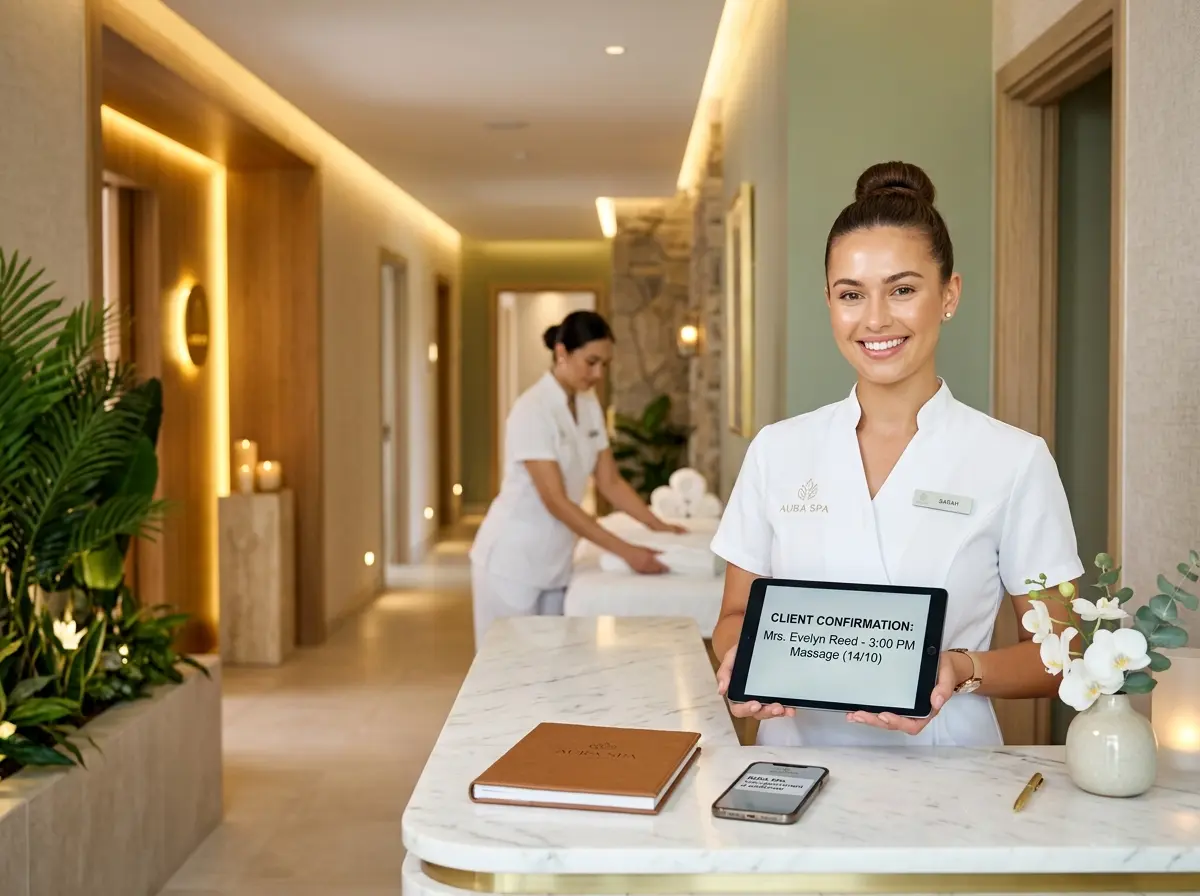
Once a client is booked, your job isn't done — it's just beginning. A confirmation message sent immediately after booking builds confidence that the appointment is real and that your spa operates professionally. A reminder sent 24–48 hours before the appointment reduces no-shows and gives clients the chance to reschedule rather than simply ghost you.
Include practical information in these touchpoints: where to park, how early to arrive, what to wear or avoid before a treatment, and who to contact with questions. This kind of proactive communication signals that your spa is organized, attentive, and genuinely invested in the client's experience — before they've even arrived.
Quick Reminder About Stella
Stella is an AI robot employee and phone receptionist who greets clients in-store, answers calls around the clock, and manages intake, CRM, and client communication — all for $99/month with no hardware costs upfront. She's designed to make your front-of-house operation feel polished and professional without adding headcount or headaches. For spas looking to close the gap between first contact and first appointment, she's worth a serious look.
Conclusion: The Booking Experience Is Part of the Service
Here's the reframe that changes everything: the client journey doesn't begin when someone steps into your spa. It begins the moment they decide to reach out. Every phone call, every intake question, every confirmation message is a reflection of your brand and a preview of the experience you're promising.
The spas that win long-term aren't necessarily the ones with the most Instagram-worthy décor or the most exotic treatments — they're the ones that make every step of the journey feel intentional, warm, and effortless. From first call to first appointment, that experience is entirely within your control.
Here's where to start this week:
- Call your own spa during and after business hours and document honestly what you find.
- Review your intake process and identify what could realistically be collected before the appointment rather than during it.
- Audit your confirmation and reminder system — or build one if it doesn't exist yet.
- Explore tools like Stella that can handle first contact, intake, and client management without adding to your staffing overhead.
Your next loyal client is probably picking up the phone right now. Make sure someone — or something — worthwhile is there to answer.