So You've Just Hired a New Retail Sales Associate
Congratulations. You've posted the job, sifted through the applications, conducted the interviews, and selected your new hire. Now comes the part that most retail training manuals gloss over with a breezy "have them shadow an experienced employee!" — as if that single sentence were a complete strategy. Spoiler alert: it isn't. But when done deliberately and with intention, the shadowing technique is genuinely one of the most powerful tools in your retail training arsenal. It just needs a little more structure than "follow Jen around until you figure it out."
High employee turnover in retail is well-documented — the industry sees annual turnover rates hovering around 60% in many segments. A big contributor? Poor onboarding. New associates who feel thrown into the deep end without proper training are far more likely to disengage, underperform, and quietly update their résumé on their lunch break. The shadowing technique, done right, addresses this head-on by giving new hires a real-world, hands-on foundation from day one.
This guide walks you through exactly how to structure a shadowing program that actually produces confident, capable sales associates — not just employees who've learned how to look busy when you walk by.
Building a Shadowing Program That Actually Works
Choose Your Mentor Employees Wisely
Not every great salesperson is a great teacher, and not every great teacher is your top salesperson. The ideal shadowing mentor is someone who is both skilled and communicative — someone who naturally narrates their thought process rather than just executing it invisibly. You want the employee who says, "I'm recommending the premium package here because this customer mentioned they have two kids and a dog," not the one who just nods and closes the sale while your new hire stands there wondering what just happened.
It's also worth considering personality dynamics. Pairing a shy new hire with your most intense, high-energy closer might be overwhelming on day one. Think about who will make your new associate feel comfortable enough to ask questions without fear of judgment. A mentor who rolls their eyes at questions is worse than no mentor at all.
Define Clear Learning Objectives for Each Shadow Session
Walking in without a plan is just following someone around a store. Walking in with specific objectives is training. Before each shadow session, both the mentor and the new associate should know exactly what skills are being observed and practiced. Break it down by phase:
- Day 1–2: Store layout, product knowledge basics, how to greet customers, and where the bathroom is (don't laugh — this matters).
- Day 3–4: Observing full customer interactions from greeting to close, watching how objections are handled.
- Day 5–6: The new associate begins handling parts of the interaction — perhaps the greeting or the product walkthrough — while the mentor stays nearby.
- Week 2+: The new associate leads interactions with the mentor available for backup and debrief afterward.
This staged approach prevents information overload and builds confidence incrementally. It also gives you a natural checkpoint structure to assess how the new hire is progressing before handing them the keys entirely.
Make Debriefs Non-Negotiable
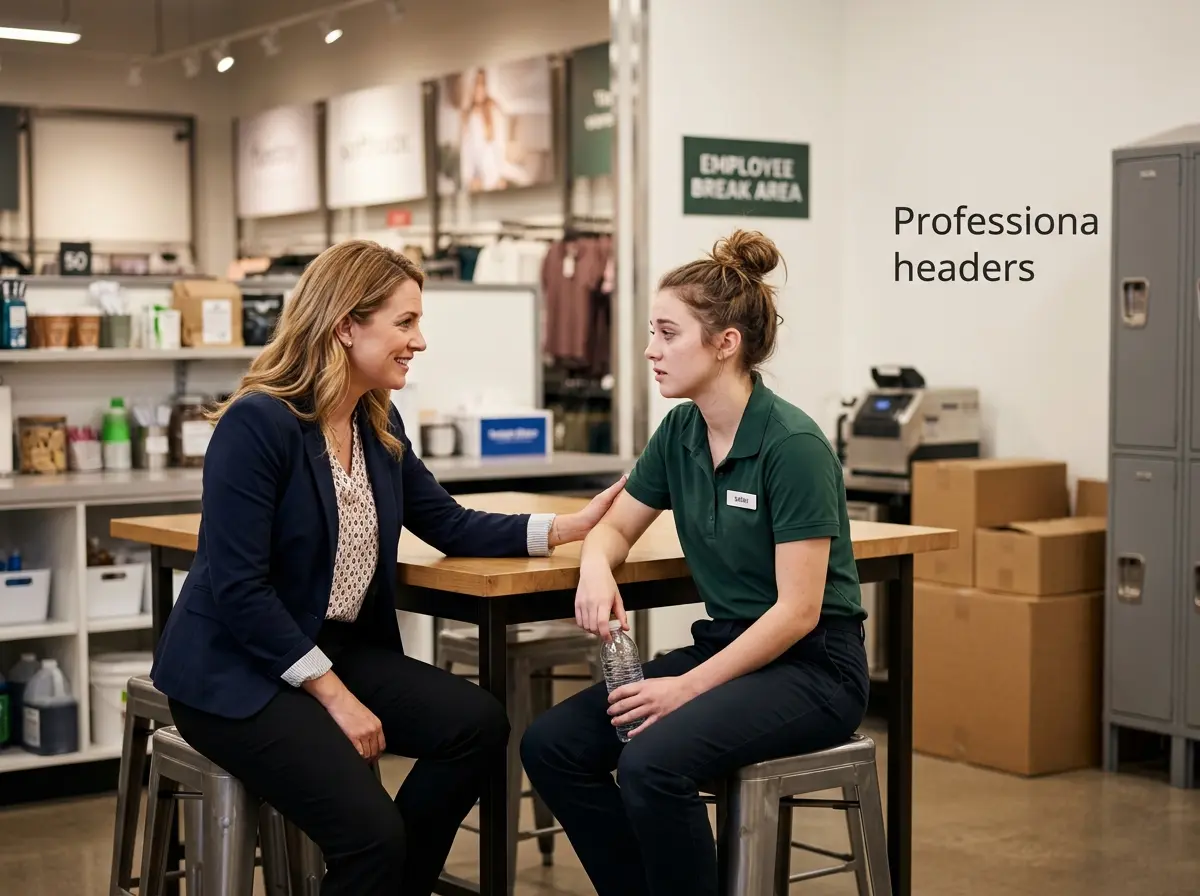
The shadow session itself is only half the training. The debrief is where the real learning gets cemented. After every significant interaction or at the end of each shift, your mentor and new associate should spend 10–15 minutes reviewing what happened. What went well? What could have gone differently? Why did the customer respond the way they did?
Encourage mentors to ask open-ended questions rather than just narrating their own brilliance. "What did you notice when I shifted from talking about price to talking about value?" will do far more for your new hire's development than a play-by-play of how the mentor saved the sale. The goal is to build a thinking salesperson, not a mimic.
How Technology Can Lighten the Training Load
Free Up Your Best Staff to Actually Train
Here's an irony most retail managers know all too well: your best employees are often too busy to train anyone because they're too busy being your best employees. When your star associate is tied up answering the same questions about store hours and return policies for the fifth time today, they're not available to mentor your new hire through a real customer interaction.
This is where Stella — an AI robot employee and phone receptionist — makes a genuine difference. Stella handles the repetitive, high-volume interactions that eat up your experienced staff's time: greeting walk-in customers, answering common product and policy questions, promoting current specials, and managing phone calls 24/7. With Stella fielding the routine inquiries both in-store at her kiosk and over the phone, your veteran employees are freed up to do what only humans can do — provide nuanced, relationship-driven mentorship to the people you've just invested time and money in hiring.
Structuring the Transition from Observer to Operator
The Gradual Handoff Method
One of the most common mistakes in retail shadowing programs is the abrupt transition — two days of watching, and then suddenly your new hire is alone on the floor during a Saturday rush wondering why no one warned them about this. The gradual handoff method fixes this by systematically expanding the new associate's role in each interaction while keeping the mentor present and accessible.
Think of it like learning to drive. First you observe. Then you take the wheel in a parking lot. Then quiet streets. Then the highway — with someone in the passenger seat. Then solo. The principle is identical in retail. Your new associate should never feel like they've been shoved onto the highway without ever having touched the steering wheel.
A practical way to structure this: use a simple signal system between mentor and new hire. If the new hire handles an objection well, the mentor stays quiet. If they see the interaction going sideways, they have a pre-agreed, natural way to step in — "Let me add to that actually..." — that doesn't embarrass the new associate in front of the customer.
Role-Playing Between Customers
Shadow sessions are often limited by the unpredictable pace of actual foot traffic. Between customers, slow periods are golden opportunities for quick role-play exercises. The mentor plays the difficult customer — the price-conscious skeptic, the overwhelmed browser, the person who "just wants to look" — and the new associate practices their responses in real time, in the actual store environment, surrounded by the real products they'll be selling.
This isn't just busywork. Studies in sales training consistently show that active practice and immediate feedback produce significantly better retention than passive observation alone. If your new hire can handle your mentor's best impression of a cranky customer, they'll be far more composed when the real thing walks through the door.
Track Progress and Adjust as You Go
A shadowing program without checkpoints is just hope with a schedule. Build in formal check-ins at the end of week one and week two where you — as the owner or manager — sit down with both the mentor and the new hire to review progress. Use a simple skills checklist: product knowledge, greeting confidence, objection handling, upselling attempts, POS system proficiency, and so on.
This serves multiple purposes. It signals to your new hire that their development is being actively monitored and supported (which boosts engagement). It gives your mentor accountability and recognition for their coaching role. And it gives you data to identify whether someone is on track or whether intervention is needed before a problem quietly compounds into a resignation two weeks later.
Quick Reminder About Stella
Stella is an AI robot employee and phone receptionist available for just $99/month with no upfront hardware costs. She stands inside your store greeting customers, answering questions, and promoting your current offers — while also handling phone calls around the clock so nothing goes to voicemail during your busiest training days. If you're spending every spare moment managing calls and walk-in inquiries, Stella gives you breathing room to build the kind of team your business actually needs.
Your Next Steps Toward a Stronger Sales Team
The shadowing technique isn't complicated, but it does require intention. The businesses that see the best results from it are the ones that treat it as a structured program — not an afterthought. Here's where to start:
- Identify two or three employees who have both the sales skills and the communication style to serve as effective mentors.
- Create a simple shadow schedule with defined learning objectives for each phase of the first two weeks.
- Build in daily debriefs — even 10 minutes makes a measurable difference in retention and confidence.
- Use role-play during slow periods to keep the new hire practicing even when customers aren't available.
- Check in formally at the end of weeks one and two with a skills assessment that guides your next steps.
Done well, this approach produces sales associates who feel prepared, supported, and genuinely enthusiastic about the work — which is exactly the kind of team that shows up reliably, sells effectively, and doesn't disappear after six weeks. And in retail, that's basically the dream.
Invest the time upfront. Your future self — the one not constantly re-posting that job listing — will thank you.