So You're Thinking About an AI Receptionist — Smart Move (But Read This First)
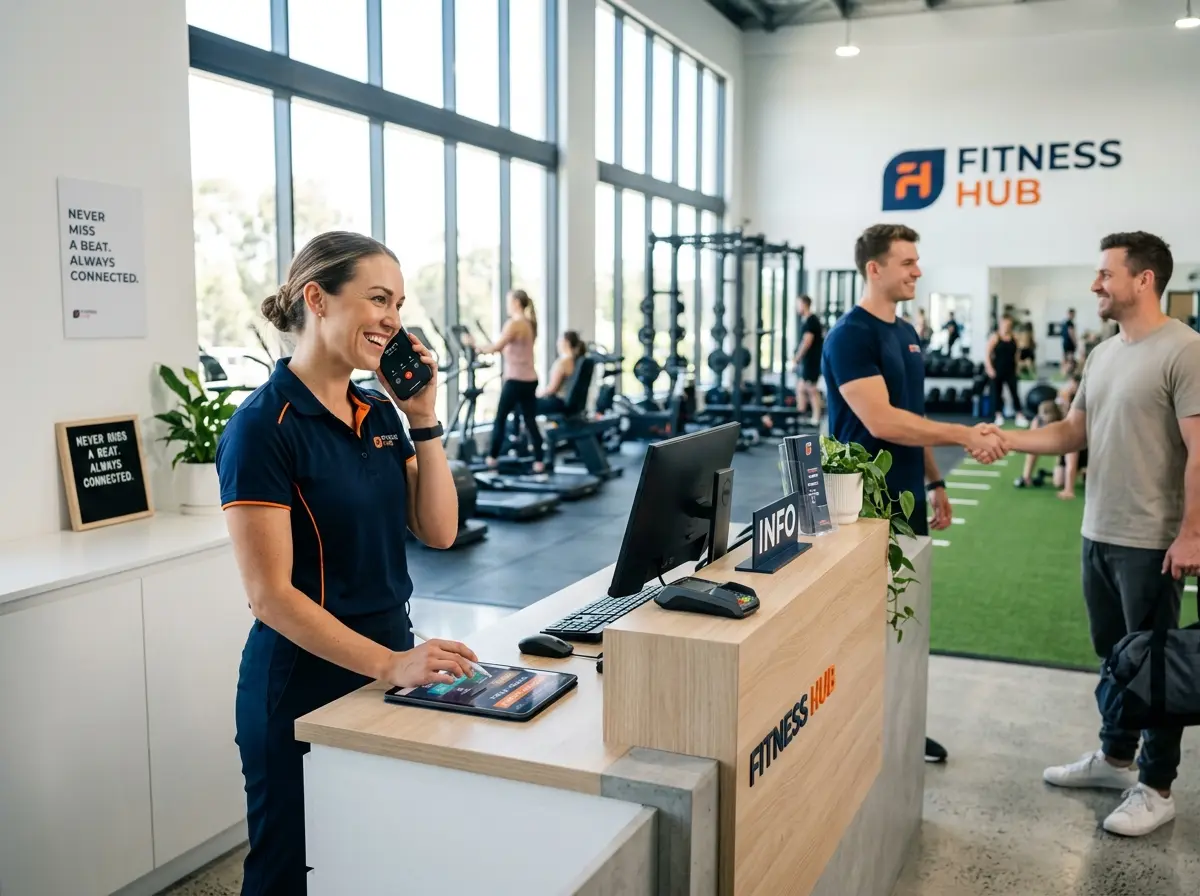
Let's paint a familiar picture: It's a Tuesday afternoon. Your phone is ringing off the hook, a customer just walked in and nobody greeted them, your best employee is simultaneously trying to answer a question about your return policy and ring up a sale, and somewhere in the back, a voicemail is quietly aging like fine wine that nobody will ever drink. Sound familiar? Welcome to small business ownership.
The promise of AI receptionists has been floating around for a few years now, and if you've been skeptical — honestly, fair enough. Early versions were about as charming as a broken vending machine. But the technology has come a long way, and today's AI receptionists can genuinely handle meaningful parts of your customer communication without making your customers feel like they've called a government hotline from 2003.
That said, AI receptionists aren't magic wands, and setting realistic expectations is the difference between a tool that transforms your business and one that collects digital dust. This guide breaks down exactly what AI receptionists can and can't do — so you can make a smart, informed decision rather than an expensive, disappointed one.
What AI Receptionists Actually Do Well
They Show Up. Every Single Time.
Here's something your human staff — bless their hearts — cannot do: work 24 hours a day, 7 days a week, 365 days a year without ever calling in sick, showing up late, or quitting to "find themselves" two weeks before the holidays. AI receptionists are relentlessly, almost aggressively reliable. Every call gets answered. Every customer who walks through the door gets greeted. No exceptions, no excuses, no drama.
For small businesses, this reliability isn't just a convenience — it's a competitive advantage. Studies have shown that nearly 80% of callers who reach voicemail won't leave a message, and a significant portion will simply call your competitor instead. An AI receptionist plugs that leak. It's the difference between capturing a lead and losing one to the business down the street that happened to pick up the phone.
They Handle Repetitive Questions Without Losing Their Minds
How many times a day does your staff answer "What are your hours?" or "Do you offer [insert service you very clearly list on your website]?" If you're being honest, probably more times than anyone would like to admit. AI receptionists thrive on exactly this kind of repetitive, high-frequency interaction — because, unlike humans, they never sigh audibly when asked the same question for the fourteenth time that morning.
They can accurately communicate your hours, pricing, policies, services, current promotions, and FAQs with complete consistency. No mixed messages. No "I think we close at six, but let me check." Just clean, accurate, on-brand information delivered every time — which, incidentally, also protects you from the kind of miscommunication that ends up in a Google review.
They Can Upsell and Cross-Sell Without Being Pushy
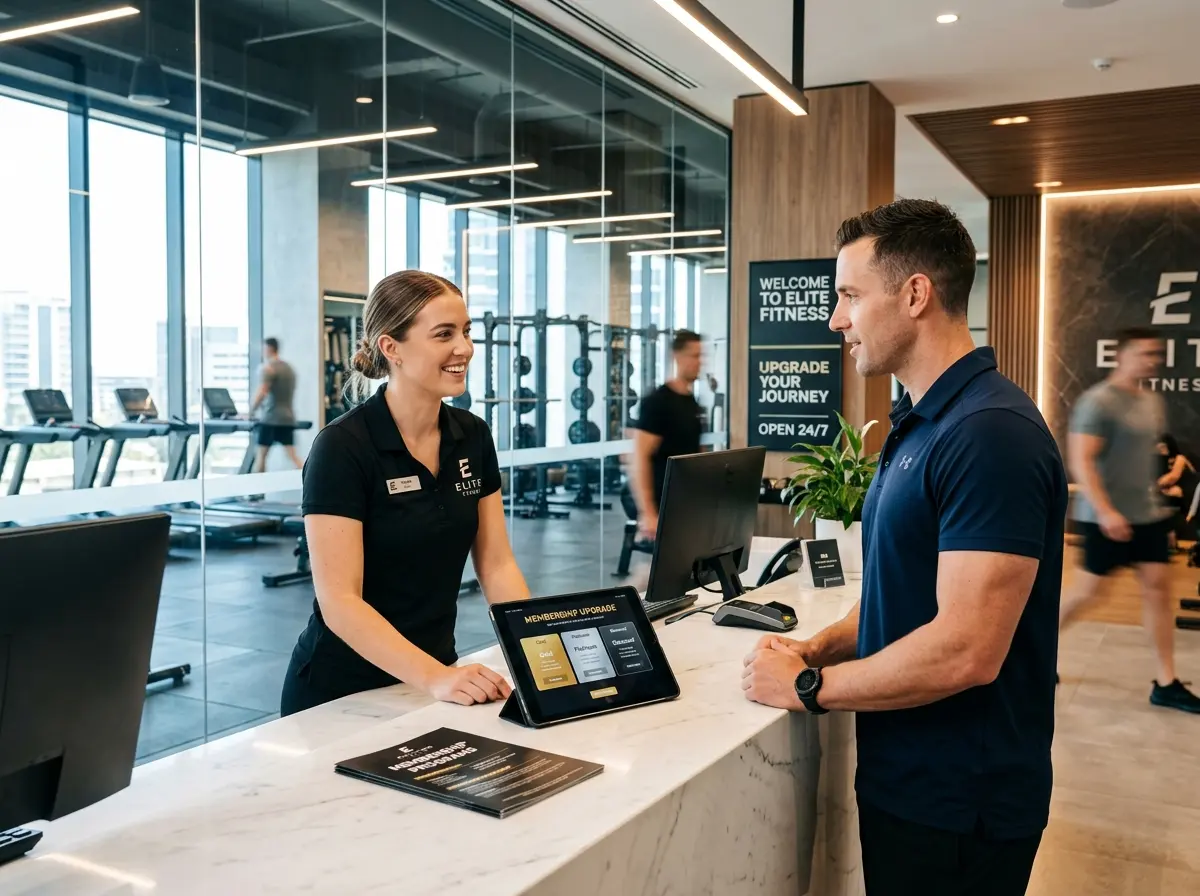
A well-configured AI receptionist doesn't just answer questions — it can proactively highlight promotions, recommend related products or services, and guide customers toward higher-value options in a natural, conversational way. Think of it as a tireless sales associate who always remembers to mention the combo deal and never forgets to ask if the customer wants fries with that — metaphorically speaking. This kind of consistent promotional reinforcement adds up quickly over hundreds of interactions a week.
Where AI Fits Into Your Business Right Now
Stella as Your Front Line — In Person and On the Phone
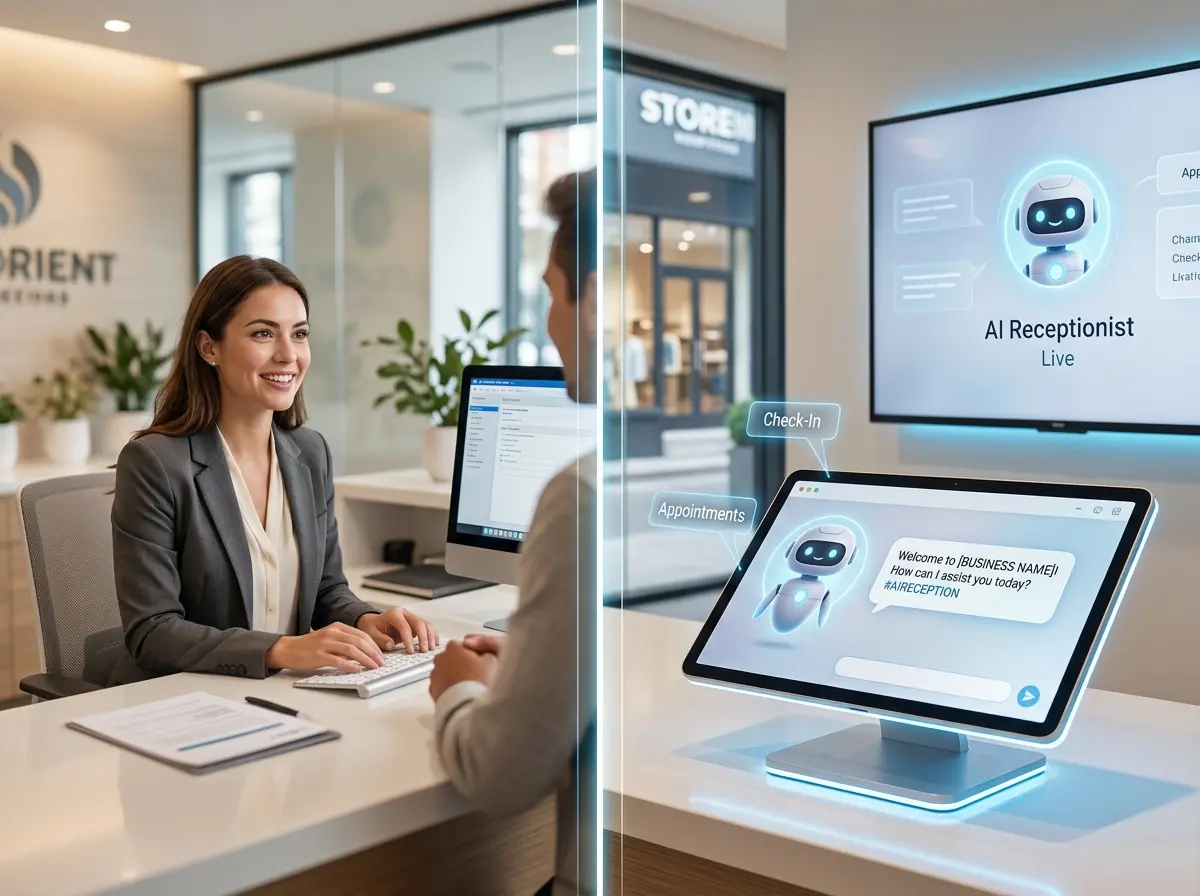
If you're looking for a practical, affordable way to deploy this technology without a complicated implementation, Stella is worth a serious look. She functions as both a physical in-store kiosk — greeting customers, answering questions, and promoting your current deals — and as a full-service AI phone receptionist, handling calls around the clock with the same business knowledge she uses face-to-face.
What makes Stella particularly practical for small business owners is that she combines customer-facing interaction with back-end intelligence. Her built-in CRM lets you manage customer contacts with custom fields, tags, notes, and AI-generated profiles, while her conversational intake forms collect customer information naturally — during a phone call, at the kiosk, or on the web. At $99/month with no upfront hardware costs, she's designed to be accessible to businesses that aren't operating with enterprise-level budgets.
What AI Receptionists Cannot Do (And Shouldn't Try To)
They Can't Replace Human Judgment in Complex Situations
Let's be honest about the ceiling here. When a situation requires nuanced human judgment — a genuinely upset customer who needs empathy and a creative solution, a complex complaint that involves multiple departments, or a sensitive conversation where tone and emotional intelligence are everything — an AI receptionist is not your closer. It's your first responder.
The smart play is designing your AI receptionist as the first layer of your customer communication, not the only layer. It handles the volume, qualifies the situation, and routes appropriately. Your human staff steps in when the situation calls for it. This is not a limitation to be embarrassed about — it's just good workflow design. Even the best human receptionist transfers calls to the right person sometimes.
They Need Good Information to Give Good Answers
An AI receptionist is only as good as what you put into it. If your business information is vague, outdated, or incomplete, your AI receptionist will reflect that — confidently and repeatedly. The businesses that get the most out of AI receptionists are the ones that take the time upfront to train the system properly: current pricing, accurate service descriptions, clear policies, and updated promotions.
Think of it like onboarding a new employee. You wouldn't hire someone, hand them a phone, and walk away hoping for the best. You'd give them the information they need to represent your business well. The same principle applies here. The setup investment is modest, but it matters.
They're Not a Substitute for a Customer Experience Strategy
This one bears saying plainly: an AI receptionist is a tool, not a strategy. Businesses that deploy AI and then stop thinking about customer experience tend to see underwhelming results — not because the technology failed, but because they expected it to do strategic work that belongs to the owner. AI can execute your customer experience vision consistently and at scale. But you still need to have a vision worth executing.
The good news is that AI receptionists can actually help you develop that strategy over time. The interaction data they collect — what customers are asking about, which promotions are generating interest, where conversations are dropping off — is genuinely useful intelligence that most small businesses simply don't have access to right now. Use it.
Quick Reminder About Stella
Stella is an AI robot employee and phone receptionist built specifically for small and mid-sized businesses — available as a human-sized in-store kiosk, a 24/7 phone receptionist, or both. She works across industries from retail and restaurants to medical offices and law firms, starting at just $99/month with no hardware costs and a straightforward setup process. If everything in this article sounds relevant to your business, she's worth a conversation.
What to Do Next (Besides Close This Tab and Forget About It)
If you've made it this far, you're at least seriously considering what an AI receptionist could do for your business — which means you're already ahead of the competitors who are still answering every call personally while trying to help the customer standing right in front of them. Here's how to move forward productively:
- Audit your current communication gaps. How many calls go unanswered after hours? How many customers walk in and wait too long to be acknowledged? Quantify the problem before you invest in the solution.
- List your top 20 most common customer questions. This becomes the foundation for your AI receptionist's training and will immediately show you how much value it can deliver on day one.
- Define your handoff rules. Decide in advance which situations should be escalated to a human and which the AI should handle end-to-end. This prevents both over-reliance and under-utilization.
- Set a 90-day review point. Commit to evaluating performance — call volume handled, customer feedback, staff time freed up, promotions engaged — after three months. Adjust from there.
AI receptionists aren't going to run your business for you, and they're not going to replace the humans who make your business worth visiting. What they will do — when deployed thoughtfully — is make your business more responsive, more consistent, and more capable of handling growth without proportionally growing your payroll. That's not magic. That's just a smart use of available technology.
And frankly, your customers already expect it. The question is whether you're going to deliver it first, or let your competition do it for you.