Why Your Practice Might Be Missing the Most Loyal Patients You've Never Met
Here's a fun riddle: What group of patients will visit you more consistently than almost any other demographic, refer their entire family to your practice, and stick with you for decades if you treat them right? If you guessed "pediatric patients," congratulations — you've just identified the golden goose that many optometrists are accidentally ignoring.
Building a strong pediatric patient program isn't just good for kids' eyesight — it's one of the smartest long-term business moves an optometry practice can make. Children who start their eye care journey with you often become lifelong patients. Their parents become patients. Their siblings become patients. Suddenly, that one six-year-old who came in because the school nurse flagged a squinting problem is responsible for five active patient relationships in your practice. Not bad for someone who still thinks SpongeBob is high culture.
And yet, many optometrists treat pediatric care as an afterthought — a niche they tolerate rather than a program they intentionally cultivate. If that sounds familiar, this post is for you. Let's talk about how to build a pediatric patient program that's structured, welcoming, and genuinely good for business.
Creating an Environment and Experience That Works for Kids (and Their Parents)
Here's the uncomfortable truth: a child who has a bad experience at the eye doctor will tell their parent, their parent will remember it forever, and your practice will see that family approximately never again. Kids are brutally honest critics with enormous influence over household decisions. The good news? They're also easily won over with the right environment and approach.
Designing a Kid-Friendly Office Space
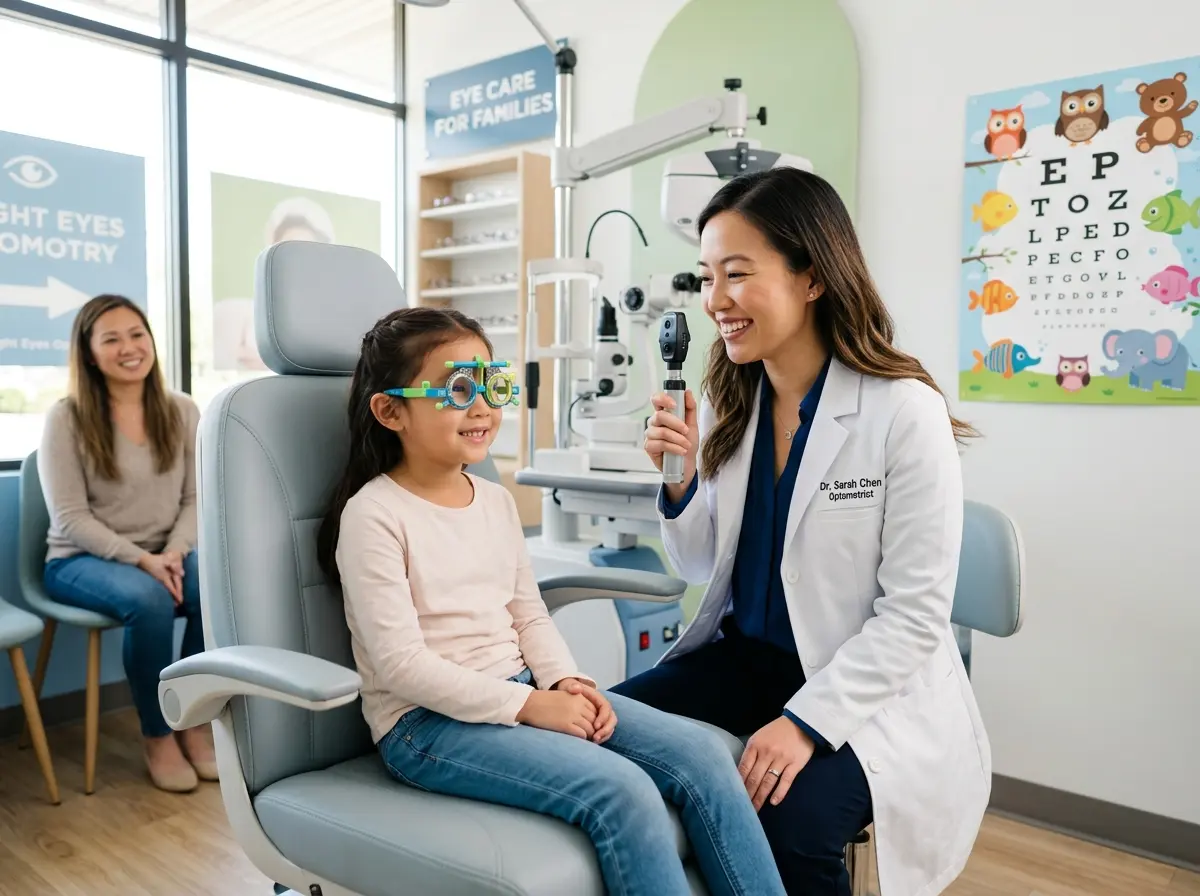
You don't need to turn your waiting room into a Chuck E. Cheese to make kids feel welcome — but you do need to put in some intentional effort. A dedicated corner with age-appropriate books, a small table with activities, and a couple of framed posters kids can actually relate to goes a long way. The goal is to reduce anxiety before the appointment even begins. Studies show that children's medical anxiety is significantly lower when the environment feels less clinical and more approachable.
Consider color choices, too. Soft, warm tones rather than sterile whites can make the space feel more inviting. Small touches — like a frame-try station at kid height, or stickers given out after exams — signal to children and parents alike that your practice actually thought about them. These investments are minimal in cost but enormous in the impression they leave.
Training Your Staff in Pediatric Communication
The most technically skilled optometrist in the world can still lose a pediatric patient if their front desk staff treats a nervous seven-year-old like a tiny, inconvenient adult. Pediatric communication is a skill, and it's worth investing in. Staff should know how to get down to a child's eye level (literally), use simple and non-threatening language, and loop parents into the conversation appropriately without excluding the child.
Brief team training sessions, even informal ones, can make a meaningful difference. Role-play some scenarios. Discuss how to handle a scared or uncooperative child. Review how to explain vision issues to parents clearly and without jargon. The practices that excel at pediatric care do so because their entire team — not just the doctor — is aligned on the experience they want to deliver.
Streamlining the Intake and Check-In Process
Nobody — and we mean nobody — wants to fill out four pages of paperwork while managing a bored five-year-old. Streamlining your intake process for pediatric patients is not just a convenience; it's a statement about how your practice respects families' time. Digital intake forms sent in advance, simple insurance verification workflows, and a fast check-in process can dramatically reduce the friction that causes families to dread appointments before they even arrive.
Leveraging Technology to Improve the Pediatric Experience
How Smart Tools Can Support Your Front Desk and Patient Communication
Running a pediatric-friendly practice means handling a lot of calls — appointment reminders, parent questions about insurance, inquiries about frame styles for kids, panicked "my child broke their glasses" emergencies. It's a lot to manage, especially during busy clinic hours when your staff is already juggling check-ins and phone calls simultaneously.
This is where Stella, the AI robot employee and phone receptionist, can genuinely help. Stella answers calls 24/7, so when a parent realizes at 9pm that their child's back-to-school eye exam still isn't scheduled, they can call your practice and actually get helpful information — not a voicemail. For practices with a physical location, Stella also operates as an in-store kiosk, greeting patients as they arrive and answering common questions so your front desk staff can focus on the humans right in front of them. Her built-in CRM and conversational intake forms also make it easy to collect and organize patient information — including pediatric-specific details — without adding more paperwork to your team's plate.
Building Loyalty and Growing Your Pediatric Patient Base Over Time
Getting a pediatric patient through the door once is a win. Keeping them — and their family — coming back every year for the next fifteen years? That's a program. The practices that truly excel at pediatric care think beyond the single appointment and invest in long-term relationship-building strategies that compound over time.
Recall Programs and Annual Reminder Campaigns
Children's vision changes rapidly, and annual exams are genuinely important — not just a revenue line item. Building a robust recall program ensures that your pediatric patients don't fall through the cracks between visits. This means proactive outreach: emails, texts, or postcards reminding parents that their child's annual exam is due, ideally timed around natural checkpoints like the start of the school year or the end of summer.
The data here is compelling: practices with structured recall programs report significantly higher patient retention rates than those relying on patients to self-schedule. Children are especially prone to gaps in care when the responsibility falls entirely on busy parents. Make it easy, make it friendly, and make it consistent. Bonus points if your recall messaging is personalized — a message that references the child by name and their last visit feels worlds apart from a generic "it's time for your checkup" blast.
Community Outreach and School Partnerships
One of the most effective ways to grow a pediatric patient base is to go where the kids are — and that means schools, daycares, and community organizations. Offering free vision screenings at local schools, sponsoring reading programs, or presenting short "eye health" talks at parent-teacher events positions your practice as a community resource, not just a clinic.
These outreach efforts don't need to be elaborate or expensive. Even a simple table at a back-to-school fair with free screenings and branded take-home materials can introduce dozens of new families to your practice in a single afternoon. Many optometrists who have built thriving pediatric programs cite school partnerships as the single most impactful growth lever they used in their early years. The parents you meet at a school fair aren't just potential pediatric patients — they're adults who probably need exams themselves. One screening event can generate a surprising amount of new patient pipeline.
Making the Eyeglass Selection Fun (and Profitable)
Kids who get to choose their own frames are kids who are actually excited to wear their glasses. That excitement translates directly into compliance — and parents who see their child wearing their glasses consistently are parents who feel great about coming back to your practice. Curate a dedicated pediatric frames section with durable, colorful, and on-trend options. Let kids try on as many as they want. Make it feel like a fun decision, not a medical transaction.
This is also a significant revenue opportunity. Pediatric lens add-ons — blue light filtering, impact-resistant lenses, anti-scratch coatings — are genuinely valuable for active children, and parents are often very receptive to these recommendations when they're framed (pun intended) around protecting their child's vision and investment.
Quick Reminder About Stella
Stella is an AI robot employee and phone receptionist that works 24/7 — greeting patients at your front door, answering incoming calls, collecting patient information, and never once calling in sick. She runs on a simple $99/month subscription with no upfront hardware costs, and she's designed to fit seamlessly into practices just like yours. If your front desk team is stretched thin during busy school-season rushes, Stella is the kind of reliable backup that doesn't require onboarding or benefits.
Start Building the Pediatric Program Your Practice Deserves
Building a strong pediatric patient program isn't a one-time project — it's an ongoing commitment to a segment of your patient population that will reward you generously over time. The practices that thrive in this space share a few key traits: they create welcoming environments, invest in their team's communication skills, build smart systems for outreach and retention, and stay actively engaged in their local community.
If you're just getting started, don't try to overhaul everything at once. Pick one area — maybe it's redesigning your waiting area corner, or launching a back-to-school screening event at a nearby school — and build from there. Small, intentional improvements compound quickly, and the families you win over early tend to stay loyal for years.
The children sitting in your waiting room today are the adults who will send their children to your practice twenty years from now — if you give them a reason to. That's not just good optometry. That's a genuinely smart business strategy. Now go make your waiting room a little less beige and a little more welcoming. Those future lifelong patients are counting on you.