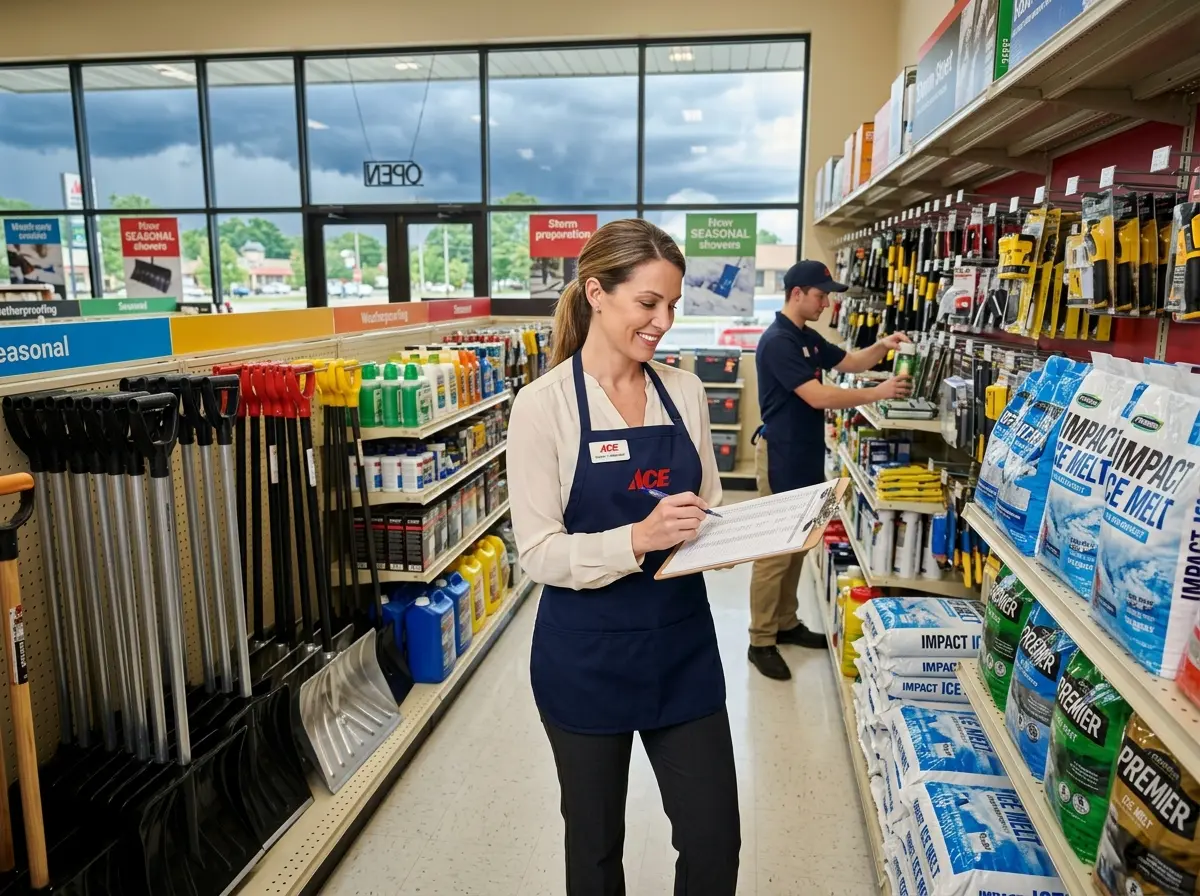
Introduction: Seasons Change. Is Your Hardware Store Ready?
Every hardware store owner knows the feeling. One week, it's quiet enough to hear the fluorescent lights hum. The next, customers are flooding the aisles demanding snow blowers, rock salt, or whatever seasonal item they've suddenly decided they absolutely cannot live without — as if winter weren't coming the same time it does every single year. Seasonal demand swings are one of the most predictable unpredictabilities in retail, and yet somehow, they still manage to catch businesses off guard.
The good news? With the right preparation strategy, you can stop reacting to the seasons and start capitalizing on them. Whether you're bracing for the spring gardening rush, the summer DIY boom, the back-to-school project frenzy, or the winter storm panic-buying sprint, a well-prepped hardware store doesn't just survive seasonal surges — it thrives during them. This guide walks you through the practical steps to get your inventory, staffing, and customer experience dialed in before the next wave hits your door.
Know Before It Snows: Forecasting and Inventory Planning
The foundation of seasonal preparedness is knowing what's coming — and no, we don't just mean checking the weather app. Effective seasonal planning starts months in advance and relies on a combination of historical data, supplier relationships, and a healthy dose of common sense.
Let Your Sales History Do the Talking
Your point-of-sale system is quietly sitting on a goldmine of information. Pull your sales data from the past two to three years and look for patterns. When did ice melt fly off the shelves? When did garden hose sales spike? What week in March did everyone suddenly remember they needed mulch? This historical data is your single best forecasting tool, and if you're not using it, you're essentially navigating a seasonal storm blindfolded.
According to the National Retail Federation, retailers who use historical sales data in their forecasting reduce excess inventory costs by up to 20%. For hardware stores with tight margins and heavy physical product loads, that's not a trivial number. Build a simple spreadsheet, map your seasonal peaks, and use it to inform your purchase orders well ahead of time.
Lock In Your Suppliers Early
Here's a truth that seasoned hardware owners know all too well: when a big storm is on the forecast, every hardware store in a 50-mile radius is calling their generator supplier at the same time. Don't be the one at the back of that line. Establish strong supplier relationships and place your seasonal orders early — ideally 8 to 12 weeks out for high-demand items like snow removal equipment, outdoor power tools, and seasonal chemicals.
Many distributors offer pre-season booking discounts, which means early ordering doesn't just protect your inventory — it can actually improve your margins. Build those conversations into your calendar and treat seasonal ordering as a recurring business process, not a reactive scramble.
Don't Overcommit — Balance Stock with Storage Reality
Stocking up is smart. Stocking up so aggressively that you're tripping over pallets of unsold leaf blowers in February is less smart. Seasonal inventory planning requires balance. Focus your deep buys on consumables and high-velocity items (think fasteners, caulk, tarps, and batteries) where the risk of overstock is lower. For big-ticket items, consider tighter initial orders with reorder triggers based on sell-through rates. The goal is to be well-stocked, not warehouse-sized.
Your Secret Weapon for a Busy Season: Technology That Works While You're Busy Working
Here's a scenario that plays out in hardware stores every season: it's a Saturday morning after the first frost, the phone is ringing off the hook, every register has a line, and a customer near the back is wandering around looking hopelessly for pipe insulation. Your staff are doing their best, but there are only so many of them. This is where smart technology can genuinely change the game.
Let an AI Employee Handle the Overflow
Stella is an AI robot employee and phone receptionist designed for exactly these kinds of moments. As a human-sized kiosk inside your store, she proactively greets customers, answers questions about products, services, and promotions, and handles the routine inquiries that would otherwise pull your staff away from higher-value tasks. When the seasonal rush hits and customers are asking about stock availability, product comparisons, or where to find the weatherstripping, Stella is there — no wait required.
On the phone side, Stella answers calls 24/7, which matters enormously during seasonal peaks when customers are calling before you open and after you close. She can handle FAQs, promote current seasonal deals, collect customer information through conversational intake forms, and forward calls to staff based on conditions you configure. At $99/month with no upfront hardware costs, it's one of the most cost-effective ways to scale your customer-facing capacity during your busiest weeks.
Staffing and Store Readiness: The Operational Side of Seasonal Prep
Inventory is only half the battle. If your store isn't operationally ready to handle a surge, the best-stocked shelves in the county won't save you from a chaotic customer experience.
Staff Up — Before You Need To
Hiring is slow. Training takes time. And nothing is worse than bringing on seasonal help the same week your busiest season kicks off. Start recruiting seasonal staff four to six weeks before your anticipated peak, and use a condensed but thorough training program focused on your most-asked questions and most-moved products for that season. Cross-train existing staff on adjacent departments so they can flex where needed.
It also pays to revisit your scheduling strategy during peak periods. Stagger shifts to ensure coverage during the busiest hours (typically mid-morning to early afternoon on weekends during peak seasons), and build in buffer coverage for the inevitable sick days. A scheduling tool or even a well-maintained shared calendar can make this far less painful than it sounds.
Merchandise Strategically for the Season
Your store layout should change with the seasons — and not subtly. High-demand seasonal items belong at the front of the store, at eye level, and in high-traffic zones. Create dedicated seasonal endcaps and use clear signage that speaks to the customer's immediate problem. A customer who just had a pipe freeze doesn't want to hunt for pipe wrap — they want to walk in and see it immediately.
Cross-merchandising is your silent upsell strategy. Place related items together: snow blowers near snow blower oil and fuel stabilizer, caulk near weatherstripping and door sweeps, generators near extension cords and transfer switches. This isn't just good merchandising — it's genuinely helpful to a customer in a hurry, and it drives meaningful increases in average transaction value without requiring any additional staff effort.
Prepare Your Digital Presence Too
Your physical store prep matters, but so does your online presence. Update your Google Business Profile with seasonal hours, current promotions, and accurate stock information where possible. Post on your social channels about seasonal inventory arrivals before peak demand hits — customers who know you have what they need before a storm are far more likely to choose you over the big-box alternative down the road. A brief email to your customer list announcing seasonal arrivals can also drive early traffic that smooths out the inevitable last-minute rush.
Quick Reminder About Stella
Stella is an AI robot employee and phone receptionist that works inside your store as a human-sized kiosk and answers phone calls around the clock — with no breaks, no turnover, and no bad days. She's built to handle the routine customer interactions that consume your team's time during busy seasons, so your staff can focus on the work that actually requires a human touch. At $99/month with no upfront hardware costs, she's ready to work the moment the rush begins.
Conclusion: Stop Reacting, Start Preparing
Seasonal demand isn't a surprise — it's a schedule. The hardware store owners who consistently win during peak seasons aren't the ones with the biggest budgets; they're the ones who treat preparation as a year-round discipline rather than a last-minute sprint. Your action plan starts now.
Here are your immediate next steps:
- Pull your last two years of sales data and identify your top 20 seasonal SKUs by velocity and margin.
- Contact your key suppliers this week and ask about pre-season booking windows and discount terms.
- Audit your current staffing plan against your anticipated peak weeks and start recruiting now if gaps exist.
- Plan your seasonal floor layout and endcap strategy before inventory arrives, not after.
- Update your digital presence — Google Business Profile, social media, and email list — with seasonal messaging.
- Evaluate tools like Stella that can extend your customer service capacity without extending your payroll.
The next seasonal rush is already on its way. The only question is whether it's going to overwhelm your store or fill your register. With a little preparation and the right tools in place, it can absolutely be the latter.