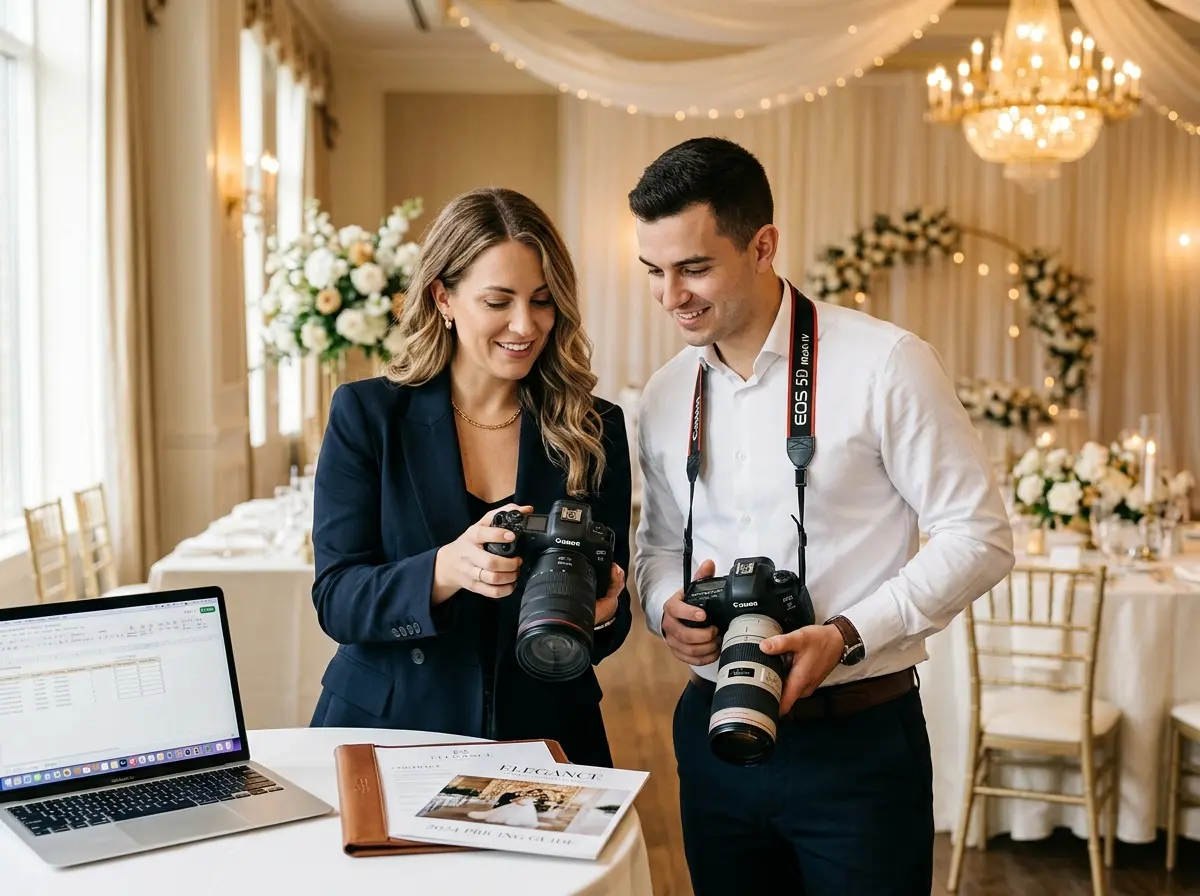
Introduction: Because "Figure It Out as You Go" Is Not a Business Strategy
You started your wedding photography business because you love capturing love stories — not because you dreamed of becoming a scheduling coordinator, contract lawyer, and accountant all at once. And yet, here you are. Somewhere between your third double-booking panic attack and your second shooter texting you the night before a wedding that they "have a thing," you realized that winging it isn't exactly a scalable business model.
A second shooter program can be one of the smartest moves a wedding photographer makes — or one of the most expensive mistakes if it's structured poorly. Done right, it expands your capacity, elevates your deliverables, and even creates a pipeline of trained talent loyal to your brand. Done wrong, it's just paying someone to show up unprepared while you silently spiral during the ceremony.
This guide is for photographers who are ready to stop treating second shooters like an afterthought and start building a program that actually makes money — and sense. We'll cover pricing, contracts, training, and the operational infrastructure that separates the photographers who thrive from the ones who are constantly exhausted and slightly resentful.
Building the Financial Foundation of Your Second Shooter Program
Know Your Numbers Before You Pay Anyone a Dime
Before you set a second shooter rate, you need to understand your own margins. Shockingly, many photographers set their second shooter pay based on what "feels fair" or what they were paid when they were second shooting — neither of which is a real pricing strategy. Start by calculating your true cost per wedding: your time in hours (shooting, editing, communication, delivery), your gear depreciation, insurance, software subscriptions, travel, and overhead. Once you know what a wedding actually costs you to deliver, you can determine how much room you have to bring in a second shooter profitably.
Industry benchmarks suggest that second shooters are typically paid between $150 and $500 per wedding, depending on experience, location, market, and hours required. If your wedding package is $2,500, paying $400 for a second shooter (16% of revenue) is very different from doing the same on a $1,200 package. The math matters. Build your packages with second shooter costs already baked in, not bolted on as an afterthought that eats your profit margin alive.
Structuring Packages That Justify the Investment
Here's a simple but powerful reframe: don't think of a second shooter as a cost — think of it as a premium deliverable. Clients pay more for comprehensive coverage. Two-angle ceremonies, candid guest moments during formals, and simultaneous getting-ready coverage are tangible value adds that you can — and should — market as part of a higher-tier package.
Consider creating at least two package tiers: one with a single photographer for intimate or budget-conscious weddings, and one that includes a second shooter as a featured benefit. Position the second shooter package at a price point that covers your second shooter fee, adds to your profit, and feels like an obvious upgrade to the client. When priced and presented correctly, most couples with 100+ guests will happily choose the elevated option. You're not upselling — you're helping them make a smarter decision.
The Compensation Models Worth Considering
Flat-rate pay per wedding is the most common and simplest model, and for most photographers, it works just fine. However, as your program scales, you might explore a tiered rate based on experience or seniority within your roster — newer second shooters earn less, experienced ones earn more, and this incentivizes loyalty and growth within your team. Some photographers also offer non-monetary perks like portfolio rights (with limitations), equipment access, or mentorship, which can attract talented newer photographers willing to work for slightly lower rates in exchange for experience and exposure.
Whatever model you choose, put it in writing. Every time. No exceptions.
Streamlining Operations So You Don't Lose Your Mind
Systems That Keep Your Program Running Smoothly
Managing a roster of second shooters — tracking availability, sending contracts, collecting deliverables, and communicating expectations — can become a part-time job in itself if you're not careful. The photographers who run thriving multi-shooter programs are not more talented than you; they're more systematized. Invest in a CRM or project management tool to track bookings, assign shooters, and manage deadlines. Automate what you can: contract delivery, onboarding checklists, post-wedding file submission reminders.
On the client-facing side, Stella — the AI robot employee and phone receptionist — can be a surprisingly useful tool for wedding photographers managing a high volume of inquiries. Stella handles incoming calls 24/7, answers questions about packages and availability, collects intake information from prospective clients through conversational forms, and manages contacts through her built-in CRM. That means when a lead calls at 10pm on a Saturday (they always do), Stella captures their details and flags it for you — without you having to stop mid-edit to answer. Her built-in CRM with AI-generated client profiles also helps keep your contact records clean and organized, which matters when you're juggling multiple bookings and shooter assignments.
Contracts, Expectations, and the Art of Not Getting Burned
The Contract Clauses You Cannot Skip
If your second shooter agreement is a handshake and a text message, please stop reading this and go fix that first. A proper second shooter contract should address several non-negotiable areas. Ownership of images is paramount — your contract must clearly state that all images captured by the second shooter are owned by you, the primary photographer, and that the second shooter has no right to deliver, sell, or publish any images without your written permission. This protects you, your clients, and your brand.
Your contract should also cover payment terms (amount, timing, and method), cancellation policies on both sides, equipment requirements, file delivery format and deadlines, confidentiality regarding client information, and your right to use the images for your portfolio and marketing. It sounds like a lot, but a solid template reviewed once by a photography-savvy attorney will serve you for years. Think of it as a one-time investment in not having a very bad, very avoidable situation.
Setting Expectations That Actually Stick
Even the best contract can't compensate for poor onboarding. Before a second shooter ever steps foot at one of your weddings, they should receive a detailed briefing document: the timeline, venue details, your shooting style, specific must-have shots, how you prefer to communicate on the day, and what "professional" looks like in your world (hint: it includes charging all batteries the night before). Create a standard onboarding packet you send to every second shooter — new or returning. Consistency here isn't micromanagement; it's quality control.
After the wedding, build in a debrief process. A quick check-in — even a short email — asking what went well and what could improve does two things: it makes your second shooters feel valued, and it gives you information you can actually use. The photographers who retain a loyal roster of reliable second shooters are the ones who treat that relationship like a professional partnership, not a gig-economy transaction.
Building a Roster You Can Actually Rely On
Having three second shooters you trust is worth infinitely more than having fifteen you've never properly vetted. Be selective. Review portfolios, do test shoots or paid mentorship sessions before booking them for a client wedding, and pay attention to soft skills — communication, punctuality, and how they interact with strangers. A technically skilled shooter who makes guests uncomfortable or goes rogue on the timeline is a liability, not an asset.
Invest in your top performers. Refer them to other photographers, give them portfolio rights for select images, and pay them fairly. Loyalty runs both ways, and in a market where reliable second shooters are genuinely hard to find, the ones who feel valued by you will answer your panicked Saturday-morning text every single time.
Quick Reminder About Stella
Stella is an AI robot employee and phone receptionist built for businesses of all sizes, including solo wedding photographers who are tired of missing leads. At just $99/month with no upfront hardware costs, she answers calls around the clock, promotes your packages, collects client information, and keeps your CRM organized — so you can focus on shooting, editing, and building the business you actually want.
Conclusion: Build the Program Once, Profit From It Repeatedly
A well-structured second shooter program isn't just a logistical convenience — it's a genuine revenue and quality multiplier for your photography business. The photographers who build these programs thoughtfully are able to take on more weddings, deliver better products, charge higher prices, and scale without burning out. That's not a coincidence; it's the result of treating their business like a business.
Here's your action plan. First, audit your current pricing to make sure your packages can absorb a second shooter fee at a profitable margin. Second, create or update your second shooter contract with the key clauses outlined above — don't skip this. Third, build an onboarding packet so every shooter arrives prepared and on the same page. Fourth, identify two or three second shooters you want to cultivate long-term and invest in those relationships deliberately. And finally, tighten up your client communication systems so no inquiry falls through the cracks while you're busy actually shooting weddings.
The goal isn't perfection out of the gate. The goal is a program that's more structured next month than it is today, and more profitable next year than it is now. You've already done the hard part — building a business worth systematizing. Now go build the systems to match it.