Introduction: The Patient Who Just... Disappeared
You know the type. They came in for six weeks of care, their back felt better, and then — poof — they vanished into the ether. No goodbye, no follow-up, no forwarding address. Somewhere between their last adjustment and their newfound confidence in walking upright, they decided they were "good." And maybe they are. But maybe they're also three months away from throwing their back out again trying to assemble IKEA furniture, with no idea that a simple reactivation call could have kept them out of that situation.
Here's the hard truth: most chiropractic practices handle patient discharge the way most people handle their gym memberships — with a vague sense of good intentions and absolutely no formal plan. Patients drift away, records go stale, and a perfectly warm lead turns ice cold. A formal discharge and reactivation protocol isn't just a nice administrative touch. It's a patient care strategy, a revenue strategy, and frankly, a "I'd like my practice to still exist in five years" strategy all rolled into one.
Let's talk about why you need one, how to build it, and how to make sure it doesn't just live in a binder on a shelf that no one touches.
The Case for Formal Protocols (Yes, Your Practice Needs the Paperwork)
What a Discharge Protocol Actually Is — and Isn't
A discharge protocol is not just telling a patient "you're good to go, call us if you need us." That's a conversation, not a protocol. A real discharge protocol is a documented, repeatable process that defines what happens at the end of a care plan — for every patient, every time, regardless of which staff member is on duty that day.
This typically includes a formal end-of-care summary review, clear documentation of the patient's progress and response to treatment, home care instructions, recommended maintenance or wellness visit frequency, and a scheduled follow-up touchpoint. The goal is twofold: protect the patient with continuity-of-care documentation, and protect your practice with a clear record that the transition was handled professionally.
From a liability standpoint alone, this is non-negotiable. But beyond the legal and clinical rationale, a strong discharge protocol signals to patients that their care didn't just end — it evolved. That perception matters enormously for long-term retention.
Why Reactivation Is Where the Real Money Lives
Industry data consistently shows that reactivating a former patient costs significantly less than acquiring a new one — some estimates put the ratio at five to one. Former patients already trust you, already know where you're located, and have already experienced results. They don't need to be convinced chiropractic works. They need to be reminded that you're still there and that their spine didn't earn a permanent vacation just because their acute pain resolved.
A reactivation protocol typically kicks in at a defined interval after discharge — commonly 30, 60, or 90 days of inactivity — and includes a structured sequence of outreach: a personalized phone call, a follow-up text or email, and potentially a re-engagement offer for a check-in visit. The practices that do this consistently report measurable increases in returning patient volume without spending a dime on new patient marketing.
Think of it this way: your existing patient database is a garden. A reactivation protocol is what keeps you from accidentally letting it turn into a parking lot.
Building the System: From "We Should Probably Do That" to Actually Doing It
Mapping the Discharge Touchpoints
Start by mapping every touchpoint a patient experiences at the end of a care plan. Most practices are surprised to find there are fewer than they assumed — and that several of them are inconsistent depending on who's at the front desk. Your discharge workflow should include a final clinical review with the provider, a formal check-out conversation with front-desk staff covering maintenance options, a printed or digital after-care summary, and an explicit next-appointment recommendation rather than a vague "come back if you need us."
Importantly, this is also where you collect or confirm updated contact information. A reactivation protocol is only as good as the contact data feeding it. If you're working off a phone number that's two years old, you're not running a reactivation program — you're leaving voicemails for strangers.
Designing the Reactivation Sequence
Your reactivation sequence should feel like a thoughtful check-in, not a sales pitch wearing a stethoscope. The first touchpoint — usually a phone call around the 30-day post-discharge mark — should be warm, brief, and genuinely curious about how the patient is doing. From there, a structured sequence of two to three additional contacts over 60 to 90 days, with a clear offer to schedule a maintenance or check-in visit, is typically sufficient to reactivate a meaningful portion of your lapsed patient base.
Document everything. Which patients were contacted, when, by whom, what was said, and what the outcome was. This data will help you refine your timing, your messaging, and your overall conversion rate over time. What gets measured gets improved — and what gets ignored eventually costs you a waiting room full of empty chairs.
How Technology Can Carry the Load Your Team Shouldn't Have To
Automating the Follow-Up Without Losing the Human Touch
Let's be realistic. Your front desk staff is managing check-ins, answering phones, handling insurance questions, and trying to eat lunch somewhere in between. Expecting them to manually track every discharged patient and execute a multi-step reactivation sequence on top of everything else is how good intentions go to die. Technology isn't a replacement for the personal connection that makes chiropractic practices great — it's the scaffolding that makes sure those personal connections actually happen consistently.
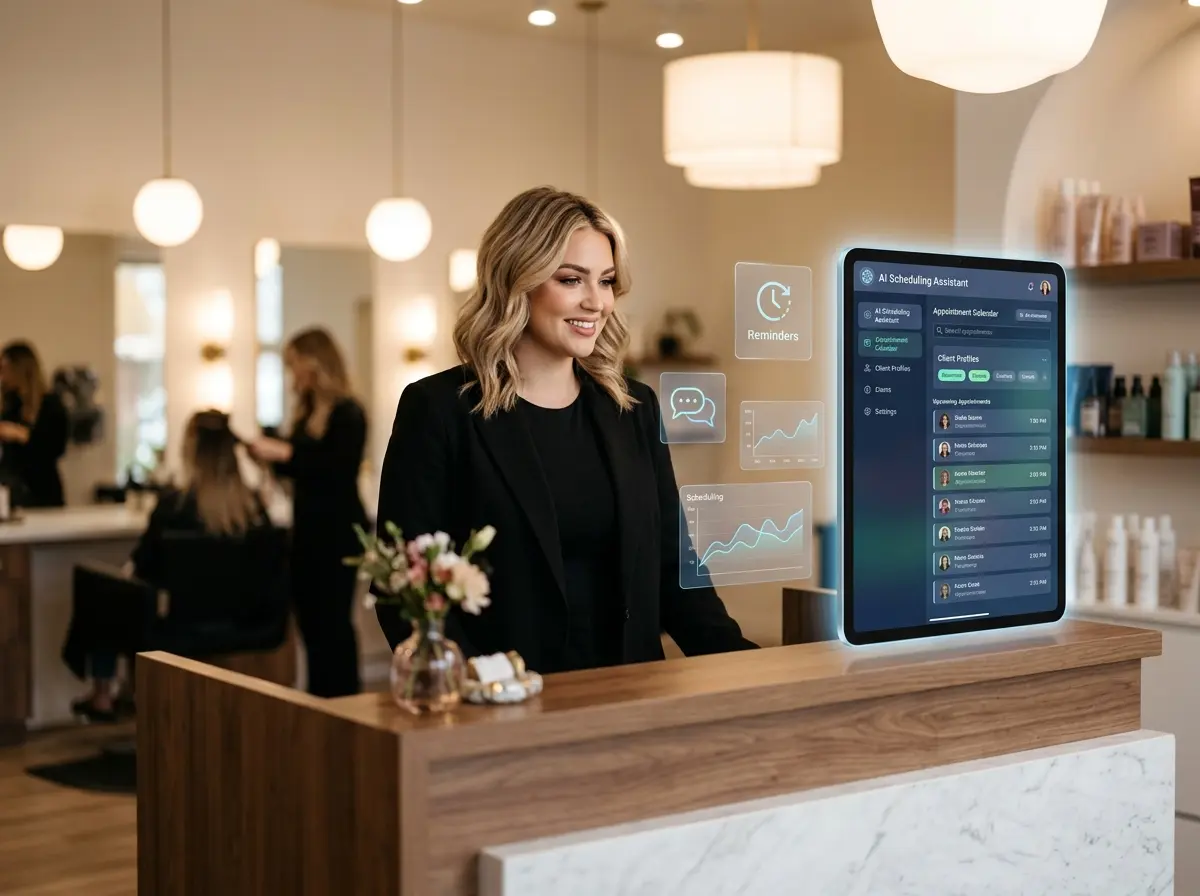
Your practice management software should be doing most of the heavy lifting: flagging inactive patients, triggering outreach reminders, and logging contact attempts automatically. If yours isn't doing that, it's worth asking why you're paying for it. Pair that with a CRM that captures patient notes, tags, and history in plain language, and suddenly your reactivation calls go from awkward cold calls to warm, informed conversations.
Stella and the Front Desk Problem
Stella, the AI robot employee and phone receptionist, is worth mentioning here because she directly addresses one of the most common failure points in reactivation programs: the phone call that never gets made because the front desk is slammed. Stella answers calls 24/7, can collect updated patient contact information through conversational intake flows, and logs everything into a built-in CRM with AI-generated profiles, custom fields, and tags — exactly the kind of clean data infrastructure that makes reactivation outreach possible at scale. She also greets patients at the kiosk when they walk in, which means your discharge conversations are more likely to include accurate information from the start. Less "we'll follow up with you" and more "we already have everything we need to do that."
Measuring Success: Because "We Think It's Working" Is Not a KPI
The Metrics That Actually Matter
Any protocol without measurement is just a hope wrapped in a policy document. For discharge and reactivation, the metrics worth tracking include your discharge-to-maintenance conversion rate (how many discharged patients book a maintenance plan), your reactivation rate (how many lapsed patients return within 90 days of outreach), your average patient lifetime value before and after implementing the protocol, and your reactivation contact-to-appointment ratio. These numbers will tell you whether your messaging is landing, whether your timing is right, and whether your team is actually executing the process.
Iterating Based on What You Learn
Expect to adjust. Your first version of this protocol won't be your best version, and that's fine. Practices that track their reactivation metrics quarterly tend to find that small tweaks — a different call script, a shifted timing window, a more compelling reason to return — can move the needle significantly. The goal isn't perfection out of the gate. The goal is a living system that gets smarter over time, rather than a static procedure that collects dust between staff meetings.
Also worth noting: pay attention to why patients don't come back. Exit surveys and casual discharge conversations can reveal patterns — cost concerns, scheduling friction, perceived completion of care — that point directly to solvable problems. Sometimes the best reactivation strategy is fixing the thing that caused patients to disengage in the first place.
A Quick Reminder About Stella
Stella is an AI robot employee and phone receptionist built for businesses exactly like yours. She answers calls around the clock, greets patients at your front desk kiosk, collects intake information, manages your CRM, and makes sure no patient interaction — incoming or outgoing — falls through the cracks. At $99 a month with no upfront hardware costs, she's probably the most reliable team member you've never had to schedule around a sick day.
Conclusion: Stop Losing Patients to Benign Neglect
The patients who slip out of your practice quietly aren't necessarily gone forever — they're just waiting to be remembered. A formal discharge and reactivation protocol is how you do that at scale, without putting the entire burden on an already-stretched front desk team. It protects your patients clinically, protects your practice legally, and — not for nothing — keeps your schedule from looking like a ghost town every time life gets busy and new patient referrals slow down.
Here's your actionable starting point: this week, audit your current discharge process. Write down every step that actually happens — not what's supposed to happen — and identify the gaps. Then draft a simple reactivation workflow for patients who have been inactive for 30 to 90 days. Start with a phone call. Track the results. Build from there.
Your past patients are a resource you've already invested in. A little structure and a little follow-through is all it takes to turn a lapsed patient back into a loyal one. That's not magic — it's just a protocol.