Is Your Front Desk Turning Away New Patients Without Even Knowing It?
Let's paint a familiar picture: a potential new patient — let's call her Sarah — throws her back out on a Tuesday afternoon. She's in pain, she's motivated, and she finally decides to call a chiropractor. She picks up her phone, dials your number, and gets... a hold message. Or worse, voicemail. Or even worse, a rushed receptionist who tells her the next available new patient appointment is three weeks out. Sarah hangs up and calls the next chiropractor on her Google search results.
You just lost a patient. And you didn't even know she called.
In the chiropractic world, speed to appointment is everything. Pain is a powerful motivator — but it's also temporary. The longer someone waits to get on your schedule, the more likely they are to try a competitor, discover they feel better on their own, or simply lose momentum. Research consistently shows that service businesses lose a significant portion of their leads simply by failing to respond or schedule quickly enough. For chiropractic practices, where new patients are the lifeblood of growth, this is not a small problem. It's a revenue leak hiding in plain sight.
The solution? A dedicated new patient fast-track scheduling option — a clearly defined, easy-to-access pathway that gets first-time patients booked quickly, with minimal friction and maximum professionalism. Here's why you need one, and how to build it.
The Real Cost of Scheduling Friction for New Patients
Why First-Time Callers Are Your Most Fragile Leads
Existing patients are loyal. They know your team, they trust your adjustments, and they'll tolerate a little inconvenience to stay with you. New patients, on the other hand, have no emotional investment in your practice yet. They're essentially strangers who happened to be in enough pain — or enough curiosity — to make a call. That call represents a moment of peak motivation, and the window is surprisingly short.
Studies in healthcare marketing suggest that practices that contact or schedule a lead within the first five minutes of inquiry are dramatically more likely to convert them than those who follow up even an hour later. Five minutes. That's not a lot of runway, especially if your front desk is juggling check-ins, phone calls, and a waiting room full of existing patients who need attention too.
The Hidden Problem With "We'll Call You Back"
Many practices default to callback promises when the front desk is overwhelmed — and it feels like a reasonable solution in the moment. The trouble is, callbacks have a shockingly low success rate with new patients. By the time your receptionist calls back, Sarah has already booked with someone else, or she's applied a heating pad and convinced herself she's fine. Either way, she's gone.
The other issue is consistency. Even the best human receptionists have bad days, busy hours, and information gaps. A new patient who calls during lunch, after hours, or on a Saturday is essentially rolling the dice on whether they'll get a helpful experience or a frustrating one. That inconsistency quietly erodes your practice's first impression before the patient ever walks through the door.
What "Fast-Track" Actually Means in Practice
A fast-track scheduling option isn't about cutting corners on intake — it's about removing unnecessary delays between a new patient's decision to call and their actual appointment confirmation. This could mean a dedicated phone option for new patients that bypasses the general queue, an online booking link specifically for first-time visitors, or an AI-powered intake process that collects the necessary information and slots the patient into your schedule — all without requiring a human staff member to step away from the treatment floor.
The goal is simple: new patient calls in, new patient gets scheduled, new patient shows up. Fewer steps, less waiting, more revenue.
How Technology Can Eliminate Scheduling Bottlenecks
Let Automation Handle What Your Front Desk Shouldn't Have To
This is where smart front desk technology earns its keep. Stella, the AI robot employee and phone receptionist, is built precisely for this kind of challenge. She answers phone calls 24/7 — including that Tuesday afternoon when Sarah calls in pain, and your front desk is elbow-deep in insurance paperwork. Stella can collect new patient information through conversational intake forms right over the phone, answer questions about your services and availability, and even forward calls to human staff when the situation calls for it.
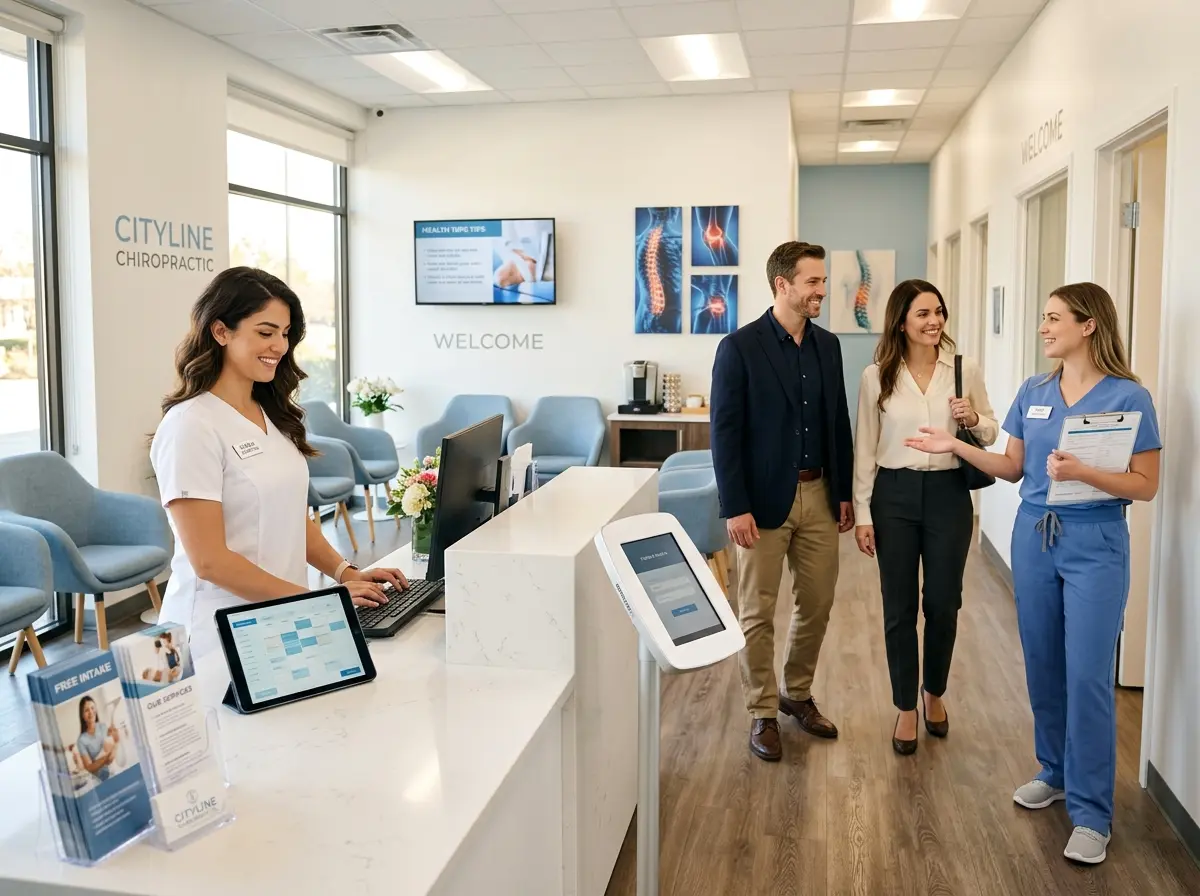
For chiropractic practices with a physical location, Stella also operates as an in-store kiosk — greeting walk-ins, answering questions, and capturing contact information before a patient even reaches the front desk. Her built-in CRM stores everything: patient details, intake responses, tags, notes, and AI-generated profiles that your team can actually use. It's not just about answering the phone — it's about making sure no new patient inquiry falls through the cracks, ever.
Building a Fast-Track System That Actually Works
Design a Dedicated New Patient Phone Experience
The first step is separating the new patient call experience from everything else. If a first-time caller reaches your general line and gets lumped into the same queue as billing questions and appointment reminders, they're already at a disadvantage. Consider implementing a phone menu option specifically for new patients — something simple like "Press 1 if you're a new patient looking to schedule." This immediately signals that you value their call and have a specific process ready for them.
From there, the experience should be fast, warm, and efficient. A new patient caller should be able to confirm their availability, provide basic intake information, and walk away with a scheduled appointment in under five minutes. If your current system can't do that, it's worth investigating why — and fixing it before another Sarah slips away.
Streamline Your New Patient Intake Process
One of the biggest scheduling delays in chiropractic practices is the intake paperwork problem. Practices often can't finalize a new patient appointment without first collecting insurance information, health history, and consent forms — and if that process is clunky or manual, it slows everything down. The fix is to move as much of this as possible to before the appointment, using digital intake forms that can be completed via phone, web, or kiosk.
When intake is handled before the patient arrives, your front desk can focus on the welcome experience rather than scrambling for clipboards. Your chiropractors can review patient history before walking into the room. And the patient feels like they're already part of your practice — not a stranger filling out paperwork in a waiting room.
Train Your Team to Protect the Fast-Track Lane
Technology and systems only work if your team supports them. Make sure every staff member understands that new patient calls are high-priority and should be handled or escalated immediately — not added to a callback list. Set a clear internal standard: no new patient inquiry goes unanswered for more than a defined time window. Whether that's five minutes during business hours or handled automatically after hours, the standard needs to exist and be enforced.
It's also worth role-playing new patient calls with your front desk staff. How do they sound on the phone? Are they warm, confident, and efficient? Do they know how to handle objections like "I'm not sure if my insurance covers this" without losing the booking? Small improvements in phone presence can have a measurable impact on your new patient conversion rate.
Quick Reminder About Stella
Stella is an AI robot employee and phone receptionist available for just $99/month — no upfront hardware costs, no complicated setup. She answers calls around the clock, collects patient information through conversational intake forms, manages contacts in a built-in CRM, and greets walk-ins at your front door with the same professionalism your best staff member would. She doesn't take lunch breaks, doesn't call in sick, and never puts a motivated new patient on indefinite hold.
Start Filling Your Schedule — One Fast Booking at a Time
New patients are the growth engine of any chiropractic practice. But they're also the most sensitive leads you'll ever handle — motivated by pain, easily distracted, and quick to move on if the process feels slow or unwelcoming. The good news is that scheduling friction is a solvable problem. It doesn't require a massive staff overhaul or a complete technology rebuild. It requires intention, a clear system, and the right tools in the right places.
Here's what you can do this week to start building your fast-track system:
- Audit your current new patient call experience. Call your own practice as a mystery shopper. How long did you wait? How was the experience? Be honest.
- Create a dedicated new patient pathway — whether that's a phone option, a landing page, or an intake automation that kicks in immediately after a call.
- Move intake paperwork online so it can be completed before the first appointment, reducing friction on both sides of the desk.
- Set a response time standard and hold your team — and your technology — accountable to it.
- Consider AI-powered support to handle the after-hours calls, the overflow volume, and the intake collection that your human team simply can't scale to meet alone.
Your next great long-term patient is out there right now, phone in hand, back aching, ready to book with whoever makes it easiest. Make sure that whoever is you.