Is Your Hygiene Team Winging It at the Treatment Upgrade Conversation?
Let's be honest — your dental hygienists are exceptional at what they do. They can spot a cracked molar from across the room and lecture a patient on proper flossing technique with the patience of a saint. But ask them to smoothly transition from "your gums look great" to "have you considered upgrading to our whitening package?" and suddenly things get... awkward. The tools are different, the skills are different, and without a proper script, even the most talented hygienist can fumble a perfectly good upsell opportunity.
This isn't a criticism of your team. It's a systems problem. When hygienists aren't given clear, consistent language for promoting treatment upgrades — think whitening treatments, electric toothbrush recommendations, periodontal add-ons, or fluoride applications — you're essentially leaving revenue on the table every single appointment. And in a dental practice where chair time is precious and competition is fierce, that's a problem worth solving.
The good news? A well-crafted marketing script tailored specifically for your hygiene team can transform those awkward "uh, we also offer whitening..." moments into confident, natural conversations that genuinely serve your patients. Here's how to build one.
Why a Script Isn't a Dirty Word
The Fear of Feeling "Salesy"
Many hygienists bristle at the idea of a sales script, and honestly, that reaction makes sense. They went to school to care for teeth, not to become commissioned salespeople. But here's the reframe: a well-written script isn't about pushing products — it's about consistently communicating value. There's a world of difference between a pushy sales pitch and a warm, informed recommendation that genuinely helps a patient understand their options.
Framing matters enormously. A hygienist who says, "We have a whitening special right now, want to add it on?" is going to get a lot of polite no's. A hygienist who says, "I noticed you mentioned feeling self-conscious about your smile at your last visit — we have a whitening treatment that a lot of our patients have really loved. Would it be helpful if I grabbed you some information?" is having a completely different conversation. One is a transaction. The other is a service.
Consistency Is the Real Gold
Here's a stat worth sitting with: businesses that standardize their customer communication processes see significantly higher conversion rates on upsells and cross-sells than those that leave it to individual discretion. Your hygiene team likely has five to ten different approaches to the same conversation, and some of those approaches are excellent — they just aren't being shared.
A shared script doesn't flatten your team's personalities or make them robotic. It gives everyone a reliable foundation to build from. Your most naturally charismatic hygienist can still add her own flair. Your quieter team member now has words to reach for instead of silence. Everyone wins, including the patient who actually learns about the treatment that could help them.
Scripts Also Protect You Legally and Professionally
This one doesn't get talked about enough. When your team is improvising, there's a real risk of inconsistent messaging, overclaiming about treatment outcomes, or accidentally implying a service is covered by insurance when it isn't. A reviewed, approved script keeps everyone on safe ground — your patients get accurate information, your practice avoids liability, and your team feels confident they're saying the right things.
A Quick Word on Automation That Actually Helps
Let Technology Handle the Groundwork
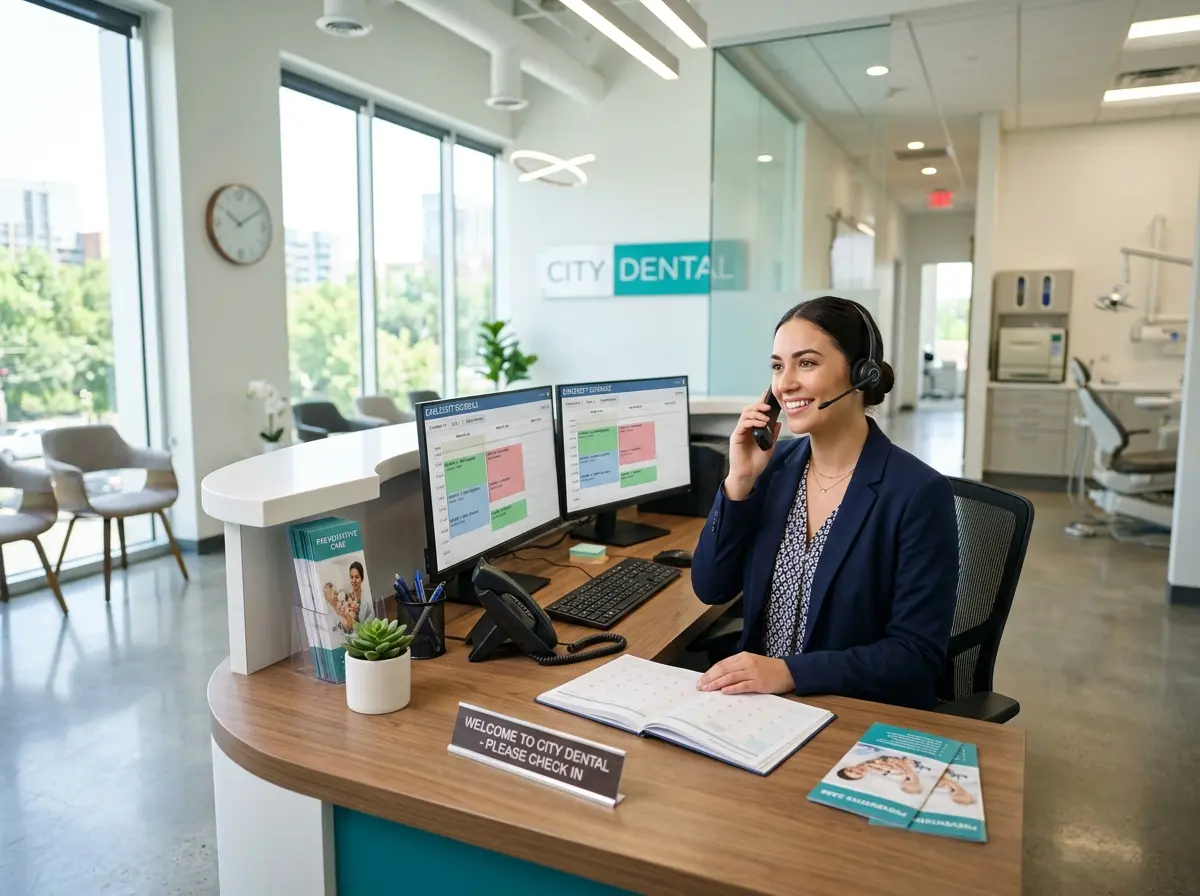
Before a patient even sits in the hygiene chair, there's a whole conversation that could be happening — through your front desk, over the phone, or at your front entrance. This is where Stella, an AI robot employee and phone receptionist, quietly earns her keep. Stella can greet patients as they walk into your practice, proactively mention current promotions, and answer common questions about available treatments — all before your hygienist says a single word. On the phone side, Stella handles inbound calls 24/7, so inquiries about whitening specials or upgrade options get answered promptly and consistently, even after hours. That means your hygiene team steps into a room with a patient who's already been warmed up, informed, and perhaps even a little curious. That's a much easier conversation to continue.
Building the Script Your Hygiene Team Will Actually Use
Start with the Patient, Not the Product
The best treatment upgrade conversations begin with observation, not promotion. Train your hygienists to open with a patient-centered statement before introducing anything. This could be as simple as referencing something noted in the chart, something the patient mentioned previously, or something observed during the current appointment.
For example, a natural opening for a whitening upgrade might sound like: "You've done a really great job maintaining your oral hygiene since your last visit. I also noticed some surface staining, which is completely normal — especially if you're a coffee drinker. We do offer an in-office whitening treatment that a lot of patients have been really happy with. Would you like me to tell you more about it?" This approach feels like a continuation of care, not a detour into sales mode.
Structure the Script in Clear Phases
A practical upgrade script for hygienists should follow a simple three-phase structure that's easy to remember and adapt:
- Observe and connect: Reference something specific and relevant about the patient's oral health or stated goals.
- Introduce the upgrade naturally: Present the service as a solution or enhancement, not a product being sold.
- Invite without pressure: Offer information, defer to their interest, and make it easy to say yes — or to ask questions.
This three-phase rhythm keeps the interaction feeling like a conversation rather than a pitch. It also gives your team a mental framework they can apply across different types of upgrades — whether that's fluoride treatment, periodontal therapy add-ons, a prescription toothpaste recommendation, or a mouth guard consultation.
Practice Out Loud, Not Just on Paper
Here's where most practices drop the ball. They develop a solid script, print it out, hand it to the team during a Monday morning huddle, and then never revisit it. Months later, half the team has forgotten it exists and the other half never really internalized it in the first place.
Real adoption requires real practice. Schedule short role-play sessions during team meetings — yes, your hygienists will groan, and yes, it works anyway. Have team members take turns playing the patient and the hygienist, then debrief on what felt natural and what felt forced. The script should evolve based on real feedback from real conversations. Treat it as a living document that improves over time, not a one-and-done initiative.
Quick Reminder About Stella
Stella is an AI robot employee and phone receptionist designed to help businesses like dental practices stay professionally present without adding to staff workload. She greets patients in-person, promotes current offerings, and answers phone calls around the clock — all for just $99 a month with no upfront hardware costs. Think of her as the team member who's always on, always on-script, and never has a bad day.
Taking Action: What to Do This Week
The path from "our hygienists sort of mention upgrades sometimes" to "our hygiene team confidently drives meaningful treatment upgrades" is not as long as it might feel. It starts with acknowledging that this is a skills and systems gap — not a character flaw in your team — and committing to building the infrastructure that makes success repeatable.
Here's a practical starting point for this week:
- Identify your top three upgrade opportunities — the treatments most commonly recommended but least often accepted. Whitening, fluoride, and athletic mouth guards are common candidates.
- Draft a script for each one using the three-phase structure outlined above. Keep each script to three to five sentences — short enough to remember, specific enough to be useful.
- Share the drafts with your hygiene team and invite honest feedback. They're the ones having these conversations; their input will make the scripts better.
- Schedule one role-play session in the next two weeks. Start with just ten minutes. Build the habit.
- Review results quarterly — track upgrade acceptance rates and adjust your scripts based on what's working and what isn't.
Your hygiene team is already doing incredible work. Giving them the language to communicate the full value of your practice's offerings isn't a sales exercise — it's a patient care initiative. When done right, patients leave your chair more informed, more engaged, and more likely to return. And your practice grows in the process. That's a pretty good outcome for a script that fits on a single index card.