Introduction: The Chaos Nobody Talks About
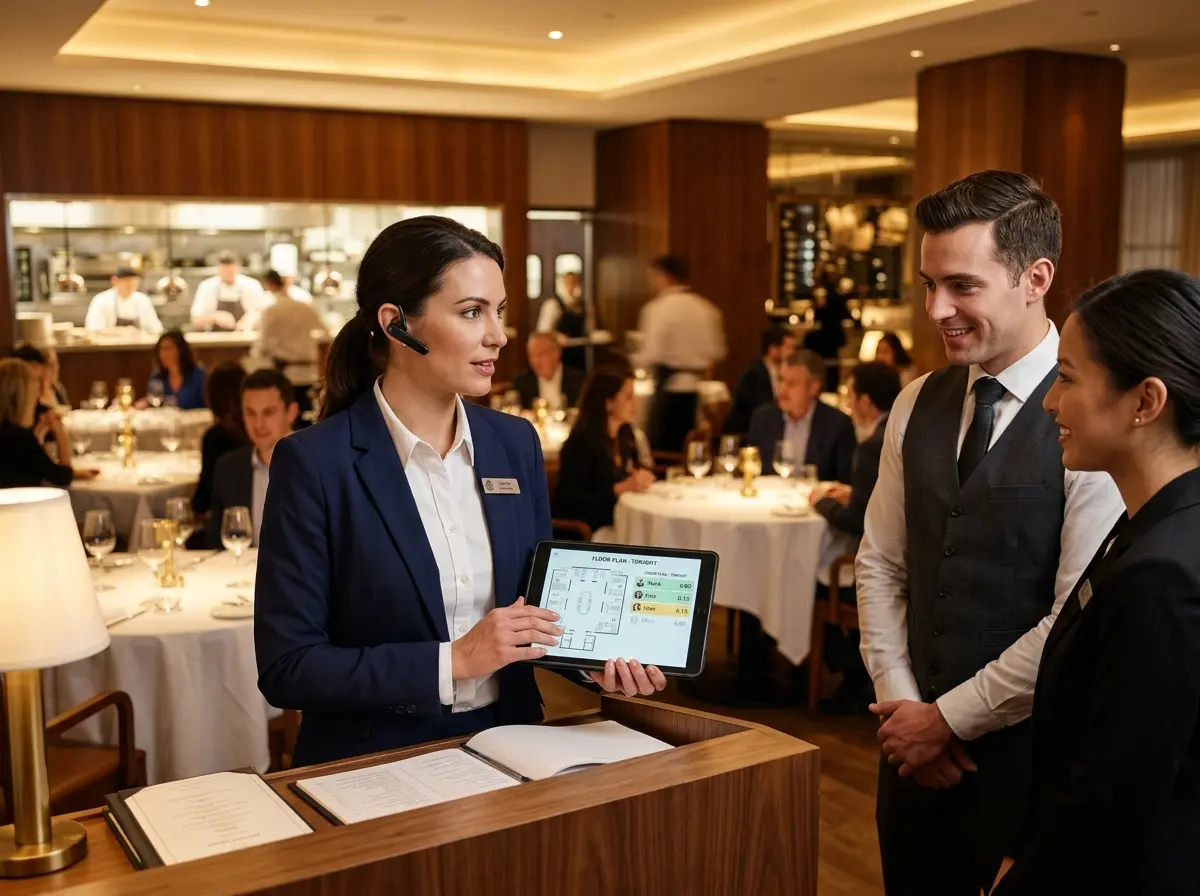
Picture this: It's a Friday night, your restaurant is packed, the kitchen is behind, one of your servers called out sick, and your manager — your actual manager — is somewhere between table 12 and the walk-in cooler. A customer has a complaint. A vendor is calling about tomorrow's delivery. And someone at the front is asking for a manager "right now, please." Nobody knows who's in charge, nobody knows what to say, and your best front-of-house employee is making decisions she was never trained to make.
Sound familiar? If you've been in the restaurant business for more than a week, it probably does. The problem isn't that your team is bad at their jobs — it's that nobody told them what to do when things go sideways and the manager is unavailable. That's where a Manager on Duty (MOD) communication protocol comes in.
A solid MOD protocol isn't just a fancy binder collecting dust in the office. It's a clearly defined system that tells your team who's in charge, how to handle escalations, and how to communicate critical information without everything falling apart. And in this post, we're going to help you build one — because your Friday nights deserve better.
What Is a Manager on Duty Protocol (and Why Most Restaurants Don't Have One)
Defining the Role vs. Defining the System
Most restaurant owners know they need a Manager on Duty. What they often don't have is a protocol — a documented, repeatable system that everyone understands before the shift starts. There's a big difference between saying "Jake is MOD tonight" and having Jake, your servers, your hosts, and your kitchen staff all know exactly what that means in practice.
A true MOD protocol defines things like: who has decision-making authority in specific situations, how staff should communicate urgent issues to the MOD, what the MOD is responsible for logging or reporting, and how handoffs happen between shifts. Without all of that written down and trained on, "MOD" is just a title on a sticky note.
The Hidden Cost of Winging It
According to the National Restaurant Association, employee turnover in the restaurant industry hovers around 75% annually — and a lack of clear systems is one of the top reasons staff feel overwhelmed and quit. When your team doesn't know how to escalate a problem or who to go to, they freeze, they guess, or they leave it for someone else. Customers notice. Complaints happen. Reviews get written.
Beyond retention, inconsistent communication during service leads to preventable mistakes — wrong orders going unaddressed, refund decisions being made by the wrong person, or a vendor left on hold for 20 minutes because nobody knew who handles that. These aren't dramatic failures; they're the slow, grinding friction that wears down your operation every single day.
What a Good Protocol Actually Looks Like
A functional MOD communication protocol should answer three core questions: Who? (Who is the MOD right now, and who's next in the chain?), What? (What situations require escalation vs. independent staff judgment?), and How? (How does information get from the floor to the MOD quickly and accurately?)
It doesn't need to be a 40-page manual. A laminated one-pager in the break room, a shared note in your team's communication app, and a 10-minute walkthrough during onboarding will take you surprisingly far. The goal is clarity — not complexity.
How Technology Can Support Your MOD System
Reducing the Noise So the MOD Can Focus
One of the biggest reasons MODs get overwhelmed is that they're handling too many things that don't actually need them. A customer asking about allergens. Someone calling to ask what time you close. A walk-in wanting to know about the daily specials. These are real interactions that take real time — but they don't require a manager. That's exactly the kind of operational friction that Stella, the AI robot employee and phone receptionist, is built to eliminate.
At the kiosk inside your restaurant, Stella can greet guests proactively, answer common questions about your menu, specials, hours, and policies, and even upsell or cross-sell — all without pulling a single staff member away from their actual job. On the phone side, she answers calls 24/7 with the same knowledge she uses in person, takes AI-summarized voicemails with push notifications to managers, and forwards calls to human staff based on conditions you configure. The result? Your MOD is handling real escalations, not fielding "do you have gluten-free options?" for the eighth time that shift.
Building Your MOD Communication Protocol: The Practical Steps
Step 1 — Define Escalation Tiers
Not every problem needs a manager, and part of a great MOD protocol is teaching your team to recognize the difference. Start by categorizing situations into tiers. Tier 1 situations are things staff can and should handle independently — a minor order mistake, a request for a to-go box, a customer asking for the check. Tier 2 situations warrant a heads-up to the MOD but don't require immediate intervention — a long wait complaint, a minor spillage, a table that's been waiting unusually long. Tier 3 situations require the MOD directly — a refund request over a certain dollar threshold, a guest altercation, a food safety concern, or any media/press inquiry.
Once your tiers are defined, train on them. Role-play scenarios during pre-shift meetings. The more your team practices, the less they'll second-guess themselves during actual service — and the fewer unnecessary interruptions your MOD will face.
Step 2 — Establish a Clear Communication Chain
During a busy dinner service, "find the manager" is not a communication strategy. Define exactly how your team should reach the MOD in different scenarios. This might mean a specific radio channel, a team communication app like 7shifts or HotSchedules, a physical check-in at the host stand, or a designated "hot spot" where the MOD checks in every 15 minutes. The method matters less than the consistency — everyone needs to know the same thing.
Also establish how the MOD communicates back to the team. If the MOD makes a decision about a table or a comp, how does that information get to the server? How does the kitchen find out? Closed-loop communication — where decisions are confirmed received, not just sent — prevents the classic "I told the manager but nothing happened" breakdown.
Step 3 — Document and Debrief Every Shift
Your MOD protocol should include a lightweight end-of-shift log. This doesn't need to be elaborate — a few bullet points in a shared digital doc or a shift report template covers it. The log should capture notable incidents, any comps or refunds issued, staffing issues, maintenance concerns, and anything that needs follow-up from ownership or the general manager.
This documentation serves two purposes. First, it creates accountability and a paper trail that protects both your staff and your business. Second, it becomes a goldmine of operational insight over time. Patterns emerge — the same complaint keeps showing up, the same station keeps falling behind, the same hour keeps causing chaos. When you can see the data, you can fix the system. And fixing the system is how restaurants stop being reactive and start being well-run.
Quick Reminder About Stella
Stella is an AI robot employee and phone receptionist that works in-store as a human-sized kiosk and answers phone calls 24/7 for any type of business. She handles customer questions, promotes specials, collects contact information, and takes AI-summarized voicemails with manager notifications — all for just $99/month with no upfront hardware costs. For restaurant owners building smarter operations, she's the kind of team member who never calls out sick on a Friday night.
Conclusion: Your Next Steps Toward a Smoother Operation
Building a Manager on Duty communication protocol isn't a glamorous project. It won't be featured on your social media. Nobody's going to Yelp you about your escalation tiers. But it will show up in your staff retention numbers, your customer satisfaction scores, and your own sanity on a busy Saturday night.
Here's what to do this week:
- Draft your escalation tiers — categorize situations into what staff handles, what the MOD is notified of, and what requires direct MOD involvement.
- Define your communication method — pick one channel and make it the standard for every shift, every team member, no exceptions.
- Create a simple shift log template — even five bullet points at end of shift will transform your ability to spot patterns and fix problems.
- Train, don't just tell — run a 10-minute scenario drill during your next pre-shift meeting and watch the lightbulbs go on.
- Reduce MOD interruptions with the right tools — the less time your manager spends on questions that don't need a manager, the more bandwidth they have for the things that do.
Your restaurant is only as smooth as its systems. And the restaurants that seem effortlessly well-run? They almost always have one thing in common: someone took the time to write things down. Start there. The rest follows.