Your Customers Are Walking Right Past You (But They Don't Have To)
Picture this: A potential customer is standing twenty feet from your front door, scrolling through their phone, mildly hungry, slightly bored, and completely unaware that you're running a 20% off promotion on the exact thing they've been meaning to buy. They walk past. You lose a sale. Nobody wins. This is the quiet tragedy playing out on sidewalks and shopping corridors everywhere, every single day.
Here's the good news: proximity marketing — specifically beacons and geofencing — exists precisely to solve this problem. These technologies let you reach customers on their smartphones the moment they enter your orbit, delivering timely, relevant offers that actually make sense given where they are and what they're doing. And unlike that guy spinning an arrow sign on the corner, these tools work around the clock without needing a lunch break.
If you've heard the terms "beacons" and "geofencing" before but filed them under "tech stuff I'll figure out later," this post is your permission slip to stop procrastinating. Let's break down how these tools work, how to use them effectively, and how to turn foot traffic into actual revenue.
Understanding the Technology: Beacons vs. Geofencing
Before you can deploy a strategy, you need to know your tools. Beacons and geofencing are often lumped together, but they work differently and shine in different contexts. Think of them as two very capable employees with complementary skill sets — except they never call in sick.
What Are Beacons and How Do They Work?
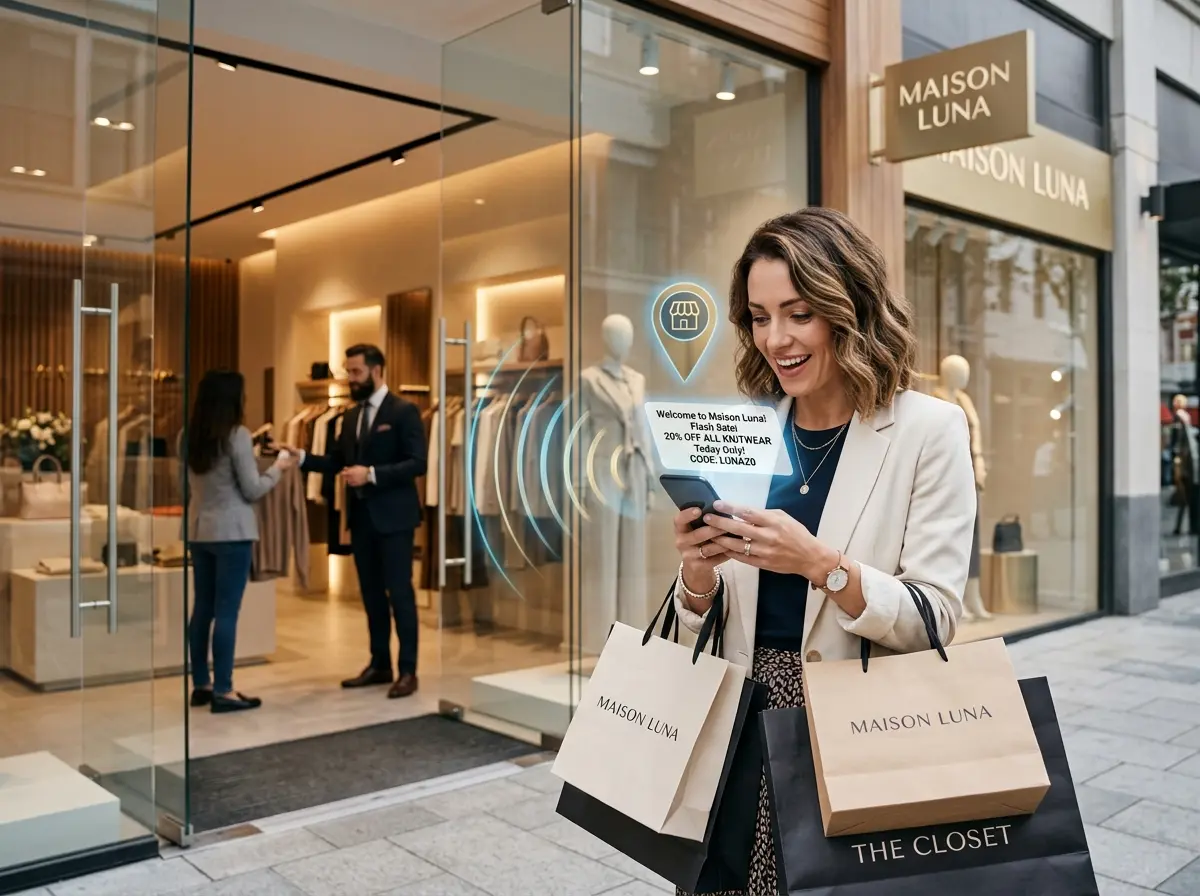
Beacons are small, low-cost Bluetooth devices — often about the size of a hockey puck — that you place inside or near your business. They continuously broadcast a Bluetooth Low Energy (BLE) signal. When a customer who has your app installed (or a compatible app) walks within range, the beacon triggers a push notification on their phone. The range is typically anywhere from a few feet to about 70 meters, and you can configure what message gets sent based on which beacon is triggered.
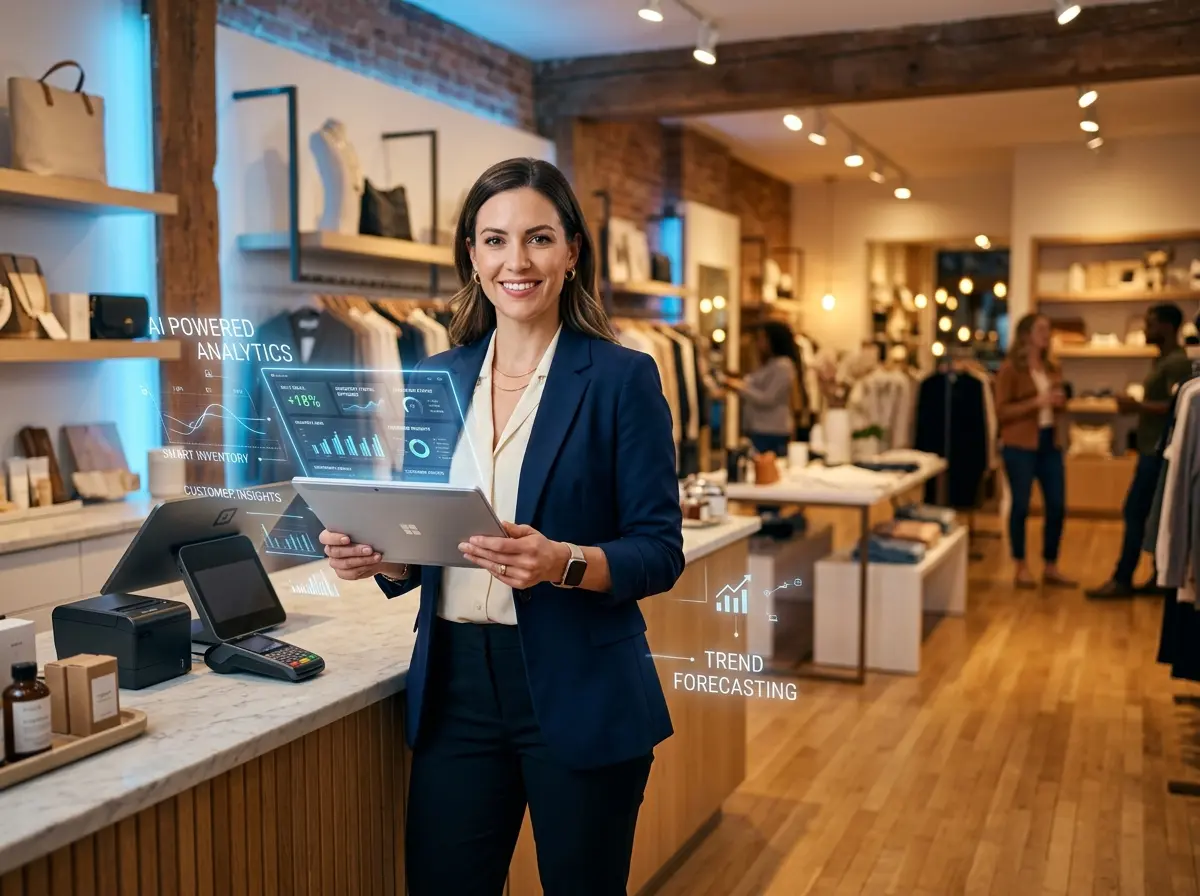
For example, a clothing retailer might place one beacon near the entrance that sends a welcome message with today's deals, another near the fitting rooms offering a "style help" prompt, and another near the checkout counter with a "complete the look" upsell suggestion. Each beacon creates a micro-moment of engagement tuned to where the customer physically is. Studies have shown that beacon-triggered messages have open rates as high as 80% — a figure that would make any email marketer weep with envy.
What Is Geofencing and How Is It Different?
Geofencing uses GPS or cellular data to draw a virtual boundary — the "fence" — around a geographic area. When someone's smartphone crosses that boundary, it can trigger an action: a push notification, an ad, an SMS, or even a discount that auto-applies in your app. Geofences can be as tight as a city block or as wide as an entire neighborhood, depending on your goals.
Unlike beacons, geofencing doesn't require any hardware inside your store. It operates at a broader scale and is particularly effective for capturing people who are near you but haven't yet decided to walk in. Imagine a customer passing by your restaurant at lunchtime — a well-timed geofence notification reading "Hot soup special today, 11am–2pm" might be exactly the nudge they need. You can also geofence competitor locations, which is aggressive in the best possible way.
Choosing the Right Tool for Your Business
The honest answer is that most businesses benefit from using both. Geofencing pulls people toward your door from the surrounding area, while beacons guide and engage them once they're inside. If you're just starting out, geofencing is easier to set up without hardware investment, making it a natural first step. Beacons make more sense once you have a mobile app or are using a platform that supports them, and they deliver a more granular, in-store experience. Either way, the underlying principle is the same: meet your customers where they are, with a message that actually matters to them in that moment.
Making Proximity Marketing Work Alongside Your In-Store Experience
Sending a clever notification is only half the battle. What happens when the customer actually walks through your door? This is where the in-store experience either seals the deal or squanders all that clever proximity marketing work you just did.
Connecting the Digital Nudge to a Real-World Welcome
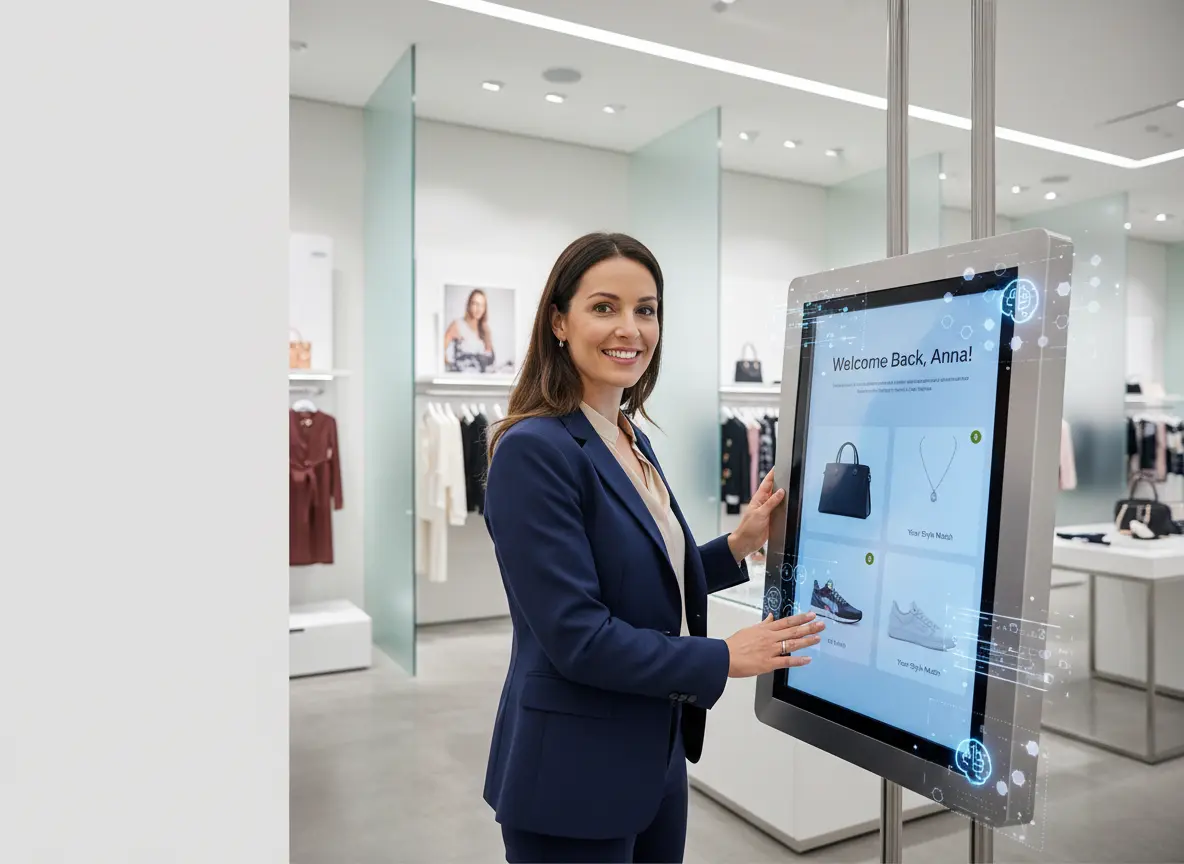
The moment a customer arrives, especially one who just received your beacon or geofence offer, the experience should feel seamless. If your notification promised 15% off, someone — or something — should acknowledge that instantly, answer questions about the promotion, and keep the momentum going. This is exactly where Stella, the AI robot employee and phone receptionist, fits naturally into the picture. Stationed inside your store, Stella greets every customer proactively, can reference current promotions and specials, answer product questions, and even upsell or cross-sell — all without pulling your human staff away from what they're doing. She's also answering your phones around the clock, so if a customer calls after seeing your geofence ad while driving past, they get a knowledgeable, friendly response at 9pm just as easily as at 9am. No missed calls, no voicemail black holes.
Building an Effective Proximity Marketing Strategy
Technology without strategy is just expensive noise. Here's how to make sure your beacon and geofencing efforts actually convert into sales rather than just annoying people into disabling their notifications.
Craft Offers That Are Worth the Interruption
The golden rule of proximity marketing is simple: if your message isn't worth interrupting someone's day, don't send it. Generic notifications like "Come visit us!" get ignored at best and unsubscribed from at worst. Instead, make your offers hyper-relevant and time-sensitive. Think flash discounts valid only for the next two hours, loyalty perks for returning customers, personalized recommendations based on past purchases, or practical information like "Your usual table is available — walk-ins welcome right now." The more specific and valuable the message, the higher the conversion rate. According to research by Salesforce, 76% of consumers say they're more likely to purchase from brands that personalize their experience — proximity marketing done right is personalization at its most literal.
Segment Your Audience and Personalize Your Triggers
Not all customers are the same, and your proximity messages shouldn't be either. Most geofencing and beacon platforms allow you to segment by customer type — new visitors versus returning customers, loyalty program members versus general foot traffic, daytime browsers versus evening shoppers. A first-time visitor might get a welcome offer and a brief introduction to your brand. A loyal regular might receive an exclusive "we missed you" discount after a period of absence. When you layer behavioral and demographic data on top of location data, you stop sending blasts and start having conversations. That's when proximity marketing stops feeling like advertising and starts feeling like service.
Measure, Test, and Refine Without Mercy
The beautiful thing about digital proximity marketing is that nearly everything is measurable. Track notification open rates, offer redemption rates, dwell time in-store, and ultimately, sales attributed to specific campaigns. A/B test your messaging — try two different subject lines for the same offer and see which drives more foot traffic. Experiment with geofence radius sizes; sometimes a tighter boundary targets more motivated shoppers, while a wider net catches more people in discovery mode. Treat every campaign as a data point, not a finished product. The businesses that consistently win with proximity marketing aren't the ones who got it perfect on the first try — they're the ones who iterated faster than everyone else.
Quick Reminder About Stella
Stella is an AI robot employee and phone receptionist designed for businesses of all types — retail shops, restaurants, gyms, medical offices, service providers, and more. She stands inside your store engaging customers in natural conversation, and she answers your business phone calls 24/7 with the same intelligence and personality she brings in person. At just $99/month with no upfront hardware costs, she's one of the most cost-effective ways to ensure every customer — whether they walked in from a beacon notification or called after seeing your geofence ad — gets a professional, informed response every single time.
Time to Stop Letting Customers Walk On By
Beacons and geofencing aren't futuristic experiments reserved for enterprise retailers with massive tech budgets. They're accessible, affordable, and genuinely effective tools that businesses of every size can deploy right now. The combination of reaching customers at the right place and time with a compelling offer, then delivering a seamless in-store or phone experience when they respond, is as close to a guaranteed sales machine as modern retail gets.
Here's a practical starting point to get you moving:
- Choose a platform. Look into tools like Radar, Gimbal, or proximity features built into platforms like Klaviyo or Salesforce Marketing Cloud to get started with geofencing. For beacons, Estimote and Kontakt.io are well-regarded hardware options with good developer support.
- Define your audience segments. At minimum, differentiate between new and returning customers so your messages feel relevant from day one.
- Write three to five test offers that are specific, time-sensitive, and genuinely valuable — then A/B test them over your first 30 days.
- Audit your in-store and phone experience. There's no point driving traffic through the door if the experience on the other side is underwhelming. Make sure every touchpoint is covered.
- Review your data monthly and adjust ruthlessly. The market rewards the curious and punishes the complacent.
Your customers are out there right now, phones in hand, perfectly positioned to receive a message that could bring them straight to you. The only question is whether you're going to send it.