When "We'll Get Back to You" Is Costing You Bookings
Picture this: A couple gets engaged on a Saturday night. They're elated, they're Googling wedding venues at midnight, and they're ready to fall in love with a location. They find your venue, they fill out your contact form — or better yet, they pick up the phone — and then… crickets until Monday morning when someone at your office finally gets around to responding. By then, they've already toured two competitors and put down a deposit on the third.
If you run a wedding venue, you already know that the inquiry-to-tour pipeline is everything. You're not selling a product someone can return. You're selling a feeling, and that feeling starts the moment someone reaches out. The problem is that weddings don't happen on a 9-to-5 schedule, and neither do the couples planning them. Initial inquiries flood in at all hours, and most venues are simply not equipped to handle them in real time — let alone qualify them before investing hours into an in-person tour.
The good news? There's a smarter way to handle this, and it doesn't require hiring a full-time receptionist who moonlights as a wedding coordinator. Let's talk about how AI-driven conversation tools are transforming the inquiry process — and how one savvy venue put it all together.
The Real Cost of a Leaky Inquiry Pipeline
Speed-to-Response Is a Competitive Weapon
Here's a stat that should make any venue owner a little uncomfortable: studies have shown that responding to a lead within five minutes makes you up to 100 times more likely to convert compared to waiting just 30 minutes. Now think about what happens when your response time is measured in business days. The wedding industry is intensely emotional and intensely competitive — couples are often reaching out to five or more venues simultaneously, and the first one to make them feel seen and heard earns a massive advantage.
The challenge isn't that venue owners don't care about responsiveness. It's that handling initial inquiries well requires time, context, and consistency — three things that are genuinely hard to maintain when you're also managing staff, coordinating events, and, you know, actually running a venue.
Not Every Inquiry Is a Good Fit — And That's Okay
Let's be honest: not every couple who submits an inquiry is going to be the right match for your venue. Maybe your minimum guest count is 100 and they're planning an intimate 30-person ceremony. Maybe your pricing starts at $8,000 and they have a $3,000 budget. Maybe their preferred date is already booked. These are conversations that need to happen — but they don't need to happen during a 90-minute in-person tour that takes up half your coordinator's day.
Qualifying leads before the tour isn't about being cold or transactional. It's about being respectful of everyone's time, including the couple's. When couples arrive for a tour already knowing your pricing structure, availability windows, and general capacity, the conversation becomes so much more productive. You're not starting from zero — you're building on a foundation.
The Hidden Labor Cost of Unqualified Tours
If your venue coordinator spends an average of two hours per tour — including prep, the tour itself, and follow-up — and only one in four unqualified inquiries converts, you're burning roughly eight hours of skilled labor for every booking. Now multiply that across a busy season. Qualifying leads conversationally before the tour doesn't eliminate the human element; it focuses it. Your team gets to spend their time on couples who are genuinely excited and genuinely ready, instead of explaining basic pricing to someone who was never going to book in the first place.
How AI Can Step In — Without Stepping on Your Brand
Meeting Couples Where They Are, When They're Ready
This is where AI-powered conversation tools become genuinely valuable for wedding venues. Stella — an AI robot employee and phone receptionist — can handle initial inquiry conversations around the clock, answering questions about availability, pricing tiers, guest capacity, catering policies, and more. When a couple calls at 10 PM on a Tuesday because they just finished watching a romantic movie and decided to finally start venue shopping, Stella is there, warm and ready, delivering the same consistent, knowledgeable experience your best coordinator would.
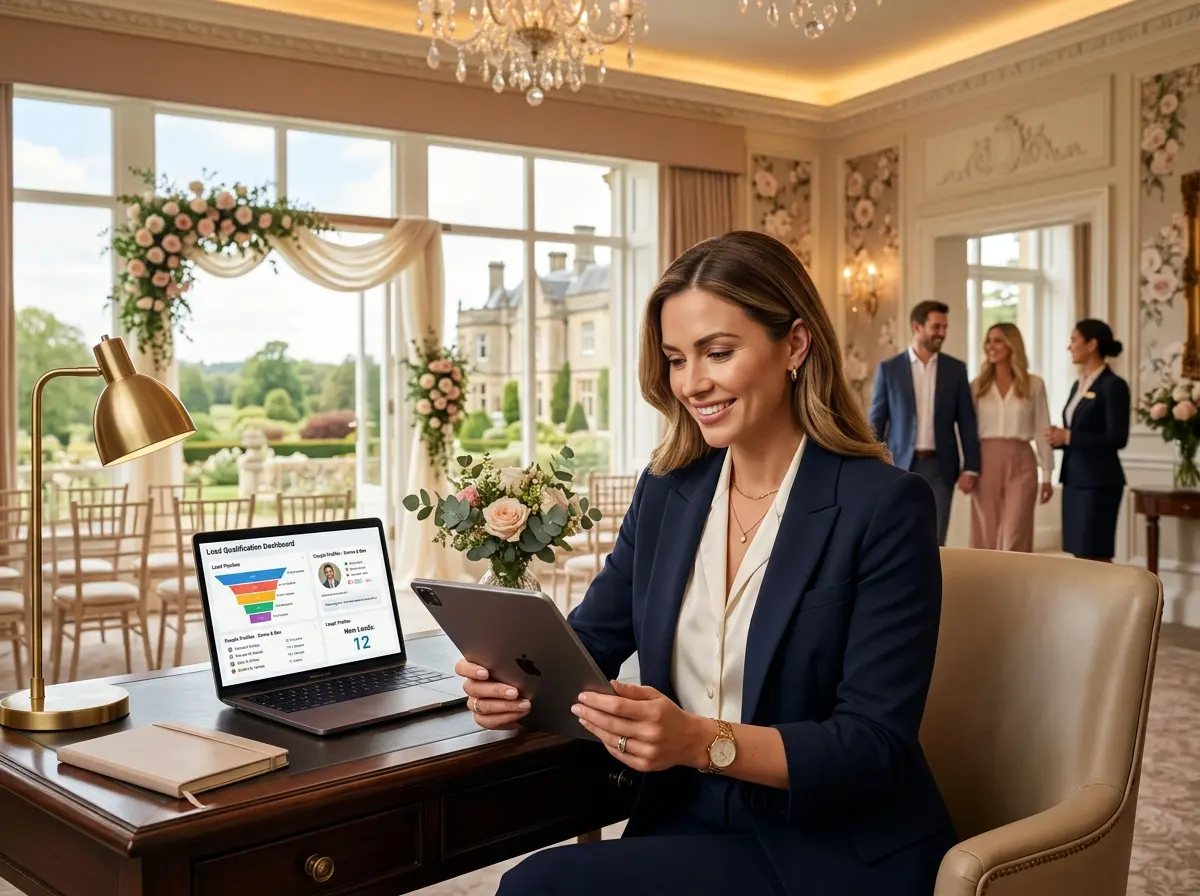
Beyond answering questions, Stella can walk couples through a conversational intake process — gathering their wedding date, estimated guest count, budget range, and vision for the event — all through a natural conversation rather than a cold web form. That information feeds directly into Stella's built-in CRM, complete with AI-generated contact profiles, custom fields, and tags that help your team prioritize follow-ups intelligently. When your coordinator walks in on Monday morning, she's not starting from scratch — she has a curated list of qualified, pre-screened prospects with notes already attached.
Building a Lead Qualification Flow That Actually Works
Define Your Qualifying Criteria Before You Automate Anything
Before you hand any part of your inquiry process to an AI system, you need to get clear on what makes a lead worth a tour. This sounds obvious, but most venues have never written it down explicitly. Start by identifying your hard filters — the non-negotiables that disqualify a lead immediately, such as dates that are already booked, guest counts outside your venue's capacity, or budget levels that don't align with your minimum spend requirements.
Then identify your soft qualifiers — the factors that don't disqualify but do help you prioritize. Is the couple local or traveling from out of state? Are they flexible on date? Do they already have a planner, or will they need more hands-on guidance from your team? Once you have these criteria mapped out, you can configure your AI tool to collect exactly the right information and route or tag leads accordingly.
Designing a Conversational Intake That Feels Personal
Nobody wants to feel like they're filling out a tax form when they're planning the most important day of their life. The key to effective AI-driven lead qualification is making the conversation feel human — warm, curious, and genuinely engaged. A well-designed intake flow might start with a simple congratulatory message, then naturally transition into questions about their vision, followed by practical details like date and headcount. The goal is to gather information in a way that also starts to sell the experience.
Consider including prompts that allow couples to share something personal — their story, their aesthetic, what matters most to them. This information isn't just operationally useful; it gives your coordinator a powerful head start on building rapport during the actual tour. Walking in and saying, "I heard you two met hiking — we actually have a beautiful outdoor ceremony space with mountain views" is a very different opening than "So, tell me a little about yourselves."
Closing the Loop: From Qualification to Confirmation
A qualification flow is only as good as what happens next. Once a lead has been pre-screened and tagged in your CRM, your team needs a clear, fast process for reviewing the intake summary and reaching out to schedule the tour. Set a target response window — ideally within an hour during business hours — and make it someone's specific responsibility to manage the follow-up queue each morning.
For leads that don't qualify, a gracious, automated response that acknowledges their inquiry, explains the mismatch briefly, and perhaps offers a referral or alternative resource goes a long way toward preserving your brand's reputation. Couples talk. Wedding planning communities are active and vocal. How you handle a "no" matters almost as much as how you handle a "yes."
A Quick Reminder About Stella
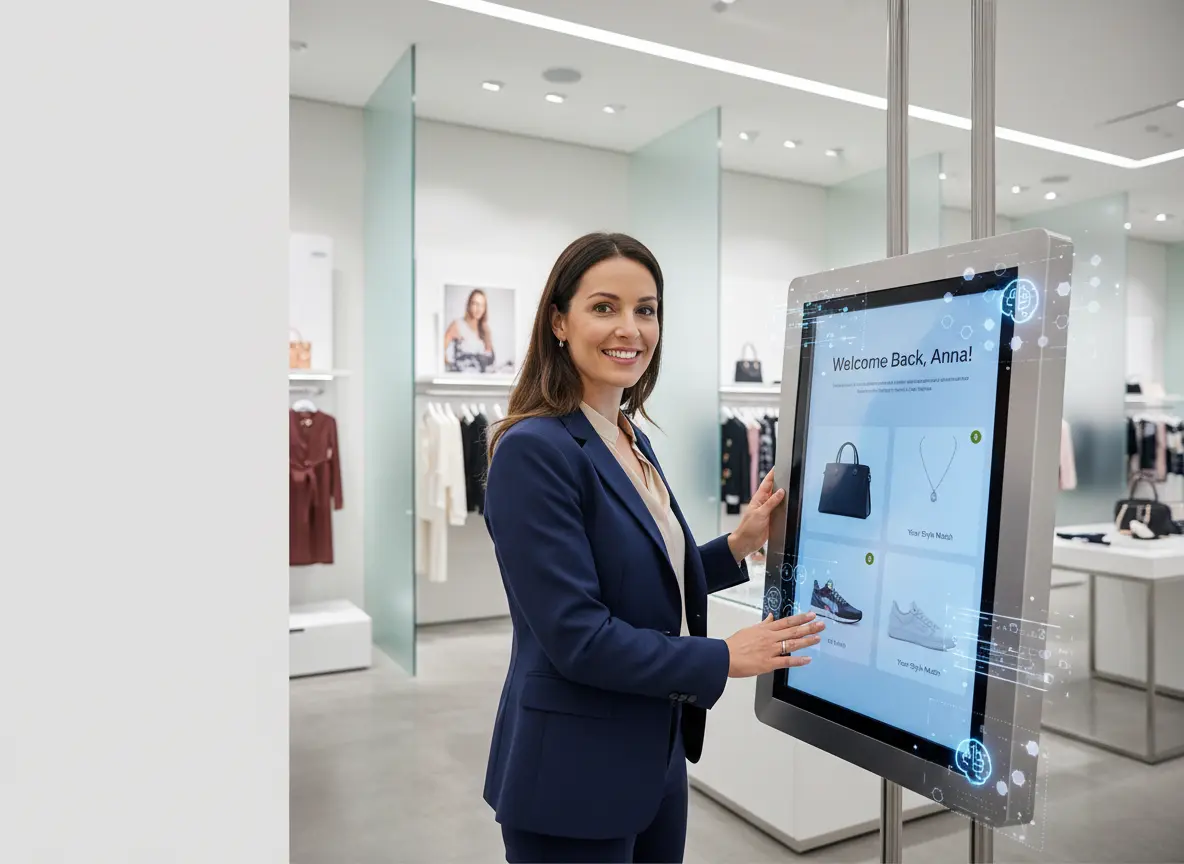
Stella is an AI robot employee and phone receptionist built for businesses that want a smarter, always-on front line. She answers calls 24/7, handles conversational intake, manages a built-in CRM, and — for venues with a physical showroom or lobby — she can even greet walk-in visitors as a human-sized in-store kiosk. All of this starts at just $99/month with no upfront hardware costs and no complicated setup.
Your Next Steps Toward a Smarter Inquiry Process
If your wedding venue is still relying on manual email follow-ups and reactive phone calls to handle initial inquiries, you're not just leaving money on the table — you're leaving couples on the table. The good news is that fixing this doesn't require a massive overhaul. It requires clarity, a sensible qualification framework, and the right tools to execute it consistently.
Start here:
- Audit your current inquiry response time. Pull the last 30 inquiries and calculate how long it took your team to respond. If the average is over an hour, you have a real problem worth solving immediately.
- Write down your qualification criteria. Hard filters and soft qualifiers — get them out of your head and onto paper so you can actually build a process around them.
- Map your ideal intake conversation. What does a perfect first interaction with a prospective couple look like? What questions get asked, in what order, and what information do you actually need before a tour?
- Implement a 24/7 response solution. Whether through an AI tool, a dedicated after-hours protocol, or a combination of both, ensure that no inquiry goes cold simply because it arrived outside business hours.
- Track conversion rates by lead source and qualification status. Once you're qualifying leads before tours, measure the difference in your tour-to-booking rate. The data will tell you whether your criteria are calibrated correctly.
The couples of your dreams are out there, searching for a venue exactly like yours. Make sure the first thing they encounter is a fast, warm, knowledgeable response — not a voicemail and a three-day wait. That first impression isn't just about being polite. It's about being chosen.