First Impressions Last — Especially When They Involve Your Teeth
Let's be honest: walking into a dental office for the first time is not most people's idea of a good time. There's the antiseptic smell, the distant hum of equipment that shall not be named, and the very real possibility that someone is about to count your teeth and judge your flossing habits out loud. New patients are already a little on edge before they even sit down — which means the experience you create before anyone picks up a probe matters more than you might think.
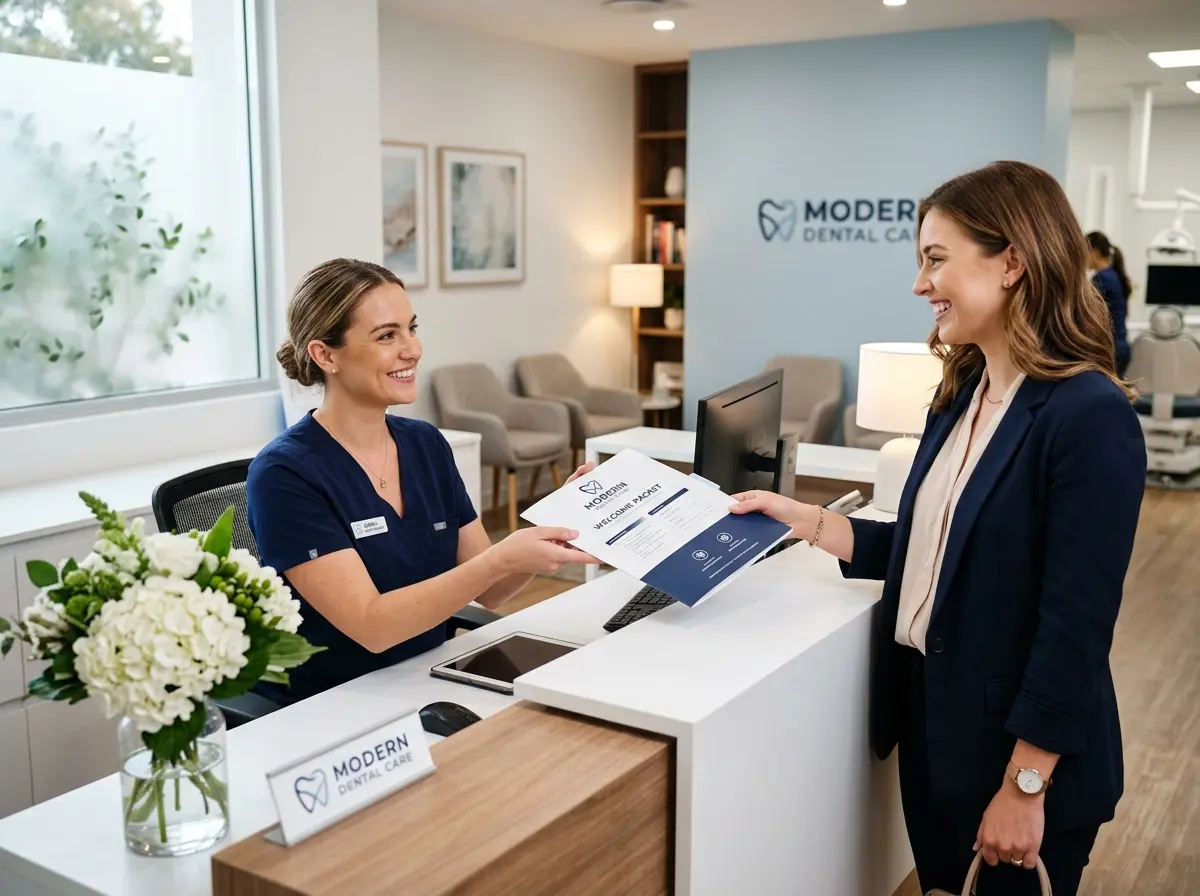
Enter: the new patient welcome packet. It sounds like administrative paperwork. It feels like administrative paperwork. But done right, it's actually one of the most powerful relationship-building tools in your practice. A well-crafted welcome packet sets expectations, reduces anxiety, communicates your brand, and quietly signals to new patients that they made a great choice. A poorly done one — or worse, no packet at all — leaves patients feeling like just another appointment slot. And in a market where patients have plenty of options and zero loyalty to a dentist they've never met, that matters.
This post breaks down why your new patient welcome packet deserves a serious upgrade, what to put in it, and how to make sure it actually reaches people at the right moment.
What a Welcome Packet Is Really Doing for Your Practice
It's Your Brand in a Folder (or an Inbox)
Before a new patient ever meets your hygienist or hears your front desk team's cheerful greeting, they're forming opinions. If their first interaction with your practice is a generic confirmation email and a stack of clipboard forms that haven't been updated since 2011, that's the impression they're carrying into the chair. Your welcome packet — whether physical, digital, or both — is your first real chance to show patients who you are as a practice.
Think of it less like paperwork and more like a first date. You wouldn't show up unprepared and hand someone a questionnaire without introducing yourself first. A thoughtful welcome packet introduces your team, explains your philosophy of care, answers the questions new patients are definitely googling at midnight, and reassures them that they're in good hands. It's the difference between a practice that feels professional and warm versus one that feels transactional.
It Reduces No-Shows and Cancellations
Here's a statistic worth taking seriously: the average no-show rate for dental practices hovers between 5% and 20%, depending on the patient demographic and how well the practice communicates before appointments. A significant portion of no-shows happen not out of rudeness, but out of anxiety, confusion, or simply forgetting. A well-structured welcome packet addresses all three.
When patients receive clear information about what to expect — what to bring, how long the appointment will take, what the first visit actually involves — they feel more prepared. Prepared patients show up. They also tend to arrive on time, with their completed forms, which makes your front desk team's morning dramatically less chaotic. Consider that a bonus.
It Sets the Stage for Long-Term Retention
Acquiring a new dental patient costs anywhere from $150 to $500 in marketing and overhead. Losing them after the first visit because they didn't feel welcomed or informed? That's an expensive mistake. A compelling welcome packet nudges new patients toward scheduling their next cleaning before they even leave the office, reinforces the value of your practice, and begins building the kind of trust that turns a one-time patient into a loyal, referring one.
Streamlining the Process Before They Even Walk In
Let Technology Handle the Heavy Lifting
One of the most common reasons dental practices have clunky intake experiences is simple: nobody has time to overhaul the system. The front desk is answering phones, managing schedules, checking in patients, and occasionally fending off questions about whether that crown is really necessary. Asking them to also manually send, track, and follow up on new patient packets is a lot.
This is exactly the kind of friction that Stella — the AI robot employee and phone receptionist — is built to eliminate. Stella answers incoming calls 24/7, meaning a prospective new patient who calls after hours isn't greeted by voicemail limbo. She can collect intake information conversationally over the phone or through a web-based form, feeding it directly into a built-in CRM with custom fields, tags, and AI-generated patient profiles. By the time your team arrives Monday morning, that new patient's information is already organized, and nobody had to stay late to make it happen.
For practices with a physical location, Stella's in-office kiosk presence means she can greet patients when they arrive, walk them through any remaining intake steps, and answer common questions — all without pulling a staff member away from something else. It's a small operational upgrade with a surprisingly large impact on how polished and professional your practice feels from the very first touchpoint.
What to Actually Put in Your Welcome Packet
The Essentials That Patients Actually Read
Resist the urge to stuff your welcome packet with every policy your practice has ever written. Patients will not read a 12-page document about billing disputes. What they will read is anything that directly answers the questions making them nervous. Lead with a warm, personal welcome letter — ideally signed by the dentist — that acknowledges this might not be their favorite errand and promises to make it worth their while. Follow that with a brief team introduction, even just photos and names, so the office feels less anonymous before they arrive.
Include a clear breakdown of what the first appointment involves, step by step. Patients who know what's coming are calmer. Calmer patients are easier to work with. It really is that simple. Add your office hours, parking information, and what to bring — insurance cards, a list of current medications, and any relevant dental history. Keep it scannable. Use headers. Use white space. Assume everyone is reading this on their phone while doing something else.
The Extras That Make You Memorable
The welcome packet is also a perfectly natural place to mention what makes your practice worth staying with. Do you offer sedation options for anxious patients? Say so — this is exactly the kind of detail that makes someone exhale with relief. Do you have evening or weekend hours? Highlight them prominently. Do you have a patient rewards program, a referral incentive, or a financing option for larger treatments? This is your moment.
A few practices have found success including a short FAQ section — questions like "Will it hurt?" and "How long until I get my cleaning results?" — written in a human, conversational tone rather than clinical language. It's a small touch, but it signals that you've thought about the patient experience from their perspective, not just your own operational checklist. That kind of empathy is memorable. It's also the kind of thing patients mention when they refer their friends.
Digital Versus Physical: You Probably Need Both
The instinct to go fully digital is understandable — it's cheaper, faster, and easier to update. But consider that some of your patients, particularly older demographics or those booking for family members, may actually appreciate a physical packet. More importantly, a beautifully designed physical packet sitting on a coffee table or stuck to a fridge is a passive marketing tool. A PDF that lives in someone's downloads folder is not.
The practical answer is a hybrid approach: send a digital packet immediately upon booking confirmation, with links to complete intake forms online, and have a polished physical version available for patients who prefer it or who didn't complete the digital version beforehand. Make the digital experience mobile-friendly, keep the forms short, and follow up with a reminder that links back to anything incomplete. Simple, effective, and respectful of everyone's time.
Quick Reminder About Stella
Stella is an AI robot employee and phone receptionist that works for your practice around the clock — answering calls, collecting patient information, managing your contact database, and greeting patients in person at her in-office kiosk. At just $99/month with no upfront hardware costs, she's the kind of front-desk upgrade that pays for itself in the first few recovered after-hours inquiries. If your welcome packet process involves any phone calls, intake forms, or follow-up communication — and it should — Stella fits right in.
Your Next Steps Toward a Welcome Packet That Actually Works
If your current new patient experience consists of a confirmation email, a pile of paper forms at the front desk, and a hope that things go smoothly — it's time for an upgrade. Here's a practical starting point:
- Audit what you're currently sending. Read your existing welcome materials as if you were a nervous first-time patient. Is it warm? Is it clear? Does it answer the questions you'd actually have? Be honest.
- Rewrite the welcome letter. Make it personal, reassuring, and human. Have the dentist sign it — or better yet, write it themselves.
- Streamline your intake forms. Eliminate anything you don't genuinely use. Ask only what you need. Make them available digitally, mobile-optimized, and completable before arrival.
- Add one memorable extra. A team photo page, a FAQ section in plain English, or a note about what makes your practice different. Pick one and do it well.
- Automate the delivery and follow-up. Whether through your practice management software, an AI receptionist, or both — make sure every new patient receives their packet promptly and gets a friendly nudge to complete it before their appointment.
A strong new patient welcome packet won't fix every retention challenge your practice faces. But it will make a measurable difference in how patients feel about you before they've even sat in the chair — and that feeling is worth far more than the hour it takes to get it right. Your patients are already nervous about their teeth. The least you can do is make them feel genuinely welcomed while they wait.