Let's Be Honest: Your Front Desk Has a Morale Problem
Picture this: It's a busy Monday morning at your gym. The phones are ringing off the hook, three people just walked in to ask about membership prices, and your front desk staff member — who is also supposed to be checking people in, selling day passes, and remembering where they put the waiver forms — is doing their absolute best not to spiral. Meanwhile, a potential new member just walked out because nobody greeted them in time.
This isn't a staffing failure. It's a systems failure. And it happens at gyms across the country every single day.
Here's the uncomfortable truth that gym owners rarely say out loud: the traditional front desk model is broken. It relies on a single human being to be cheerful, knowledgeable, sales-savvy, detail-oriented, and available — all at once, for hours on end, for a wage that rarely reflects how much you actually need them to nail every interaction. That's not a job description. That's a superpower requirement.
The good news? AI has entered the building. Literally. And for gym owners who are tired of missed calls, inconsistent member experiences, and the revolving door of front desk turnover, it's worth paying attention.
The Real Cost of a Traditional Gym Receptionist
What You're Actually Paying For (And What You're Not Getting)
Let's talk numbers for a moment. The average gym receptionist earns somewhere between $28,000 and $38,000 per year — and that's before you factor in payroll taxes, onboarding, training, scheduling headaches, and the ever-present threat of a two-week notice arriving on your busiest week of the year. Studies suggest that replacing a single employee can cost anywhere from 50% to 200% of their annual salary when you account for lost productivity and recruitment costs.
And what do you get in return? Coverage during business hours — maybe. Consistent upselling of your personal training packages — probably not. Proactive engagement with every single person who walks through the door — almost certainly not. Front desk staff are human, and humans get tired, distracted, frustrated, and frankly sometimes just don't feel like pitching your 12-month membership to the nineteenth person that day. You can't really blame them.
The Missed Opportunity Problem Is Bigger Than You Think
Here's where it gets painful. Research from various fitness industry reports suggests that gyms miss a staggering number of inbound calls — some estimates put it as high as 35-40% of calls going unanswered during peak hours. Each one of those is a potential member who called, got no answer, and signed up at the gym down the street instead.
After-hours inquiries are even worse. Somebody driving home from work at 7 PM decides they want to finally get in shape, they call your gym, and they get voicemail. By morning, the motivation has faded and so has your lead. This isn't hypothetical — it's happening constantly, and it's costing gym owners real revenue.
Turnover Is the Silent Killer of Member Experience
The fitness industry has one of the highest employee turnover rates of any sector. That means your members — who thrive on familiarity and routine — are constantly being greeted by new faces who don't know them, don't know the current promotions, and haven't quite figured out the check-in software yet. Consistency builds loyalty. Inconsistency builds cancellations.
How AI Can Step In (Without Stepping on Anyone's Toes)
A Front Desk That Never Has a Bad Day
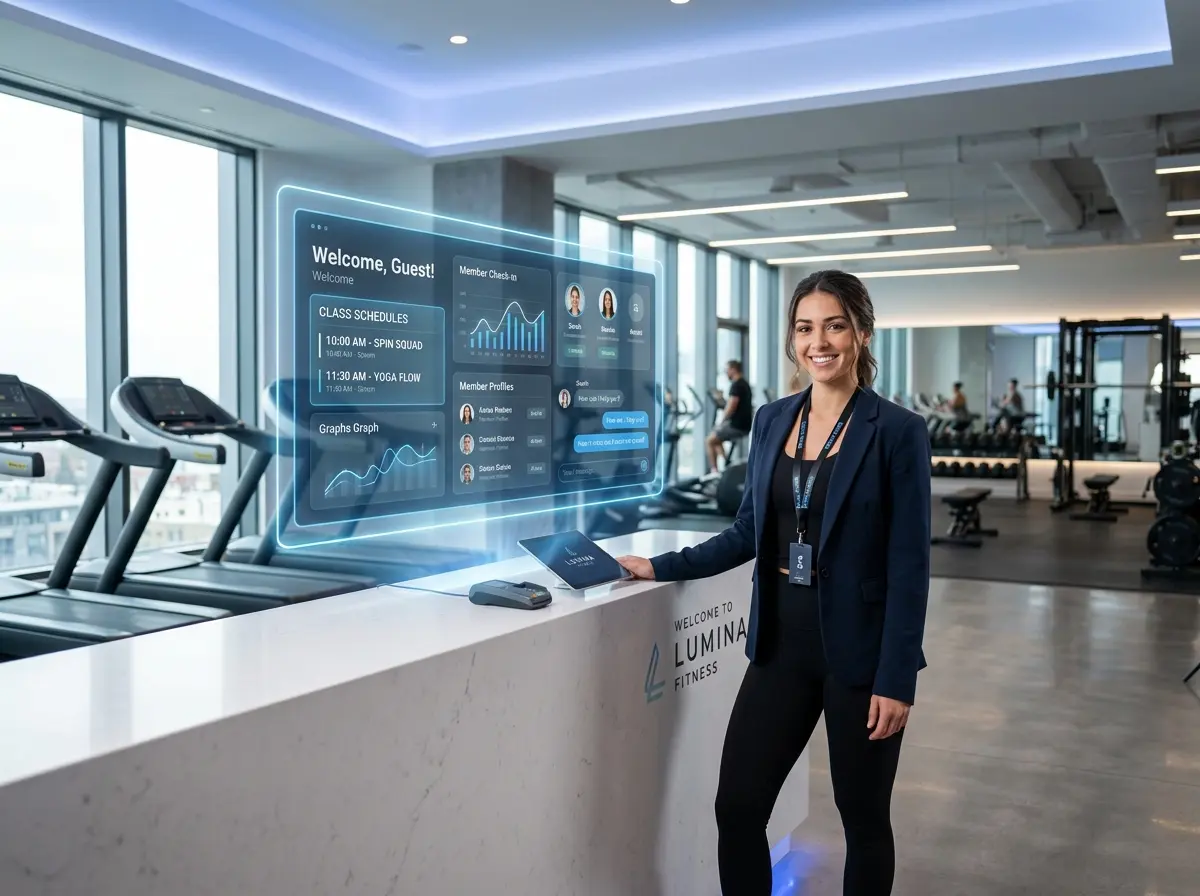
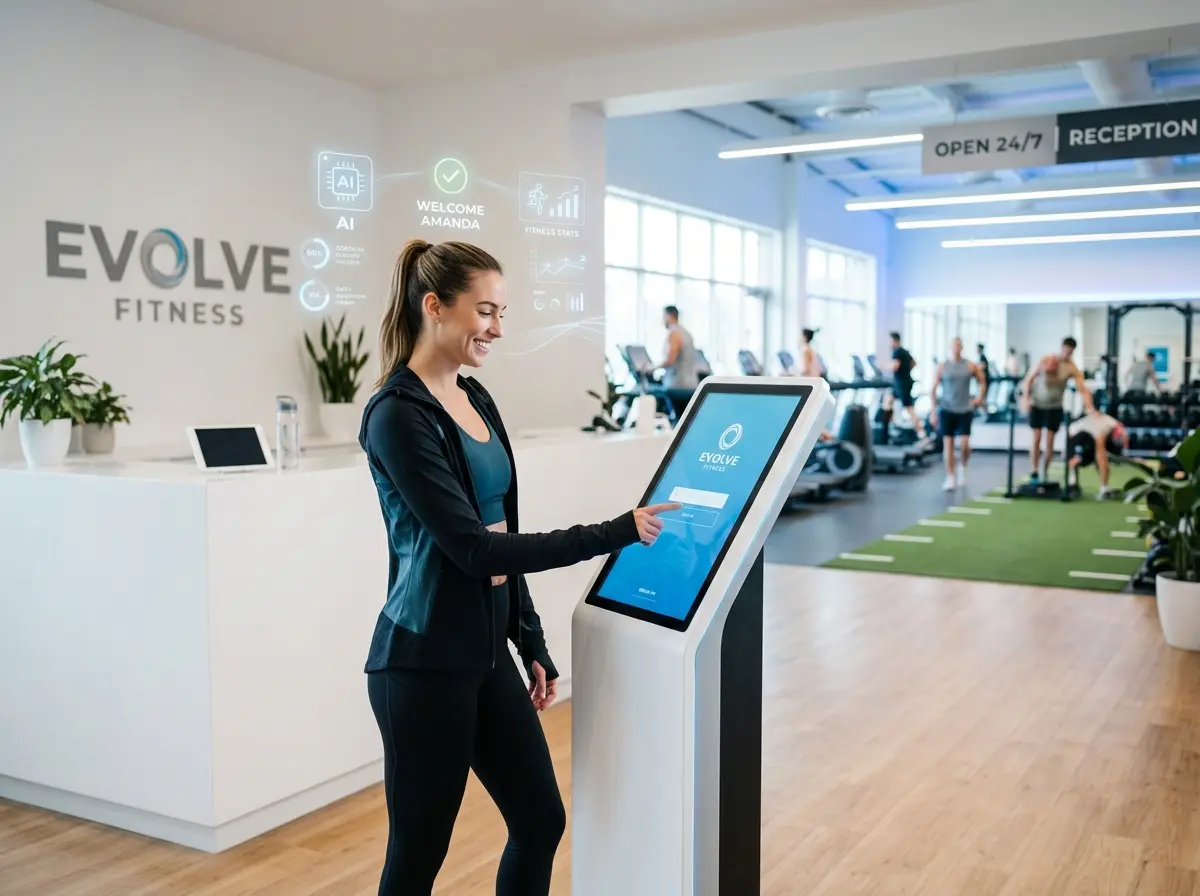
This is where Stella — an AI robot employee and phone receptionist — enters the picture. As a human-sized kiosk that stands inside your gym, Stella greets every member and visitor who walks through the door, proactively engages them in natural conversation, answers questions about memberships, class schedules, pricing, and current promotions, and does it all with the same energy whether it's 6 AM on a Monday or 8 PM on a Friday. She also handles your inbound phone calls 24/7, which means that motivated person calling at 7 PM? They get a real, helpful conversation instead of voicemail.
Stella can forward calls to your human staff when needed, take voicemail with AI-generated summaries, and even collect prospect information through conversational intake forms — all while keeping everything organized in a built-in CRM with custom fields and AI-generated contact profiles. She runs on a $99/month subscription with no upfront hardware costs, which means she costs less than a single day of missed leads, let alone a month of turnover-related chaos.
What Great Gym Member Experiences Actually Look Like
The First Impression Sets the Tone for Everything
In the fitness world, the first 90 seconds of a member's experience at your gym predicts a lot about whether they'll stick around. A warm, knowledgeable greeting that acknowledges them, offers help, and maybe mentions that you're running a 20% discount on personal training packages this month — that's the kind of interaction that converts visitors into members and members into long-term loyalists.
The problem is that first impression is wildly inconsistent in most gyms. It depends entirely on who happens to be at the desk, how busy they are, and whether they remembered to mention the current promotion. Training helps, but it doesn't solve the fundamental issue of human variability at scale. The gyms that win on member experience are the ones that treat every single touchpoint as an opportunity — not just when staffing allows for it.
Upselling Doesn't Have to Feel Gross
Most gym owners know they should be upselling personal training, nutrition coaching, premium memberships, and merchandise — but they also know their front desk staff find it awkward. Selling feels like selling, and staff who weren't hired as salespeople often avoid it entirely.
The secret to effective gym upselling is making it feel like a recommendation, not a pitch. When someone asks about group classes, that's the perfect moment to mention your 4-week kickstart package. When a new member signs up, that's when you highlight your personal training intro offer. These aren't aggressive sales tactics — they're helpful suggestions. And they're most effective when they happen consistently, every time, without hesitation or awkwardness.
Data You're Probably Not Collecting (But Should Be)
Your front desk interactions are a goldmine of business intelligence that most gym owners are simply letting evaporate into the air. What questions do people ask most often? Which promotions generate the most interest? What objections come up repeatedly when people consider signing up? This information should be shaping your marketing, your pricing, and your member communications — but if it only lives in the memory of whoever happened to be working that day, it's essentially worthless.
Modern AI tools can track and summarize these interactions automatically, giving you real insight into what's working and what isn't — without requiring you to stand behind the desk with a clipboard.
Quick Reminder About Stella
Stella is an AI robot employee and phone receptionist built for businesses exactly like yours. She stands inside your gym as a friendly, human-sized kiosk and handles in-person member interactions, while simultaneously managing your phone calls 24/7 — greeting callers, answering questions, collecting leads, and forwarding to staff when needed. At $99/month with no hardware costs, she's the front desk upgrade that doesn't require a job posting, a benefits package, or a two-week notice.
Your Next Steps Toward a Smarter Front Desk
If you've read this far, you probably already know that something needs to change. Here's how to start thinking about it practically:
- Audit your missed calls. For one week, track how many calls go unanswered or to voicemail. The number will probably surprise you — and motivate you.
- Calculate your actual front desk cost. Include wages, payroll taxes, training time, and an honest estimate of turnover costs over the past two years. Then compare that to what a $99/month AI solution could offset.
- Identify your highest-value upsell opportunities. What are the two or three things you wish your front desk mentioned to every single person who walked in? Those are your starting points for an AI interaction script.
- Think about your after-hours experience. What happens to someone who tries to reach your gym between 9 PM and 6 AM? If the answer is "nothing good," that's fixable.
The goal here isn't to eliminate human connection from your gym — your coaches, trainers, and experienced staff are irreplaceable in ways that matter deeply to member retention. The goal is to stop relying on an overwhelmed front desk to be the sole guardian of your brand experience, your lead pipeline, and your upsell strategy all at once.
AI isn't coming for the heart of your gym. It's coming for the part that was already breaking under the pressure. And honestly? It's about time.