When "We'll Send You Home With Some Information" Becomes a Black Hole
You've heard it before. A patient sits in the chair, gets a thorough exam, learns they need a crown, two fillings, and maybe some whitening while they're at it. The dentist presents the treatment plan. The patient nods thoughtfully, says "let me think about it," takes the printed sheet home — and then absolutely nothing happens. The paper sits on the counter. Life gets busy. The tooth doesn't hurt yet. And your front desk team, already juggling phones, check-ins, and insurance verifications, doesn't have time to manually chase down every unaccepted treatment plan.
This is one of the most common and quietly expensive problems in dental practice management. According to industry estimates, the average dental practice has somewhere between $30,000 and $50,000 in unaccepted treatment sitting dormant in its patient base at any given time. That's not money that walked out the door — it's money that just hasn't been asked for properly yet.
The good news? You don't need to hire a dedicated follow-up coordinator or guilt your front desk into making awkward phone calls. A well-designed automated follow-up sequence can do the heavy lifting — and one dental practice figured out exactly how to make it work.
Why Treatment Plans Go Cold (And Why It's Not Really the Patient's Fault)
The Forgetting Curve Is Real
Patients leave the office with the best intentions. But between work, kids, Netflix, and the general chaos of modern life, that treatment plan slides quietly down their list of priorities. The urgency they felt in the chair fades fast. Research on human memory — particularly Ebbinghaus's forgetting curve — suggests that people forget roughly 50% of new information within a day and up to 70% within a week. If your follow-up strategy is a single phone call from a front desk staffer who may or may not have time to make it, you're fighting an uphill battle against human psychology.
The Front Desk Is Already Overwhelmed
Here's the uncomfortable truth: manual follow-up is genuinely hard to maintain consistently. Your front desk team is managing a dozen priorities simultaneously — and "call Mrs. Henderson about her crown from three weeks ago" often loses to "handle the patient standing right in front of me." This isn't a staffing failure; it's a systems failure. Without automation, consistent follow-up simply doesn't happen at the scale it needs to.
Patients Often Just Need a Gentle Nudge (Not a Sales Pitch)
Here's the other side of the coin: many unaccepted treatment plans aren't rejections — they're delays. A significant portion of patients who leave without scheduling intend to come back. They just need a reminder, a reason, and an easy way to say yes. The practice that cracks the follow-up code isn't being pushy — it's being helpful. There's a meaningful difference between badgering someone and simply making it easy for them to do something they already planned to do.
The Automated Follow-Up Sequence That Actually Works
How One Practice Built Their System
A multi-provider dental practice in the Midwest was leaving a significant amount of revenue on the table each month in unaccepted treatment. Their front desk was talented and hardworking, but there simply weren't enough hours in the day to follow up meaningfully with every patient who walked out without scheduling. They built a three-touch automated sequence that changed their conversion rate measurably within the first 90 days.
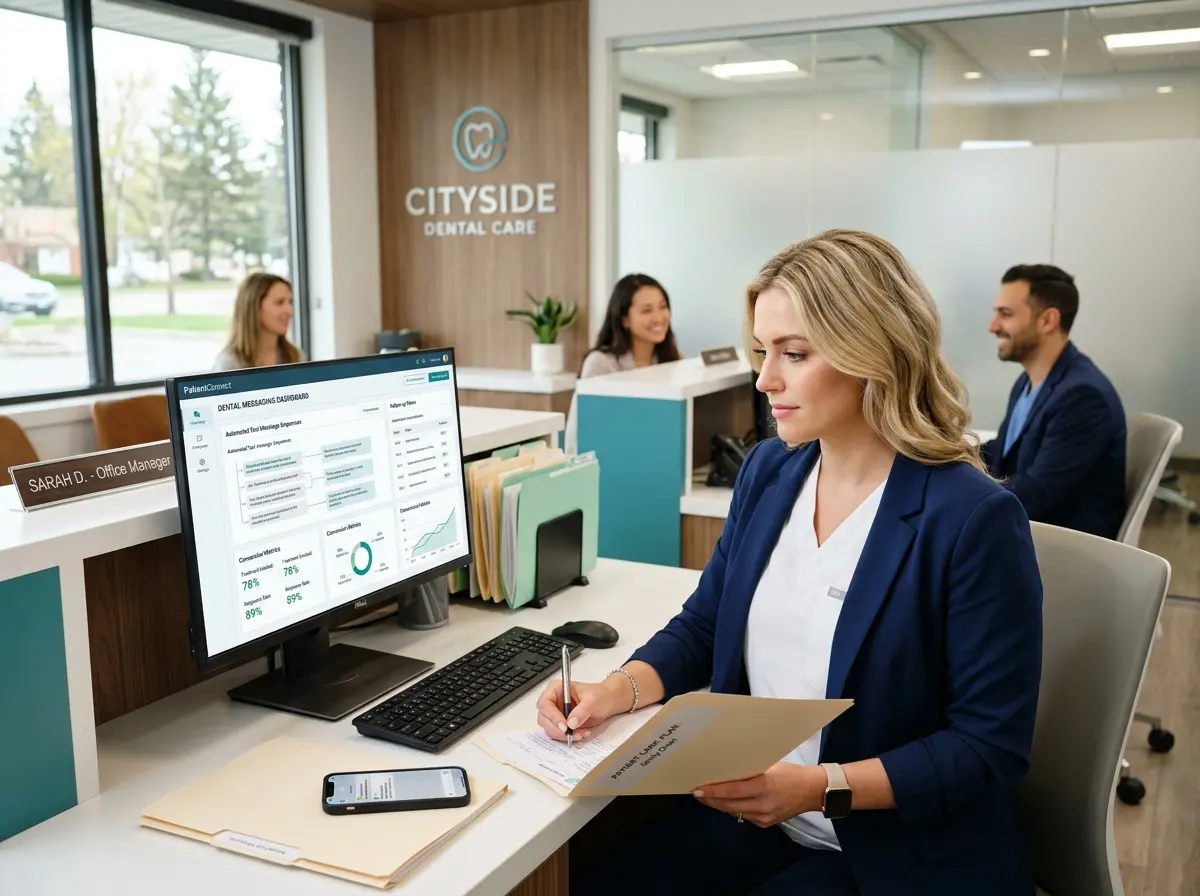
The sequence works like this: within 24 hours of the appointment, the patient receives a personalized email recapping their treatment plan in plain, friendly language — no dental jargon, just a clear explanation of what was recommended and why it matters. This email also includes a direct scheduling link. Three days later, if no appointment has been booked, a text message goes out with a shorter, warmer reminder: "Hey, just checking in — we'd love to get you scheduled before your calendar fills up." Finally, at the two-week mark, a second email goes out that addresses common hesitations head-on: financing options, time estimates for each procedure, and a note about what happens if treatment is delayed.
The result? Their treatment plan acceptance rate climbed by over 23% in the first quarter after implementation. Not because they hired more staff. Not because they pressured anyone. Simply because they stayed visible, relevant, and easy to respond to.
The Keys to Keeping It Human (Even When It's Automated)
The instinct is to worry that automation will feel cold or robotic. But the practice above learned quickly that the tone of the messages mattered just as much as the timing. A few things they got right: they used the patient's first name, they referenced the specific treatment that was recommended rather than a generic placeholder, and they wrote the messages to sound like they came from a caring team member — not a billing department. Automation handles the consistency; personalization handles the warmth. You need both.
Where Smart Tools Can Make This Even Easier
Letting Technology Handle the Repetitive Work
Building and maintaining a follow-up sequence manually is still work — and that's where the right tools earn their keep. Stella, the AI robot employee and phone receptionist built for businesses like dental practices, can play a meaningful supporting role in this kind of patient communication workflow. On the front end, Stella's built-in CRM and conversational intake forms help capture patient contact information cleanly and consistently — whether that happens during a phone call, at the kiosk in your waiting area, or through your website. That means the data feeding your follow-up sequences is accurate and complete, which is more than half the battle.
Stella also handles inbound calls 24/7, so when a patient does respond to one of those follow-up messages and calls to schedule, someone is always available to take that call — even after hours, even when your front desk is heads-down with another patient. That's the kind of seamless loop that turns a good follow-up sequence into a great one.
Optimizing Your Sequence Over Time
Metrics Worth Tracking
An automated sequence is only as good as your willingness to look at the data and make adjustments. The most important numbers to watch are your email open rates, your click-through rates on scheduling links, your text response rates, and ultimately your treatment acceptance rate segmented by sequence touchpoint. If your Day 1 email is getting opened but not clicked, the copy or the call-to-action needs work. If patients are scheduling after the two-week email more than after the first, maybe the financing message deserves to come sooner. Let the data tell you the story.
Segmenting by Treatment Type and Value
Not all unaccepted treatment is created equal. A patient who declined a $150 fluoride treatment probably doesn't need the same follow-up intensity as someone sitting on a $4,000 full-mouth restoration plan. Consider building separate sequences — or at minimum separate messaging tracks — for high-value treatment plans versus routine items. For major procedures, a personal phone call woven into the automation sequence can dramatically increase conversion. Automation doesn't mean zero human contact; it means reserving human effort for the moments where it has the highest impact.
Timing Adjustments That Can Move the Needle
Small timing tweaks can have outsized effects. Studies in email marketing consistently show that messages sent on Tuesday through Thursday between 9 a.m. and 11 a.m. tend to perform best. Text messages, on the other hand, have high open rates almost regardless of time — but avoiding early mornings and late evenings is still courteous. Test sending your Day 3 text on different days of the week and watch what happens to your response rate. These aren't massive changes, but compounded over hundreds of patient interactions, they add up to real revenue.
A Quick Reminder About Stella
Stella is an AI robot employee and phone receptionist designed to help businesses — including dental practices — handle customer interactions more consistently and professionally. She greets patients at your kiosk, answers phones around the clock, collects contact information through smart intake forms, and keeps everything organized in a built-in CRM. At $99/month with no upfront hardware costs, she's built to make your team's life easier without blowing your budget.
Stop Leaving Treatment Plans on the Counter
The dental practice in this story didn't stumble onto a miracle — they built a repeatable system and committed to running it consistently. That's entirely replicable. If your practice is sitting on tens of thousands of dollars in unaccepted treatment plans, the answer probably isn't a bigger team or a more aggressive front desk. It's a smarter, more consistent process that meets patients where they are and makes it ridiculously easy to say yes.
Here's where to start: pull your last 90 days of unaccepted treatment plans. Look at how many patients never received a second touchpoint after leaving the office. That number is your opportunity. Then take these steps:
- Audit your current follow-up process — be honest about whether it's actually happening consistently.
- Choose a platform that allows automated email and SMS sequences tied to your patient data.
- Draft three messages — a Day 1 recap email, a Day 3 text, and a Day 14 objection-handling email — using a warm, personal tone.
- Set conversion benchmarks so you know what success looks like before you start tweaking.
- Review performance monthly and adjust messaging, timing, or segmentation based on what the data shows.
Patients aren't ignoring you because they don't care about their health. They're just busy and forgetful — like all of us. The practices that win aren't the ones who give up after one attempt. They're the ones that show up consistently, helpfully, and at the right moment. Build that system, and you'll stop wondering where all that treatment plan revenue went.