You've Got 60 Minutes — Are You Wasting Them?
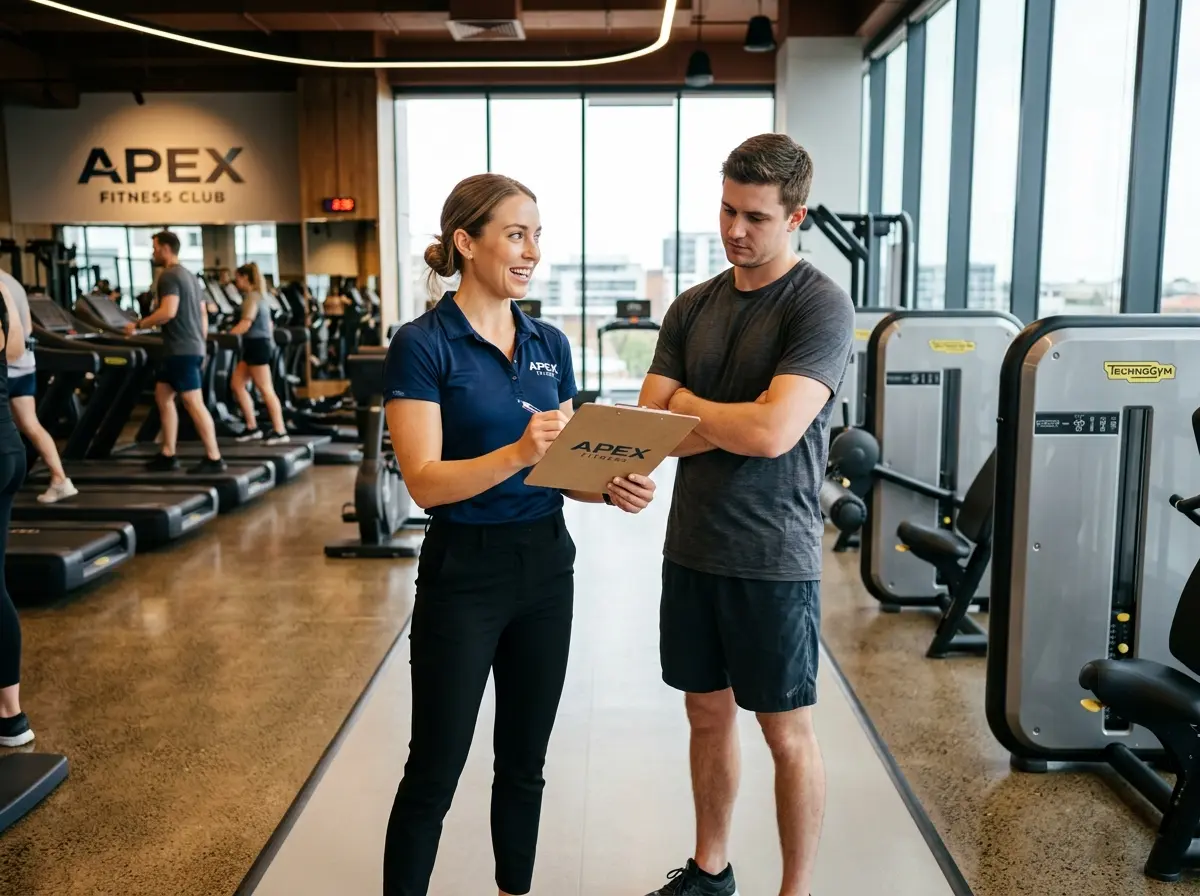
The new member orientation is arguably the most valuable 60 minutes your gym will ever spend with a customer. Think about it: this person just handed you their credit card, they're excited (or at least optimistic), and they're physically present and listening. Their motivation is at its seasonal peak — whether it's January 2nd, post-breakup, or the week before a beach vacation. And yet, gym after gym fumbles this golden window when it comes to pitching personal training. Not because the trainers aren't talented. Not because the pricing is wrong. But because the pitch itself is broken.
According to the International Health, Racquet & Sportsclub Association (IHRSA), the average gym retains only about 65–70% of its members year over year. Personal training is one of the most powerful tools to flip that statistic — members who train with a PT cancel far less often and spend significantly more per year. So why are so many gyms leaving that revenue sitting on the mat? Let's talk about what's actually going wrong — and how to fix it.
The Real Reasons Your Personal Training Pitch Falls Flat
You're Selling a Product Instead of a Transformation
The most common mistake gym staff make during orientation is describing personal training like a menu item. "We offer 30-minute and 60-minute sessions, available in packages of 10, 20, or 30. Our trainers are certified and have experience with weight loss, strength training, and more." Riveting stuff. Truly. The problem is that new members aren't buying sessions — they're buying a version of themselves they haven't become yet. When your pitch leads with logistics and price points, you're speaking a language the new member isn't emotionally tuned into yet.
Effective personal training pitches start with a discovery question: "What's the main reason you joined today?" The answer to that question is your entire sales pitch. If they say they want to lose 20 pounds before their daughter's wedding, your job is to connect personal training directly to that outcome — not to explain the difference between a 30- and 60-minute session. Features tell, but outcomes sell.
The Pitch Happens Too Late in the Orientation
If you're saving the personal training pitch for the end of the orientation tour — right after you've shown them the locker rooms, explained the parking validation, and covered the guest policy — you've already lost momentum. By that point, the new member is mentally planning their first workout, calculating how long the drive home will take, and wondering if they left their car unlocked. Their bandwidth is full.
The smarter move is to weave the personal training conversation naturally into the early part of the tour — ideally right after that initial discovery question. When you walk them past the training floor, that's your cue. "This is where our personal trainers work with members one-on-one. Actually, based on what you mentioned about wanting to build strength after your injury, I'd love to introduce you to one of them today if they're available." That's not a hard sell. That's a helpful recommendation — and it lands completely differently.
Staff Inconsistency Is Killing Your Conversion Rate
Here's an uncomfortable truth: your orientation pitch is only as good as whoever happened to show up for the morning shift. If you have three front desk staff members running orientations and no standardized script or talking points, you effectively have three different gyms operating under one roof. One employee might be naturally enthusiastic about personal training and convert 30% of new members. Another might awkwardly mention it at the end like a legal disclaimer. The third might skip it entirely because they felt weird bringing up something "extra" during the first visit.
Standardizing your orientation pitch doesn't mean making it robotic. It means giving every staff member the same framework: open with discovery questions, seed personal training early, connect PT to the member's stated goals, and offer a complimentary intro session rather than leading with price. Role-play it. Rehearse it. Make the pitch a habit, not an afterthought.
A Smarter Front-Line Support System for Your Gym
Let Technology Handle the Groundwork Before Orientation Even Starts
One underrated way to improve your personal training conversion rate is to collect goal and preference data before the new member ever walks through the door for their orientation. When your staff already knows that the incoming member is a 42-year-old who wants to train for a 5K and has a history of knee issues, they can have a relevant, personalized conversation from the moment they shake hands — rather than spending the first 10 minutes getting up to speed.
Stella, the AI robot employee and phone receptionist, can help with exactly this kind of pre-visit groundwork. When a new member calls to schedule their orientation, Stella can handle that call 24/7, gather intake information through a natural conversation, and log everything into her built-in CRM — complete with notes and AI-generated summaries your staff can review before the appointment. For members who are already in the building, her in-store kiosk presence can greet them, answer questions about personal training packages, and keep them engaged while they wait for their orientation to begin. It's a smarter handoff, and it means your staff walks into that 60-minute window better prepared and more focused on selling the outcome — not gathering basic information.
How to Actually Fix Your Orientation Pitch
Build a Complimentary Session Into the Onboarding Process
If you want to dramatically increase personal training uptake, stop asking new members to decide whether they want personal training — and start asking them to experience it. A complimentary 20 to 30-minute introductory session with a trainer, offered as a standard part of every new member's first week, removes the financial barrier and the psychological hesitation simultaneously. The member doesn't have to commit to anything. They just have to show up.
The data on this is compelling: gyms that offer complimentary intro sessions as part of onboarding consistently report higher personal training conversion rates — often 2 to 3 times higher than gyms that pitch PT verbally during orientation without a trial component. Once someone has experienced working with a trainer, the abstract becomes concrete. The value is no longer something they have to imagine; it's something they've felt.
Train Your Staff to Handle Objections With Empathy, Not Pressure
The two most common objections to personal training are price and time. "It's a little out of my budget right now" and "I'm not sure I can commit to a regular schedule" account for the vast majority of declined pitches. The mistake most staff make is either caving immediately ("No problem! Just know it's available whenever you're ready.") or pushing too hard ("Well, if you think about it in terms of cost-per-session, it's really not that bad..."). Neither approach works particularly well.
Instead, train your team to respond with genuine curiosity. When someone says it's out of budget, acknowledge it: "Totally understand — it's an investment. Can I ask, what's the main thing you're hoping to accomplish here in the next six months?" Then reconnect the outcome to the solution. If their goal is meaningful enough to them, budget objections often soften on their own. You're not pressuring them — you're helping them decide if the outcome is worth prioritizing.
Follow Up Like You Mean It
The orientation pitch is not a one-shot opportunity. Far too many gyms treat it that way — make the pitch, accept the answer, move on. But research consistently shows that most purchasing decisions, especially for higher-ticket services, require multiple touchpoints before conversion. A new member who says "not right now" to personal training in week one might be completely ready for that conversation in week three, once they've realized that they don't actually know what they're doing on the weight floor.
Build a structured 30-day follow-up sequence into your onboarding process. A check-in call or text at day 7, a personal training highlight email at day 14, and an offer to revisit the complimentary session invite at day 21 can meaningfully move the needle — especially for members who were genuinely interested but hesitant during orientation. The goal isn't to hound them. It's to stay helpful and relevant while their motivation is still alive.
Quick Reminder About Stella
Stella is an AI robot employee and phone receptionist designed to support businesses exactly like yours — greeting customers in person at her kiosk, answering calls around the clock, collecting intake information, managing contacts through a built-in CRM, and helping your team stay organized and prepared. She's available for just $99/month with no upfront hardware costs, and she's always ready to work — no sick days, no bad mornings, no skipped pitches.
Your Next Steps Toward a Pitch That Actually Converts
Fixing your personal training pitch during new member orientation isn't about being more aggressive or more persuasive. It's about being more intentional. Start by auditing your current process honestly: Are your staff members asking discovery questions or launching straight into logistics? Is personal training introduced early or saved for the awkward end-of-tour moment? Do you have a complimentary session offer built into your standard onboarding flow, or is it optional and inconsistently offered? The answers to those questions will tell you exactly where to focus first.
From there, build your framework, train your team, offer the complimentary session as a default rather than an upsell, and create a follow-up sequence that keeps the conversation alive past day one. Leverage tools that help your staff walk into every orientation better informed and better prepared. And remember: every new member who joins your gym is standing at the beginning of a journey. Your job — during that 60-minute window and beyond — is simply to make the case that they don't have to walk it alone.
The pitch isn't broken because personal training is a hard sell. It's broken because it's being treated as an afterthought in a process that should be your most carefully designed touchpoint. Fix the process, and the revenue will follow.