Let's Be Honest: Your Customers Are Tired of Calling to Ask "When Was My Last Tune-Up?"
Picture this: It's the hottest day of the year, a homeowner's AC is making a sound that can only be described as "a cat trapped in a ceiling fan," and they have absolutely no idea when their last service was, what was done, or whether they're still under warranty. So they call you. Then they call back because the hold music cut out. Then they email. Then they leave a one-star review because nobody got back to them fast enough.
Sound familiar? If you run an HVAC company, you already know that customer communication and service history management are two of the biggest pain points in the business. Technicians are stretched thin, office staff are fielding the same questions on repeat, and somewhere in a filing cabinet from 2019, there's a service record that would answer literally everything.
The good news: a customer portal for service history and scheduling can fix most of this. It gives your customers the transparency they crave and your team the breathing room they deserve. Let's break down why this isn't just a nice-to-have — it's quickly becoming a competitive necessity.
The Real Cost of Not Having a Customer Portal
Your Office Staff Are Professional Broken Records
Without a self-service portal, your customers have exactly one option for getting information: calling you. And what do they call about? The same things, every single day. "When was my last service?" "What filter size did the tech recommend?" "Is my equipment still under the maintenance agreement?" These are all questions that a well-designed customer portal answers automatically, without a single human being involved.
According to Salesforce research, 88% of customers expect companies to have a self-service portal. That number isn't going down. Customers have been trained by Amazon, their banks, and their doctors' offices to expect on-demand access to their own information — and when your HVAC company doesn't offer that, it feels dated. Not charmingly old-school. Just dated.
The labor cost alone is worth considering. If each unnecessary inbound call takes five minutes to handle and you're fielding 20 of those calls per day, that's nearly two full hours of staff time spent on questions that a portal could answer in seconds.
Service History Gaps Lead to Missed Revenue
Here's one that hurts a little more: when customers don't have easy access to their service history, they're less likely to stay on top of maintenance schedules. And when maintenance gets skipped, you lose recurring revenue opportunities. Worse, systems fail prematurely, the customer blames the last company that touched it (probably you), and suddenly you've lost a client you could have kept for a decade.
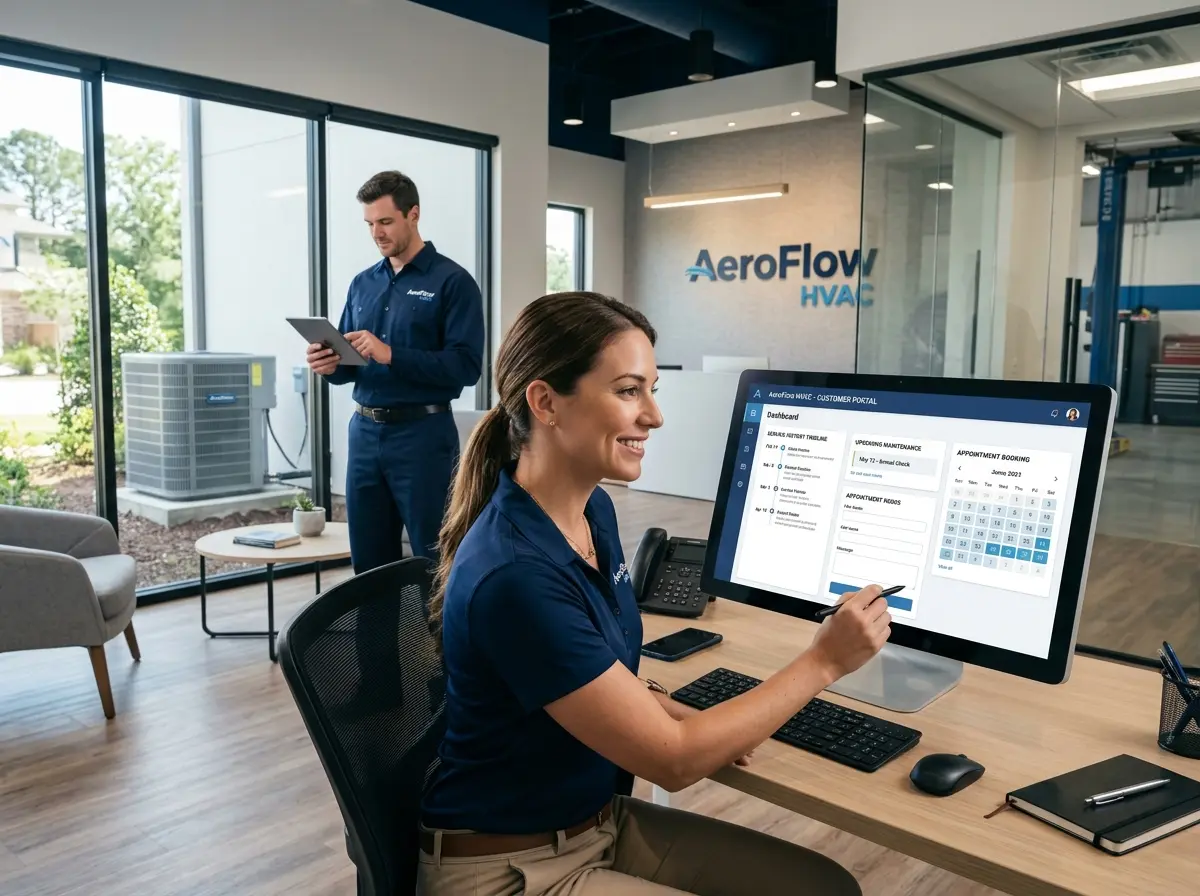
A customer portal that shows a clear timeline of service visits, parts replaced, recommendations made, and upcoming maintenance due dates is essentially a passive upselling engine. When a customer logs in and sees "Capacitor flagged as aging — replacement recommended at next visit," they're far more likely to proactively schedule that service than if they had to rely on memory or a voicemail they half-listened to six months ago.
Scheduling Friction Is Quietly Killing Your Conversion Rate
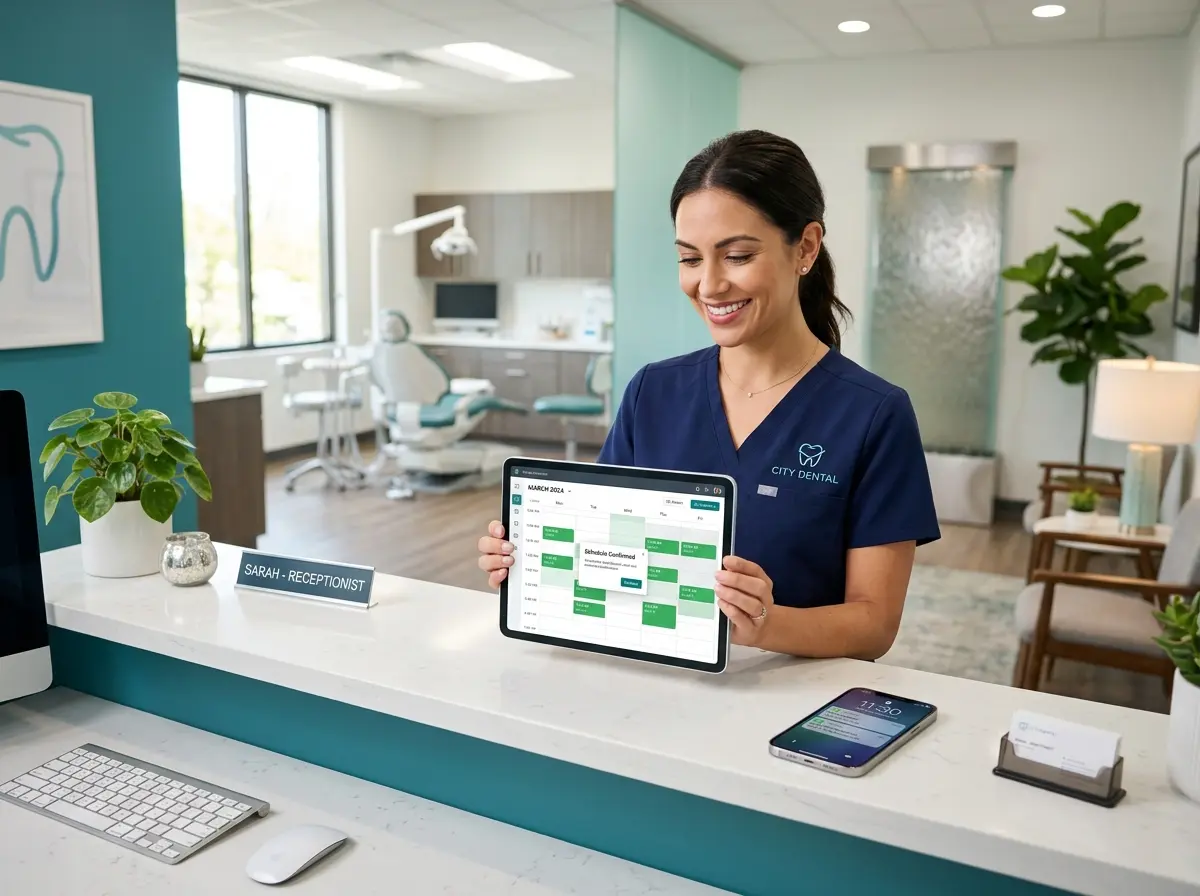
If booking a service appointment requires a phone call during business hours, you are losing customers to competitors who let people book online at 10 PM in their pajamas. It's that simple. Online scheduling reduces friction, increases booking volume, and — bonus — tends to reduce no-shows because automated reminders can be built right in. The fewer steps between "I need service" and "appointment confirmed," the better your conversion rate.
How to Build a Portal Experience Your Customers Will Actually Use
Start With the Features That Matter Most
Not every customer portal needs to be a full-blown enterprise software suite. For an HVAC company, the core features that drive real value are: service history with technician notes, equipment profiles (make, model, age, warranty status), online scheduling with availability in real time, and document storage for invoices, inspection reports, and maintenance agreements. Get those four things right and you've solved about 80% of your customer communication problems before they start.
Beyond the basics, consider adding a maintenance agreement dashboard where customers can see exactly what their plan covers and when their next included visit is due. This reduces cancellations, builds trust, and makes your service agreements feel premium rather than like a piece of paper nobody reads.
Make It Mobile-First Without Exception
Your customers are looking up their service history from a parking lot while their car idles. They're scheduling a tune-up from their couch while half-watching television. If your portal isn't fully functional and genuinely pleasant to use on a smartphone, it might as well not exist. Responsive design isn't optional — it's the baseline. Test it on multiple devices before you launch it, and then test it again six months later because mobile browsers update constantly and things break in unexpected ways.
Where Stella Fits Into Your Customer Experience Strategy
Covering the Front Door — Physical and Digital
A customer portal handles a lot, but it doesn't handle everything. Customers still call. Walk-ins still happen if you have a showroom or service center. And plenty of people still prefer to talk to someone rather than navigate a self-service interface. That's where Stella comes in.
Stella is an AI robot employee and phone receptionist that works 24/7 — greeting customers in person at your physical location and answering phone calls around the clock. For an HVAC business, that means no more missed calls during peak season when every technician is in the field and the office line rings unanswered. Stella handles incoming calls professionally, answers common questions about your services and scheduling, and can collect customer information through conversational intake forms — feeding that data directly into her built-in CRM so your team has a complete picture before a technician ever sets foot on-site.
Think of the portal as your customers' self-service lane and Stella as your always-on front desk. Together, they cover just about every communication scenario without adding headcount.
Best Practices for Rolling Out and Promoting Your Portal
Get Your Existing Customers Enrolled First
A customer portal only creates value if people actually use it, and adoption doesn't happen on its own. The best time to enroll a customer is immediately after a service visit, while the interaction is fresh. Send a follow-up email with a clear, simple invitation to create their account, view their service summary, and schedule their next appointment. Keep the sign-up process short — name, email, and a password. You can collect more information later once they're logged in and engaged.
Consider offering a small incentive for first-time portal registrations, like a discount on a future visit or a free filter with their next maintenance appointment. It doesn't need to be extravagant — it just needs to make clicking that link feel worth the thirty seconds it takes.
Train Your Technicians to Be Portal Ambassadors
Your field technicians are your most direct touchpoint with customers, and they should be your primary portal evangelists. When a tech wraps up a visit, a simple "Hey, you can actually see everything I just did — parts replaced, notes, your next recommended service date — all in our customer portal. Here's how to sign up" goes a long way. Customers respond to recommendations from people they trust, and if your technician just fixed their AC during a heat wave, trust is at an all-time high. Use that moment.
Use the Portal as a Retention Tool, Not Just a Convenience Feature
The most forward-thinking HVAC companies are using portal data to proactively reach out to customers before problems occur. If your system shows that a customer's equipment is five years past its last major service and they haven't scheduled anything in 14 months, that's a trigger for an automated outreach campaign. "Hey, it's been a while — here's a quick link to see your service history and book a check-up before summer hits." That kind of proactive communication feels like good service, not spam, because it's relevant and timely. It keeps customers engaged, reduces emergency calls, and generates steady maintenance revenue in your slower months.
Quick Reminder About Stella
Stella is an AI robot employee and phone receptionist built for businesses of all sizes, available for just $99/month with no upfront hardware costs. She greets customers in person at your location, answers phone calls 24/7, collects customer information, manages contacts in a built-in CRM, and keeps your business running professionally even when your human team is unavailable. For HVAC companies juggling a busy season, a technician shortage, or simply too many inbound calls, she's the kind of employee who never calls in sick and never puts someone on hold and forgets about them.
Your Next Steps Toward a Smarter Customer Experience
The HVAC industry is competitive, and the companies that win long-term aren't necessarily the ones with the most trucks or the lowest prices — they're the ones that make customers feel taken care of in a way that's convenient, transparent, and proactive. A customer portal for service history and scheduling is one of the highest-leverage investments you can make toward that goal.
Here's what to do this week:
- Audit your current customer communication process. Count how many inbound calls per day are questions a portal could answer automatically.
- Research portal solutions built specifically for HVAC or field service businesses — many integrate directly with dispatch and invoicing software you're likely already using.
- Map out the four core features (service history, equipment profiles, online scheduling, document storage) and make sure any solution you consider covers all of them well on mobile.
- Build an enrollment campaign for your existing customer base and brief your technicians on how to promote it in the field.
- Pair it with a front-end communication tool — like Stella — so that customers who prefer to call or walk in still get an outstanding, professional experience.
Your customers already expect this. The only question is whether they'll get it from you or from your competitor down the street. The answer to that one is entirely up to you.