Your Booking Form Has a Personality Problem
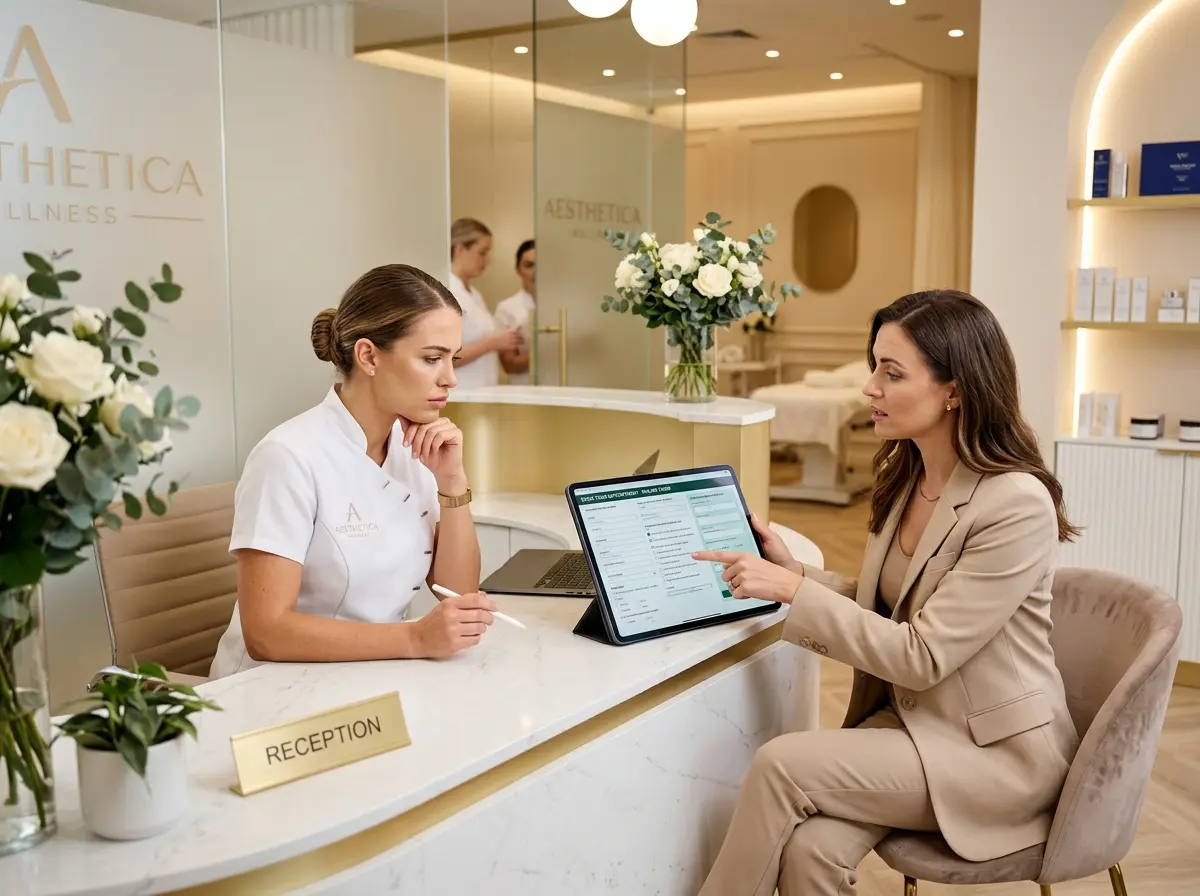
Picture this: A potential client has just discovered your med spa. She's been thinking about getting a HydraFacial for months, finally decided to treat herself, and landed on your website ready to book. Then she hits your online booking form — and suddenly she's filling out a digital questionnaire that feels more like a loan application than a luxury experience. Name, email, phone, date of birth, insurance information (wait, what?), preferred appointment time, how did you hear about us, referral code, emergency contact...
She closes the tab. You just lost a client before she ever walked through your door.
Here's the uncomfortable truth: most med spa booking forms are optimized for the business's convenience, not the client's experience. They ask too much too soon, create unnecessary friction, and completely miss the opportunity to start building a relationship. The questions you're asking — and the ones you're not asking — could be quietly costing you bookings every single day. Let's fix that.
The Anatomy of a Bad Booking Form
Asking for Everything Upfront (And Why It Backfires)
There's a well-documented phenomenon in conversion rate optimization called "form fatigue." Research consistently shows that reducing form fields can increase conversions dramatically — in some cases by over 50%. Yet med spas are notorious for front-loading their intake process with every piece of information they might ever conceivably need, presented to someone who hasn't even visited yet.
Think about what your form is actually asking a first-time client to do: Trust you with their personal health history before they've met a single member of your staff. Before they've seen your facility. Before they've experienced anything that would give them a reason to trust you with sensitive information. That's like asking someone to share their medical records on a first date. Charming? Not exactly.
The fix is straightforward: separate your intake process into stages. Collect only what you need to confirm the appointment at the booking stage. Save the detailed health history, contraindication screening, and consent forms for a pre-appointment digital packet sent 24–48 hours before they arrive.
Ignoring the Questions That Actually Drive Revenue
While your form is busy asking for a secondary email address and whether the client prefers morning or afternoon appointments, it's completely missing the questions that could meaningfully improve their experience — and your bottom line.
Consider what you could be asking instead:
- "What's the main skin concern you'd like to address?" — This lets you prepare the right provider, suggest the right treatment, and personalize the experience before they arrive.
- "Have you had any professional treatments in the last 30 days?" — Genuinely useful for safety and service quality, and it signals that you're serious about their results.
- "Is there a special occasion coming up you're preparing for?" — A wedding? A reunion? Now you have a reason to recommend a treatment package and follow up with purpose.
- "What's your biggest hesitation about trying this service?" — A slightly bold question that surfaces objections you can address proactively, turning a nervous first-timer into a confident, loyal client.
These questions don't just collect data — they start a conversation. And in the med spa world, where trust is everything, that distinction matters enormously.
Missing the Upsell Moment Hiding in Plain Sight
Your booking form is, believe it or not, a sales touchpoint. Most spa owners treat it like a data collection chore. Smart ones treat it like an opportunity. A simple, well-placed question like "Would you like to add a complimentary consultation about our current specials when you arrive?" costs you nothing and opens the door to upsells that your front desk staff may never get around to mentioning during a busy afternoon.
Similarly, a brief note on the confirmation page — "Clients booking a HydraFacial often pair it with our LED light therapy add-on for enhanced results" — is a soft, non-pushy way to plant the seed of an upgraded experience. No pressure. Just information. The kind a knowledgeable friend might share.
How Smarter Intake Transforms the Client Journey
Where AI Can Step In and Make This Effortless
Redesigning your intake process sounds like a weekend project that turns into a month-long nightmare. It doesn't have to be. Stella, the AI robot receptionist designed for businesses like yours, handles conversational intake forms across multiple channels — whether a client is calling in to book, visiting your website, or walking up to an in-store kiosk. Instead of a cold, static form, clients answer questions naturally, in conversation, which dramatically reduces the friction that causes drop-offs.
For med spas specifically, Stella's built-in CRM captures client responses, tags profiles automatically, and gives your team a clear picture of each client before the appointment even begins. No more scrambling at the front desk, no more generic greetings, and no more missed upsell opportunities because nobody read the intake notes in time.
Building a Form Strategy That Actually Works
The Three-Stage Intake Model
The most effective med spa intake processes follow a three-stage model that respects the client's time and attention while ensuring your team has everything they need.
Stage 1 — At Booking: First name, last name, phone, email, service requested, and preferred date/time. That's it. Five to six fields. Fast, painless, done. The goal here is simply to get the appointment on the books.
Stage 2 — Pre-Appointment (24–48 Hours Before): This is where you send a more detailed digital intake form via email or text. Health history, current medications, skin concerns, contraindications, and consent forms all live here. Clients are already committed to the appointment, so they're far more willing to invest five minutes completing paperwork. Completion rates at this stage are significantly higher than at the initial booking.
Stage 3 — Post-Visit Follow-Up: A brief, friendly check-in 48–72 hours after the appointment. How are they feeling? Any questions about aftercare? And gently — is there anything else they'd like to explore? This stage costs almost nothing and does enormous work in building long-term loyalty.
The Language Your Form Uses Matters More Than You Think
Clinical language on a booking form creates psychological distance. Your clients are coming to you for self-care, confidence, and sometimes a bit of indulgence. Your form should reflect that energy, not undermine it.
Compare these two versions of the same question:
- Clinical version: "List any current medications or topical treatments you are using."
- Warm version: "Are you currently using any prescription creams or taking medications we should know about to make sure your treatment is as safe and effective as possible?"
Same question. Completely different feeling. The second version explains why you're asking, which builds trust and increases honest, complete responses. Every question on your form should be able to answer the implicit client question: "Why do they need to know this?" If you can't answer that quickly and clearly, the question probably doesn't belong on the form.
Test, Measure, and Actually Improve
Here's where most med spa owners drop the ball entirely: they build a form, launch it, and never look at it again. Your booking form should be a living part of your business, not a "set it and forget it" checkbox. Monitor your drop-off rate — if clients are starting the form and not completing it, that's a measurable problem with a fixable cause. A/B test different versions of key questions. Track which intake questions correlate with higher-ticket bookings. Use the data your form collects to actually inform your service menu, your promotions, and your staff training.
The med spas that win long-term aren't the ones with the most beautiful websites. They're the ones that pay close attention to the micro-moments — like a booking form — that everyone else ignores.
A Quick Reminder About Stella
Stella is an AI robot employee and phone receptionist built for businesses that want to deliver a polished, professional client experience without the overhead. For med spas, she can greet walk-in clients at the kiosk, answer incoming calls around the clock, collect intake information conversationally, and keep your CRM organized — all for $99 a month with no upfront hardware costs. She doesn't take sick days, she doesn't forget to mention the monthly special, and she never puts a client on hold to go find someone who "actually knows the answer."
Start with One Change This Week
You don't need to overhaul your entire intake process overnight. Start with one concrete step: pull up your current booking form right now and count the number of fields. If it's more than seven, you have immediate work to do. Remove anything that isn't strictly necessary to confirm the appointment and move it to a pre-appointment communication instead.
Then look at the questions that remain and ask yourself honestly: Is this question serving my client, or is it just serving my filing system? Rewrite the clinical language into something warmer and more human. Add one question that opens a natural conversation about what the client actually wants to achieve.
Small changes to your booking form can produce meaningful increases in completed bookings, higher average spend, and better client retention — all without spending a dollar on advertising. Your intake process is the first real impression your business makes. It's worth making it a good one.