From Dusty Shelves to Community Destination: Why Your Store Needs to Be More Than a Store
Let's be honest — if your sporting goods store is just a place where people buy cleats and protein powder, you're fighting a losing battle against the internet. Amazon doesn't host a 5K. Dick's Sporting Goods doesn't know your kid's soccer coach. But you can. And that's the most powerful competitive advantage a local sporting goods store owner has: the ability to become the heartbeat of an active, engaged community.
The stores that thrive long-term aren't just retailers — they're gathering places. They're where the local running club posts its flyers, where youth athletes get their first real gear advice, and where neighbors accidentally spend forty-five minutes talking about trail conditions. According to a Nielsen study, 68% of consumers say they prefer to support local businesses that are involved in their communities. The opportunity is right in front of you. You just have to be intentional about it.
So let's talk about how to actually do that — without burning out your staff, blowing your budget, or accidentally hosting a dodgeball tournament that ends in a liability claim.
Building the Foundation: Events, Partnerships, and Programming
Turning your store into a community hub starts with giving people a reason to show up when they're not buying anything. That sounds counterintuitive for a retail business, but trust the process. The more people are in your store — even just browsing, chatting, or attending an event — the more familiar and comfortable they become with your brand. And comfortable people buy things.
Host Events That Match Your Customer's Passions
You sell sporting goods. Your customers are, by definition, people who like to move, compete, and challenge themselves. So give them something to get excited about. Think beyond the obvious product demo. Consider hosting a weekly group run that starts and ends at your store, a youth sports clinic taught by a local coach, a beginner's hiking workshop, or a seasonal gear swap event. These don't have to be expensive — many can be run with minimal cost if you partner with the right people.
The key is consistency. A one-time event is a marketing stunt. A recurring event is a community institution. When your Thursday evening run group becomes something people plan their week around, you've won something that no coupon code can buy: loyalty.
Partner With Local Teams, Clubs, and Organizations
Your town already has an ecosystem of active people — youth leagues, adult recreational sports teams, school athletic programs, fitness clubs, and outdoor adventure groups. These organizations are constantly looking for local support, and you're constantly looking for customers. That's called a perfect match.
Reach out to local coaches and league organizers and offer to be their "official" gear supplier. Sponsor a youth team jersey. Set up a small consignment corner for used gear from local teams. Offer a discount program for club members. These partnerships put your name in front of hundreds of potential customers while genuinely serving the community. It's good business and good citizenship — a rare combo that deserves to be celebrated.
Create a Space People Want to Linger In
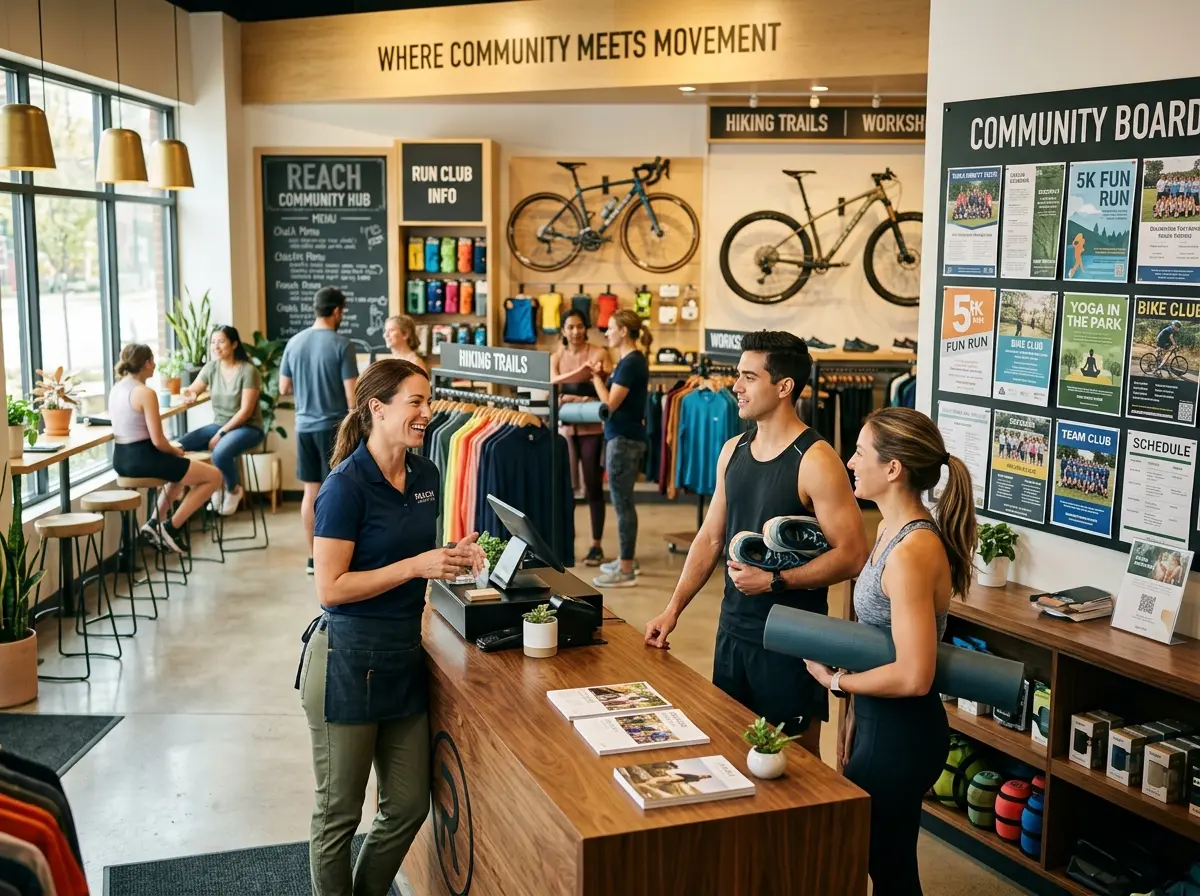
Small changes to your store's physical environment can go a long way toward making it feel like a community gathering spot rather than a transaction machine. Post a local events board near the entrance. Display photos of local athletes and teams (with permission, obviously). Stock a rack of free local trail maps or race flyers. Have a comfortable spot where someone can sit and lace up a pair of shoes they're trying on. These are low-cost, high-impact touches that signal: this is your place, not just our store.
Using Smart Tools to Stay Consistent and Connected
Let Technology Handle the Repetitive Stuff So You Can Focus on People
Here's the thing about building community: it requires human energy. And human energy is finite. If your staff is constantly answering the same questions about store hours, return policies, and whether you carry a specific brand of knee brace, they don't have the bandwidth to actually connect with customers in meaningful ways. That's where Stella comes in.
Stella is an AI robot employee and phone receptionist that can greet customers as they walk in, answer common questions, promote your current events and deals, and handle phone calls 24/7 — including taking messages with AI-generated summaries sent straight to your phone. For a sporting goods store trying to build community, that means your human staff can focus on the high-value interactions: the ones where a knowledgeable, enthusiastic employee helps someone find the perfect trail shoe or recommends the right youth baseball glove for a nervous parent. Stella handles the routine. Your team handles the relationship-building. That's a solid division of labor at just $99/month.
Loyalty, Local Marketing, and Keeping the Momentum Going
Getting people through the door once is an accomplishment. Getting them to come back — and bring their friends — is the real game. Community hubs don't happen by accident; they're built through consistent effort, smart communication, and a genuine commitment to your customers' passions.
Build a Loyalty Program That Reflects Your Values
A points-based loyalty program is fine, but for a community-focused store, consider going beyond the transactional. Reward customers for attending your events, referring friends, or posting about a local race they completed. Create a "Local Athlete of the Month" recognition that features a customer on your social media and gives them a small store credit. These programs reinforce the idea that you see your customers as people, not just purchase histories.
The data backs this up: research from Bain & Company found that increasing customer retention rates by just 5% can increase profits by 25% to 95%. Loyalty isn't just warm and fuzzy — it's a revenue strategy.
Use Social Media to Amplify Your Community Story
Your community hub status is only as powerful as the story you tell about it. Document your events. Share photos of the running club (with permission). Post race results from local athletes who shop with you. Celebrate the youth team you sponsor when they win their division. This kind of content does something that product photography can't: it shows that real humans love your store and what it stands for.
Focus on platforms where your audience actually lives — Instagram and Facebook tend to work well for sporting goods stores, especially for reaching both youth sports parents and adult fitness enthusiasts. And don't overthink production quality. Authentic, slightly-imperfect content from a real local business often outperforms polished ads from faceless brands.
Collect Feedback and Actually Use It
If you're hosting events, running partnerships, and engaging your community, you're sitting on a goldmine of customer insight. Use it. Ask attendees what they'd like to see next. Survey your loyalty members about what products they wish you carried. Pay attention to what questions customers ask most frequently — those are signals about gaps you could fill.
The stores that become true community institutions are the ones that listen as well as they talk. Make feedback a regular habit, not a crisis response.
Quick Reminder About Stella
Stella is an AI robot employee and phone receptionist designed to help businesses like yours stay professional, responsive, and consistent — without adding headcount. She greets customers in-store, answers calls around the clock, promotes your events and deals, and keeps your team free to do what they do best. At $99/month with no upfront hardware costs, she's one of the easiest ways to scale your presence without scaling your stress.
Your Community Hub Starts Today — Not Someday
The path from "sporting goods store" to "community institution" isn't a mystery. It's a series of intentional choices made consistently over time. You host the events. You build the partnerships. You create the space. You tell the story. You reward the loyalty. And you use smart tools to make sure the routine stuff never gets in the way of the real stuff.
Here are your actionable next steps to get started:
- Pick one recurring event and put it on the calendar for the next three months. Commit to it before you feel ready.
- Reach out to one local team or club this week about a potential partnership or sponsorship.
- Audit your store's environment — does it feel welcoming and community-oriented, or purely transactional? Make one small physical change.
- Set up a social media content calendar that includes regular community spotlights, not just product posts.
- Explore tools that free up your team's time so they can focus on human connection rather than repetitive tasks.
Your sporting goods store has everything it needs to become the local community hub that people brag about to their friends. The only thing standing between where you are now and that version of your business is a little intentionality — and maybe a very capable AI robot named Stella to handle the phones while you're out hosting your first 5K.