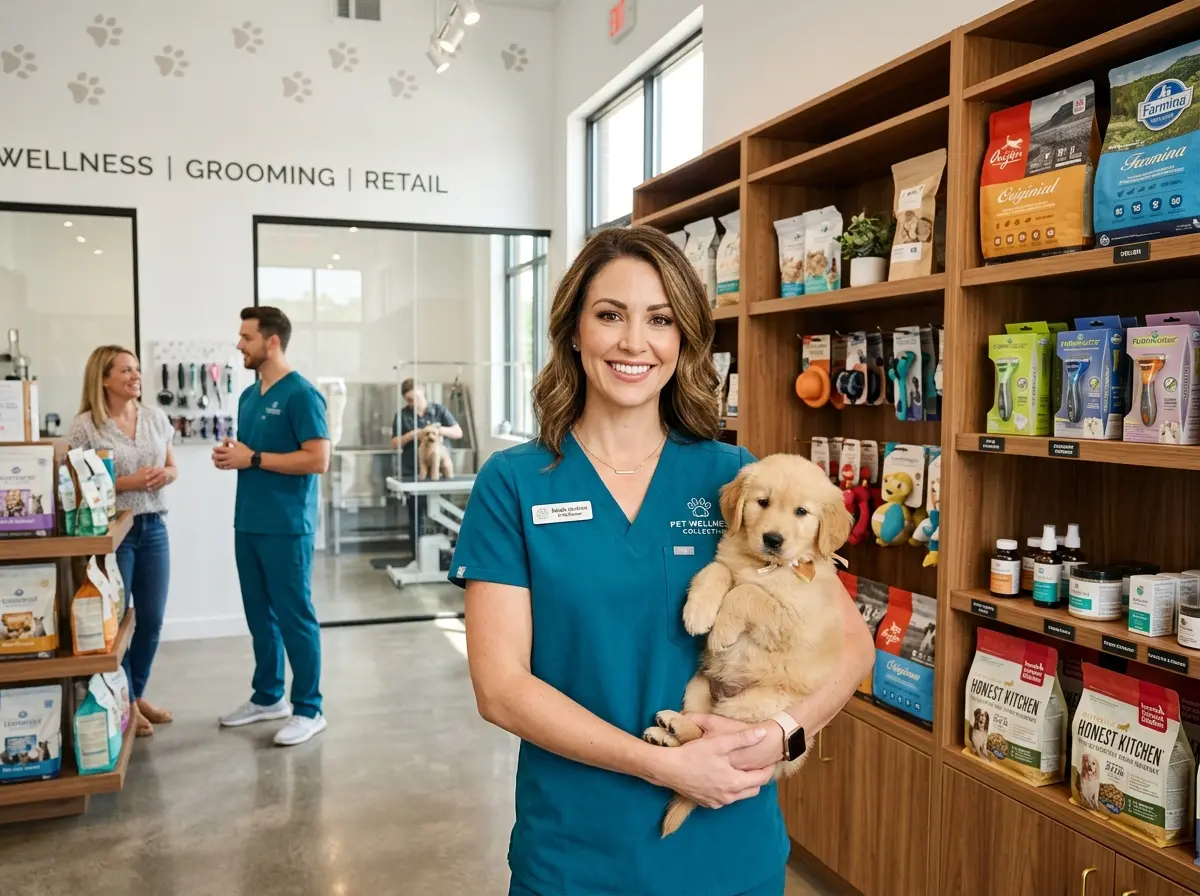
From Shampoo and Scissors to a One-Stop Pet Paradise
Let's paint a picture. A dog walks into a grooming shop. The owner pays, picks up a freshly fluffed poodle, and walks out the door — never once hearing about the nail grinding service, the premium shampoo line sitting on the shelf, or the new daycare program launching next month. The business owner watches $80 walk out the door when it could have been $140. Sound familiar?
This is the quiet tragedy of under-selling in service businesses, and pet grooming shops are some of the biggest victims. You're so focused on delivering an excellent service — which, to be fair, is the right priority — that the conversation about everything else you offer never quite happens. Staff are busy. Customers are distracted by their excited (or traumatized) pets. And the upsell opportunity disappears faster than a Labrador in a mud puddle.
The good news? A well-designed cross-sell strategy doesn't require pushy sales tactics or a complete business overhaul. It requires a smarter system — one that starts a conversation, meets customers at the right moment, and consistently reminds them of what else you can do for their furry family members. Let's talk about how to build one.
Understanding the Cross-Sell Opportunity in Pet Grooming
You Already Have the Hardest Part: A Captive Audience
Here's something most pet grooming shop owners don't fully appreciate: your customers are already there. They've already crossed the threshold, they already trust you with their beloved animal, and they already have their wallet out. In retail and service industries, that is the holy grail. Acquiring a new customer costs five to seven times more than selling more to an existing one — so the math on cross-selling is almost embarrassingly good.
Pet owners, in particular, are a dream demographic for cross-selling. Studies suggest that Americans spend over $150 billion annually on their pets, and that number climbs every year. These are not reluctant spenders. They want to give their pets the best — they just need to know what "the best" looks like at your shop specifically. Your job isn't to convince them to spend money on their pet. Your job is simply to make sure they know what you offer.
The Natural Expansion Path: What to Cross-Sell and When
The most effective cross-sell strategies in pet grooming aren't random. They follow a logical progression from the core service outward. Think about it in layers:
- Layer 1 — Service add-ons: Nail grinding, teeth brushing, de-shedding treatments, flea and tick rinses, or aromatherapy conditioning. These are easy "yes" decisions for pet owners already paying for a groom.
- Layer 2 — Retail products: The shampoo you just used on their dog. A detangling spray. A specialty brush. Premium treats. These have strong margins and require almost no extra labor.
- Layer 3 — Recurring services: Grooming packages, daycare, boarding, training referrals, or membership plans. These transform a one-time customer into a long-term revenue source.
The key is to connect each suggestion to the specific pet in front of you. "Your golden retriever is going to shed like a snowstorm this spring — would you like to add the de-shedding treatment today?" lands infinitely better than a generic "we also offer add-ons." Personalization is the difference between a sales pitch and a helpful recommendation.
Timing Is Everything — Don't Miss the Moment
There are three golden windows for cross-selling in a grooming shop: at booking, at drop-off, and at pickup. Most shops are only using one of them, if that. Booking is underutilized — when a customer is scheduling an appointment, they're already in "yes" mode. Drop-off is ideal for add-on services because the decision is low-stakes and immediate. Pickup is perfect for retail products because you can show them exactly what made their pet look (and smell) amazing.
Map out your customer journey and assign a cross-sell moment to each touchpoint. You don't need to be aggressive — you just need to be consistent. If every customer interaction includes one relevant recommendation, your average ticket size will climb without a single uncomfortable sales conversation.
Using Smart Tools to Make Cross-Selling Effortless
Let Technology Do the Heavy Lifting
Here's the honest truth: your groomers are artists, not salespeople. Expecting your staff to consistently deliver personalized cross-sell recommendations while also managing anxious dogs, sharp scissors, and a packed schedule is a tall order. That's where smart tools can completely change the equation.
Stella, an AI robot employee and phone receptionist, is built for exactly this kind of consistent, proactive customer engagement. In the shop, Stella stands as a human-sized kiosk that greets customers as they walk in — asking about their pet, mentioning current promotions, and naturally surfacing add-on services or retail products before the customer even reaches the front desk. She doesn't get distracted, she doesn't forget to mention the de-shedding special, and she never has an off day. On the phone side, Stella answers calls 24/7, handles booking inquiries, and can promote services during every interaction — turning a simple appointment call into a cross-sell opportunity. Her built-in CRM even logs customer preferences and pet details, so recommendations can get smarter over time.
Building the Full-Service Model: From Grooming Shop to Pet Care Center
Reframe Your Identity — and Your Menu
One of the biggest mental shifts a grooming shop owner can make is to stop thinking of the business as "a grooming shop that also sells some stuff" and start thinking of it as a pet care center that happens to specialize in grooming. It sounds subtle, but it changes everything — how you train your staff, how you design your space, how you talk to customers, and how customers talk about you to their friends.
Start by auditing your current service menu. Are there gaps that represent easy wins? A lot of grooming shops are one partnership away from offering training referrals, veterinary wellness checks, or nutrition consultations. You don't have to provide every service yourself — curated referral partnerships with complementary businesses can enhance your brand, add value for customers, and even generate referral revenue. Position yourself as the trusted hub for everything pet-related in your community, and customers will keep coming back because you're more useful to them than any competitor who only does one thing.
Create Packages That Bundle Value and Increase Spend
Packages are one of the most effective cross-selling mechanisms in any service business, and yet they're massively underused in pet grooming. Instead of listing individual services à la carte and hoping customers pick more than one, build bundled packages that make the choice easy. A "Puppy Pamper Package" that combines a groom, nail grinding, teeth brushing, and a sample-size bottle of your house shampoo feels like a deal — even if the margin is better than selling each service separately.
Consider a recurring membership model as well. A monthly grooming membership with priority scheduling and a discount on add-ons creates predictable revenue for you and a reason for customers to stay loyal. Pet owners love the convenience of "set it and forget it" care routines for their animals. Give them that, and you'll dramatically reduce churn while increasing lifetime customer value.
Train Your Team to Cross-Sell Naturally
Even with the best tools and packages in place, your human staff still plays a critical role. The goal isn't to turn every groomer into a commission-hungry salesperson — it's to make helpful recommendations feel like a natural extension of excellent service. Simple training principles go a long way: teach staff to mention one relevant product or service per customer, tie recommendations to what they actually observed ("Bella's coat was a little dry today — we have a great conditioning spray that works wonders between grooms"), and follow up at pickup while the customer is emotionally engaged and happy with the results.
Role-play common scenarios during team meetings. When cross-selling feels rehearsed and awkward internally, it will feel rehearsed and awkward to customers. When it feels natural and genuine, it just feels like good service.
Quick Reminder About Stella
Stella is an AI robot employee and phone receptionist that works inside your shop as a human-sized kiosk and answers your phone calls 24/7 — promoting services, handling questions, and cross-selling on your behalf without ever needing a break. She runs on a simple $99/month subscription with no upfront hardware costs and is easy to set up. For a pet grooming shop growing into a full-service pet care center, she's the kind of tireless team member that actually shows up every single day.
Start Small, Scale Smart
Transforming a grooming shop into a full-service pet care center doesn't happen overnight, and it shouldn't. The businesses that do it well start with intentional, incremental changes rather than a dramatic reinvention that confuses staff and overwhelms customers. Here's a practical roadmap to get started:
- Audit your current offerings and identify the two or three most natural add-on services or products to introduce this month.
- Map your customer journey and assign at least one cross-sell moment to each major touchpoint — booking, drop-off, and pickup.
- Create one bundled package that combines your core service with at least one add-on and one retail product.
- Train your team on one or two simple, natural cross-sell phrases tied to real service observations.
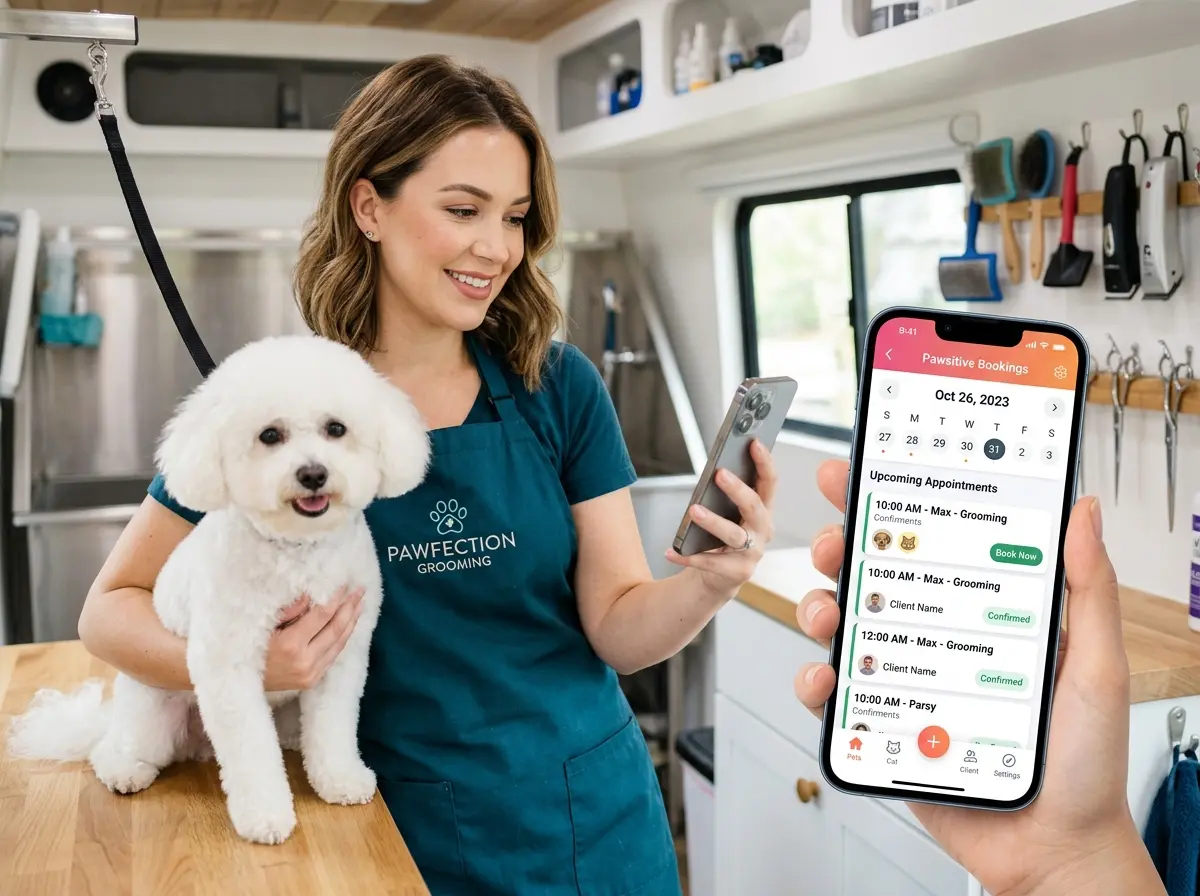
- Invest in tools that take the pressure off your staff and make consistent engagement possible — whether that's a smarter booking system, a CRM to track customer pet profiles, or an AI assistant like Stella who handles customer touchpoints so your team can focus on the groom.
The pet grooming industry is more competitive than ever, but the shops that win long-term aren't just the ones that give the best haircuts. They're the ones that make pet owners feel genuinely cared for, consistently reminded of value, and too well-served to even consider going anywhere else. That's not luck — that's strategy. And now you have one.