So You Just Hired a New Server — Now What?
Picture this: It's a Saturday night. Your restaurant is packed, the kitchen is firing on all cylinders, and your brand-new server — who shadowed someone for two shifts and watched a 10-minute onboarding video — is now standing at table seven looking like a deer in headlights. A guest just asked about allergens in the pasta special, and your new hire's answer is approximately: "I think it's fine?"
Breathe. We've all been there. But here's the thing — you didn't have to be.
The restaurant industry has one of the highest employee turnover rates of any sector, hovering around 75% annually according to the National Restaurant Association. That means you're probably hiring — and training — constantly. And yet, formal server training certification programs remain shockingly rare among independent and small-chain restaurants. Most owners wing it, cross their fingers, and hope the new hire absorbs enough through osmosis before they're left alone with a six-top on a Friday night.
A structured, formal server training certification program isn't bureaucratic overkill. It's the backbone of a consistent, professional guest experience — and it protects your business in ways you might not have considered. Let's break down exactly why you need one and how to build it right.
The Real Cost of Skipping Formal Training
Inconsistency Is the Enemy of Reputation
Guests don't just come back for your food. They come back because they know what to expect. A great dining experience is repeatable and reliable — and that reliability starts with your team. When every server has been trained differently (or barely trained at all), your guests are essentially rolling the dice on the quality of their experience every single visit.
One server upsells dessert confidently and knows every ingredient in your seasonal cocktail. Another mumbles through the specials and doesn't know the difference between your house red and your reserve Cabernet. Both are representing your brand. One of them is doing it well. Guess which guest is writing the Yelp review?
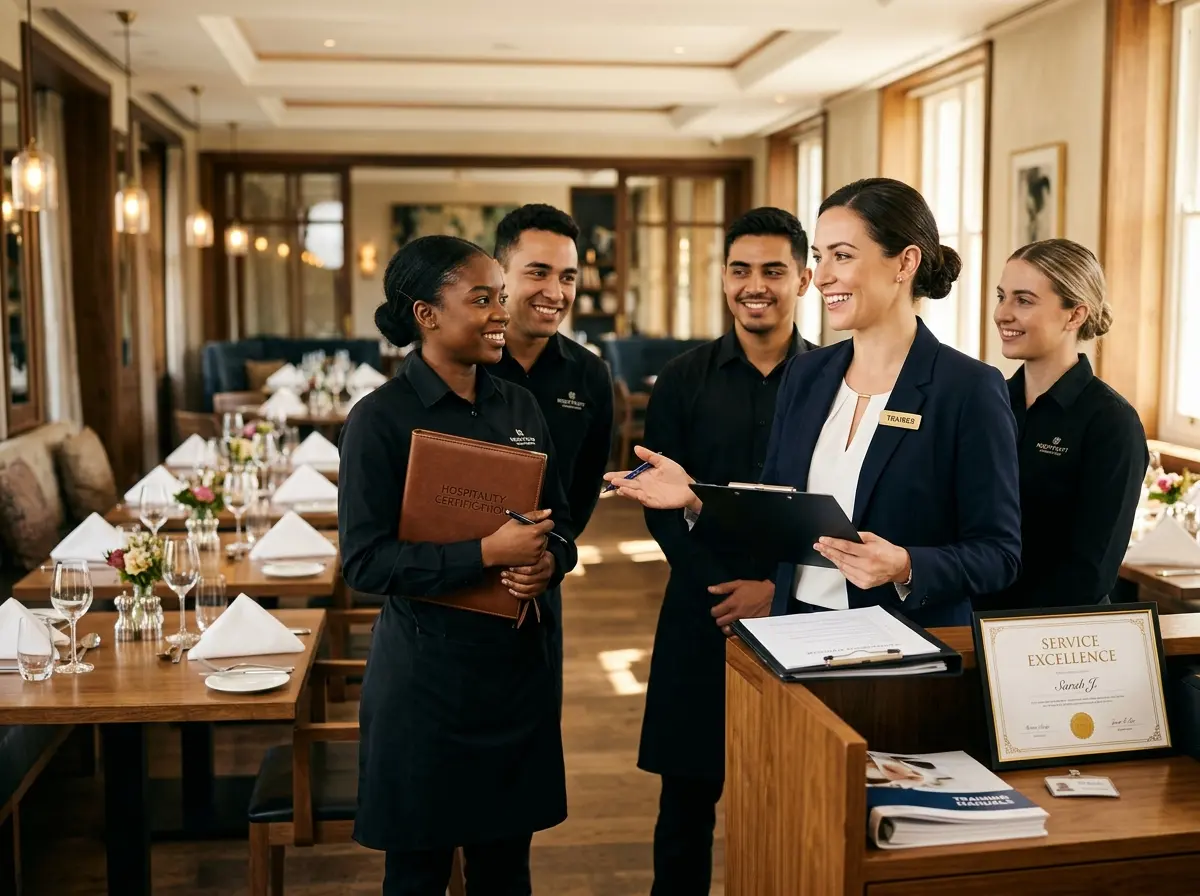
Formal certification creates a standardized baseline. Every server who earns their certification knows your menu, understands your service standards, can handle common complaints gracefully, and knows when to escalate. That's not just nice to have — it's the foundation of your restaurant's reputation.
Liability Is Not a Small Word
Here's where things get serious. Allergen misinformation, alcohol service to visibly intoxicated guests, improper food handling communication — these aren't just bad customer service moments. They're legal liabilities. A guest who has a severe allergic reaction because your server guessed wrong isn't just a tragedy; it's a lawsuit waiting to happen.
A formal training certification program that includes documented allergen protocols, responsible alcohol service training (such as TIPS or ServSafe), and clear escalation procedures gives you a paper trail. It demonstrates that you took reasonable steps to train your staff properly. That documentation can be the difference between a manageable incident and a catastrophic legal situation. It also sends a message to your team that these topics aren't suggestions — they're requirements.
Turnover Gets Expensive Without a System
Every time a server quits or doesn't work out, you absorb the cost of recruiting, onboarding, and lost productivity during the learning curve. The average cost to replace a single restaurant employee is estimated at $5,864, according to research published by Cornell University's hospitality school. Multiply that by your annual turnover and you're looking at a significant chunk of your operating budget evaporating into thin air.
A well-structured certification program doesn't just make new hires better — it makes them faster to become productive. When training is organized, documented, and tied to measurable milestones, new servers reach competency sooner. And when employees feel properly trained and set up for success, they're more likely to stick around. That alone makes the investment worth it.
Tools That Make Your Restaurant Run Smoother
Reducing the Load on Your Staff from Day One
While your newly certified servers are focused on delivering exceptional table-side experiences, someone (or something) still needs to handle the front-of-house chaos — the phone ringing during the dinner rush, walk-in guests needing information, questions about hours and reservations. This is where Stella, an AI robot employee and phone receptionist, can genuinely take pressure off your team.
Stella stands inside your restaurant as a friendly, human-sized kiosk and greets walk-in guests proactively — answering questions about your menu, current specials, and policies without pulling a server away from a table. She also answers phone calls 24/7, so the phone isn't ringing off the hook during your busiest hours while your trained staff focuses entirely on delivering the guest experience your certification program was designed to create. At just $99/month with no upfront hardware costs, she's an easy addition to a well-run operation.
Building a Certification Program That Actually Works
Define What "Certified" Actually Means
The first step is deceptively simple: write down exactly what a server needs to know and be able to do before they work a shift independently. This is your certification checklist, and it should be exhaustive. Think menu knowledge (ingredients, preparation methods, allergens, pairing suggestions), service sequence (greeting timing, order-taking etiquette, table checks, farewell), point-of-sale system fluency, complaint handling protocols, and any brand-specific standards that define your restaurant's identity.
Once you have your checklist, break it into phases. Week one might cover menu mastery and allergen protocols. Week two focuses on service sequence and POS operations. Week three is supervised floor shifts with a mentor server. Certification is only granted when all phases are completed and assessed — not just when someone feels ready or when you're desperate for bodies on the floor.
Build in Assessments and Real Accountability
A certification program without assessment is just a really long orientation. You need actual checkpoints that confirm your new servers have absorbed the material — not just sat through it. Consider written quizzes on menu knowledge and allergen information, practical demonstrations of table service sequence, role-playing exercises for handling common complaints, and a final supervised shift evaluated by a manager or senior server.
Document everything. Keep records of completed training phases, quiz scores, and sign-offs from evaluating staff. This documentation protects you legally, helps you identify gaps in the program over time, and gives your new hires a tangible sense of accomplishment when they earn their certification. People perform better when they know the standards are real and that their progress is being tracked.
Make It a Culture, Not a Checkbox
The most effective training programs aren't events — they're ongoing. Initial certification gets your servers to baseline, but the best restaurants build a culture of continuous learning. Schedule quarterly menu refreshers when your offerings change seasonally. Run brief pre-shift meetings that reinforce service standards. Celebrate servers who demonstrate exceptional performance, and use your certification framework as the basis for performance reviews.
When new staff see that experienced servers are still engaged in learning and improvement, the certification program stops feeling like a hurdle and starts feeling like a professional standard worth maintaining. That cultural shift pays dividends in team morale, guest satisfaction scores, and — yes — staff retention. Turns out, people like working in environments where they're treated like professionals.
Quick Reminder About Stella
Stella is an AI robot employee and phone receptionist built for businesses like yours — she greets customers in person at a physical kiosk, answers phone calls around the clock, promotes specials, and handles common questions so your human team can focus on delivering the experience they were trained to provide. She's available for $99/month with no complicated setup and no days off. Consider her the teammate who never calls in sick right before a dinner rush.
Start Before the Next Hire Walks Through the Door
You don't need a massive budget or an HR department to build a formal server training certification program. You need a clear definition of your standards, a structured training timeline, honest assessments, and the discipline to stick to the process even when you're short-staffed and tempted to rush someone onto the floor.
Here's your actionable starting point:
- Audit your current onboarding — write down everything you currently do (or don't do) to train new servers. Be honest.
- Draft your certification checklist — list every piece of knowledge and every skill a server must demonstrate before working independently.
- Break training into phases — assign timelines to each phase and designate who is responsible for evaluating each one.
- Build your assessment tools — create the quizzes, role-play scenarios, and evaluation rubrics your managers will use.
- Document and iterate — keep records, review the program quarterly, and update it as your menu, policies, or team structure evolve.
Your guests deserve consistent, knowledgeable, professional service every single time they walk through your door. Your staff deserves to be set up for success rather than thrown into the deep end and judged for sinking. And your business deserves the protection, efficiency, and reputation that only comes from doing this the right way.
The certification program you build today is the guest experience you deliver tomorrow. Time to put it on paper.