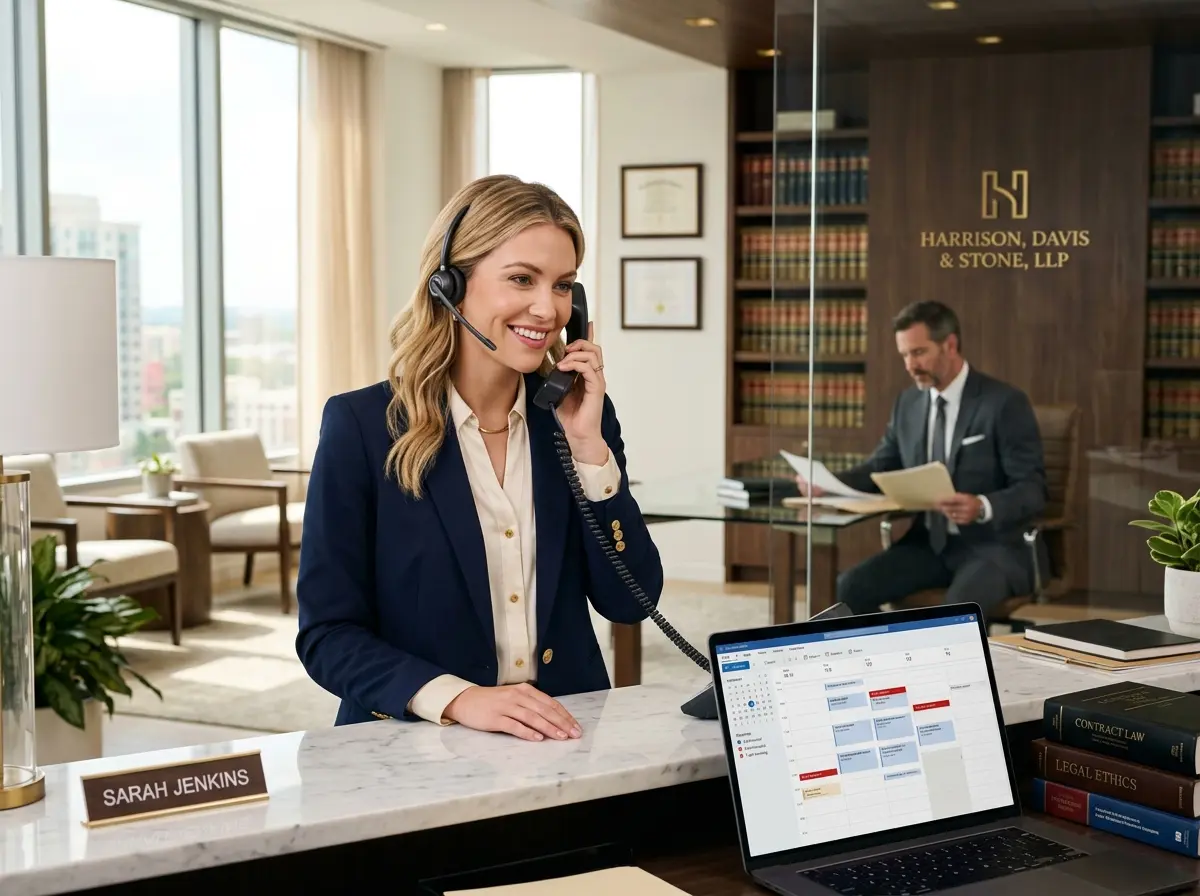
The $500,000 Phone Problem Most Law Firms Don't Know They Have
Picture this: A potential client — let's call her Karen — has just been in a fender-bender. She's stressed, she needs legal help, and she's ready to hire someone today. She Googles law firms in her area, finds yours, and calls. The phone rings. And rings. And rings. She hangs up and calls the next firm on the list. That firm answers. That firm gets the case.
Congratulations — you just lost a client you never even knew you had.
This scenario plays out dozens of times a month at law firms across the country, and most attorneys have absolutely no idea it's happening. After all, you can't measure the calls you missed. You can't count the voicemails people didn't leave. But the revenue walking out the door? That's very real, even if it's invisible on your P&L statement.
One small personal injury law firm discovered this the hard way — and then fixed it. The result? A threefold increase in consultation bookings within 60 days. No new ad spend. No redesigned website. No rebrand. Just one phone problem, finally solved. Here's what happened, and more importantly, what you can do about it.
The Hidden Leaks in a Law Firm's Phone System
Missed Calls Are Missed Clients — Full Stop
The legal industry is one of the most call-dependent service sectors in existence. Unlike shopping for shoes, people seeking legal counsel rarely browse at their leisure and add things to a cart. They call when they have a problem, and they call with urgency. Research from the legal marketing world consistently shows that the first firm to respond to an inquiry wins the client the majority of the time — some studies put that number as high as 78%.
And yet, many law firms — including mid-sized ones with perfectly good receptionists — still miss a staggering number of calls. Why? Because humans take lunch breaks. Humans handle one call at a time. Humans leave at 5 PM. And legal emergencies, bless their hearts, do not follow business hours.
For this particular law firm, an audit of their phone activity revealed that roughly 40% of inbound calls during peak hours went unanswered or were sent to voicemail — and less than 30% of those voicemails ever received a timely callback. The leads weren't cold; they were frozen. Most had already hired someone else by the time the firm's staff got around to returning the call.
The Voicemail Black Hole
Voicemail is where leads go to die. That's not a personal attack on voicemail as a technology — it's just reality. When someone in legal distress gets a voicemail prompt, most hang up immediately. The ones who do leave a message often leave incomplete information, making follow-up a guessing game. And when your receptionist is juggling five tasks and a ringing front desk, that blinking voicemail light becomes background noise.
The law firm in our story had a voicemail inbox that, at one point, contained over 60 unreviewed messages spanning three weeks. Some of those were spam, sure. But several were from people with active cases and time-sensitive needs. One was a potential wrongful termination case worth, conservatively, a significant contingency fee. It had been sitting there for eleven days.
First Impressions at Scale
There's also the matter of what a poor phone experience communicates to potential clients. Law is a trust business. When someone calls your firm and reaches a robotic phone tree, gets shuffled to an overwhelmed receptionist, or — worst of all — gets no answer at all, they don't just move on. They mentally file you under "disorganized" and keep scrolling. In a field where credibility is currency, a bad first phone impression is an expensive one.
How Modern AI Phone Solutions Are Changing the Game for Law Firms
Always Available, Always Professional
This is exactly the kind of problem that Stella, an AI robot employee and phone receptionist, was designed to solve. When the law firm implemented Stella as their 24/7 phone answering solution, the results were almost immediate. Every inbound call was answered — at 2 PM and at 2 AM. Stella handled initial intake questions, collected caller information through conversational intake forms, and either routed calls to available attorneys based on pre-set conditions or logged detailed, AI-generated voicemail summaries with instant push notifications to the managing partner's phone.
No more voicemail black holes. No more "I'll get to it tomorrow." Just clean, organized, actionable lead data — ready to convert.
Stella's built-in CRM made follow-up equally painless. Each caller's information, intake responses, and interaction history was automatically stored with AI-generated profiles and custom tags — so when an attorney called someone back, they already knew the basics. That preparation alone made callbacks faster, more professional, and significantly more likely to convert into booked consultations.
The Three-Part Fix That Tripled Their Bookings
Step 1: Audit Your Current Call Handling Honestly
Before you can fix a phone problem, you have to admit you have one. Most business owners are shocked when they actually pull their call data. If your phone system has any kind of call log or analytics, go look at it right now. How many calls came in last week? How many were answered? Of the ones that went to voicemail, how many received a same-day callback?
If you're using a basic business line with no analytics whatsoever — that's also important information, because it means you've been operating blind. Consider switching to a system that at least gives you visibility into call volume and response rates. You cannot manage what you cannot measure, and in this case, what you're not measuring is probably costing you more than you'd like to admit.
Step 2: Eliminate the After-Hours Gap
The after-hours gap is the window between when your last employee clocks out and when the first one clocks in. For most law firms, that's roughly 16 hours per weekday — and the entire weekend. That's a long time to let potential clients reach nothing. The fix doesn't require hiring a night-shift receptionist (please, nobody wants that). It requires an automated system that can answer intelligently, gather information, and create a warm handoff for the next business day.
The law firm in our example saw the largest single jump in booked consultations from calls that came in between 6 PM and 9 PM — people calling after work, after their spouse came home, after they finally decided they needed a lawyer. These aren't fringe callers. These are motivated prospects with real problems and real money, and they were previously hitting a wall of silence.
Step 3: Make the Intake Process Frictionless
Booking a consultation should not be a bureaucratic ordeal. Yet many law firms still require a callback just to schedule a callback, followed by a paper intake form, followed by a second call with the actual attorney. Every extra step in that chain is a point where a potential client can lose patience and call your competitor instead.
Streamlining intake — gathering basic case details, contact information, and availability during the very first interaction — shortens the path from "interested stranger" to "booked client" dramatically. When the law firm automated this process through conversational AI intake during the initial call, their booking conversion rate jumped by over 60%. Clients felt heard immediately. Attorneys walked into consultations prepared. Everyone won — except the competing firm down the street.
Quick Reminder About Stella
Stella is an AI robot employee and phone receptionist built for businesses of all sizes — including law firms, medical offices, retail stores, and beyond. She answers calls 24/7, collects intake information, manages contacts through a built-in CRM, and keeps your team in the loop with AI-generated summaries and instant notifications. For businesses with a physical location, she also operates as a friendly in-store kiosk that greets and engages customers in person. At $99/month with no upfront hardware costs, she's the employee who never calls in sick, never puts a client on hold unnecessarily, and never misses a lead.
What to Do Starting Today
The law firm in this story didn't overhaul their entire operation. They didn't rebrand, rebuild their website, or hire three new staff members. They fixed one thing — their phone — and it changed their business in two months. The lesson isn't complicated: if people can't reach you easily, they will reach someone else easily.
Here's your action plan, and it's refreshingly short:
- Pull your call data this week. Find out how many calls you're actually missing and how quickly you're responding to the ones you catch. If you don't have this data, getting visibility should be your first move.
- Map your after-hours gap. Identify exactly when your phone goes unanswered and estimate how many calls might be coming in during that window. Even a rough estimate will be eye-opening.
- Simplify your intake process. Look at how many steps it takes to go from "first call" to "booked appointment." If it's more than two or three, trim it. Every unnecessary step costs you clients.
- Automate where it makes sense. Whether you use Stella or another solution, get something in place that handles calls when your team can't. This is no longer a luxury — it's a baseline competitive requirement.
The good news is that most of your competitors are still letting their phones ring unanswered at 7 PM. That means the bar is low, the opportunity is real, and the fix is well within reach. All you have to do is pick up — or rather, make sure something always does.