Introduction: The Reservation Black Hole (And How to Escape It)
Picture this: It's a busy Friday night. Your kitchen is firing on all cylinders, your dining room is packed, and your staff is scrambling to keep up. Meanwhile, your phone is ringing off the hook with reservation requests, takeout orders, and a catering inquiry from someone who wants 200 chicken marsalas for their daughter's wedding. Nobody answers. The caller leaves — or worse, they don't — and you've just lost revenue you didn't even know was walking out the door.
Sound familiar? If you run a restaurant, this isn't a hypothetical. According to a study by Vonage, nearly 61% of customers say they'll hang up after being on hold for just one minute. And in the restaurant industry, where every table turn and every catering contract matters, that kind of customer dropout is death by a thousand unanswered calls.
The good news? Managing reservations, takeout requests, and catering inquiries doesn't have to mean hiring a dedicated phone receptionist who calls in sick on your busiest days. AI-powered tools are reshaping how restaurants handle customer communication — and the restaurants that adopt them early are going to look very, very smart in hindsight.
The Real Cost of Poor Reservation and Inquiry Management
Missed Calls Are Missed Revenue
Let's talk numbers for a second. If your average dinner reservation represents a $75–$100 check, and you're missing even five calls a night, that's potentially $375–$500 in lost revenue per evening. Multiply that by a week, a month, a year — and suddenly that "we're just too busy to answer the phone" excuse starts looking very expensive. Catering inquiries are even more painful to miss, since a single event can represent thousands of dollars in a single booking.
The problem isn't that your staff doesn't care. It's that they're doing seventeen things at once, and answering the phone in the middle of a dinner rush is genuinely difficult. The phone becomes the lowest priority — until it becomes the most expensive mistake.
The Inconsistency Problem
Even when calls do get answered, consistency is another beast entirely. Does every team member know your current specials? Do they all handle catering inquiries the same way? Do they upsell the private dining room when someone calls for a group reservation, or do they just confirm the headcount and hang up? Inconsistency in how phone inquiries are handled isn't just an operational inconvenience — it directly affects your revenue and your brand reputation.
Customers who call with catering questions, in particular, often need specific information: pricing tiers, minimum guest counts, menu options, deposit requirements, lead times. If your host on a busy Saturday night fumbles through that conversation, you may lose the booking entirely — not because your catering program isn't great, but because the first impression was chaotic.
The After-Hours Problem Nobody Talks About
Here's the dirty little secret of restaurant phone management: a significant portion of your calls come in when you're not open, or when you're too slammed to pick up. People plan dinner reservations during their lunch break. They research catering options late at night. They want to know if you do gluten-free options at 10 PM on a Sunday. If your phone just rings endlessly — or worse, goes to a generic voicemail — those potential customers are already Googling your competitor.
How AI Can Transform Restaurant Communication
Always On, Always Informed
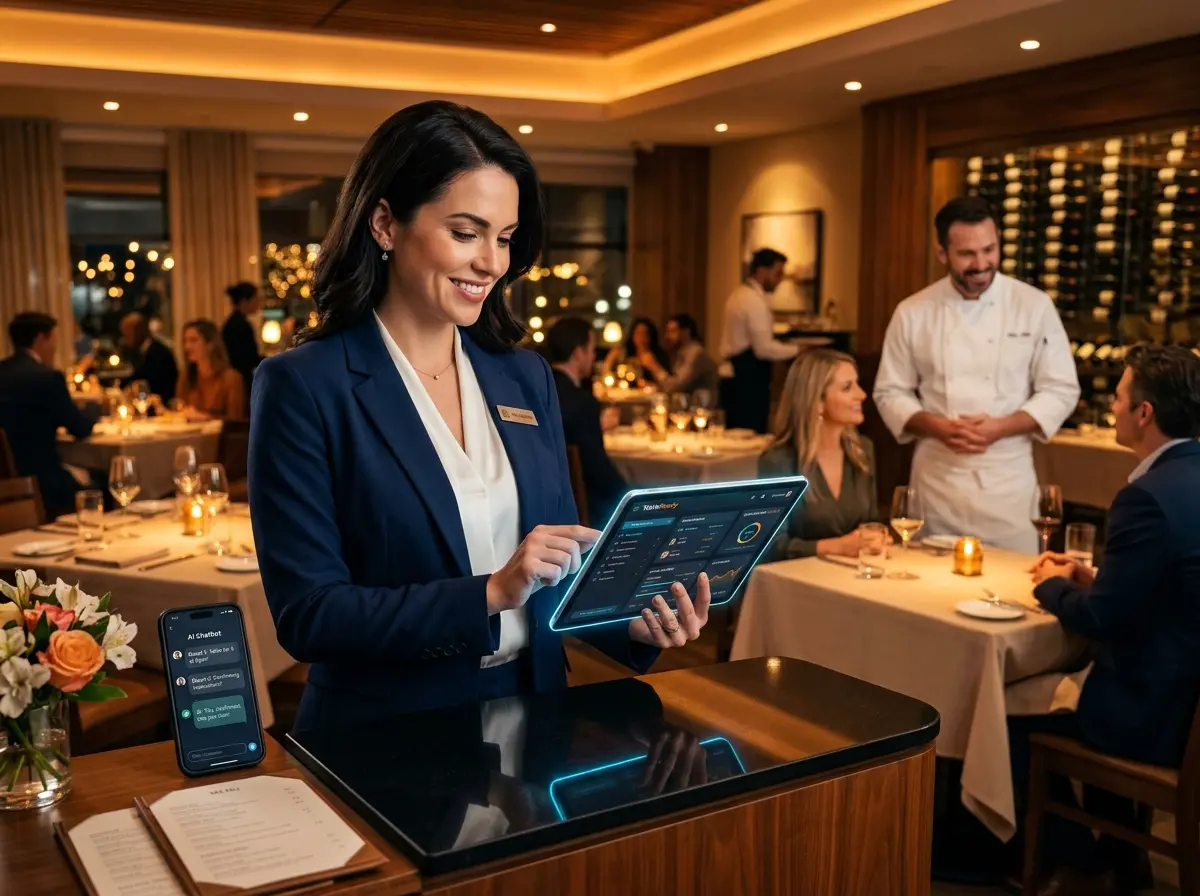
This is where technology steps in — and honestly, where it earns its keep. An AI phone receptionist can answer calls 24/7, handle reservation inquiries, provide accurate information about your menu and hours, and walk catering prospects through your offerings without breaking a sweat. Unlike your actual staff, it doesn't get flustered during a dinner rush, it doesn't forget to mention the weekend special, and it certainly doesn't call in sick on New Year's Eve.
Stella is one such solution worth considering. She functions as both an in-store AI kiosk and a 24/7 AI phone receptionist, meaning she can greet walk-in customers at the host stand and handle your incoming calls simultaneously. She's trained on your specific business information — your menu, your reservation policies, your catering packages — so every caller gets a consistent, knowledgeable response. She can also collect customer information through conversational intake forms during calls, meaning catering inquiries don't just disappear into a voicemail void; they become structured leads in a built-in CRM, complete with AI-generated contact profiles and push notifications to your management team.
Intake Forms That Actually Get Filled Out
One of the most underrated features of AI-powered phone management is the ability to gather structured information conversationally. Instead of playing phone tag with a potential catering client over three days to get basic event details, an AI receptionist can walk them through the key questions during the initial call — event date, guest count, dietary restrictions, budget range, preferred menu style — and deliver a complete summary to your events coordinator before they even sit down with their morning coffee. That's not just convenient; it's a genuine competitive advantage.
Best Practices for Managing Reservations, Takeout, and Catering
Create a Clear Intake Process for Each Inquiry Type
Not all calls are created equal. A takeout order is a transactional interaction that needs to be fast and accurate. A reservation call requires capturing the right details — date, time, party size, special occasions, seating preferences. A catering inquiry is a sales conversation that can span multiple touchpoints. Treating all three the same way is a recipe for chaos.
Build distinct intake flows for each category. For catering, this means having a standard set of qualifying questions ready to go — and making sure whoever answers that call (human or AI) is equipped to ask them. For reservations, it means capturing not just the basics but also the value-add details that help you personalize the experience and reduce no-shows.
Reduce No-Shows With Proactive Communication
No-shows are one of the restaurant industry's most frustrating and costly problems. The average no-show rate hovers around 20% for restaurants without a confirmation system in place. The fix is relatively simple: confirmation messages, reminders, and a clear cancellation policy communicated at the time of booking. AI tools can automate all of this, sending confirmation messages and reminders without requiring a single staff member to pick up the phone. Less awkward conversation. Fewer empty tables. More revenue. It's not rocket science — it's just good process.
Treat Catering Inquiries Like Sales Leads
Your catering program deserves a dedicated pipeline, not a sticky note on the host stand. When a catering inquiry comes in, it should be logged, tracked, and followed up on with the same diligence you'd apply to any high-value sales lead. That means capturing the contact's information, noting their event details, and having a clear follow-up cadence. Restaurants that treat catering as a revenue center — rather than an afterthought — consistently outperform those that wing it. A CRM, even a simple one, can make the difference between landing a 200-person corporate event and losing it to the restaurant down the street that called back first.
Quick Reminder About Stella
Stella is an AI robot employee and phone receptionist designed to handle exactly the kind of customer communication challenges restaurants face every day. She greets guests in person as a human-sized kiosk, answers calls around the clock, manages intake forms, and keeps your team informed through AI-generated summaries and notifications — all for $99/month with no upfront hardware costs. She's not a replacement for great hospitality; she's the support system that makes it possible.
Conclusion: Stop Losing Business to an Unanswered Phone
Running a restaurant is hard enough without letting reservation gaps, missed catering inquiries, and inconsistent phone handling quietly drain your revenue. The operational fixes aren't glamorous — better intake processes, proactive confirmation systems, a real pipeline for catering leads — but they compound. Restaurants that nail their communication infrastructure tend to fill more tables, land more events, and build stronger customer relationships over time.
Here's what you can do this week to start moving in the right direction:
- Audit your missed calls. Check your phone records and honestly assess how many calls go unanswered during peak hours and after hours.
- Map your inquiry types. Identify whether your team has a consistent, defined process for reservations, takeout, and catering — and fix the gaps.
- Implement a confirmation and reminder system. Even a basic text reminder can cut your no-show rate significantly.
- Explore AI phone reception. If staffing your phones consistently is a challenge, an AI solution like Stella can fill that gap affordably and reliably.
Your restaurant's reputation is built in the dining room — but a surprising amount of revenue is won or lost before a customer ever walks through the door. Make sure your phones are working as hard as your kitchen.