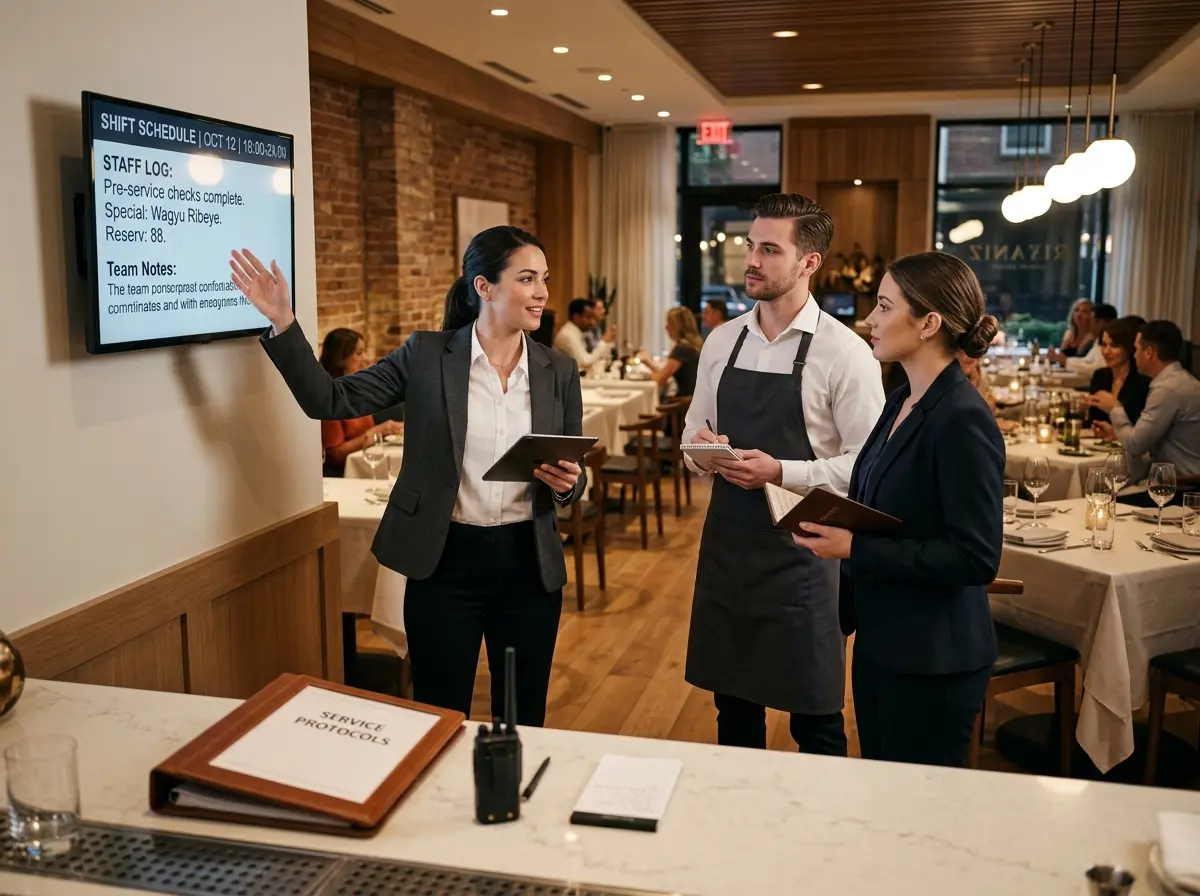
Introduction: The Unsung Hero of Restaurant Operations
Picture this: It's a Friday night, your restaurant is packed, your head chef just burned their hand, a table of twelve is complaining about wait times, and your phone is ringing off the hook. Oh, and no one — not a single soul — knows who is in charge right now. Congratulations. You've just entered the chaos dimension.
Running a restaurant is not for the faint of heart, but one thing that separates the establishments that thrive from the ones that spiral into madness is surprisingly simple: a clear, documented Manager on Duty (MOD) communication protocol. Not a vague understanding. Not a verbal tradition passed down like folklore. An actual protocol — written down, trained on, and followed consistently.
What a Manager on Duty Protocol Actually Covers
Defining the Role (Yes, Someone Has to Actually Be "It")
The first and most critical piece of an MOD protocol is deceptively obvious: someone needs to be explicitly designated as the manager on duty at all times. Not sort of in charge. Not the most experienced person in the room by default. Someone who has been formally assigned, knows they are assigned, and whose name is on a board, in a shared schedule, or in a group chat for that shift.
What the MOD Is Responsible For
- Handling customer complaints and escalations beyond the server or host level
- Making on-the-spot decisions about comps, discounts, or service recovery
- Communicating with kitchen staff about delays, substitutions, or 86'd items
- Managing floor coverage and staffing gaps in real time
- Responding to emergencies — from a spilled fryer to a medical situation
- Being the first point of contact for any vendor, delivery, or external party during the shift
Documentation and Handoff Expectations
One of the most overlooked parts of an MOD protocol is the shift handoff. What happened during the previous shift? Were there unresolved issues, unusual incidents, or staffing notes the incoming manager needs to know? Without a documented handoff process, your managers are essentially starting every shift blind.
Where Technology Can Carry Some of the Weight
Taking Pressure Off Your Team at the Front Door and on the Phones
That's where Stella comes in. Stella is an AI robot employee and phone receptionist designed to handle the routine customer-facing interactions that eat up your team's time. In-store, she greets customers, answers questions about your menu, hours, and current specials, and proactively engages people before they even have to flag down a staff member. On the phone, she answers calls 24/7, handles common inquiries, forwards calls to human staff based on conditions you configure, and takes detailed voicemails with AI-generated summaries sent directly to your phone. When Stella is handling the routine, your MOD can focus on the decisions that actually require human judgment.
Building the Protocol Your Team Will Actually Follow
Keep It Simple Enough to Use Under Pressure
Establish Clear Communication Channels
Train for the Exceptions, Not Just the Routine
According to the National Restaurant Association, employee training is consistently cited as one of the top factors in reducing operational errors and improving customer satisfaction scores. The investment in a couple of training hours is nothing compared to the cost of a poorly handled incident that ends up on Yelp.
Quick Reminder About Stella
Stella is an AI robot employee and phone receptionist built for businesses like yours — she greets customers in person, answers calls around the clock, promotes your specials, and keeps the routine interruptions off your team's plate. At just $99/month with no upfront hardware costs, she's an affordable way to give your staff — and your MOD — more room to focus on what actually matters. If you haven't taken a look at what she can do for a restaurant operation, it's worth five minutes of your time.
Conclusion: Stop Winging It and Start Systematizing
- Document your MOD designation process and make it a non-negotiable part of every pre-shift briefing.
- Define the MOD's specific responsibilities in writing and share it with your entire management team.
- Create a simple shift handoff log — even a shared document works — and require its use at every shift change.
- Establish clear communication channels for different types of issues and train your team on which to use when.
- Run scenario-based training at least twice a year to prepare your managers for edge cases, not just routine operations.