Stop Losing Bids Because You're Guessing What Clients Want
Here's a scenario that probably feels familiar: you show up to a potential client's home or office, walk through the space, do some mental math, quote a price — and then never hear from them again. Was it the price? The scope? Did they just want to feel like someone was listening? You'll never know, because you didn't ask the right questions before the bid.
The cleaning industry is competitive. Whether you're running a residential maid service or a commercial janitorial operation, you're likely competing against dozens of other providers who can mop a floor just as well as you can. So what separates the businesses that win bids consistently from the ones that don't? Preparation, personalization, and professionalism — all of which start long before you ever set foot in a client's building.
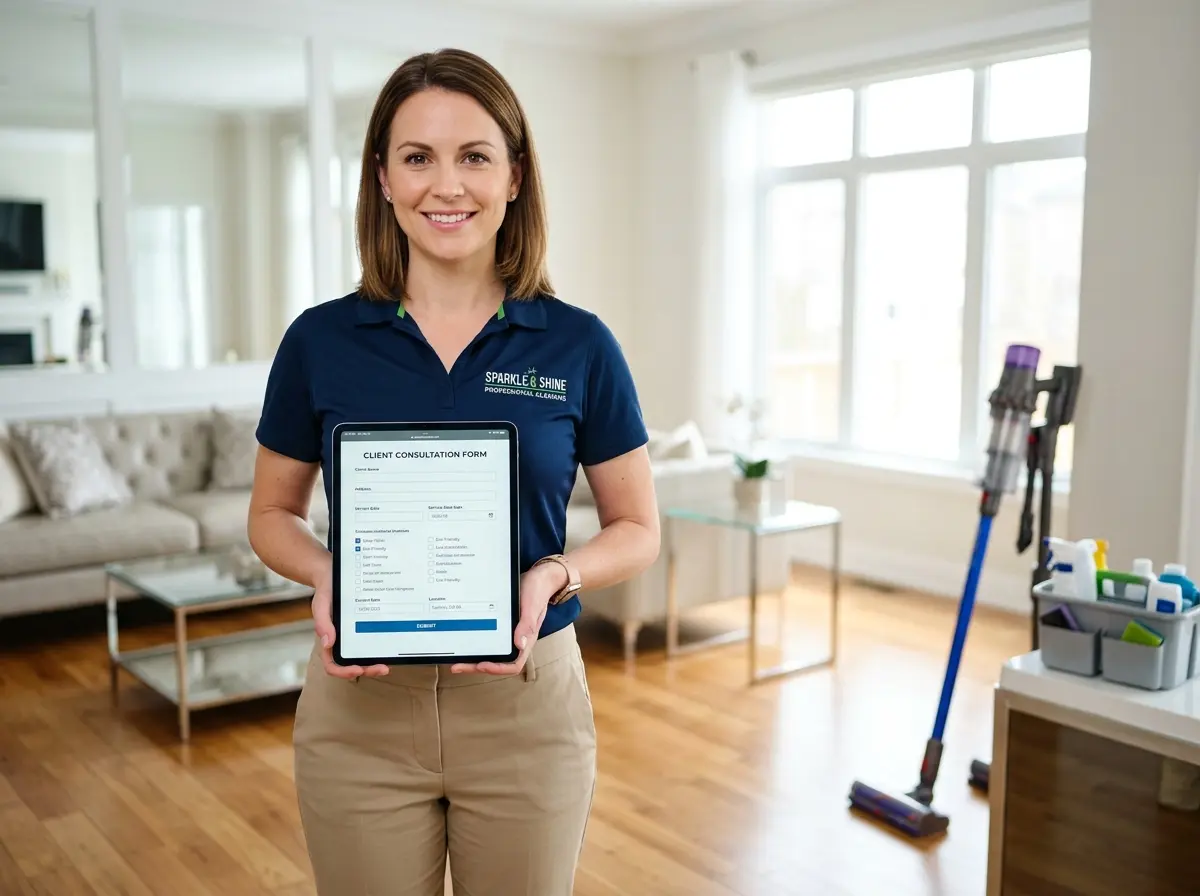
A digital questionnaire, sent before your estimate appointment, is one of the simplest and most underutilized tools in a cleaning business owner's arsenal. It helps you gather critical information upfront, walk into every bid looking like the most organized company in the room, and — not so coincidentally — close more deals. Let's talk about how to make it work for you.
Why a Pre-Bid Questionnaire Changes Everything
You Show Up Prepared Instead of Clueless
There's nothing less inspiring to a potential client than watching a service provider walk through their space taking notes on a napkin and asking, "So, uh, how often were you thinking?" A digital questionnaire flips that dynamic entirely. When a prospect fills out a form before your appointment, you already know their square footage, their preferred cleaning frequency, their pet situation, their budget range, and whether they have any specific concerns — like that one bathroom that apparently needs "extra attention."
This means your estimate isn't a vague ballpark. It's a tailored proposal. And tailored proposals close at dramatically higher rates than generic ones. According to research from HubSpot, personalized pitches can improve conversion rates by over 200% compared to one-size-fits-all approaches. That's not a small number. That's the difference between a thriving business and one that constantly wonders why the phone isn't ringing.
You Qualify Leads Before You Waste Your Time
Not every lead is worth chasing, and a good questionnaire helps you figure that out before you drive across town for a 45-minute appointment with someone whose entire budget is $40 a month. The form acts as a gentle filter. Ask about square footage, number of rooms, frequency preferences, and yes — budget range. You don't have to be blunt about it, but you do need to know if this person is a viable client before you invest your time.
This is especially valuable for commercial cleaning businesses, where the gap between a realistic contract and a fantasy contract can be enormous. A lead that fills out your questionnaire thoroughly is also signaling something important: they're serious. Tire-kickers rarely bother with forms.
It Sets the Tone for Your Professionalism
First impressions happen earlier than you think. Before a prospect ever meets you, they've already formed an opinion based on your website, your Google reviews, and — yes — the experience of interacting with your intake process. A polished, easy-to-use digital questionnaire communicates that your business is organized, detail-oriented, and takes customer needs seriously. Compare that to a competitor who just says "call us for a quote." Which one feels more trustworthy?
What to Actually Put in Your Questionnaire
The Essential Information You Need to Quote Accurately
Keep the form efficient. Prospects will abandon a questionnaire that feels like a tax return, so focus on the questions that genuinely affect your pricing and approach. For most cleaning businesses, that includes: the type of property (residential, commercial, or post-construction), approximate square footage, number of rooms or areas, the type of cleaning needed (standard, deep clean, move-in/move-out, specialty), preferred frequency, any specific areas of concern, and how they heard about you. That last one is worth its weight in gold for your marketing data.
For commercial clients, add a few more: industry type, occupancy hours, security or access requirements, and whether there's an existing cleaning contract they're looking to replace. That context helps you understand not just what they need, but why they're looking for someone new — which is incredibly useful information when you're crafting your pitch.
Let Stella Help You Collect It Automatically
Stella, the AI robot employee and phone receptionist, can collect this kind of intake information conversationally — whether a prospect calls your business or interacts with her directly. For cleaning businesses with a physical office or showroom, Stella's in-store kiosk presence means she can greet walk-in prospects and guide them through your intake process face-to-face, without tying up your staff. For inbound phone calls, she handles the conversation naturally, asking the right questions and logging responses directly into her built-in CRM — complete with custom fields, tags, and AI-generated contact profiles. No more sticky notes, no more "I'll remember that" moments that you absolutely do not remember. The questionnaire practically fills itself out.
How to Use Questionnaire Responses to Win the Bid
Personalize Your Proposal Around Their Answers
Once you have the questionnaire data, actually use it. This sounds obvious, but you'd be surprised how many business owners collect information and then proceed to send the same boilerplate estimate they send everyone. Reference specific details from the form in your proposal — mention the hardwood floors they noted, the bi-weekly schedule they prefer, or the fact that they have two large dogs and you've got a process for that. These small touches tell the client that you actually read what they submitted, which is, frankly, a bar so low it's underground, but clearing it will make you stand out.
If your questionnaire revealed a pain point — say, they mentioned their previous cleaning company was inconsistent — address it directly in your proposal. Explain your quality control process, your check-in procedures, or your satisfaction guarantee. You've turned a generic sales meeting into a targeted conversation about exactly what they care about.
Follow Up Faster and Smarter
Speed matters in sales. Studies consistently show that responding to a lead within five minutes makes you significantly more likely to connect — and ultimately close — than waiting even an hour. When a prospect submits your digital questionnaire, that's a buying signal. They're interested right now. Have a follow-up system in place that acknowledges their submission immediately, confirms you've received their information, and sets expectations for when they'll hear from you with a customized quote.
Use the data from the questionnaire to personalize even that first follow-up message. A response that references their specific situation — rather than a generic "thanks for reaching out!" — immediately demonstrates value and builds trust before you've even spoken with them directly.
Track Patterns to Improve Your Business Over Time
Here's a benefit that most cleaning business owners overlook entirely: the aggregate data from your questionnaires is a goldmine. Over time, you'll start to see patterns. Maybe 70% of your residential leads prefer bi-weekly service. Maybe most of your commercial inquiries are coming from healthcare facilities. Maybe a surprising number of prospects mention that they've had bad experiences with inconsistent crews — which tells you something about your competitors and what messaging to emphasize in your marketing.
This is the difference between running your business on gut instinct and running it on actual information. Both can work, but one of them scales a lot better.
A Quick Reminder About Stella
Stella is an AI robot employee and phone receptionist built for businesses just like yours. She greets customers in person at your physical location, answers phone calls around the clock, collects intake information through conversational forms, and manages it all through a built-in CRM — for just $99 a month with no upfront hardware costs. She doesn't take breaks, doesn't call in sick, and never forgets to ask a follow-up question. For cleaning businesses trying to look bigger and more professional than the competition, she's a surprisingly affordable advantage.
Start Winning More Bids This Week
You don't need a massive marketing budget or a fleet of new vans to start winning more cleaning bids. You need better information, delivered sooner, used more strategically. A digital questionnaire gives you all of that — and it costs almost nothing to implement.
Start by drafting eight to ten core questions that cover property type, size, service needs, frequency, and any special requirements. Build the form using a tool you're already comfortable with, whether that's Google Forms, Jotform, or an intake system built into something like Stella. Then embed or link the form on your website, include it in every new lead conversation, and build a follow-up workflow around the responses.
The cleaning businesses that win consistently aren't just better at cleaning. They're better at selling, better at listening, and better at showing up prepared. A digital questionnaire is one of the fastest ways to become that business — starting with your very next bid.