Turning Pint Lovers Into Walking Billboards (And Boosting Revenue While You're At It)
Let's be honest — you didn't open a brewery just to sell t-shirts. But here you are, staring at a shelf full of branded pint glasses, hoodies, and bottle openers that customers walk right past on their way to the tap room. Meanwhile, that brewery two towns over is practically running a fashion label out of their taproom, and their merchandise is generating a very respectable chunk of their annual revenue.
Merchandise isn't an afterthought. Done right, it's a revenue stream, a marketing channel, and a community builder all rolled into one screen-printed package. Every customer who walks out wearing your logo is a walking advertisement — one you got paid to create. The question isn't whether you should be taking merchandise seriously. The question is why you haven't been doing it harder.
This guide is here to fix that. Whether you're selling twelve pint glasses a month or you've got a full merch wall that still isn't performing the way you'd like, there are practical, actionable strategies that can meaningfully move the needle. Let's get into it.
Building a Merchandise Strategy That Actually Sells
Most breweries treat merch like an afterthought — slap a logo on something, put it near the register, and hope for the best. The breweries that consistently move merchandise do something different: they treat it like a product line. That means thinking about your audience, your brand identity, and what actually makes someone reach for their wallet.
Know What Your Customers Actually Want to Buy
There's a meaningful difference between what you think is cool and what your customers will actually wear in public. A deep dive into customer preferences doesn't require a market research firm — just pay attention. What are regulars already asking about? Which items do people photograph? What do customers from other breweries come in wearing?
Drinkware consistently ranks as a top-performing category for brewery merchandise, and for good reason — it's functional, it gets used daily, and it keeps your brand in front of customers every morning (or evening, no judgment). Apparel performs well when the design is genuinely appealing, not just a logo on a blank tee. Consider limited edition seasonal releases tied to specific beers. Scarcity is a powerful motivator, and a merch drop tied to your annual pumpkin ale or summer IPA creates urgency that a year-round hoodie just doesn't have.
Price It Like You Mean It
Underpricing your merchandise is one of the most common and quietly damaging mistakes a brewery can make. It signals low value to the customer and leaves money on the table that was basically already yours. Customers at a brewery are already in a spending mindset — they've come to enjoy themselves, and they are genuinely willing to pay fair prices for items they connect with emotionally.
Research from the National Retail Federation consistently shows that customers associate higher prices with higher quality, especially in experience-based retail environments. A well-designed quarter-zip fleece priced at $65 will often outsell the same item priced at $40, because at $65 it feels like something worth having. Price with confidence, and make sure your margins reflect the real value of what your brand represents.
Design Matters More Than You Think
Nobody is going to wear a shirt that looks like it was designed in fifteen minutes on a free logo tool. Invest in good design — hire a local graphic artist, run a community design contest, or work with a branding agency that understands your identity. Your merchandise is an extension of your brand, and customers will judge it accordingly. The good news is that genuinely great design can turn a simple item into something people seek out.
Using Technology to Promote and Sell More Merch
Let Your In-Store Presence Do the Heavy Lifting
You've done the hard work of getting customers through the door. Now the question is whether your environment is actively selling for you — or just passively waiting. This is where tools like Stella, the AI robot employee and phone receptionist, can make a surprisingly tangible difference. Stella stands inside your taproom as a friendly, human-sized kiosk, proactively greeting customers, highlighting current promotions, and answering questions about your products — including your merchandise. Instead of relying on busy bartenders to upsell a hoodie while managing a full bar, Stella handles those conversations naturally and consistently. She can promote a merchandise bundle, mention a limited edition release, or remind customers about a loyalty perk tied to a purchase, all without adding to your staff's workload.
And when customers call ahead — asking about hours, events, or whether you still have that crewneck in an XL — Stella answers those calls 24/7 with the same knowledge she uses in person. That means no missed opportunities and no "I'll have to check on that" moments that end in a forgotten callback.
Merchandising Display and the Psychology of the Impulse Buy
Even the best merchandise won't sell itself if it's tucked in a corner behind the barrel aging display. Physical placement, presentation, and context do an enormous amount of work in retail environments, and breweries are no exception. Understanding a few basic principles of retail psychology can dramatically improve your conversion rate without spending a dime on new inventory.
Place Merchandise Where Eyes Already Go
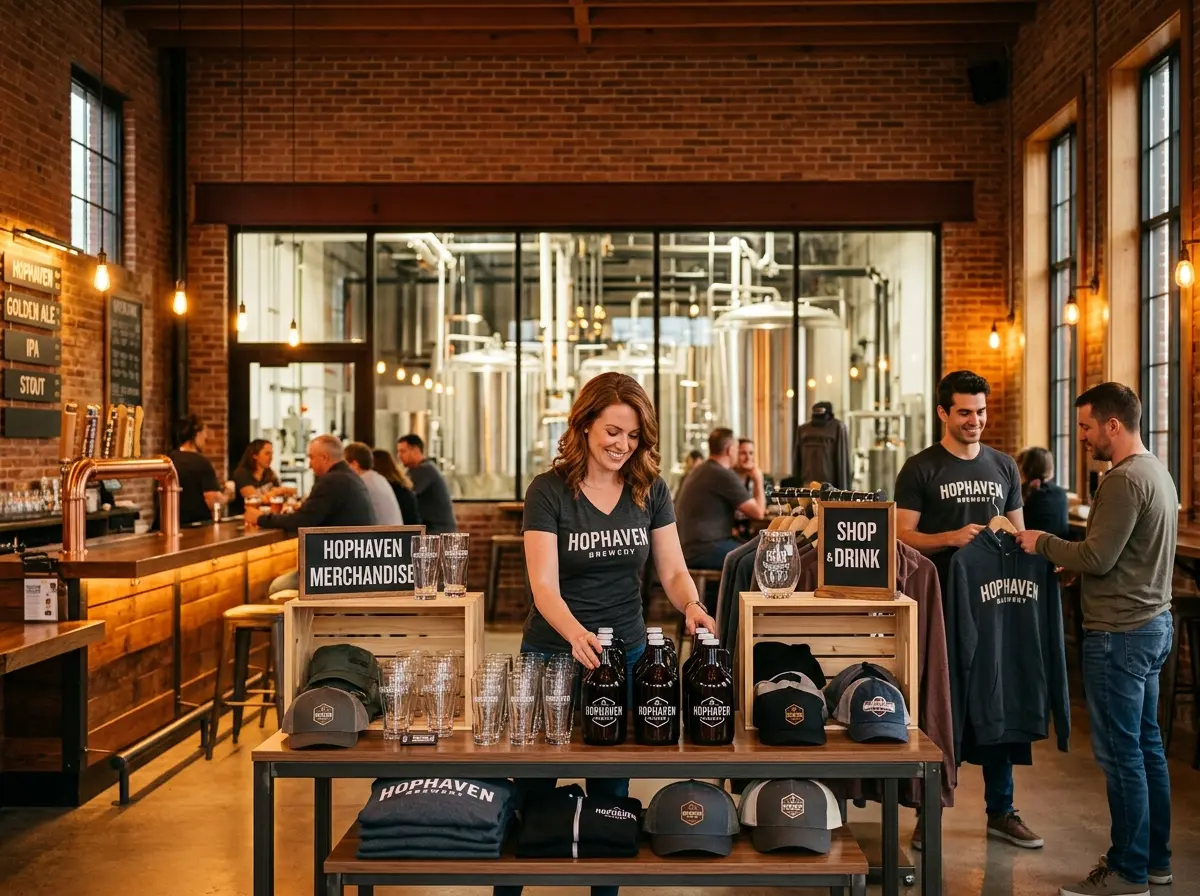
The path from the entrance to the bar is prime real estate. Customers walk it every single visit, often while in a positive, anticipatory mood — which is exactly the emotional state most conducive to discretionary spending. Merchandise displayed along this path, at eye level, with clear pricing and attractive presentation, will consistently outperform the same items placed elsewhere. End caps, countertop displays near the register, and dedicated merch walls near the exit (for the "on the way out" impulse buy) are all high-value placements worth optimizing.
Use lighting intentionally. A simple spotlight on a merch display makes items look more premium and draws attention naturally. It costs very little and makes a measurable difference in perceived value.
Bundle for Value, Not Just Discount
Bundling is one of the most effective upsell strategies in retail, and it translates beautifully to the brewery context. A "Taproom Starter Kit" — a branded pint glass, a six-pack of your flagship, and a bottle opener — feels like a gift rather than a purchase, even at a price point that works well for your margins. Bundles tied to occasions (birthdays, housewarming gifts, Father's Day) make the purchase decision easier for customers who are already shopping with a purpose.
The key is framing: don't present a bundle as "three things at a slight discount." Present it as a complete experience or the perfect gift. Customers aren't just buying products — they're buying the feeling of giving or receiving something thoughtful.
Create Seasonal and Limited Drops to Drive Urgency
Scarcity is one of the oldest and most reliable motivators in consumer behavior. A limited run of merchandise tied to a seasonal beer, an anniversary, or a special event creates urgency that evergreen inventory simply cannot replicate. Promote these drops in advance through email and social media, give them a name, build a little anticipation — and watch how differently customers respond compared to standard stock. When something might not be there next week, people stop waiting to decide.
Quick Reminder About Stella
Stella is an AI robot employee and phone receptionist that works inside your taproom as an engaging kiosk and answers your phone calls around the clock — starting at just $99/month with no upfront hardware costs. She proactively promotes your merchandise, answers customer questions, and handles calls so your staff can focus on delivering great experiences. If you're looking for a consistent, tireless presence that actually helps move products and keep customers informed, she's worth a serious look.
Turning Merchandise Into a Core Revenue Stream
Merchandise has the potential to represent anywhere from 10% to 30% of a brewery's total revenue when approached strategically — a range that represents a significant difference in the financial health of your business. The breweries sitting at the top of that range aren't there by accident. They've treated merch as a real product line, invested in design, optimized their physical environment, and created systems that make purchasing easy and natural for customers.
Here's how to start moving in that direction:
- Audit your current merchandise setup. Walk through your taproom as a customer would. Where is the merch? Is it visible, well-lit, and easy to browse? What's the first thing a new visitor would notice?
- Review your pricing. If you're consistently underselling, adjust. Test a modest price increase on your best-performing items and monitor whether volume changes meaningfully.
- Plan a limited edition drop. Pick an upcoming event, seasonal release, or anniversary and build a small merch collection around it. Promote it two to three weeks in advance.
- Train your team — or get tools that handle it. Every staff member should know how to mention merchandise naturally in conversation. And if staffing bandwidth is a challenge, that's a problem technology can increasingly help solve.
- Track what's working. Measure sell-through rates by category, note which items get photographed or commented on, and use that data to inform your next buying decisions.
Your brewery has a brand that people genuinely love — otherwise they wouldn't keep coming back. Merchandise is simply the bridge between that loyalty and your bottom line. Build it intentionally, promote it actively, and make it easy for customers to say yes. The pint glasses won't sell themselves, but with the right strategy in place, they'll come a lot closer than you might expect.