Introduction: The Google MD Has Entered the Exam Room
Picture this: A parent walks into your pediatric office, child in tow, armed with seventeen browser tabs, a Reddit thread from 2019, and the unshakeable confidence of someone who has thoroughly read the first three paragraphs of a WebMD article. Before you've even said good morning, they're quoting "research" that suggests their child's mild ear infection might actually be a rare tropical disease. Congratulations — you've just met the modern parent.
To be fair, parents who research before appointments aren't the enemy. In fact, engaged parents who come prepared are often easier to work with than those who've never given their child's health a second thought between visits. The real challenge isn't the research — it's the communication. When a parent arrives already anchored to a self-diagnosis or a treatment plan they assembled from a mommy blog, the path to trust, clarity, and actual medical care becomes a lot more... scenic.
This guide is for pediatricians and pediatric practice managers who want to turn those pre-loaded, slightly frantic, deeply well-meaning parents into cooperative partners in their child's care — without losing their minds or their afternoon schedule in the process.
Understanding the Research-Before-Appointment Parent
Why They Do It (And Why That's Actually Fine)
Before we dive into strategy, let's acknowledge something important: parents who research before appointments are not trying to undermine your medical degree. They're scared, they love their kids, and the internet is right there at 2 a.m. when anxiety peaks and your office is closed. According to a Pew Research study, over 80% of internet users look up health information online, and parents of young children are among the most active health researchers. This is not a trend that is going away. It is, in fact, accelerating.
The parent who arrives citing a functional medicine blog isn't challenging your authority — they're expressing anxiety through the only tool available to them. Reframing their behavior this way changes everything about how you respond to it. Instead of feeling defensive, you can feel empathetic. And empathy, as it turns out, is extraordinarily useful in a pediatric exam room.
The Spectrum of Online-Researching Parents
Not all pre-researchers are created equal. You'll generally encounter a few distinct types:
- The Informed Questioner: Did genuine research, found legitimate sources, has smart questions. An absolute pleasure to work with.
- The Anxious Over-Researcher: Read everything they could find, convinced themselves of the worst, need reassurance more than anything else.
- The Committed Self-Diagnoser: Has already decided what's wrong and what the treatment should be, and is here for you to confirm it.
- The Protocol Challenger: Disagrees with standard medical guidelines and has peer-reviewed (in their estimation) evidence to support an alternative approach.
Each of these parents requires a slightly different communication approach, but they all share one fundamental need: to feel heard before they can hear you.
The Communication Breakdown That Happens Before the Appointment Starts
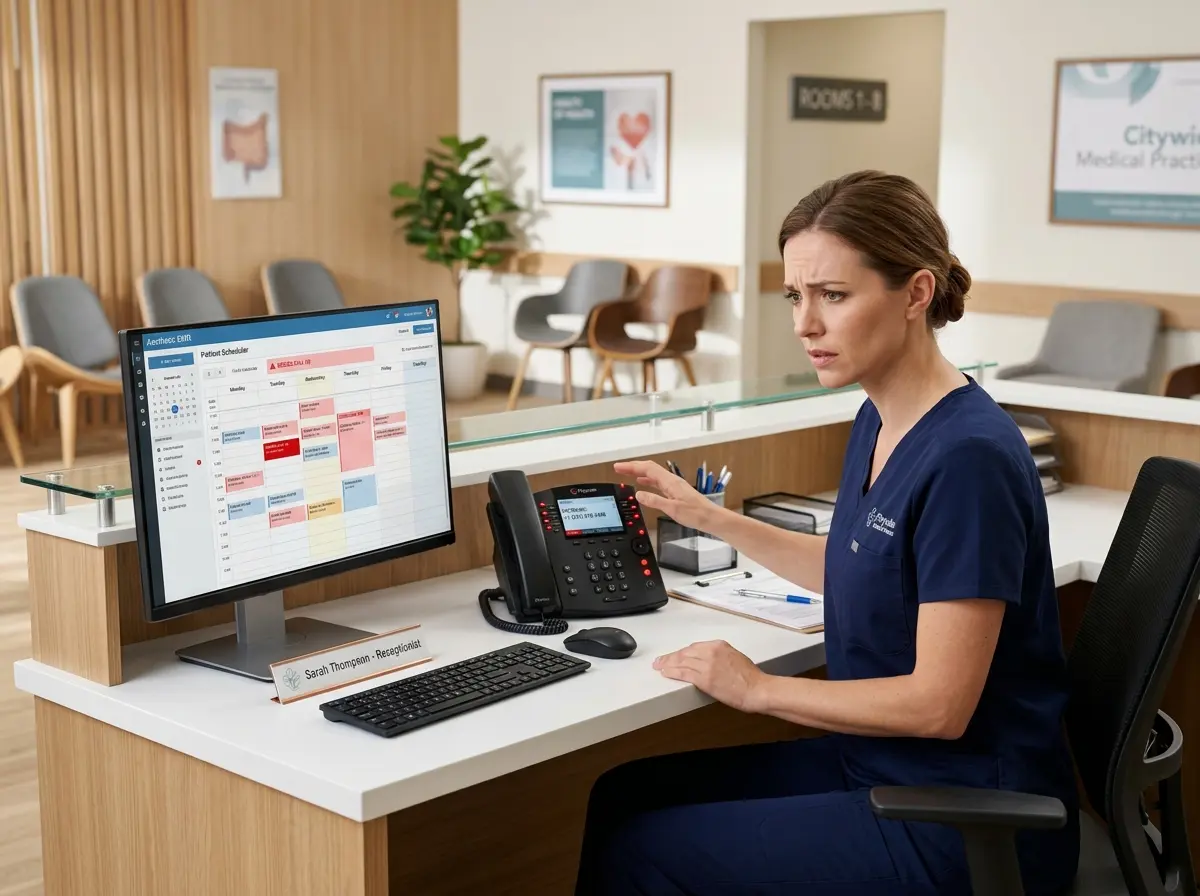
Here's something practices often overlook: the communication breakdown frequently begins before the parent even steps into the exam room. If your intake process is chaotic, your phone hold times are long, or your front desk staff seems harried and dismissive, that parent's anxiety level is already elevated by the time they sit down. An already-anxious parent clinging to their internet research is a much harder conversation than a calm, acknowledged parent who felt welcomed from the first point of contact. The experience your practice creates before the appointment shapes the entire clinical interaction that follows.
How Your Practice's Front-End Communication Sets the Tone
First Impressions Start at the Phone Call (or the Front Door)
It might seem counterintuitive to talk about AI tools in a blog post about human communication, but bear with us — because the way a parent is treated when they first contact your practice has a measurable impact on how open they are to your guidance during the appointment itself.
Stella is an AI robot employee and phone receptionist that can greet patients at your front desk kiosk and answer phone calls around the clock — ensuring that a parent calling at 10 p.m. with a worried question gets a professional, informative response instead of voicemail. When parents feel acknowledged early, they arrive calmer. Stella can also collect intake information conversationally before the appointment through phone calls or web forms, giving your clinical staff a head start on understanding what's on a parent's mind — including flagging when someone has specific questions or concerns that warrant a little extra communication prep. Her built-in CRM lets your team track those notes and patterns over time, so no concerned parent feels like they're starting from scratch every visit.
Practical Communication Strategies That Actually Work
Lead With Validation, Not Correction
The single most effective thing you can do with a parent who arrives armed with online research is validate their effort before you engage with their conclusions. This does not mean agreeing with a misdiagnosis. It means acknowledging that they care, that they tried, and that their instinct to prepare was a good one. Something as simple as "I can see you've been doing your homework — tell me what you found" accomplishes three things simultaneously: it disarms defensiveness, it gives you direct intelligence about what you're working with, and it signals to the parent that this is a conversation, not a lecture.
From there, you can gently redirect. When you need to correct a misconception, anchor your explanation to something they got right before addressing what they got wrong. Parents who feel respected absorb information dramatically better than parents who feel patronized. This isn't soft communication — it's efficient communication. The appointment that starts with defensiveness costs you ten extra minutes. The one that starts with validation moves cleanly.
Use Analogies and Plain Language Without Being Condescending
Medical communication research consistently shows that patients — and parents acting on behalf of patients — retain very little of what they're told in clinical settings, particularly when they're anxious. The solution isn't to talk louder or slower. It's to translate. When you explain that a viral upper respiratory infection doesn't respond to antibiotics and that's why you're not prescribing them, you're technically correct but potentially unconvincing to a parent who just read that their neighbor's kid got antibiotics for the same thing.
Try instead: "Antibiotics are like a lock and key — they only work on bacterial infections. A virus has a completely different lock, so the key does nothing except wipe out the good bacteria your child needs. Your child's immune system is actually the right tool here, and it's already working." That explanation takes fifteen extra seconds and cuts follow-up calls in half. Build a mental library of analogies for your most common conversations. Your team will thank you, and so will your appointment schedule.
Set Expectations Proactively — Before and After the Visit
One of the most underutilized communication tools in pediatric practice is the pre-visit and post-visit touchpoint. If parents arrive with a mental model already constructed from online research, one of the best ways to influence that model is to reach them before they fall down the rabbit hole — or immediately after the appointment while your guidance is still fresh.
Consider creating brief, accessible resources (short videos, one-page FAQs, or even a practice blog) that address the questions you get most often. Topics like fever management, antibiotic use, vaccine schedules, and developmental milestones are perennial online search targets. If your practice's voice is in that space, you're guiding the research rather than fighting the conclusions. Post-visit follow-up — even a brief automated check-in — reinforces your instructions and reduces the likelihood of a panicked return to Google at midnight.
Quick Reminder About Stella
Stella is an AI robot employee and phone receptionist built for businesses across all industries, including medical practices. She greets patients at your front desk, answers calls 24/7 with full knowledge of your practice's services and policies, and helps your team stay focused on what matters most — the patients in front of them. At just $99/month with no upfront hardware costs, she's the easiest front-desk upgrade your practice will ever make.
Conclusion: The Best Patient Relationship Starts With the Best Communication
The parent who walks in with seventeen browser tabs open isn't your adversary. They're a highly motivated, deeply caring adult who needs your expertise and your patience in equal measure. The practices that thrive in this environment aren't the ones that push back hardest against online research — they're the ones that have built communication systems thoughtful enough to meet parents where they are, from the very first phone call to the post-visit follow-up.
Here's your action plan:
- Audit your first-contact experience. Call your own office and see what a parent experiences. Is it warm? Efficient? Informative? Fix what isn't.
- Train your team on validation-first communication. This applies to front desk staff, nurses, and physicians alike. The tone is set long before the exam room.
- Build your analogy library. Identify your ten most common parent misconceptions and develop clear, non-condescending explanations for each.
- Create proactive content. A simple FAQ page or short video series addressing common online research topics positions your practice as the trusted source.
- Streamline intake and follow-up. Use tools that reduce friction and anxiety before and after appointments, so parents arrive calmer and leave more confident.
Your medical training prepared you to diagnose and treat. Your communication skills — and the systems that support them — determine whether your patients actually follow your guidance. In the age of Dr. Google, that distinction makes all the difference.