Introduction: Because Patients Don't Just Fall From the Sky
Let's be honest — if you're a chiropractor waiting for patients to find you entirely on their own, you might be waiting a while. Word of mouth is great, Google reviews are wonderful, and your signage is probably very tasteful. But one of the most powerful and underutilized growth engines for chiropractic practices is sitting right under your nose: local physician referral networks.
Primary care physicians, orthopedic surgeons, physical therapists, sports medicine doctors, and pain management specialists see patients every single day who could benefit from chiropractic care. And yet, many of those patients never end up in your chair — not because their doctor doesn't believe in chiropractic, but because you haven't given them a reason to think of you first.
Building a referral network with local physicians isn't about schmoozing or leaving a stack of business cards on a front desk and hoping for the best. It's a deliberate, relationship-driven strategy that, when done right, creates a steady and sustainable stream of warm referrals. This guide will walk you through exactly how to build those relationships, maintain them, and make sure your practice is ready to receive every single patient that comes through the door.
Laying the Groundwork: How to Get on Physicians' Radars
Start With Research, Not a Cold Pitch
Before you walk into a medical office with your brochures and your winning smile, do your homework. Identify which local physicians are most likely to refer patients to a chiropractor. Think about primary care providers who treat patients with chronic back pain, orthopedic specialists who manage musculoskeletal injuries, neurologists who see headache patients, and sports medicine physicians who work with active populations. These are your natural allies.
Look them up. Read their bios, understand their patient demographics, and — if they have any published content or reviews — get a sense of their treatment philosophy. A physician who values integrative, non-pharmaceutical approaches to pain management is going to be a much warmer prospect than one who considers anything outside of conventional medicine to be suspicious territory. Know your audience before you make contact.
Lead With Value, Not a Sales Pitch
Here's a hard truth: physicians are busy. Extremely busy. They did not get into medicine to sit through a chiropractor's 20-minute pitch about lumbar adjustments. If you want to get in the door — and stay there — you need to lead with value.
Consider introducing yourself through a brief, professional letter or email that explains who you are, what conditions you specialize in, and — most importantly — how referring to your practice benefits their patients. Include a one-page clinical overview of the types of cases you handle well. Offer to provide a complimentary consultation or case review for mutual patients. Make it easy for them to say yes, and make it clear that your goal is collaborative patient care, not patient poaching.
Show Up in Person — Tastefully
There's real value in a face-to-face introduction, but it has to be handled with care. Call ahead and ask if the practice manager or physician has five minutes for a brief introduction. Bring something useful — a well-designed referral pad, a concise one-pager about your specialties and accepted insurances, or even a small lunch for the office staff (the gatekeepers, as they say, are everything). Don't overstay your welcome. Be memorable for the right reasons: professional, knowledgeable, and respectful of their time.
Keeping Your Front Desk Ready for Referral Patients
First Impressions Matter More Than You Think
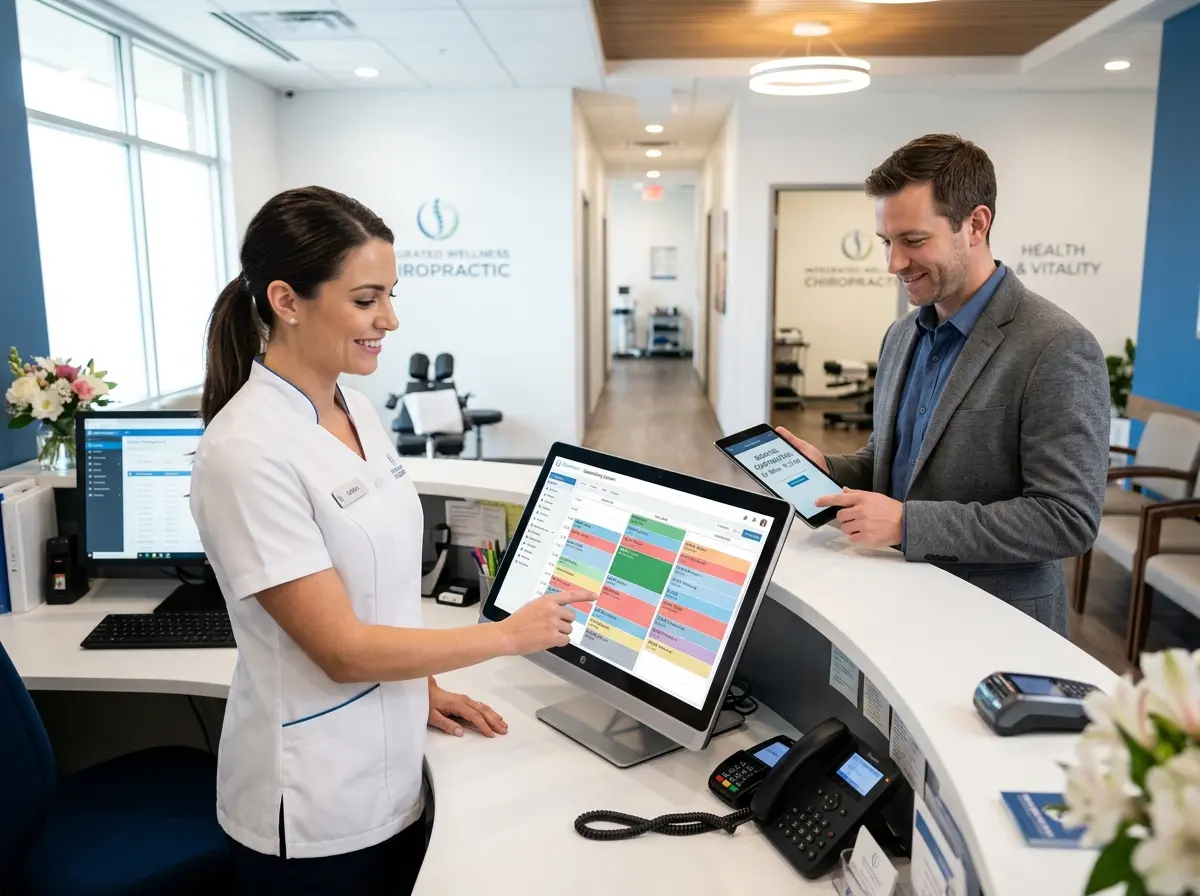
You've done the hard work of building physician relationships. A doctor's office just referred a patient. That patient calls your practice at 7:30 PM to schedule an appointment — and nobody answers. Congratulations, you've just undone a week's worth of networking in about four rings.
This is where Stella, the AI robot employee and phone receptionist, can quietly save the day. Stella answers every call, 24/7, with the same professional knowledge she'd use in person — collecting patient intake information, answering questions about your services and insurance policies, and ensuring that referred patients feel welcomed and cared for from the very first interaction. For your physical location, she also serves as an in-office kiosk presence, greeting walk-ins and helping patients navigate their visit. Referral relationships are hard to build and easy to lose — don't let a missed call be the reason a physician stops sending patients your way.
Nurturing Relationships That Actually Last
Communication Is the Currency of a Strong Referral Partnership
One of the most common complaints physicians have about referring to specialists — chiropractors included — is that they send a patient over and then hear absolutely nothing. No update, no report, no acknowledgment that the patient even showed up. From a physician's perspective, this feels like a black hole, and it erodes trust faster than almost anything else.
Make it a standard practice to send a brief, professional follow-up note to the referring physician after seeing a shared patient. You don't need to write a novel — a concise clinical summary covering your assessment, your treatment plan, and the patient's progress is more than enough. This one habit alone will set you apart from the majority of chiropractors competing for those same referrals. Physicians want to know their patients are in good hands, and consistent communication is how you prove it.
Continuing Education and Co-Marketing Opportunities
Consider creating opportunities to deepen the relationship beyond individual patient referrals. Host a lunch-and-learn at a local medical practice, where you present on a topic of shared clinical interest — spinal stenosis management, whiplash rehabilitation, or conservative care options for herniated discs, for example. These events position you as a knowledgeable colleague rather than a vendor looking for business.
You might also explore co-marketing opportunities: joint blog posts, shared social media content, or even coordinated patient education materials. Some of the strongest referral networks in local healthcare are built by practitioners who genuinely enjoy learning from each other. Be the chiropractor who contributes to that kind of culture, and the referrals will follow.
Stay Consistent Without Being Annoying
Maintaining a referral network requires consistent, low-pressure touchpoints over time. A quarterly check-in call, a holiday card, an occasional invitation to a community health event — these small gestures keep you top of mind without making anyone feel like they're being aggressively marketed to. According to a study published in the Journal of Chiropractic Medicine, ongoing professional communication is one of the most significant factors in sustaining long-term referral relationships between chiropractors and medical physicians. Consistency beats intensity every time.
Measuring and Improving Your Referral Strategy
Track Where Your Patients Are Coming From
If you're not tracking referral sources, you're essentially flying blind. Make it a habit to ask every new patient how they heard about your practice, and record that data systematically. Over time, you'll be able to see which physician relationships are generating the most referrals, which outreach tactics are working, and where there might be gaps worth addressing. Even a simple spreadsheet can reveal meaningful patterns — though a proper CRM makes this significantly less painful (pun absolutely intended).
Adjust, Refine, and Double Down on What Works
Once you know what's working, invest more in it. If one orthopedic group consistently sends you post-surgical rehabilitation cases, prioritize that relationship. Invite that physician to co-present at a community event. Send a thoughtful year-end summary of the outcomes you've achieved with their referred patients. If another outreach effort has produced nothing after six months, don't be afraid to redirect that energy elsewhere. Referral network building is an evolving process — treat it like the business strategy it is.
Quick Reminder About Stella
Stella is an AI robot employee and phone receptionist that works in-person at your practice location and answers calls around the clock — so referred patients always reach a knowledgeable, professional voice, even after hours. At just $99/month with no upfront hardware costs, she's an easy way to make sure the relationships you've worked hard to build never get undermined by a missed call or an overwhelmed front desk.
Conclusion: Build the Network, Fill the Schedule
Building a referral network with local physicians is not a quick win — it's a long game. But it's one of the highest-return investments a chiropractic practice can make. When physicians trust you, they send you their patients. When patients have great outcomes, physicians send you more patients. When you communicate consistently and show up as a true clinical partner, those relationships compound over time into something genuinely valuable.
Here's your action plan to get started:
- Identify 10 local physicians who treat patients likely to benefit from chiropractic care.
- Craft a professional introduction — letter, email, or in-person visit — that leads with patient value.
- Establish a post-referral communication protocol so every referring physician gets a follow-up note after seeing their patient.
- Plan one relationship-building event — a lunch-and-learn or community health workshop — within the next 90 days.
- Start tracking referral sources so you can measure what's working and make smarter decisions over time.
- Make sure your phones are covered — because a referred patient who can't reach you is a referred patient who finds someone else.
Your practice grows when your community trusts you. Start building those bridges today, and give them a reason to keep sending patients your way for years to come.