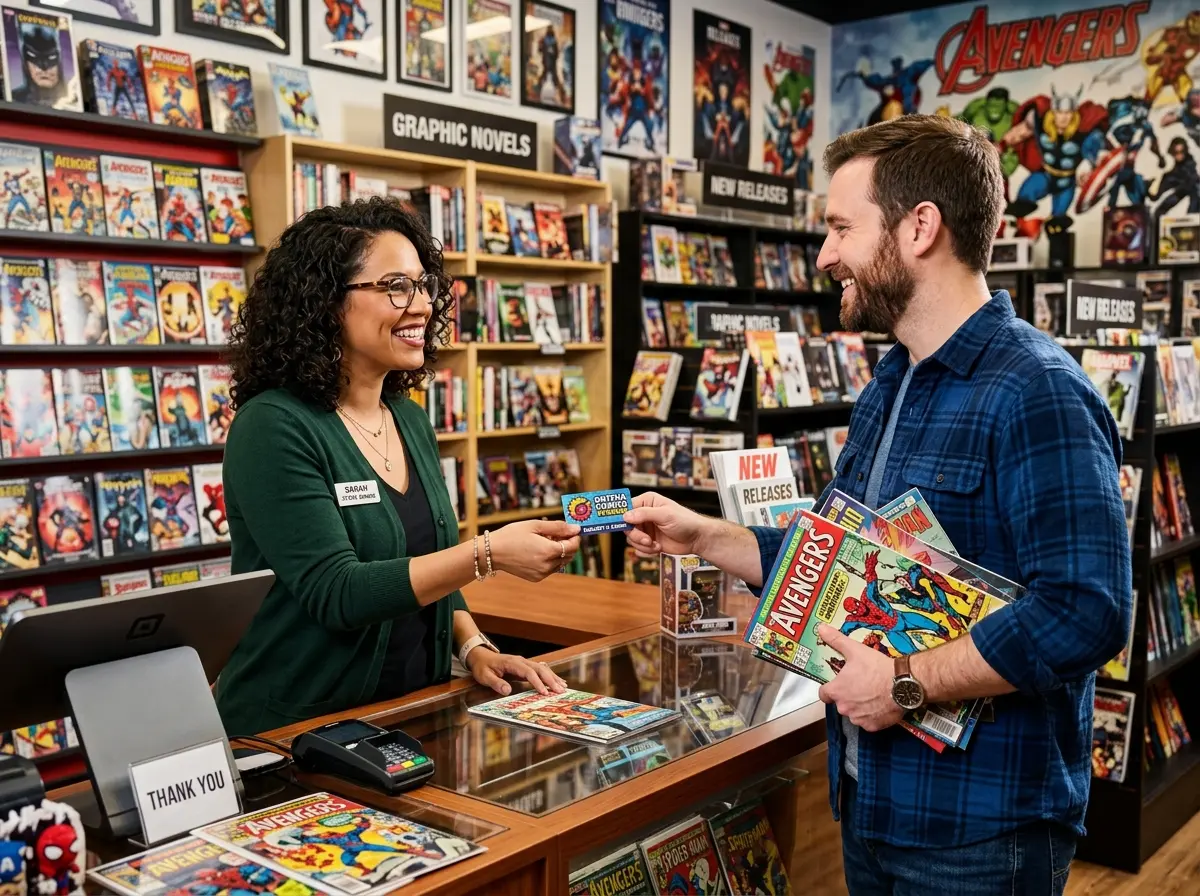
Introduction: Why Your Comic Book Store Needs a Loyalty Program (and Why "Buy 10, Get 1 Free" Isn't Enough)
Let's be honest — your customers already love you. They're comic book fans. Loyalty is practically baked into their DNA. These are people who have collected the same title for 30 years through reboots, retcons, and storylines that made absolutely no sense. Keeping them coming back shouldn't be that hard, right?
Well, sort of. The good news is that your customers are passionate, engaged, and community-driven. The challenging news is that passion alone doesn't pay the bills — especially when online retailers are undercutting your prices and digital comics are just a tap away. A well-designed customer loyalty program is one of the most powerful tools a comic book store owner can deploy to turn casual readers into lifelong regulars, and lifelong regulars into vocal evangelists who drag their friends in every Wednesday.
According to research from Bain & Company, increasing customer retention rates by just 5% can increase profits by 25% to 95%. That's not a typo. And for specialty retailers like comic book shops — where repeat customers are the lifeblood of the business — a thoughtful, well-executed loyalty program isn't a nice-to-have. It's a competitive necessity. So let's build one worth showing up for.
The Foundation: Designing a Loyalty Program That Actually Fits Your Store
Know Your Customer Before You Know Your Rewards
Before you print a single punch card or set up a points system, you need to understand who your customers actually are. Comic book store regulars are not a monolith. You've got the Wednesday Warriors who show up every single week for new releases. You've got the collectors hunting for back issues and variants. You've got the casual fans who come in for graphic novel collections every few months. And then you've got the parents buying gifts for kids who are really into Spider-Man right now.
Each of these groups has different spending habits, different motivations, and different reasons to return. A one-size-fits-all points program might satisfy your Wednesday Warriors but completely miss your collectors. Segment your customer base — even informally at first — and think about what would genuinely delight each group. A collector might not care about a free comic; they might care about early access to a rare variant or a private heads-up when something valuable comes in. Know your people, then build the rewards around them.
Points, Tiers, and Perks: Choosing the Right Structure
There are several popular loyalty program structures, and each has its strengths depending on your store's personality and customer mix.
- Points-based programs are simple, familiar, and easy to communicate. Customers earn points per dollar spent and redeem them for discounts or free merchandise. They work well for stores with frequent, lower-ticket transactions.
- Tiered programs add a gamification layer — think Bronze, Silver, and Gold members with escalating perks. Tiers are excellent for encouraging bigger spending and rewarding your most loyal customers with status they actually care about.
- Subscription or pull-list programs are uniquely suited to comic shops. Customers who commit to a monthly pull list get perks like a percentage discount, reserved copies, and priority notification on new arrivals. This model also gives you predictable inventory demand — a genuine operational win.
- Punch cards or milestone rewards are low-tech but surprisingly effective for casual customers who don't want to sign up for anything.
Many successful comic shops combine elements of several structures. A pull-list subscription can be your anchor loyalty product, while a points system handles walk-in traffic and a tiered status system incentivizes your heaviest spenders. Just make sure whatever you build is easy to explain at the register — if it takes longer than 30 seconds to describe, simplify it.
Making Rewards Actually Rewarding
Here's where a lot of loyalty programs quietly go wrong: the rewards aren't compelling enough to change behavior. A 1% discount on a $4 comic is not a reason to hand over your email address. Think beyond simple discounts. Some of the most effective rewards for comic book stores include early access to new releases or limited variants, invitations to private in-store events with creators or artists, exclusive store-branded merchandise, trade-in credit bonuses for loyal members, and birthday month perks that make customers feel genuinely remembered. The goal is to create rewards that feel special — things your customers couldn't easily get elsewhere. That's what transforms a loyalty program from a forgettable transaction into a genuine relationship.
Using Technology to Run Your Program Without Losing Your Mind
Let Automation Do the Heavy Lifting
Running a loyalty program manually — tracking punch cards, remembering who's on what tier, following up with customers who haven't been in for a while — is a fast track to burnout. The right technology stack can automate most of this work so your team can focus on what they do best: talking about comics with customers who want to talk about comics.
Point-of-sale systems like Square, Shopify, or Lightspeed have built-in loyalty tools or integrate easily with platforms like Stamp Me, Smile.io, or Marsello. Email marketing platforms like Klaviyo or Mailchimp let you send automated loyalty milestone emails, re-engagement campaigns for lapsed members, and personalized birthday offers without lifting a finger after initial setup.
And then there's your front-of-store experience. Stella, the AI robot employee and phone receptionist, can greet every customer who walks through your door, proactively promote your loyalty program, answer questions about how it works, and collect customer information through conversational intake forms — all without pulling your staff away from the register. On the phone side, Stella answers calls 24/7 and can inform callers about your loyalty program, current promotions, and how to sign up, even when your shop is closed. Her built-in CRM helps you manage customer contacts, track notes and tags, and build richer profiles over time — exactly the kind of infrastructure a growing loyalty program needs to stay organized and personalized.
Building Community: The Secret Weapon Behind the Best Comic Stores
Events Are a Loyalty Program in Disguise
The comic book stores that thrive long-term aren't just retail shops — they're community hubs. And nothing builds community faster than a well-run event calendar. Free Comic Book Day is the obvious anchor, but the best stores don't stop there. Creator signings, new release midnight events, trivia nights, painting parties, gaming tournaments, and book club meetups for graphic novel fans all give customers a reason to show up even when they weren't planning to buy anything. And when they show up, they usually buy something.
The loyalty program connection here is intentional: make events a perk. Exclusive early access to creator signing queues for loyalty members. VIP seating at release events for your top-tier customers. A private pre-opening shopping hour for pull-list subscribers. These perks cost you very little but carry enormous perceived value — and they make customers feel like insiders, which is exactly how you want them to feel.
Social Proof and the Word-of-Mouth Multiplier
Your most loyal customers are also your most credible marketers. According to Nielsen, 92% of consumers trust recommendations from friends and family over any form of advertising. Building a referral component into your loyalty program is one of the smartest and most cost-effective decisions you can make. Offer existing members bonus points or a reward when they refer a friend who makes their first purchase. Feature loyal customers on your social media — with their permission — as "regulars of the month." Create a sense of belonging that people genuinely want to share.
Local comic book stores have something big-box retailers and online giants simply cannot replicate: a real human (and, increasingly, a friendly robot) who knows your name, knows your pull list, and knows that you've been waiting three months for that particular back issue. Lean into that. It's your greatest competitive advantage, and a well-designed loyalty program is the vehicle for delivering it consistently at scale.
Measuring What Matters
A loyalty program that isn't measured is just a guess. Track the metrics that actually tell you whether your program is working: customer retention rate, average transaction value for loyalty members versus non-members, redemption rates, and enrollment growth over time. If your redemption rate is very low, your rewards probably aren't compelling enough. If enrollment has stalled, your sign-up process might be too clunky. Use the data to iterate, and don't be afraid to evolve the program as your customer base grows and changes. The best loyalty programs are living systems, not set-it-and-forget-it checklists.
Quick Reminder About Stella
Stella is an AI robot employee and phone receptionist that works inside your store as a friendly kiosk and answers your phone calls 24/7 — all for $99/month with no upfront hardware costs. She greets customers, promotes your loyalty program and current deals, collects customer information, and manages contacts through her built-in CRM. Whether your doors are open or closed, Stella makes sure your business is always putting its best foot forward.
Conclusion: Your Next Steps Toward Loyalty Program Greatness
Building a loyalty program that actually moves the needle doesn't require a massive budget or a marketing degree. It requires knowing your customers, designing rewards they genuinely want, making it easy to participate, and consistently delivering the community experience that makes your store irreplaceable.
Here's where to start:
- Audit your current customer base. Even a rough segmentation of your regulars, casual visitors, and collectors will sharpen your program design significantly.
- Choose one or two program structures that fit your store's personality and customer mix — and make sure your staff can explain them in under 30 seconds.
- Pick rewards that feel special, not just discounts. Early access, exclusive events, and personalized perks outperform generic percentage-off offers every time.
- Automate what you can. Set up a CRM, connect your POS loyalty tools, and let technology handle the tracking so your team can focus on the conversations.
- Build community intentionally. Events, referral programs, and social recognition turn customers into advocates — and advocates are worth more than any ad spend.
Your store has already done the hard part: you've built something people love. A great loyalty program makes sure they never have a reason to forget it — and always have a reason to come back.