Why Your Waiting Room Isn't the Only Place to Find New Patients
Let's be honest — getting kids into the dental chair is already an uphill battle. Between the anxiety, the "I brushed my teeth, I promise!" fibs, and the collective societal agreement that dentist visits are somewhere between "mildly unpleasant" and "please reschedule forever," pediatric dentists have their work cut out for them. And that's before you even think about patient acquisition.
Here's the thing: the parents you're trying to reach are busy. They're not scrolling through Google reviews thinking, "You know what today needs? A new dentist." They're packing lunches, signing permission slips, and wondering how their child's backpack got so heavy. But schools? Schools are where those parents already have their attention focused. And a well-executed school partnership program can put your practice front and center — right where it counts.
This guide walks you through building a school partnership program that doesn't just feel good on paper, but actually drives new patients through your doors. Strategically. Sustainably. And yes, with a little charm.
Building the Foundation of Your School Partnership Program
Before you show up at a school with a bag of toothbrushes and a nervous smile, you need a strategy. Schools are bombarded with vendors and community businesses wanting a piece of their audience, and a half-baked pitch will get you exactly nowhere. The practices that win these partnerships come prepared, professional, and genuinely useful.
Identifying the Right Schools to Partner With
Not all schools are created equal — at least not from a partnership perspective. Start by mapping out the schools within a 5–10 mile radius of your practice and cross-referencing them with your current patient demographics. Which neighborhoods are already sending you patients? Which schools have a large population of families that align with your target patient profile?
Elementary schools are your sweet spot. You're a pediatric dentist, after all, and most children in that age range are at a critical stage for establishing lifelong dental habits. Middle schools can work too, especially for orthodontic referrals, but you'll get the most mileage from the K–5 crowd.
Also consider reaching out to Title I schools — those serving lower-income communities — where access to dental care is often limited. Not only is this genuinely impactful community service, but it also builds enormous goodwill with parents, staff, and administrators. Goodwill has a funny way of turning into word-of-mouth referrals.
Making a Pitch That School Administrators Actually Want to Hear
Here's what school principals don't care about: your new patient specials, your office's proximity, or how friendly your hygienists are. Here's what they do care about: their students' wellbeing, supporting their teachers, and not wasting anyone's time.
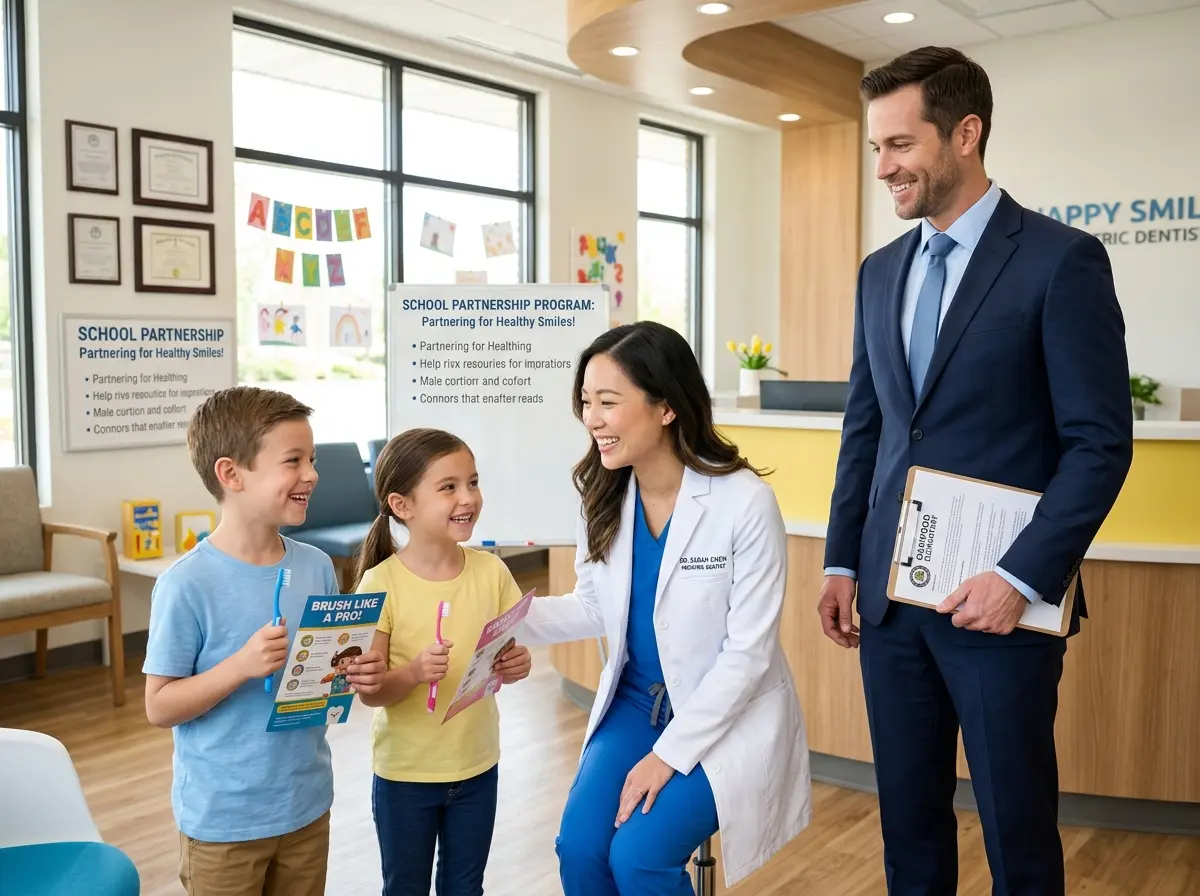
Frame your pitch entirely around what you're offering the school, not what you're hoping to gain. Come with a concrete proposal — free in-school dental screenings, an oral health education presentation tied to state health curriculum standards, a "Cavity-Free Club" certificate program, or a sponsored dental hygiene supply drive. Show them you've done the homework. Administrators respond to preparation the way kids respond to sticker charts: enthusiastically and immediately.
A brief one-page partnership overview document goes a long way. Include your credentials, what you're proposing, what it costs them (nothing), and how it benefits students. Keep it simple. Keep it human. Leave the dental jargon at the office.
Keeping Things Running Smoothly Behind the Scenes
A school partnership program generates activity — screenings, follow-up calls, appointment scheduling, new patient inquiries — and all of that has to land somewhere productive. This is where many practices quietly drop the ball. You do the community outreach brilliantly, hand out 200 referral cards, and then... the phones go unanswered during lunch, or a new patient inquiry gets lost in a voicemail nobody checked.
How Stella Can Help Your Practice Handle the Influx
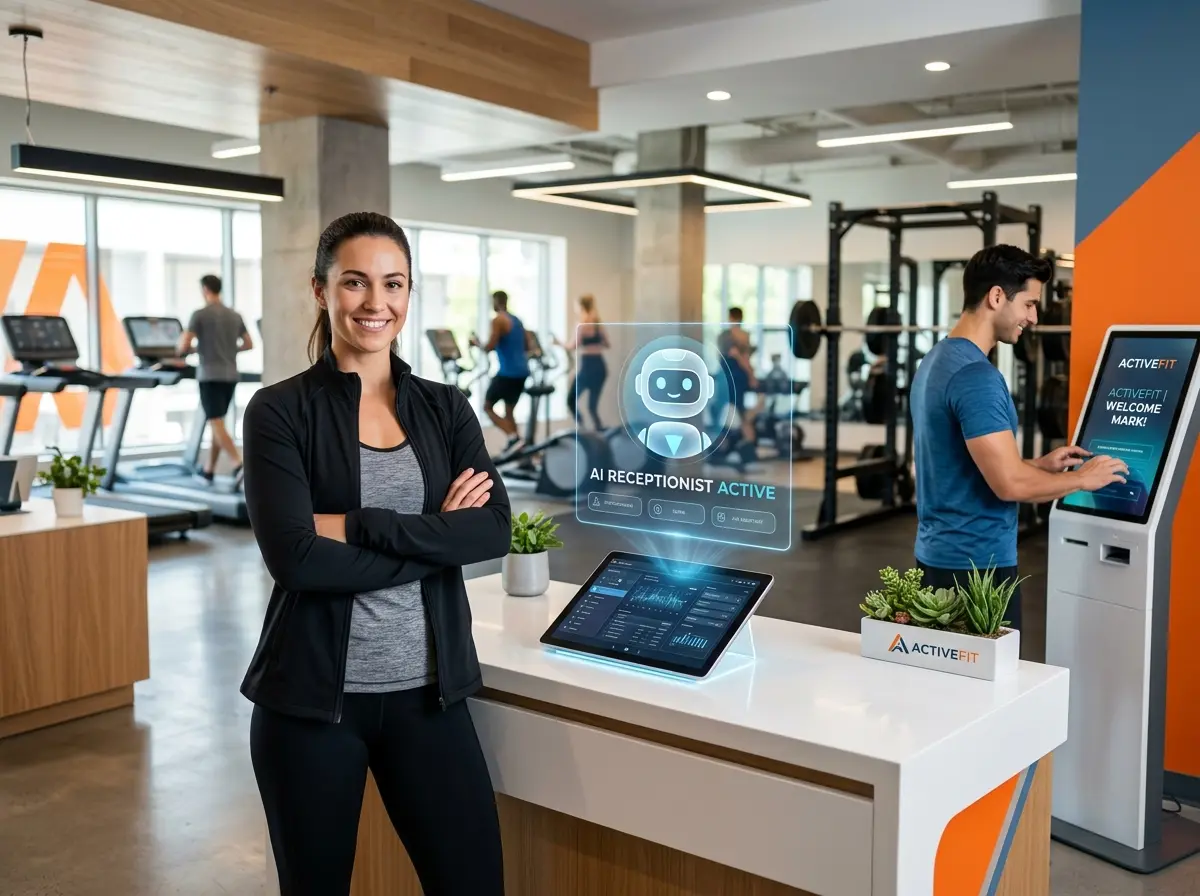
This is exactly the kind of operational gap that Stella — the AI robot employee and phone receptionist — is built for. When your school partnership program starts generating calls, Stella answers every single one, 24/7, with full knowledge of your services, new patient offers, insurance policies, and appointment process. She never puts a parent on hold while she "checks with someone," and she never misses a call because the front desk is slammed with check-ins.
Beyond phones, Stella can collect new patient information through conversational intake forms and log everything directly into her built-in CRM — so when your staff follows up, they already have the contact's name, child's age, insurance info, and how they heard about you. That "how did you hear about us?" data alone is gold for measuring which school partnerships are actually driving patients. Her in-office kiosk presence also means that when new families walk in for a first visit, they're greeted professionally and immediately, even if the front desk is momentarily occupied. First impressions matter, especially with anxious kids and skeptical parents.
Executing Events and Turning Outreach Into Appointments
Getting the partnership is step one. Converting it into actual patients is the whole game. The practices that see real ROI from school programs are the ones that treat every school interaction as both a community service and a conversion opportunity — without being weird about it.
Running In-School Dental Screenings That Actually Impress
An in-school dental screening is one of the most effective tools in your partnership toolkit. Studies show that school-based dental programs significantly increase the likelihood of follow-up dental care, particularly among children who have never seen a dentist. When you show up with gloves, mirrors, and a calm, kid-friendly demeanor, you're not just checking teeth — you're auditioning for the role of "family dentist."
Make the experience memorable. Bring branded toothbrushes and floss. Have a small prize or sticker for every child who participates. Give each student a personalized take-home note for their parents — something warm, not clinical — that summarizes what you observed and invites them to schedule a full appointment. Include a clear call to action with your phone number, your website, and a new patient offer. Make it easy for a busy parent to take the next step without thinking too hard.
Creating Year-Round Touchpoints That Keep You Top of Mind
The biggest mistake practices make with school partnerships is treating them as one-off events. You do one screening, hand out some brochures, and consider it done. That's not a partnership — that's a field trip. Real partnerships are ongoing, and they compound over time.
Consider building a calendar of touchpoints throughout the school year. A "Back to School" oral health presentation in September. A "No Candy Cavities" Halloween flyer in October. A Dental Health Month (February) classroom activity. A spring "Smile into Summer" reminder campaign. Each touchpoint reinforces your practice's name in the minds of parents and school staff. By the third or fourth interaction, you're not a business anymore — you're a trusted community partner. That's exactly the kind of position that generates referrals without you having to ask for them.
Don't underestimate the teachers, either. Teachers talk to parents every day. A dentist who makes their students excited about brushing their teeth is a dentist they'll recommend without hesitation.
Quick Reminder About Stella
Stella is an AI robot employee and phone receptionist that works 24/7 — greeting patients at your front desk via her in-office kiosk, answering calls with full knowledge of your services, collecting new patient info through intake forms, and organizing everything in a built-in CRM. She starts at just $99/month with no upfront hardware costs, so there's no reason your front office should ever feel the pressure of an unanswered phone or an ungreeted visitor again.
Putting It All Together and Taking the First Step
Building a school partnership program that genuinely drives new patients isn't complicated, but it does require intention. It requires showing up with real value, following through consistently, and making it ridiculously easy for interested parents to become patients once they've heard your name. None of this happens by accident — but none of it is rocket science, either.
Here's your action plan to get started:
- Research and list 5–10 schools within your practice's radius that align with your target demographics.
- Develop a one-page partnership proposal that leads with student benefit, not your business goals.
- Schedule a meeting with one principal or PTA coordinator this month. Start small. One strong partnership is worth more than five lukewarm ones.
- Plan your first event — an in-school screening or oral health presentation — with a clear follow-up process in place before you walk through the school doors.
- Build a content calendar for recurring touchpoints throughout the school year so the relationship doesn't go cold after September.
- Make sure your phone and front desk are ready for the influx of new inquiries your outreach will generate — because all that effort deserves a worthy follow-through.
Schools aren't just buildings full of small people who haven't seen a dentist in two years. They're communities full of parents who are actively looking for trustworthy providers for their families. Be present, be useful, and be consistent — and they'll find their way to your chair.