When Clients Ghost You (And How One Salon Won Them Back)
Every salon owner knows the feeling. You glance at your client list and notice a name you haven't seen in eight, ten, maybe fourteen months. You think, "Whatever happened to Jennifer?" Jennifer is fine, by the way. She's just been going to that other salon down the street — the one with the aggressive loyalty program and the suspiciously good Instagram presence.
Lapsed clients are one of the most frustrating and, frankly, expensive problems in the beauty industry. You've already done the hard work of acquiring them. You've built the relationship. You know their hair type, their color history, their standing appointment preferences. And then — poof. Radio silence. According to industry research, salons lose between 20% and 40% of their active client base every year to inactivity. That's not a small leak; that's a flood.
The good news? Winning back a lapsed client costs significantly less than acquiring a brand-new one. And when one mid-sized salon decided to get serious about reactivation, they brought back over 200 lapsed clients in a single campaign. Here's exactly how they did it — and how you can too.
Understanding Why Clients Leave in the First Place
Before you can win someone back, it helps to understand why they left. Spoiler: it's usually not because they hate you. Most client attrition is quiet and undramatic — no angry reviews, no dramatic exits, just a slow drift toward convenience, life changes, or a competitor's well-timed promotion.
Life Gets in the Way
The number one reason clients go quiet isn't dissatisfaction — it's life. A move to a new neighborhood, a new baby, a career change, a shift in budget. These clients aren't lost because of anything you did wrong. They're lost because life reshuffled their priorities, and your salon just wasn't loud enough to stay top of mind. These are actually your easiest reactivation targets, because their relationship with you was positive — they just need a nudge to remember you exist.
They Felt Like Just Another Appointment
Here's the uncomfortable truth: many clients leave because they didn't feel remembered. They came in three times and still had to re-explain their hair history. Nobody followed up after a new color treatment. Their birthday passed without so much as a discount code. In an industry built entirely on personal relationships, impersonal service is a slow-burning exit strategy — yours, not theirs.
A Competitor Made a Better Offer at the Right Moment
Sometimes the reason is painfully simple: someone else showed up in their inbox with a compelling offer at exactly the right time. Timing matters enormously in reactivation. If a client is passively considering a change and your competitor emails them a 20% off first-visit offer on a Tuesday afternoon, guess who's booked for Saturday? The lesson here isn't to panic — it's to be the one who shows up first, consistently, and with intention.
How Salons Can Use Technology to Stay Connected (Without Being Annoying)
One of the biggest barriers to running a reactivation campaign is simply the operational overhead. Between managing appointments, handling walk-ins, answering the phone every twelve minutes, and actually doing hair, who has time to audit lapsed clients and craft personalized outreach? This is exactly where smart technology starts earning its keep.
Where Stella Fits Into the Picture
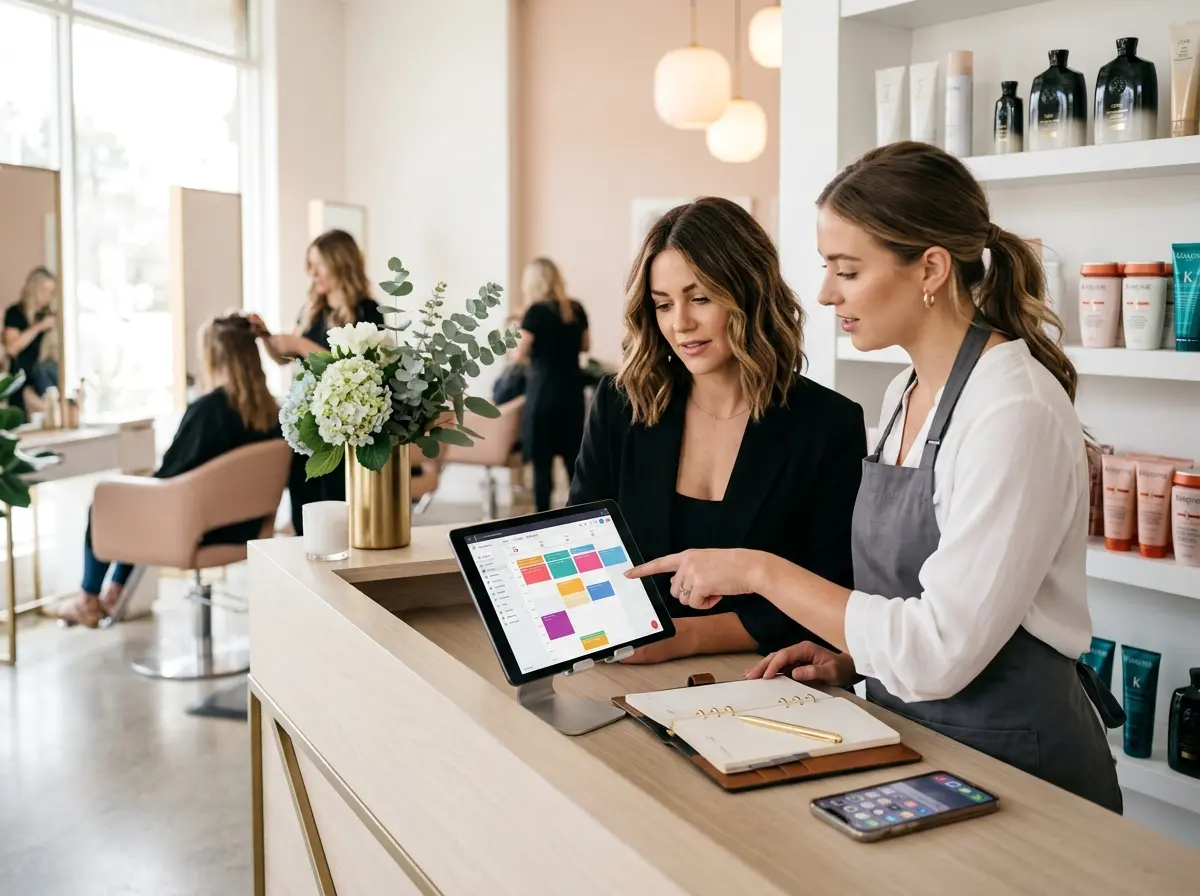
Stella, the AI robot employee and phone receptionist built for businesses like salons, does a lot of the behind-the-scenes heavy lifting that makes reactivation campaigns actually executable. Her built-in CRM lets you tag clients by status — active, at-risk, lapsed — and add notes or custom fields like last visit date, service history, and personal preferences. When it's time to run a reactivation campaign, you're not starting from scratch or digging through spreadsheets. The data is already organized and actionable.
Stella also handles phone intake conversationally, so when lapsed clients do call back in response to your outreach, she greets them warmly, answers their questions about current promotions and availability, and collects their information — all without pulling your staff away from the chair. She's available 24/7, which matters more than you'd think, because people respond to reactivation emails at 9pm on a Wednesday and then promptly forget about it by morning if they can't book immediately.
The Reactivation Campaign That Brought Back 200 Clients
Now for the part you actually came here for. A salon with a client database of roughly 1,800 contacts identified 620 clients who hadn't booked in over nine months. Rather than blasting a generic "We miss you!" email to all 620 and calling it a day, they built a structured, three-phase reactivation campaign over six weeks. The result: 214 reactivated clients, a measurable bump in retail sales, and a handful of clients who became regulars again for the first time in over a year.
Phase One: Segmentation and Personalization
Not all lapsed clients are created equal. The salon divided their 620 inactive contacts into three segments: clients lapsed 9–12 months, clients lapsed 12–24 months, and clients lapsed over 24 months. Each group received different messaging with different offer levels. The 9–12 month group got a simple, friendly "We noticed it's been a while" message with a modest 15% off incentive — because these clients likely just needed a reminder, not a discount bonanza. The 12–24 month group received a more compelling offer (a free deep-conditioning treatment with any color service), along with a brief personal note referencing their last service. The 24-month-plus group was treated essentially as a new client acquisition target, with a generous first-rebook offer and no assumptions about loyalty.
Phase Two: Multi-Touch Outreach Across Channels
Email alone doesn't cut it anymore. The campaign ran across email, SMS, and a targeted social media ad sequence for the 24-month-plus segment. Critically, each message had a clear, single call to action — not a newsletter, not five different promotions, just one offer and one booking link. The email sequence included three touchpoints over two weeks: an initial offer, a soft reminder four days later, and a final "last chance" message three days after that. SMS was used sparingly — just once per segment — because nobody wants to feel spammed by their hair salon. The sweet spot is persistent enough to be noticed, subtle enough not to be blocked.
Phase Three: The Return Experience
Here's what most salons completely overlook: the reactivation doesn't end when the client books. It ends — or rather, it continues — based on the experience they have when they walk back through the door. This salon trained staff to acknowledge returning clients directly, reference their history, and make them feel like the prodigal child rather than a stranger. Every reactivated client received a follow-up SMS two days after their appointment asking about their experience. Those who responded positively were gently encouraged to rebook. Those who didn't received a second follow-up a week later. Simple, effective, and not remotely as complicated as most salon owners assume.
Quick Reminder About Stella
Stella is an AI robot employee and phone receptionist designed to help businesses run more smoothly — whether she's greeting clients as a friendly in-store kiosk or answering your salon's phone calls 24/7 with full knowledge of your services, promotions, and policies. At just $99/month with no upfront hardware costs, she's the kind of team member who never calls in sick, never forgets a promotion, and never lets a reactivated client's call go to voicemail at midnight.
What to Do Starting This Week
You don't need a marketing agency or a six-figure tech stack to run a reactivation campaign like the one above. You need a clean client list, a clear offer, and the discipline to follow through across multiple touchpoints. Start by pulling every client who hasn't booked in the last nine months. If that number is larger than you expected — and it probably will be — don't panic. That's not a failure; it's an opportunity with a dollar sign on it.
Here's a simple action plan to get started:
- Audit your client database and segment by time since last visit (9–12 months, 12–24 months, 24+ months).
- Create tiered offers that escalate in generosity based on how long the client has been gone.
- Write three to four short, personal messages for each segment — email and SMS. Keep them warm, specific, and action-oriented.
- Schedule the campaign over four to six weeks with two to three touchpoints per segment.
- Prepare your team for the returning client experience — this is where the real retention happens.
- Follow up after the appointment with a simple check-in and a soft rebook ask.
Jennifer — and the other 199 clients like her — are out there. They remember your salon. They probably even liked it. They just need you to remind them why coming back is worth it. The salon that sent the email wins. So be the salon that sends the email.