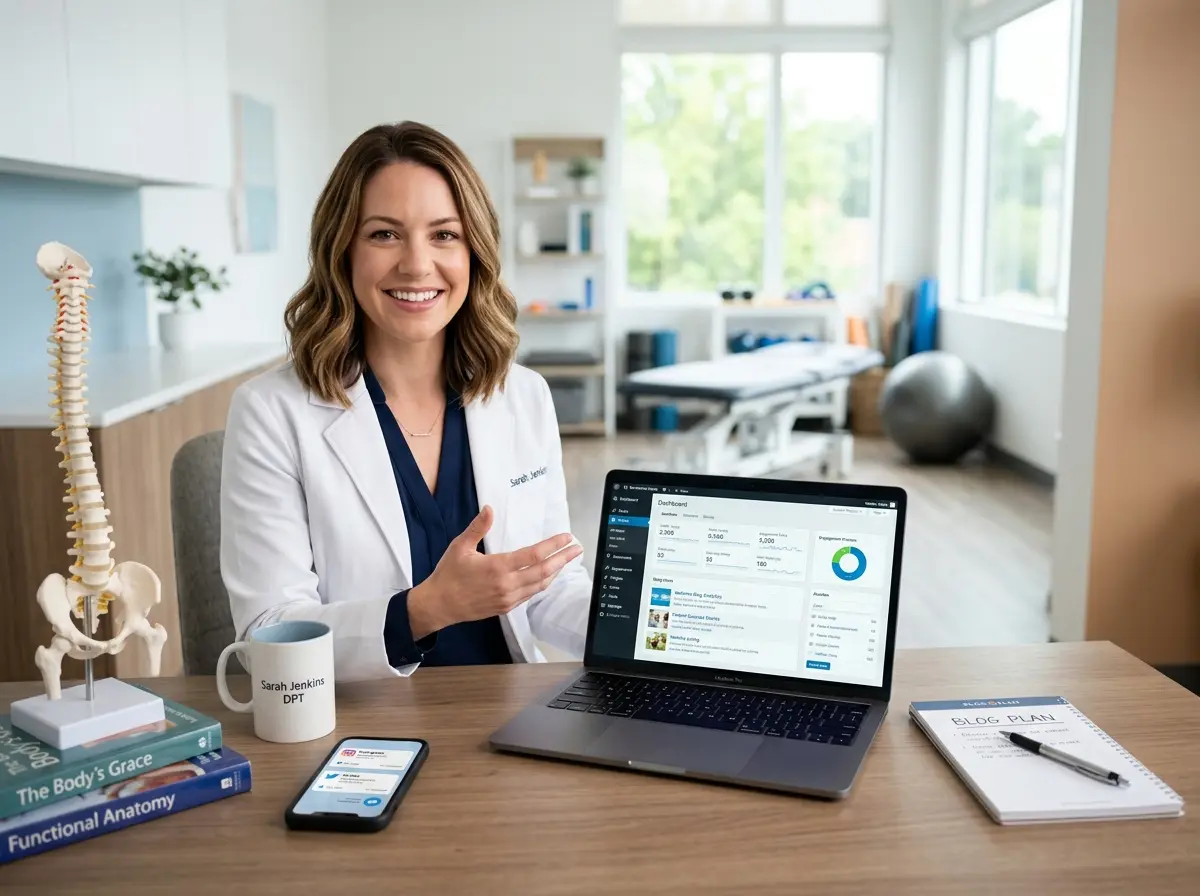
From Best-Kept Secret to Neighborhood Health Authority
Let's paint a familiar picture: you're a skilled physical therapist, you've built a solid practice, your patients love you, and yet — somehow — the chiropractor down the street with a mediocre Yelp rating and a suspiciously aggressive coupon strategy is still out-marketing you. Frustrating, right?
The hard truth is that expertise alone doesn't build a reputation. Visibility does. And in today's digital landscape, content marketing is one of the most powerful (and most underutilized) tools a local healthcare provider can use to establish themselves as the go-to authority in their community. Not just for SEO rankings — though that's a lovely bonus — but for building genuine trust with the people who will eventually become your most loyal patients.
This post walks through the exact content marketing strategy that took one local physical therapist from "well, I've heard of them" to "oh, you have to go see them." The best part? It's repeatable, scalable, and doesn't require a marketing degree or a Hollywood production budget.
Building a Content Foundation That Actually Works
Most healthcare providers, when they think about content marketing, imagine writing dry blog posts that nobody reads. And honestly, if that's the approach, they're not wrong to be skeptical. But done strategically, content marketing is less about churning out articles and more about systematically answering the questions your ideal patients are already asking — before they ever pick up the phone.
Start With the Questions Your Patients Ask Every Single Day
The most effective content strategy begins embarrassingly close to home: your waiting room. Think about the five questions patients ask you most frequently before, during, or after treatment. "Is it normal for my knee to click?" "How long does recovery from a rotator cuff injury take?" "Should I use ice or heat?" These are gold. These are the exact phrases people type into Google at 11pm when they're worried and looking for answers.
A physical therapist who builds a library of content around these real-world questions isn't just optimizing for search — they're demonstrating empathy and competence simultaneously. According to the Content Marketing Institute, 70% of consumers prefer to learn about a business through articles rather than advertisements. Your future patients would rather read your thoughtful breakdown of sciatica treatment options than see your ad for a free consultation. Give the people what they want.
The Content Formats That Build Authority in Healthcare
Not all content is created equal, and not all formats serve the same purpose. For a local physical therapist looking to become a trusted health expert, a combination of the following tends to work exceptionally well:
- Educational blog posts and FAQs — Long-form answers to specific conditions, treatment approaches, and recovery timelines. These rank well locally and establish depth of knowledge.
- Short-form video content — A 60-second demonstration of a simple at-home exercise for lower back pain gets shared. A lot. People forward it to their spouse. Their coworker. Their mom.
- Patient success stories — With appropriate permissions, sharing anonymized or consented patient journeys humanizes your practice and builds social proof more effectively than any five-star review.
- Local health guides — Think "The Weekend Warrior's Guide to Avoiding Common Sports Injuries in [Your City]." Hyper-local content builds community relevance and local SEO authority at the same time.
Consistency matters more than volume here. One well-crafted piece of content per week will outperform five rushed, generic posts every time.
Distribution: Because a Great Blog Post Nobody Reads Is Just a Diary Entry
Creating content is only half the equation. Distribution is where most practices drop the ball — they hit publish and wait. Instead, treat each piece of content like a small campaign. Share it across your social media channels with a genuine, personal caption. Email it to your existing patient list. Repurpose it into a short video or an Instagram carousel. Submit it to local community groups, neighborhood Facebook pages, or partner with a local gym or sports team to cross-promote it.
The physical therapist in our example didn't just write a blog post about preventing running injuries — she partnered with the local running club to share it in their newsletter. That one collaboration brought in fourteen new patient inquiries in a month. The content was good. The distribution made it powerful.
How Your Front Desk Can Make or Break Your Content ROI
Here's a scenario that plays out in healthcare practices everywhere: a potential patient reads your brilliant blog post about chronic knee pain at midnight, feels genuinely understood, clicks through to your website, and calls your office the next morning — only to get a voicemail. Or worse, a rushed staff member who can't answer their follow-up questions. All that content marketing effort, undone in thirty seconds.
Turning Content-Driven Interest Into Booked Appointments
This is where the bridge between marketing and operations becomes critical. Content marketing creates interest and trust. Your intake process — the moment someone actually reaches out — is where that trust is either confirmed or quietly shattered. A warm, knowledgeable, always-available point of first contact is not a luxury for a growing practice. It's infrastructure.
Stella, the AI robot employee and phone receptionist, is built exactly for this gap. For a physical therapy practice with a physical location, Stella stands inside the office as a friendly, human-sized kiosk, greeting walk-ins, answering questions about services and specialties, and ensuring no patient ever feels ignored during a busy afternoon. For every inbound call — whether it's the midnight researcher finally calling at 7am or the lunch-break caller who can't get through — Stella answers the phone 24/7 with the same knowledge and warmth as your best staff member, collects intake information through conversational forms, and routes calls or takes AI-summarized voicemails so nothing falls through the cracks. Your content builds the relationship. Stella makes sure the relationship actually starts.
Becoming the Community's Trusted Health Voice
Authority isn't self-declared. It's earned through consistent, visible, genuinely helpful presence over time. But there are strategic moves that accelerate the process considerably — especially for a local practice with a geographic target audience.
Collaborate With Other Local Businesses and Organizations
The fastest way to borrow credibility is to appear alongside people and organizations that already have it. A local physical therapist who co-hosts a workshop with a respected sports nutrition coach, writes a guest column for the local community paper, or sponsors a health segment for the neighborhood newsletter suddenly isn't just "a PT office on Main Street" — they're woven into the fabric of the community's wellness conversation.
These partnerships also create natural content opportunities. A joint Q&A video between a physical therapist and a personal trainer on injury prevention for beginners serves both audiences and produces shareable, authoritative content that neither party could have created as effectively alone. Don't underestimate the power of showing up in each other's worlds.
Leverage Patient Education as an Ongoing Touchpoint
Content marketing doesn't stop when someone becomes a patient — that's actually when the most valuable phase begins. Automated follow-up emails with relevant educational content, monthly newsletters that address seasonal health concerns (hello, shoveling-related back injuries every February), and condition-specific resource guides all serve to deepen the patient relationship and dramatically increase referral rates.
According to Nielsen, 92% of consumers trust referrals from people they know above all other forms of advertising. When your patients feel genuinely informed and cared for — not just treated and discharged — they become your most enthusiastic marketing channel. Invest in their ongoing education and they'll invest in sending everyone they know to your door.
Track What's Working and Double Down Without Apology
The final piece of a sustainable content strategy is honest measurement. Which blog posts drive appointment inquiries? Which videos get shared? Which email subject lines actually get opened? These aren't vanity metrics — they're signals telling you what your community actually cares about. Use that data ruthlessly. Double down on the formats and topics that resonate, and gracefully retire the ones that don't. A good content strategy isn't static; it evolves with your audience.
Most practice management platforms and even free tools like Google Analytics and Google Search Console will show you exactly which content is driving traffic and conversions. Set aside thirty minutes once a month to review this data and adjust accordingly. That one habit alone will put you miles ahead of competitors who are still publishing into the void and wondering why nothing is working.
Quick Reminder About Stella
Stella is an AI robot employee and phone receptionist designed for businesses like yours — whether you have a physical location, run a service-based practice, or operate entirely by phone. She greets patients in-person, answers calls around the clock, collects intake information, manages contacts through a built-in CRM, and makes sure every potential patient who reaches out after reading your brilliant content actually gets a professional, knowledgeable response. All for $99/month, no hardware costs, no days off, and no bad moods.
Your Next Steps Toward Becoming the Authority in Your Area
The physical therapist who inspired this post didn't overhaul her entire practice overnight. She started by answering one question per week in writing. Then she started sharing those answers more strategically. Then she built partnerships. Then she made sure her phone and in-office experience matched the trust her content was building. Within eighteen months, she had a waitlist, a local health column, and a reputation that no coupon-wielding competitor could touch.
Here's your practical action plan to get started:
- List the ten questions your patients ask most often — these are your first ten content pieces.
- Pick one format to start with — blog post, short video, or email newsletter. Master one before adding others.
- Identify two or three local organizations or businesses to approach for collaboration — gyms, schools, sports teams, and wellness coaches are natural allies.
- Audit your patient intake experience — what happens when someone calls after hours? When they walk in and the front desk is busy? Fix those gaps before you drive more traffic toward them.
- Commit to consistency over perfection — one helpful piece of content per week for a year will transform your practice's reputation. Start this week.
Your expertise is already there. Your community already needs what you offer. Content marketing is simply the bridge between the two — and building it is more straightforward than most people think. The only thing standing between you and being the area's most trusted health expert is the decision to start showing up, consistently and helpfully, where your future patients are already looking.
That, and maybe a slightly better phone experience than sending people to voicemail at 7am.