Introduction: Because Your Patients Can't Schedule Their Own Appointments (Yet)
Let's be honest — if dogs could use smartphones, your appointment book would probably manage itself. Unfortunately, they can't, and that means one of the biggest challenges in veterinary practice isn't the medicine. It's the follow-up. You've already done the hard work: you've built trust with a pet owner, treated their beloved four-legged family member, and sent them home with care instructions they probably half-read. And then... silence. Life happens. The reminder to schedule that six-month wellness exam gets buried under school pickups, work deadlines, and the dog eating something he absolutely should not have eaten.
The result? Pets fall behind on preventative care, owners feel vaguely guilty about it, and your practice loses recurring revenue that was practically already yours. The good news is that a well-structured preventative care reminder system can dramatically close this gap — keeping pets healthier, deepening client loyalty, and turning one-time visitors into lifelong clients. According to the American Veterinary Medical Association, practices that actively use reminder systems see significantly higher return visit rates than those that rely on clients to remember on their own. Shocking, we know.
This guide is designed to help you build that system — one that's thoughtful, consistent, and doesn't require your front desk staff to personally track every dog's birthday and vaccine schedule by hand.
Building a Preventative Care Reminder Strategy That Actually Works
Know What You're Reminding Clients About (and When)
The foundation of any effective reminder system is a clear, comprehensive list of the preventative care touchpoints your practice wants clients to stay current on. This sounds obvious, but many practices have a vague "we send reminders sometimes" approach that falls apart under the weight of a busy schedule. Instead, map out every recurring care event for your most common patient types — dogs, cats, exotic pets — and assign a standard timeline to each.
Think annual wellness exams, core and lifestyle vaccine boosters, heartworm and flea/tick prevention refills, dental cleanings, senior pet screenings, and post-surgical or post-treatment follow-ups. Each of these represents both a health milestone for the pet and a revenue opportunity for your practice. Once you've mapped the care calendar, you can build reminder sequences around it — ideally triggering automatically based on the date of the last visit or procedure recorded in your system.
Timing matters more than most practices realize. A reminder sent four weeks before a vaccine is due gives clients time to schedule without urgency. A reminder sent the day it's due tends to generate guilt and procrastination in equal measure, which is not the emotional cocktail you're going for.
Choose Your Reminder Channels Strategically
Email is easy. Texts get opened. Phone calls feel personal but are labor-intensive. The best practices use a combination of all three, calibrated to client preferences and the urgency of the reminder. A general wellness reminder might start with an email, escalate to a text if there's no response in two weeks, and then trigger a personal call from your front desk for high-value clients or pets with known health risks.
The key is to not treat all reminders equally. A routine annual wellness nudge and a reminder that a diabetic cat is overdue for bloodwork are very different communications that deserve different levels of urgency and personalization. Segmenting your client base by pet health status, visit history, and even pet life stage allows you to craft messages that feel relevant rather than robotic — which significantly improves response rates.
Make It Personal Without Making It a Full-Time Job
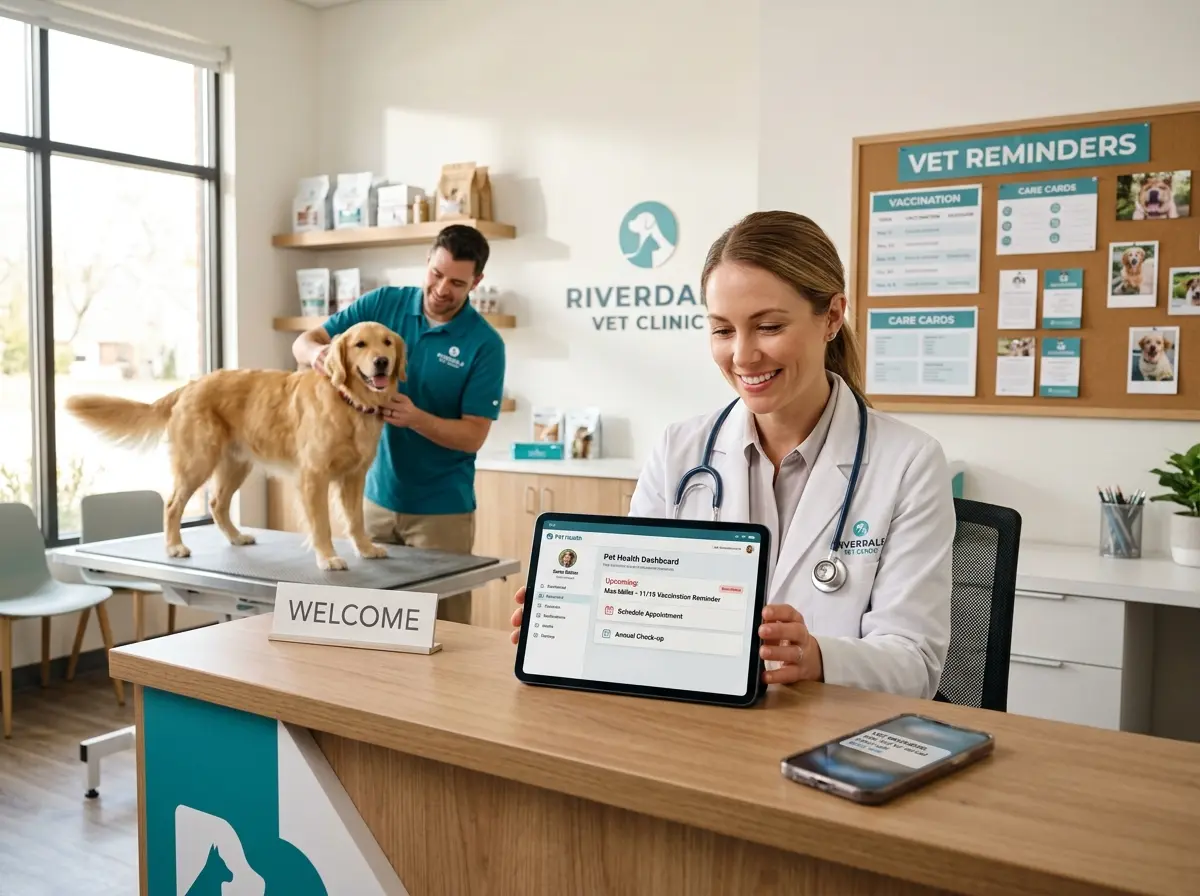
Personalization doesn't have to mean writing individual emails for every patient. It means using the data you already have — the pet's name, species, last visit date, and upcoming care needs — to make automated messages feel human. "Hi Sarah, just a reminder that Max is due for his annual heartworm test in about 3 weeks" converts far better than "Dear Valued Client, a pet in your household requires veterinary attention." One feels like it came from a trusted vet. The other sounds like a form letter written by someone who has never met a dog.
Most modern veterinary practice management software supports some level of automated reminders with merge fields. If yours does, use them. If it doesn't, it may be time for an upgrade — or at minimum, a supplemental tool that bridges the gap.
Streamlining Client Communication With the Right Tools
Where Technology Can Take the Load Off Your Front Desk
Your front desk team is already juggling check-ins, checkout, phone calls, and the occasional frantic walk-in involving a dog that ate a sock. Adding manual reminder outreach to that list is a recipe for burnout — and inconsistency. This is where smart automation tools earn their keep, and where Stella, the AI robot employee and phone receptionist, fits naturally into the picture.
Stella answers phone calls around the clock, meaning that when a client calls at 8 PM to schedule the appointment your reminder just prompted them to book, someone actually picks up — professionally, knowledgeably, and without overtime pay. For practices with a physical location, she also greets clients at the front, answers common questions about services and hours, and can collect client and patient information through conversational intake forms, feeding directly into her built-in CRM. That CRM supports custom fields, tags, and AI-generated profiles — making it easier to maintain the organized client data that good reminder systems depend on. At $99 a month, she's significantly cheaper than the chaos of a missed call.
Turning Reminders Into Relationships (Not Just Transactions)
Use Reminders as a Touchpoint, Not Just a Notice
The most effective preventative care reminders do more than announce that something is due. They reinforce your role as a trusted partner in the pet's health journey. A reminder email for a senior dog's wellness exam might include a brief note about what the exam covers and why it matters at that life stage. A dental reminder might include a startling-but-true statistic about how the majority of dogs over age three show signs of periodontal disease — because nothing motivates a pet owner quite like a well-placed veterinary fact about their beloved companion's hidden health risk.
This kind of value-added communication transforms reminders from administrative nudges into genuine client education. Clients who feel informed and cared for are dramatically more likely to book, show up, and refer their friends. And referrals from existing clients remain one of the most cost-effective sources of new business for any veterinary practice.
Track What's Working and Adjust Accordingly
A reminder strategy you never measure is a reminder strategy you'll never improve. Track open rates on your emails, response rates to texts, and appointment conversion rates from each reminder type. If your three-week-out vaccine reminder has a strong booking rate but your annual wellness email gets ignored, that tells you something important about timing and messaging.
Over time, you'll develop a clear picture of which channels, messages, and timing windows work best for your specific client base. This is genuinely valuable institutional knowledge — and it compounds. The practice that optimizes its reminder system over two years will dramatically outperform the one that sends the same form email it's been sending since 2017.
Don't Forget the Lapsed Client
Lapsed clients — those who haven't been in for 12 to 18 months or more — represent a significant recapture opportunity that many practices underutilize. A well-crafted "we miss you (and more importantly, your pet)" campaign, timed around a pet's likely care needs based on last visit data, can bring dormant clients back into the fold. Keep the tone warm and non-judgmental. Life gets busy. You're not there to make anyone feel bad; you're there to help them get their pet back on track.
These campaigns work best when they feel personal rather than broadcast. Reference the specific pet by name, acknowledge the time that has passed, and make it easy to re-engage — a direct link to book online, a simple phone number, or an invitation to ask questions before committing to an appointment all lower the barrier significantly.
Quick Reminder About Stella
Stella is an AI robot employee and phone receptionist that works 24/7 — answering calls, greeting in-person clients, collecting intake information, managing a built-in CRM, and representing your practice professionally without breaks, bad days, or turnover. She runs on a simple $99/month subscription with no upfront hardware costs and is easy to set up. For any veterinary practice trying to do more with a lean team, she's worth a serious look.
Conclusion: A Healthy Practice Starts With a Healthy Follow-Up System
Preventative care reminders aren't glamorous. They don't require years of veterinary training, and they won't win you any awards at the next industry conference. But they are quietly one of the most powerful levers available to a veterinary practice owner — driving return visits, improving patient health outcomes, deepening client relationships, and generating consistent revenue from the client base you've already worked hard to build.
Here's your action plan to get started:
- Audit your current reminder system. What are you sending, when, and to whom? Be honest about the gaps.
- Map your care calendar. Identify every preventative care milestone you want clients to stay current on for your most common patient types.
- Segment your client list. Not all clients or patients are the same. Build reminder sequences that reflect pet age, health status, and visit history.
- Add personalization. Use pet and client names, specific care details, and relevant health context in every communication.
- Close the phone gap. Make sure that when your reminder inspires a client to call and book, someone — or something — is there to answer.
- Measure and optimize. Track your conversion rates and adjust your timing, channels, and messaging based on real data.
Your clients love their pets. They just need a little help staying on top of the calendar. With the right reminder system in place, you become the practice that makes that easy — and that's the kind of thoughtful, consistent care that earns loyalty for the long haul.