Introduction: Because Nobody Actually Enjoys Sitting in a Waiting Room
Let's be honest — waiting rooms are the purgatory of the healthcare experience. Patients shuffle in, grab a magazine from 2019, and spend the next 20 minutes quietly dreading whatever comes next. For physical therapy patients especially, anxiety can be a genuine barrier to care. Many are recovering from injuries, navigating chronic pain, or returning after surgery. The last thing they need is a sterile, fluorescent-lit room with uncomfortable chairs and a TV nobody asked to watch.
Here's the good news: a growing number of physical therapy practices are figuring out that the waiting room isn't dead space — it's prime real estate for patient experience. One clever PT practice decided to treat their waiting room like a design problem worth solving, and the results were genuinely impressive. Patient anxiety dropped, satisfaction scores climbed, and staff reported fewer tense interactions at the front desk. Coincidence? Absolutely not.
This post walks through the specific changes that made a real difference, why they worked from a psychological standpoint, and how you — whether you run a physical therapy clinic or any other client-facing business — can apply the same principles. We'll even throw in a tech angle that might surprise you.
The Waiting Room Redesign: What Actually Changed
Sensory Environment: Lights, Sound, and Smell (Yes, Smell)
The practice's first move was attacking the sensory experience head-on. Harsh overhead fluorescent lighting was replaced with warm, adjustable LED panels that dimmed slightly in the late afternoon when patient volume — and therefore stress — peaked. The effect was immediate. A softer lighting environment signals to the nervous system that it doesn't need to be on high alert, which is exactly what you want for someone who just tweaked their back and is anxious about their first appointment.
Sound was the next target. The practice introduced low-level ambient nature sounds — think a quiet stream, not a rainforest rainstorm — through a modest Bluetooth speaker system. Research from the University of Sussex found that natural soundscapes measurably reduce the body's fight-or-flight response and improve mood. That's not a small thing when your patient population includes people in genuine pain.
Finally, they introduced subtle diffused scent — specifically lavender and eucalyptus — through a commercial diffuser in the corner. Aromatherapy skeptics may roll their eyes, but multiple peer-reviewed studies support its role in reducing situational anxiety. The key word is subtle. Nobody wants to feel like they've walked into a spa that's overcorrecting for something.
Layout and Furniture: Giving People a Choice
The original layout had chairs lined up against the walls, military-style. Efficient? Sure. Anxiety-inducing? Absolutely. Research on environmental psychology consistently shows that people feel less anxious when they have a sense of control over their personal space. The redesign introduced clusters of chairs at varied heights and angles, a couple of small individual seats near the window, and one slightly separated "quiet corner" with a partition — perfect for introverts, people on their phones, or anyone who simply doesn't want to make eye contact with strangers.
They also swapped out the rigid plastic chairs for cushioned seating with lumbar support — which, for a physical therapy practice, is practically a brand statement. Nothing says "we understand your body" quite like a chair that doesn't actively hurt to sit in.
Information and Transparency: Reducing the Unknown
A significant driver of waiting room anxiety isn't the wait itself — it's the uncertainty. Patients don't know how long they'll wait, what's happening behind that door, or whether they filled out their forms correctly. This practice installed a simple digital display that showed approximate wait times, patient queue position, and a brief, friendly message about what to expect during a first visit.
They also created a short laminated "What Happens Next" card available at the front desk that outlined the typical first-appointment process in plain, jargon-free language. Small investment, enormous payoff. When patients understand what's coming, they stop catastrophizing — and that's half the battle.
How Technology Can Support a Calmer Patient Experience
Reducing Front Desk Friction Before and During the Visit
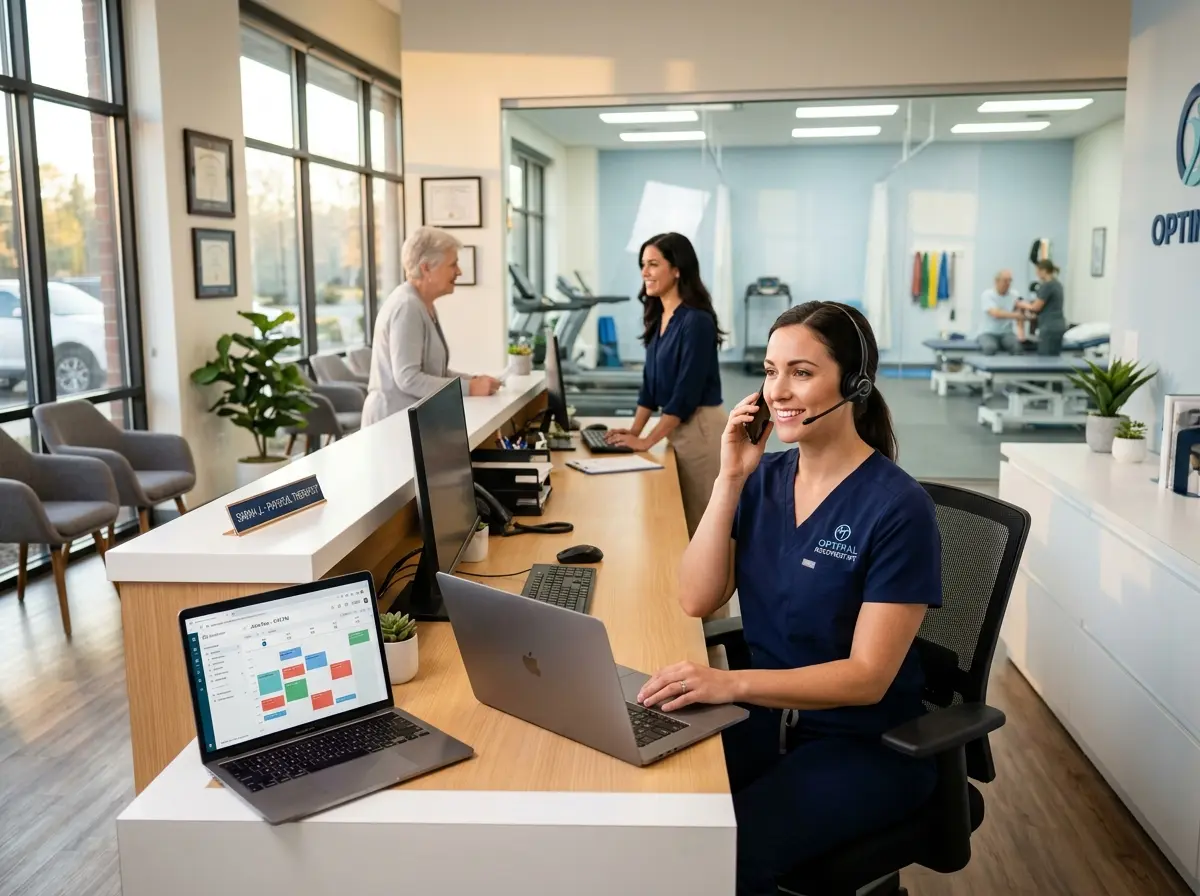
One thing the redesign team noticed quickly was that front desk interruptions were a source of ambient stress for everyone in the waiting room. Every time the phone rang, a staff member had to choose between the patient standing in front of them and the caller on the line. That tension — visible and audible — rippled through the room.
This is exactly where Stella, the AI robot employee and phone receptionist, can make a meaningful difference for practices like this one. Stella handles incoming calls around the clock, answering questions about services, hours, insurance, and appointment prep — so your front desk staff can stay focused on the person in the room. For practices with a physical location, her in-person kiosk presence can greet arriving patients, collect intake information conversationally, and answer common questions without adding to the front desk queue. Less chaos at the desk means a calmer atmosphere for everyone in the waiting area. It's a small shift with a noticeable environmental impact.
The Psychology Behind It All: Why This Works
Perceived Control Is Everything
Environmental psychologists have known for decades that perceived control dramatically affects stress levels in clinical settings. A landmark study published in the Journal of Environmental Psychology found that patients in healthcare environments with more varied, flexible, and personalized spatial options reported lower anxiety and higher satisfaction — even when actual wait times were identical to control groups. The takeaway for practice owners: you don't necessarily need to get patients in and out faster. You need to make the waiting feel less helpless.
Every design decision the practice made — the lighting they could adjust by time of day, the seating that gave people options, the display that gave them information — was rooted in returning a sense of agency to the patient. That psychological mechanism is the engine driving the results.
First Impressions Set the Clinical Tone
Physical therapy outcomes are genuinely affected by patient mindset going into a session. A patient who walks into their appointment tense, irritable, and wound up is harder to work with — and may perceive their treatment as less effective, even if the clinical quality is identical. A 2020 study in Physiotherapy Theory and Practice found a meaningful correlation between pre-session anxiety levels and patient-reported outcome measures after treatment.
In other words, the waiting room isn't just a logistical holding area. It's the beginning of the treatment. Practices that design it that way don't just improve patient satisfaction scores — they may actually improve clinical results.
Your Staff Benefits Too (And They'll Thank You For It)
It's easy to frame waiting room design entirely around the patient, but the staff experience matters enormously. Receptionists and front desk coordinators who work in chaotic, tense environments experience higher burnout rates and lower job satisfaction — which leads to turnover, which leads to inconsistency, which circles back to a worse patient experience. The calmer, more organized environment the practice created didn't just help patients settle in. It gave the front desk team a genuinely more manageable workday. That's a compounding return on a relatively modest investment.
Quick Reminder About Stella
Stella is an AI robot employee and phone receptionist built for businesses like yours. She stands in your location as a friendly, conversational kiosk and answers your phones 24/7 — handling questions, collecting patient intake information, promoting services, and keeping things running smoothly whether you're slammed or closed. At just $99/month with no upfront hardware costs, she's the team member who never calls in sick and never puts someone on hold to take another call.
Conclusion: Your Waiting Room Is Telling Patients Something — Make Sure It's the Right Thing
The physical therapy practice in this story didn't spend a fortune. They spent thoughtfully. Warm lighting, flexible seating, natural sound, clear information, and a front desk freed from constant interruption — none of these changes required a full renovation or a significant capital outlay. What they required was intention.
If you run a physical therapy clinic, a chiropractic office, a massage studio, or any health and wellness practice, here are your actionable next steps:
- Audit your waiting room sensory environment. Sit in it for 15 minutes as if you were a nervous patient. What do you notice? What would you change?
- Give patients information proactively. Wait time displays, "what to expect" cards, and clear signage reduce the anxiety of the unknown without requiring extra staff time.
- Introduce flexible seating arrangements that give patients a sense of personal space and choice.
- Evaluate your front desk workflow. If phone calls are constantly pulling staff away from in-person patients, consider whether a tool like Stella could absorb that volume and restore calm to your front-of-house.
- Measure the impact. Use post-visit surveys to track patient satisfaction and self-reported anxiety. If you redesign the environment and don't measure it, you're just guessing.
The waiting room is your first clinical decision. Make it a good one.