Introduction: Because "Hope They Come Back" Is Not a Business Strategy
Let's be honest — your dog grooming shop has a serious retention advantage that most businesses would kill for. Clients love their dogs. They will spend unreasonable amounts of money on them, return like clockwork every six to eight weeks, and tell every person at the dog park exactly who made their Goldendoodle look like a show dog. All you have to do is not lose them.
And yet, here you are — chasing down lapsed clients, scrambling to remember which dogs are on flea prevention schedules, and trying to recall whether Mrs. Henderson's Shih Tzu is named "Biscuit" or "Pretzel." (It's Pretzel. She's mentioned it three times.)
The solution isn't working harder — it's working smarter with a CRM workflow built specifically around how your grooming business actually operates. A well-designed Customer Relationship Management system transforms your client list from a chaotic spreadsheet into a retention machine that keeps tails wagging and appointments booked. This post will walk you through exactly how to build that workflow, step by step, without needing a dedicated IT team or a second cup of coffee.
Building the Foundation: Data That Actually Matters
Before you can build a CRM workflow, you need to decide what information you're actually going to collect — and commit to collecting it consistently. Most grooming shops make the mistake of capturing barely enough data to send a birthday email, then wonder why their "personalization" efforts feel hollow. Your CRM is only as powerful as the data feeding it.
Custom Fields: Going Beyond Name and Phone Number
A good grooming CRM should capture not just client contact details, but pet-specific information that makes every interaction feel personal and every appointment feel seamless. Think about the fields that actually change how you serve a client:
- Pet name, breed, age, and weight — essential for scheduling and pricing
- Coat type and preferred cut — so every groomer knows the expectations before the dog is on the table
- Behavioral notes — anxious around dryers? Aggressive with other dogs? Needs a muzzle? This is safety-critical information
- Medical conditions or sensitivities — allergies to certain shampoos, joint issues that affect handling, etc.
- Preferred groomer — because some clients will literally reschedule rather than see someone new
- Service history and frequency — so you can spot when someone is overdue and reach out proactively
Most modern CRM platforms let you create custom fields. Use them. A client who walks in and hears "Welcome back! Is Pretzel still loving the teddy bear cut?" is a client who books their next appointment before they leave.
Tags and Segmentation: Your Marketing Superpower
Once you have rich data, tagging lets you slice your client list into meaningful segments for targeted outreach. Consider tags like monthly-bath-client, senior-dog, new-client, lapsed-60-days, or add-on-upsell-ready. These tags let you send the right message to the right person at the right time — which is the entire point of CRM in the first place.
For example, a promotion for your new "Spa Day" add-on package (blueberry facial, anyone?) is far more compelling when it's sent to clients who've already purchased premium services, not blasted to your entire list including the guy who brings in his rescue mutt twice a year for a basic bath. Segmentation turns generic emails into conversations — and conversations drive bookings.
Automate the Follow-Up Before You Forget (You Will Forget)
The most common reason grooming clients don't return isn't dissatisfaction — it's simply inertia. Life gets busy, the weeks blur together, and suddenly it's been twelve weeks since Biscuit — sorry, Pretzel — had a bath. The clients who return most reliably are the ones who get a gentle nudge at exactly the right moment. That nudge needs to be automatic, because you are a groomer, not a full-time marketing coordinator.
The Rebooking Reminder Sequence
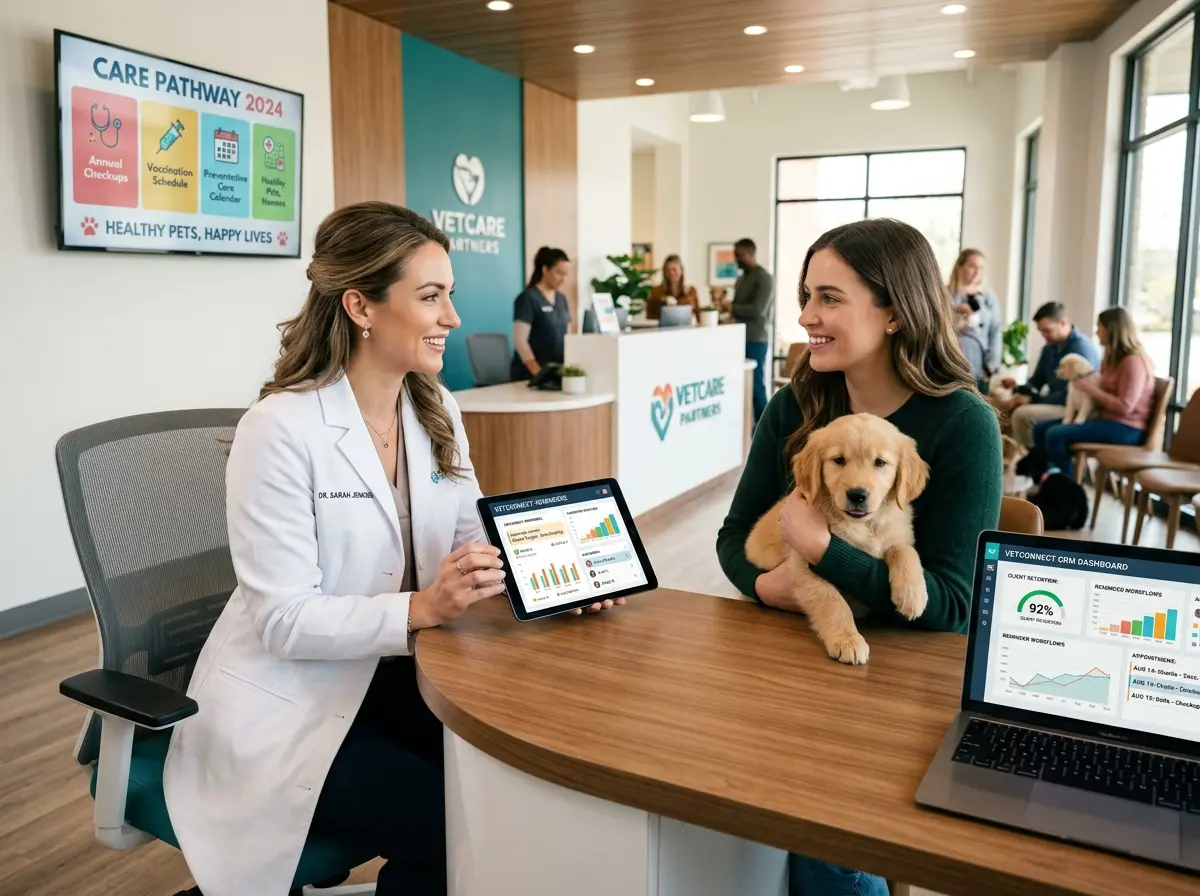
A simple three-touch rebooking sequence does most of the heavy lifting. At the time of checkout, your CRM should automatically schedule a reminder based on the client's typical service interval — usually four, six, or eight weeks out. The first touch is a friendly text or email reminder. The second, sent a week later if there's no response, includes a small incentive like a discounted add-on. The third, sent two weeks after that, is a personal-feeling check-in that mentions the pet by name. According to industry data, automated follow-up sequences can increase rebooking rates by 20–40% compared to no follow-up at all. That's not a trivial number when you're running back-to-back appointments all day.
Let Technology Handle the Front Door (and the Phone)
Here's where things get interesting — and where a lot of grooming shops leave serious money on the table. Your CRM workflow is only as good as the data going into it, and data collection depends on how well you capture information when clients first make contact. That means your intake process — whether someone walks through the door or calls to book — needs to be airtight.
Stella: Your AI Receptionist Who Never Forgets to Ask the Right Questions
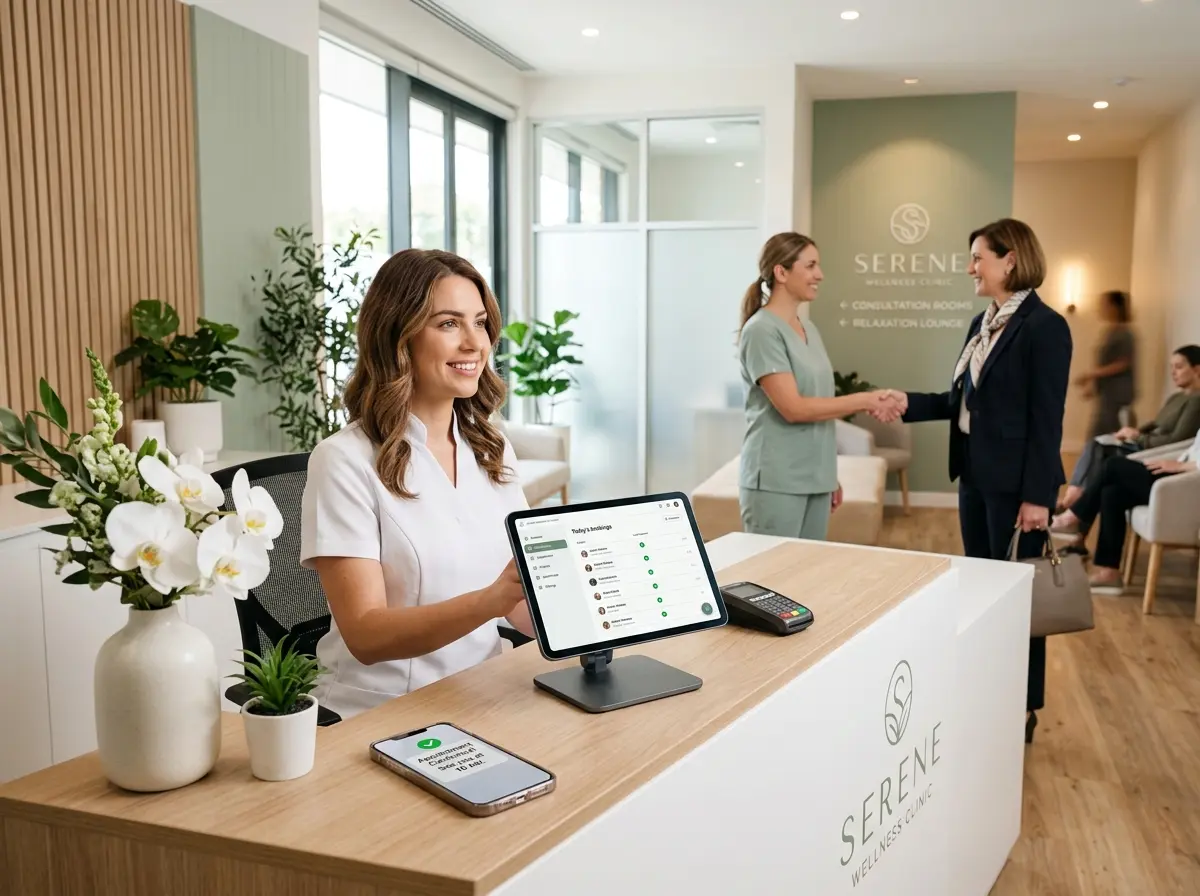
Stella is an AI robot employee and phone receptionist designed to handle exactly this kind of front-line data collection without burdening your staff. When a new client calls to book their first appointment, Stella answers the call, gathers all the relevant intake information — pet name, breed, service preferences, behavioral history — through a natural conversation, and feeds it directly into your CRM as a structured contact profile. No more sticky notes. No more "I think she said the dog's name was Biscuit."
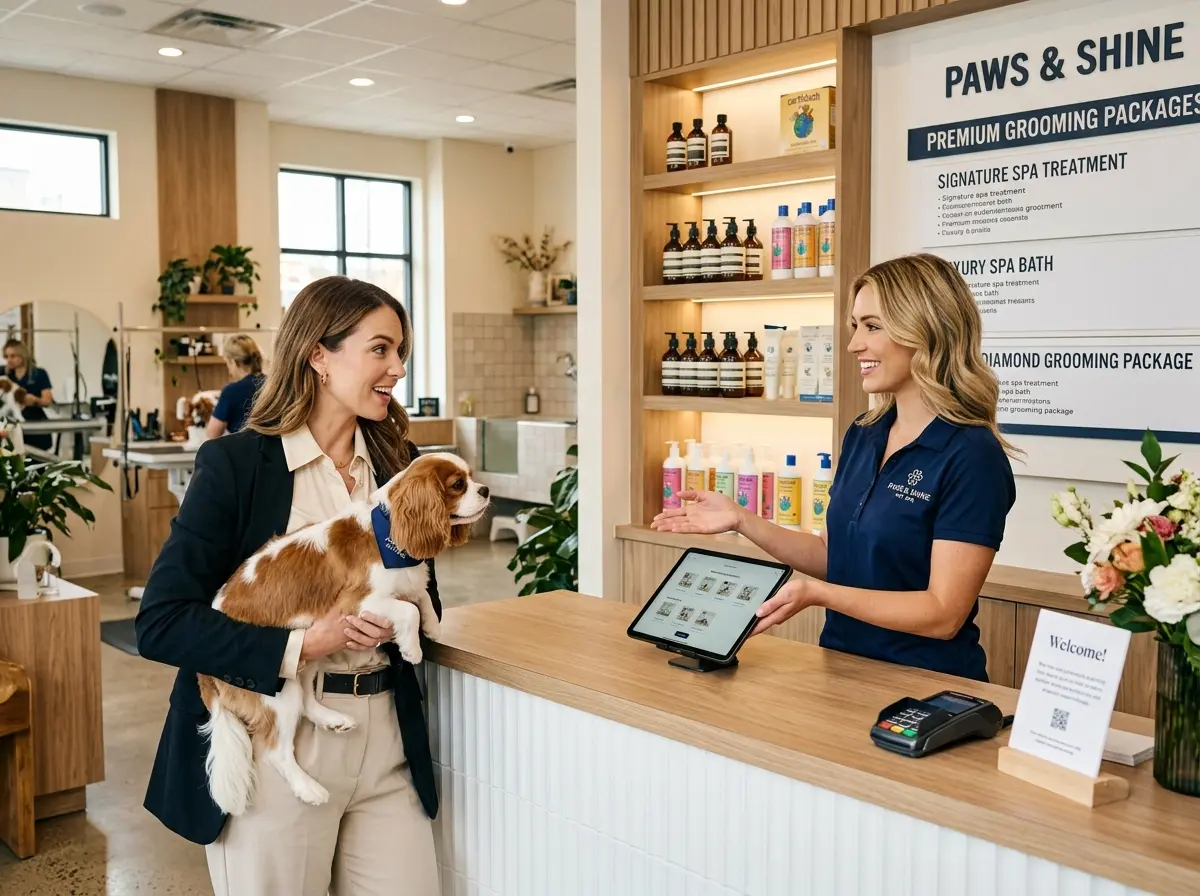
For clients who walk in, Stella's in-store kiosk presence means she can greet them, confirm their appointment details, and even prompt them to update their pet's information if anything has changed since their last visit. She handles intake forms conversationally, which means clients actually complete them — unlike the clipboard method, which produces illegible handwriting and half-finished forms. The result is a CRM that's consistently populated with accurate, actionable data from day one.
Turning One-Time Clients into Loyal Regulars
Retention is where your CRM investment pays off most dramatically. It costs five times more to acquire a new client than to retain an existing one — and in a service business built on trust and routine, loyalty is everything. The goal of your CRM workflow isn't just to track clients; it's to create experiences so smooth and personalized that switching grooming shops feels like an unreasonable amount of effort.
Milestone Moments and Personalized Outreach
Use your CRM data to acknowledge the moments that matter to pet owners. A birthday message for their dog — yes, people absolutely love this — a "one year anniversary as our client" note, or a seasonal reminder about summer shave-downs all signal that you pay attention and genuinely care. These touchpoints don't have to be elaborate; they just have to be timely and personal. An automated birthday email with the dog's name in the subject line takes five minutes to set up and generates goodwill that lasts months.
Upselling Without Being Annoying About It
Your CRM also enables smart, non-pushy upselling. If a client's notes indicate their dog has a thick double coat, a flag in the system can prompt your front desk to mention your deshedding treatment at checkout. If a senior dog tag triggers, staff can proactively recommend your gentle grooming package. When recommendations feel relevant rather than random, clients don't experience them as sales pressure — they experience them as expertise. That's the difference between a transaction and a relationship, and it's the difference between a one-time visit and a five-year loyal client.
Handling Lapsed Clients Before They're Gone for Good
Set up an automated workflow that flags any client who hasn't booked within their expected service window plus two weeks. A personalized win-back campaign — ideally including a time-sensitive offer — can recover a surprising number of lapsed clients who simply drifted away rather than intentionally leaving. According to customer retention research, win-back campaigns targeting lapsed customers see response rates between 10–30%, which is significantly higher than cold acquisition efforts. Your warm list is always your most valuable list.
Quick Reminder About Stella
Stella is an AI robot employee and phone receptionist available for just $99/month with no upfront hardware costs. She greets walk-in clients at her in-store kiosk, answers phone calls 24/7 with full knowledge of your services and promotions, and collects client intake information that flows directly into her built-in CRM — complete with custom fields, tags, notes, and AI-generated profiles. For a grooming shop trying to build a consistent, data-driven client experience, she's the front-line presence that never calls in sick and never forgets to ask if the dog prefers the bandana or the bow.
Conclusion: Start Small, Stay Consistent, and Watch the Bookings Stack Up
Building a CRM workflow that turns first-time clients into loyal regulars doesn't require a massive technology overhaul or a marketing team. It requires three things done consistently: capturing the right data from the start, automating the follow-up touchpoints that keep your business top of mind, and using what you know about each client to make every interaction feel personal.
Here's a practical action plan to get started this week:
- Audit your current data collection. What are you capturing today, and what important fields are you missing? Add pet-specific custom fields immediately.
- Build your tagging structure. Define the five to ten tags that matter most for your business and start applying them to new contacts from day one.
- Set up one automated sequence. Start with the rebooking reminder. Just that one workflow, done well, will have a measurable impact on your retention rate within 60 days.
- Identify your lapsed clients. Pull the list of clients who haven't booked in 90-plus days and send a win-back campaign this month.
- Optimize your intake process. Whether that's a better intake form, a smarter phone script, or a tool like Stella handling the conversation for you, make sure new client data is complete and consistent from appointment one.
Your clients love their dogs more than most things in their lives. They want a groomer they can trust and return to. Your job is simply to make it easy for them to stay — and a well-built CRM workflow does exactly that, quietly and automatically, while you focus on making Pretzel look fabulous.