Introduction: Because Word-of-Mouth Shouldn't Require You to Beg
Let's be honest — you didn't start a cleaning company so you could spend your evenings cold-calling strangers or throwing money into a marketing black hole. You started it because you're good at what you do, your clients love you, and you know that if more people just tried your service, they'd be hooked.
Here's the thing: your happiest customers are walking billboards. They talk to their neighbors, their coworkers, their book club friends. The question isn't whether they're talking about you — it's whether that conversation ever turns into a new booking. A well-designed referral program bridges that gap. And when it's set up correctly, it doesn't just work — it works without you babysitting it.
According to Nielsen, 92% of consumers trust recommendations from people they know over any other form of advertising. Meanwhile, referred customers have a 37% higher retention rate and are four times more likely to refer others themselves. In other words, a referral program isn't just a nice-to-have. It's a compounding growth machine — if you build it right.
This guide will walk you through how to design, launch, and automate a referral program that keeps your phone ringing without requiring you to personally charm every new lead. Let's get into it.
Building the Foundation: Designing a Referral Program Worth Talking About
Choosing the Right Incentive Structure
Before you print a single flyer or send a single email, you need to answer one critical question: what's in it for them? Not in a cynical way — your clients genuinely like you. But even the most enthusiastic fan needs a nudge to take action, and a good incentive turns a casual mention into a deliberate recommendation.
For cleaning companies, the most effective incentives tend to fall into one of three buckets. The first is a discount off a future cleaning for the referring customer — simple, appreciated, and directly tied to your service. The second is a cash reward or gift card, which has broader appeal but can feel transactional if not framed well. The third — and often most powerful — is a two-sided reward where both the referrer and the new customer get something. For example: "Give $25 off to a friend, get $25 off your next cleaning." Everyone wins, and the new customer has an immediate reason to book.
Keep the reward meaningful but sustainable. A $25 credit on a $150 recurring cleaning service is a reasonable cost of acquisition compared to what you'd spend on paid ads for the same result.
Making It Dead Simple to Refer
Complexity kills referral programs. If your customers have to fill out a form, remember a code, or navigate three pages of your website, most of them will abandon the effort entirely — not because they don't like you, but because life is busy and friction is the enemy of action.
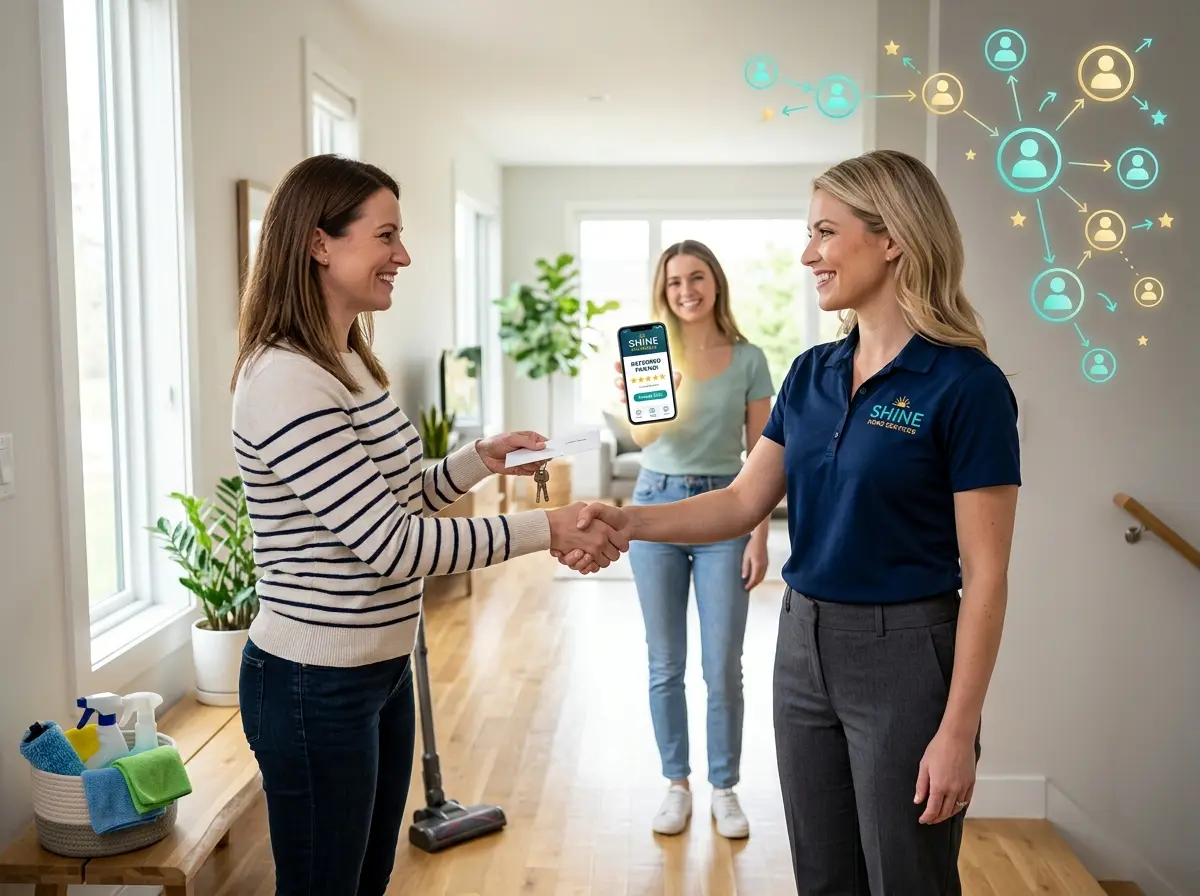
The ideal referral process looks something like this: after a cleaning is completed, your customer receives an automated text or email with a unique referral link. They share it. Their friend clicks it, books a cleaning, and both parties automatically receive their rewards. That's it. No spreadsheets, no manual tracking, no awkward follow-up emails asking "did you ever refer anyone?"
Tools like ReferralHero, Referral Rock, or even a simple integration through your booking software can handle the mechanical side of this. The key is choosing something that connects to your existing workflow rather than creating a parallel system you have to maintain separately.
Timing Your Ask for Maximum Effect
Timing is everything. The absolute worst time to ask for a referral is before you've delivered any value. The absolute best time? Right after a client experiences a moment of delight — a first cleaning that exceeded expectations, a thank-you note left on the counter, or a sparkling bathroom that made them audibly gasp.
Build your referral ask into post-service communication. A well-crafted automated message sent 30–60 minutes after a cleaning is completed — when the client is still basking in the freshly-vacuumed glow — will outperform a generic monthly newsletter every single time. Strike while the countertops are still shining.
Letting Technology Do the Heavy Lifting
Automating Follow-Ups and Referral Tracking
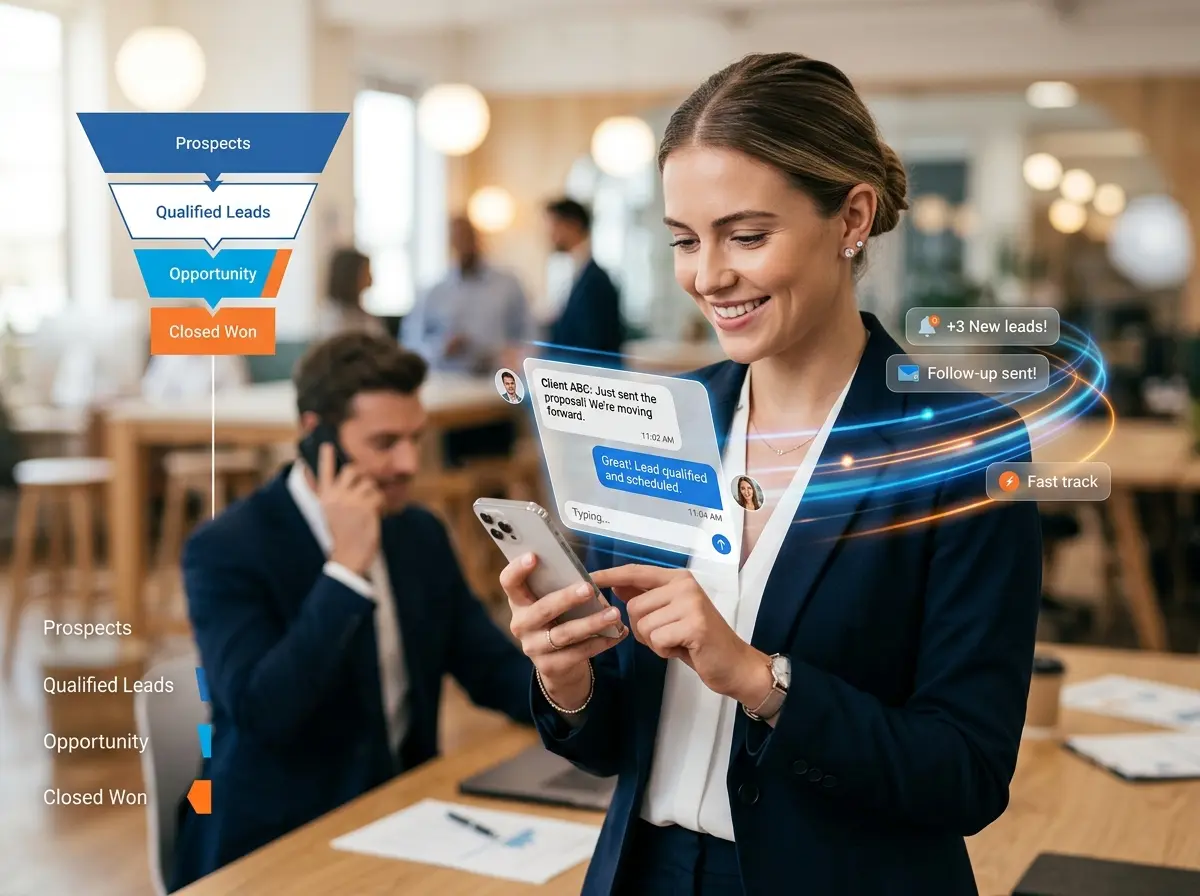
Once your referral program is designed, automation is what turns it from a manual chore into a self-sustaining engine. Your booking software, CRM, and email/SMS platform should all be talking to each other. When a cleaning is marked complete, the system should automatically trigger a thank-you message with the referral link — no human involvement required. When a referred lead books, the system should log the source, apply the discount, and queue up the reward notification for the referrer. All while you're out running your next job.
This is also where customer data becomes genuinely valuable. If you know that a particular customer has referred three people over the past year, they deserve VIP treatment — maybe a handwritten note, a bonus reward, or a personal call from you. Your CRM should surface those insights so you can act on them without having to manually dig through booking history.
How Stella Can Help You Stay Connected With Leads and Clients
Here's where things get interesting for cleaning companies — especially those handling high call volumes or managing multiple crews. When a referred lead calls to ask about your services, pricing, or availability, that call needs to be answered promptly and professionally. A missed call from a warm referral is basically throwing money out the window.
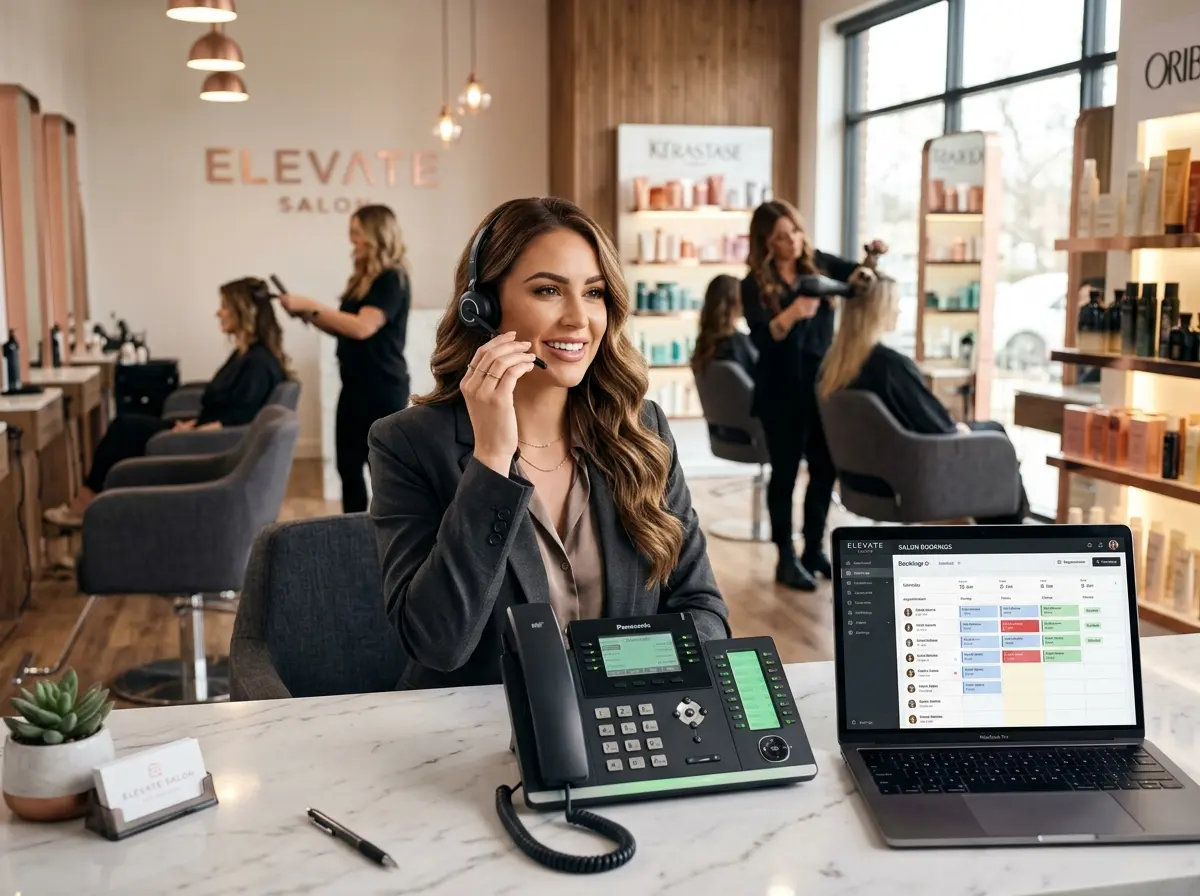
Stella, the AI robot employee and phone receptionist, can answer every inbound call 24/7 — including those referral leads who call at 9pm after their neighbor raved about your service at dinner. She answers naturally, explains your services and pricing, and can collect intake information through conversational forms so your team wakes up to a ready-to-book lead rather than a voicemail. Her built-in CRM automatically logs contact details, tags referral sources, and generates AI-powered customer profiles — so you always know where a lead came from and how to follow up. For cleaning companies juggling scheduling, crews, and client communication, Stella handles the front-end communication so nothing slips through the cracks.
Keeping the Momentum Going: Sustaining and Growing Your Program
Promoting Your Referral Program Consistently
A referral program that nobody knows about is just a document sitting in a Google Drive folder. Promotion doesn't have to be aggressive or annoying — it just has to be consistent. Mention it in your post-service emails. Add a line to your email signature. Put a small card in the cleaning supplies bag your team leaves behind. Train your staff to mention it naturally when clients compliment the work ("We're so glad you love it — we actually have a referral program if you ever want to share us with a friend!").
Social proof amplifies referrals too. When you collect a glowing Google review or a testimonial from a happy client, that content does double duty — it validates your service to strangers and reminds your existing clients why they trust you enough to refer. Cross-pollinate your review requests and referral asks for maximum effect.
Tracking Results and Iterating
No program is perfect out of the gate. The cleaning companies that build truly effective referral engines are the ones that treat their programs like living things — reviewing the data quarterly, testing different incentive structures, and adjusting their messaging based on what actually converts.
At minimum, track these metrics: number of referrals sent, conversion rate of referred leads, average lifetime value of referred customers, and cost per referred acquisition. If your conversion rate is low, the problem is probably in the booking experience or the incentive. If referrals are being sent but leads aren't converting, look at your intake process and response time. Data tells you where to focus — which is infinitely better than guessing.
Rewarding Your Best Referrers Meaningfully
Not all customers are created equal when it comes to referrals. Your top 10% of referrers are driving a disproportionate share of your new business, and they deserve to know you see them. Consider creating a tiered recognition system — something as simple as a "Gold Client" status that comes with a small annual perk, a priority scheduling window, or a personalized thank-you from the business owner.
This isn't bribery. It's relationship management. People who feel genuinely valued don't just keep referring — they become vocal advocates who defend your reputation, leave unprompted reviews, and stick with you even when a competitor undercuts your price. That kind of loyalty is worth far more than the cost of a nice gesture.
Quick Reminder About Stella
Stella is an AI robot employee and phone receptionist built for businesses like yours — answering calls 24/7, managing customer intake, and keeping your CRM organized without adding headcount. At just $99/month with no upfront hardware costs, she's the kind of team member who never calls in sick, never puts a referral lead on hold too long, and never forgets to log a contact. For cleaning companies growing through referrals, that kind of reliable front-line presence can make a real difference.
Conclusion: Your Next Steps Toward a Referral Machine
Building a referral program that runs on autopilot isn't about luck or having unusually enthusiastic customers. It's about design, timing, automation, and consistent follow-through. When those four elements are in place, referrals stop being a happy accident and start being a predictable growth channel.
Here's your action plan to get started this week:
- Define your incentive structure. Choose a two-sided reward that's meaningful to both the referrer and the new client, and make sure the math works for your margins.
- Map out the referral journey. From post-service message to reward delivery, document every step and identify where automation can replace manual effort.
- Choose your tools. Pick a referral platform that integrates with your booking and CRM systems. Avoid anything that creates a parallel workflow you have to maintain by hand.
- Set up your automated touchpoints. Post-service thank-you, referral ask, new lead follow-up, and reward notification should all be automated from day one.
- Promote it consistently. Add referral mentions to your email signature, leave-behind materials, and staff scripts. Make it part of your culture, not a one-time campaign.
- Review quarterly. Check your metrics, test a new incentive or message, and iterate based on what the data shows.
Your clients are already talking about you. A well-built referral program just makes sure that conversation ends with a booking — automatically, professionally, and without you having to lift a finger every time. That's the kind of system your business deserves.