The Admin Avalanche No One Warned You About
You opened a boutique fitness studio because you love helping people get stronger, move better, and feel great. You did not open it because you dreamed of spending three hours a day chasing down incomplete intake forms, playing phone tag with prospective members, and manually entering the same client information into four different places. And yet, here we are.
The Hidden Cost of Manual Intake Processes
It's Slower Than You Think
Most studio owners underestimate how much time their team spends on intake-related tasks. Consider the full lifecycle of a single new client: someone calls to ask about membership options, your front desk answers (or doesn't, because they're mid-session), they call back, someone answers, they get interested, they're told to fill out a paper form or emailed a PDF, they forget, someone follows up, they complete it, someone manually enters the data — and that's assuming nothing gets lost along the way. Studies in the fitness industry suggest front desk staff spend anywhere from 30 to 50 percent of their time on administrative tasks rather than client-facing work. That's a significant chunk of payroll going toward clipboard management.
Incomplete Data Creates Downstream Problems
The Bottleneck at the Front Desk
How Automation (and the Right Tools) Can Help
Conversational Intake Meets the Real World
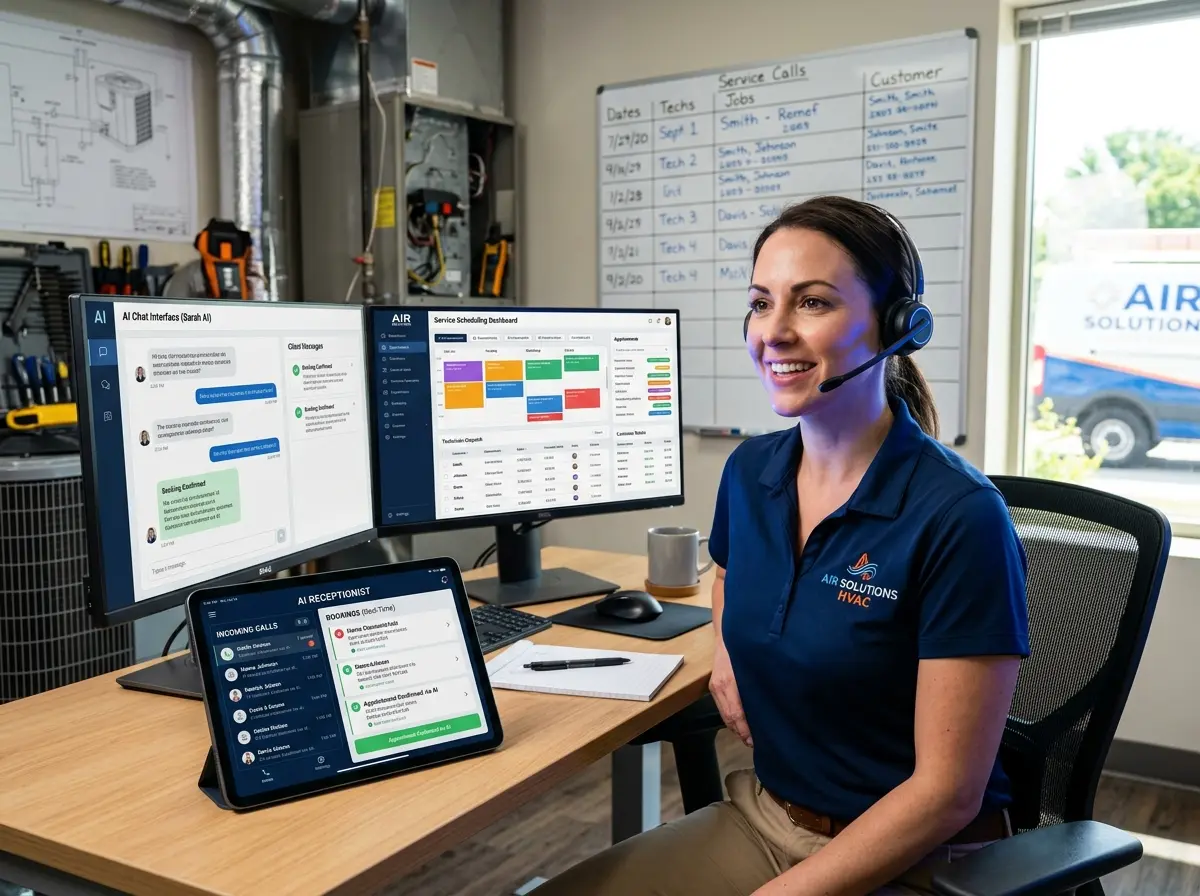
One of the more elegant solutions emerging for fitness studios is the use of conversational AI to handle intake — not just web forms that feel like doing your taxes, but natural, friendly interactions that guide clients through the process in a way that actually feels human. Stella, the AI robot employee and phone receptionist, is one such tool that handles this seamlessly across multiple channels. When a prospective member calls to inquire about personal training packages, Stella can handle the call, answer their questions, and collect intake information conversationally — no hold music, no missed calls, no frazzled receptionist trying to take notes while the 6 a.m. cycling class piles in the door.
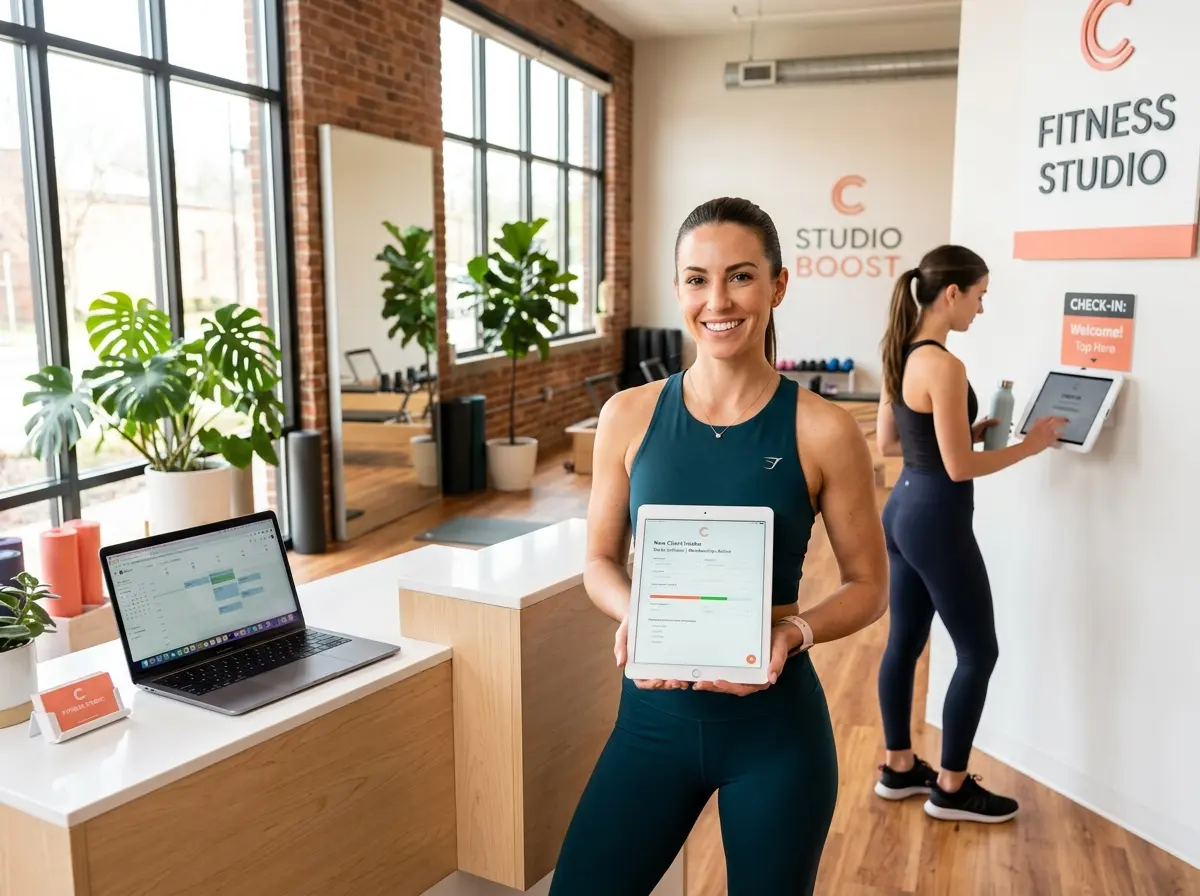
For studios with a physical location, Stella's in-store kiosk presence means new clients can check in, complete health forms, and get their questions answered without monopolizing staff time. All that information flows directly into a built-in CRM with custom fields, tags, and AI-generated client profiles — so your team walks into every interaction already knowing who they're talking to. No duplicate entry, no missing fields, no mystery handwriting.
A Real-World Example: How One Studio Cut Admin Time in Half
Meet the Studio
The Shift to Automated Intake
After implementing an automated intake workflow — including a conversational intake form delivered via phone and at the in-studio kiosk — the studio saw immediate changes. New client form completion rates jumped from around 60 percent to over 95 percent before the first appointment. Phone call volume dropped by roughly 40 percent as common questions were handled automatically. Front desk staff reported spending significantly more time on relationship-building tasks rather than administrative ones. The owner estimated that between phone handling, form chasing, and data entry, the team collectively recovered nearly 15 hours per week — the equivalent of a part-time employee's workload.
What That Time Actually Bought Them
Building Your Own Streamlined Intake System
Start by Auditing What You're Currently Doing
Identify Your Highest-Friction Points
Make It Feel Personal, Not Robotic
Quick Reminder About Stella
Stella is an AI robot employee and phone receptionist built for businesses exactly like yours — answering calls 24/7, greeting clients at your in-store kiosk, handling intake forms conversationally, and keeping everything organized in a built-in CRM. She runs on a straightforward $99/month subscription with no upfront hardware costs, and she never calls in sick on a Monday morning. If your front desk is your bottleneck, she's worth a serious look.