When Your Waiting List Becomes the Problem
Here's a scenario that should sound familiar to any dermatology practice owner: your phone rings forty times before noon, your front desk staff is buried in appointment requests, patients are waiting three weeks just to book a consultation, and somewhere in the chaos, Mrs. Henderson called four times about her rash and nobody wrote it down. Again.
A packed schedule is supposed to be a good problem to have. And in theory, it is. But a three-week booking backlog isn't just an inconvenience — it's a revenue leak, a patient satisfaction nightmare, and a quiet signal that your intake process is working against you. Patients who can't get in quickly don't wait patiently. They call your competitors.
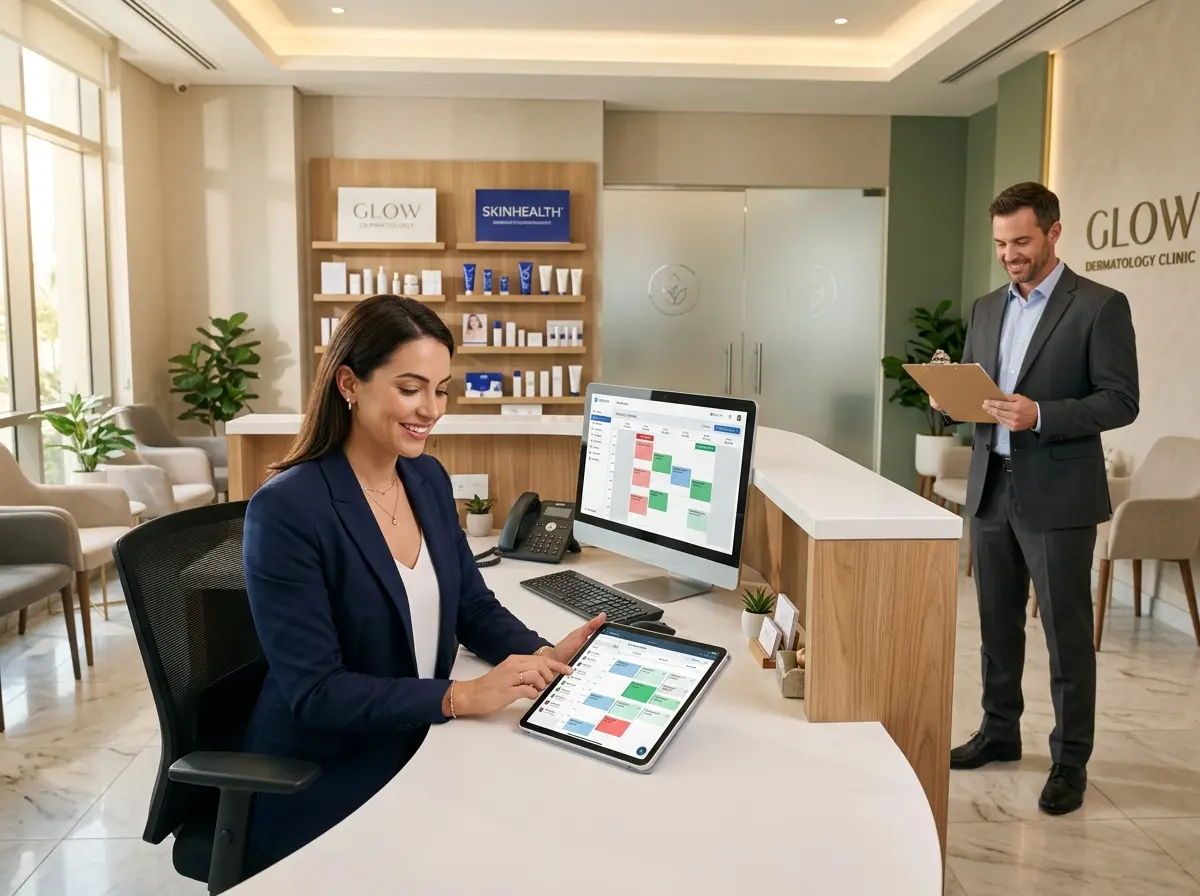
This is exactly the situation one dermatology practice found itself in before overhauling its scheduling workflow with automated intake and AI-powered phone handling. The result? That three-week backlog was gone in under a month. Here's how they did it — and how you can apply the same principles to your own practice.
Understanding the Anatomy of a Scheduling Backlog
The Hidden Cost of Manual Intake
Most scheduling backlogs don't start with too many patients. They start with too much friction. When every appointment requires a phone call, and every phone call requires a staff member, and every staff member can only handle one conversation at a time, you've built a single-lane road into your practice. It doesn't matter how many people want to come in — they're stuck in traffic.
In the case of our dermatology practice, the front desk was handling an average of 85 inbound calls per day. Roughly 60% of those were appointment requests that required collecting patient information, insurance details, reason for visit, and preferred time slots — all manually, all by hand, all during business hours. Each call averaged seven minutes. Do the math and that's nearly five hours of staff time per day just on intake. That's not a staffing problem. That's a systems problem.
Why Phone-Only Scheduling Punishes Your Best Patients
There's a particular cruelty in phone-only scheduling that doesn't get discussed enough: it disproportionately frustrates your most motivated patients. Someone who calls at 8:02 AM to book an appointment isn't a casual browser — they've already decided they want to come in. Making them wait on hold, call back, or navigate a clunky voicemail system is the operational equivalent of locking your front door right when someone reaches for the handle.
Research consistently shows that healthcare practices lose between 20% and 30% of prospective patients simply due to poor first-contact experiences. When patients can't get through, or when they're told the next available appointment is three weeks out, a significant portion simply books elsewhere. The backlog, paradoxically, creates more backlog — frustrated patients call multiple times, staff spend time managing those repeat contacts, and the queue only grows.
The Shift to Automated, Conversational Intake
The solution the practice implemented wasn't complicated in concept, even if it required some setup in practice. They introduced automated conversational intake — a system that could collect all necessary patient information through a natural, guided interaction, without requiring a human staff member to be present on the line. New patients could call after hours, provide their details, describe their concern, and select a time slot — all without ever being put on hold or told to call back tomorrow.
Within the first two weeks, after-hours bookings accounted for 34% of all new appointment requests. That's a third of their new volume being captured at times when previously, those calls would have gone to voicemail and been forgotten or followed up on too late. The backlog began to shrink almost immediately.
How AI-Powered Scheduling Tools Make This Possible
From Bottleneck to Throughput
This is where tools like Stella become genuinely worth talking about. Stella is an AI robot employee and phone receptionist that handles inbound calls around the clock — gathering patient information through conversational intake forms, answering questions about services and policies, and routing calls to human staff only when truly necessary. For a dermatology practice (or any medical office), this means new patient intake, appointment inquiries, and general Q&A can happen continuously, not just during the nine-to-five window when your receptionist is available and hasn't yet spilled coffee on the keyboard.
Stella also includes a built-in CRM with custom fields, tags, AI-generated contact profiles, and notes — so every interaction is logged, organized, and immediately useful. No more sticky notes. No more "I think someone called about this." For practices managing dozens of new patient inquiries per week, that kind of structured data capture is less of a luxury and more of a basic operational necessity. And for practices with a physical location, Stella's in-person kiosk presence means that patients walking in can get the same consistent, knowledgeable experience they'd receive over the phone.
Rebuilding the Scheduling Workflow That Sticks
Audit Before You Automate
Before you implement any new scheduling system, spend one week tracking exactly where your current process breaks down. Which steps require human intervention? Where do patients drop off? How many calls go to voicemail, and how many of those voicemails are actually returned within 24 hours? Be honest. Most practices are surprised — and a little horrified — by what the data reveals.
The dermatology practice in this case study discovered that nearly 40% of their voicemails were being returned more than 48 hours later. For a new patient inquiring about a suspicious mole, that delay isn't just a scheduling inconvenience — it's a trust problem. Patients interpret slow follow-up as low interest, and they move on. The audit made the problem undeniable, which made the solution easier to justify and implement.
Design for the Patient's Schedule, Not Just Yours
One of the most overlooked scheduling improvements is simply extending the window during which patients can interact with your practice. Most dermatology patients are working adults. They can't call at 10 AM on a Tuesday. They call at 7 PM, or on Saturday morning, or during a lunch break when hold times are at their worst. Any scheduling improvement that only functions during business hours is solving half the problem.
Effective automated systems handle inquiries continuously, confirm appointments with follow-up reminders, and give patients a sense of being taken care of — even when no human is actively on the line. When the practice introduced 24/7 phone intake, patient satisfaction scores on first-contact experience jumped by over 40% in the first month. People don't need to talk to a human for every interaction. They need to feel heard and organized. A well-designed automated system does exactly that.
Measure, Adjust, and Don't Declare Victory Too Early
Eliminating a backlog is satisfying. Keeping it eliminated is the actual work. Once the practice cleared their three-week queue, they established ongoing metrics to make sure the problem didn't quietly return: average days to first available appointment, percentage of after-hours calls successfully converted to bookings, and repeat-call rate (a reliable indicator of unresolved first contacts).
Automation isn't a set-it-and-forget-it solution. As your practice grows, your volume changes, and the intake system needs to grow with it. Build review checkpoints into your calendar — quarterly at minimum — to assess whether your current configuration still fits your actual patient flow. The practices that maintain the gains are the ones that treat their scheduling system as a living process, not a one-time fix.
A Quick Reminder About Stella
Stella is an AI robot employee and phone receptionist designed for businesses of all sizes — including medical practices, spas, law firms, retail shops, and more. She answers calls 24/7, handles conversational intake, manages a built-in CRM, and for physical locations, greets patients in person at a human-sized kiosk. At $99 per month with no upfront hardware costs, she's built to be accessible, not just impressive.
Your Next Steps Start with One Question
The dermatology practice in this case study didn't solve its three-week backlog with more staff, longer hours, or a strongly worded memo to the front desk. They solved it by removing the bottleneck that created the backlog in the first place — the dependency on human-only, hours-limited, single-threaded intake. Once patients could reach the practice, provide their information, and book an appointment at any hour of the day, the queue cleared itself.
If you're managing a practice with a scheduling backlog, start by asking one honest question: How many patients are we losing before they ever get into our system? Then trace that number back to the specific friction points in your intake process. Chances are, the bottleneck is exactly where you suspect it is — on the phone, after hours, in the gap between when patients want to connect and when your staff is available to receive them.
Automation doesn't replace the human care that makes a great practice. It protects the space for that care to actually happen — by handling the logistics so your staff can focus on the patients who are already in the room. That's not a futuristic concept. It's a Tuesday morning at a well-run dermatology office that no longer has a three-week backlog.
The question is whether yours will be next.