The Silent Exodus: Why Your Best Customers Disappeared
Here's an uncomfortable truth: somewhere in your customer database, there's a list of people who genuinely liked your store, spent real money there, and then just... stopped coming. No dramatic breakup. No angry Yelp review. They just quietly drifted away, and you probably didn't notice until now.
Welcome to the world of lapsed customers — retail's version of the one that got away. Research consistently shows that acquiring a new customer costs five to seven times more than retaining an existing one, yet most retail businesses pour their energy and marketing budgets into chasing fresh faces while ignoring a warm, pre-qualified audience sitting right in their CRM. (Assuming they even have a CRM, but we'll get to that.)
The good news? Customers who've purchased from you before already trust you. They've already crossed the psychological barrier of handing over their money. They just need a reason — and a reminder — to come back. This post will walk you through exactly how to win back retail shoppers who haven't visited in 12 months or more, without begging, over-discounting, or sending another generic "We Miss You!" email that gets immediately deleted.
Understanding Why They Left in the First Place
Before you can win someone back, it helps to understand why they wandered off. Spoiler: it usually isn't what you think.
It's Rarely About You (But Sometimes It Is)
Studies suggest that the majority of customer churn — roughly 68% — happens due to perceived indifference. Not a bad experience. Not a competitor with lower prices. Just the quiet, creeping feeling that the business didn't really care whether they came back or not. Nobody followed up. Nobody noticed they were gone. And so they found somewhere else that made them feel slightly more appreciated, even if that somewhere else was just Amazon.
Of course, some customers leave for legitimate reasons: they moved, their needs changed, a competitor genuinely offered something better, or they had an experience that disappointed them. The point is that you can't fix the problem without first understanding it. A simple win-back campaign that includes a short survey — "We haven't seen you in a while and we'd love to know why" — can yield surprisingly honest feedback while simultaneously signaling that you actually pay attention.
Segmenting Your Lapsed Customers
Not all lapsed customers are created equal, and treating them as a monolithic group is a fast track to wasted effort. Before you launch any re-engagement campaign, divide your lapsed audience into meaningful segments:
- High-value lapsed customers: Shoppers who spent significantly or visited frequently before going quiet. These are your highest priority — treat them like VIPs, because they were.
- One-and-done shoppers: Customers who made a single purchase and never returned. They showed enough interest to buy once, which means the spark was there. You just need to reignite it.
- Seasonal shoppers: People who only came in during certain times of year. They may not be lapsed at all — just waiting for the right moment. A timely, season-appropriate outreach can bring them right back.
- Feedback-driven leavers: Customers who had a complaint or left a negative review. These require a personalized, human approach before any promotional messaging.
Once you've segmented your list, you can craft messages and offers that actually resonate rather than sending everyone the same 10% off coupon and hoping for the best.
How Stella Can Help You Stop Losing Customers in the First Place
Here's a thought: the most effective win-back strategy is the one you never have to run — because you kept customers engaged from the start. That's where Stella, the AI robot employee and phone receptionist, quietly earns her keep.
Capturing Customer Data and Building Real Relationships
Stella stands inside your store and engages every customer who walks through the door — greeting them, answering questions, highlighting current promotions, and collecting contact information through natural, conversational intake forms. That data flows directly into her built-in CRM, where customers are automatically organized with AI-generated profiles, custom tags, and notes. Instead of a dusty spreadsheet you never look at, you have an actual, actionable record of who your customers are and what they care about. She does the same on the phone, handling calls 24/7 and gathering customer information during every interaction — so no lead, inquiry, or returning customer ever slips through the cracks undocumented.
Crafting a Win-Back Campaign That Actually Works
Alright, let's get tactical. You've identified your lapsed customers and you're ready to reach out. Here's how to do it without being annoying, desperate, or forgettable.
The Right Offer at the Right Time
The instinct is to immediately throw a discount at lapsed customers, and while incentives can work, leading with price alone trains customers to wait for deals rather than valuing your business at full price. A more effective approach is to lead with relevance and value, then layer in an incentive if needed.
Start by referencing something specific — a product category they've purchased before, a service they've used, or a new arrival that fits their profile. "We just got in a new line of [X] that we thought you'd love" is infinitely more compelling than "Here's 15% off everything." Personalization doesn't have to be elaborate; even basic purchase history can make your outreach feel thoughtful rather than automated. If you do include a discount or special offer, frame it as an exclusive reward for being a past customer rather than a clearance sale desperation move.
Choosing the Right Channels
Email remains one of the highest-ROI channels for win-back campaigns, but it works best when combined with other touchpoints. A well-timed text message can achieve open rates upward of 90%, making it a powerful complement to email — especially for time-sensitive offers. For your highest-value lapsed customers, consider a personal phone call from a staff member. Yes, an actual human phone call. It's almost retro at this point, which is precisely why it stands out.
Social media retargeting can also be effective if you have the customer's data in a format that allows audience matching on platforms like Meta. The goal is to surround your lapsed customers with gentle, consistent reminders of your existence across multiple channels — not to bombard them, but to stay top of mind until the timing is right for them to return.
The Win-Back Sequence: A Simple Framework
Rather than a single outreach attempt, build a short sequence over two to four weeks. A three-touch approach tends to work well for most retailers:
- Touch 1 — The Warm Reconnect: A friendly, low-pressure message acknowledging it's been a while and sharing something genuinely interesting — a new product, a major update, an upcoming event. No hard sell.
- Touch 2 — The Value Offer: A concrete incentive delivered with a clear expiration date. Urgency works, but only if it's real. "This weekend only" means nothing if you send the same deal every weekend.
- Touch 3 — The Last Call: A brief, honest message letting them know this is your final outreach for now. Something like "We don't want to overstay our welcome — but if you'd like to come back, here's one last offer." This respects their inbox and often generates a surprisingly strong response from customers who simply needed a deadline.
After the third touch, move truly unresponsive contacts to a suppression list. Continuing to message people who show zero engagement hurts your sender reputation and wastes resources on a lost cause. Not every lapsed customer is worth chasing indefinitely, and knowing when to let go is just as important as knowing how to win back.
Quick Reminder About Stella
Stella is an AI robot employee and phone receptionist that greets customers in-store, answers calls around the clock, manages customer data through a built-in CRM, and collects insights that help businesses understand exactly what's working — and what isn't. At $99/month with no upfront hardware costs, she's the kind of team member who never calls in sick, never forgets a customer's name, and never lets a lead walk out the door undocumented. For retail businesses serious about customer retention, she's worth a serious look.
Turning Win-Backs Into Long-Term Loyalty
Winning a customer back is only half the battle. The other half is making sure you don't have to do it again in another twelve months. Once a lapsed customer returns, treat that first visit back like a first impression — because in many ways, it is.
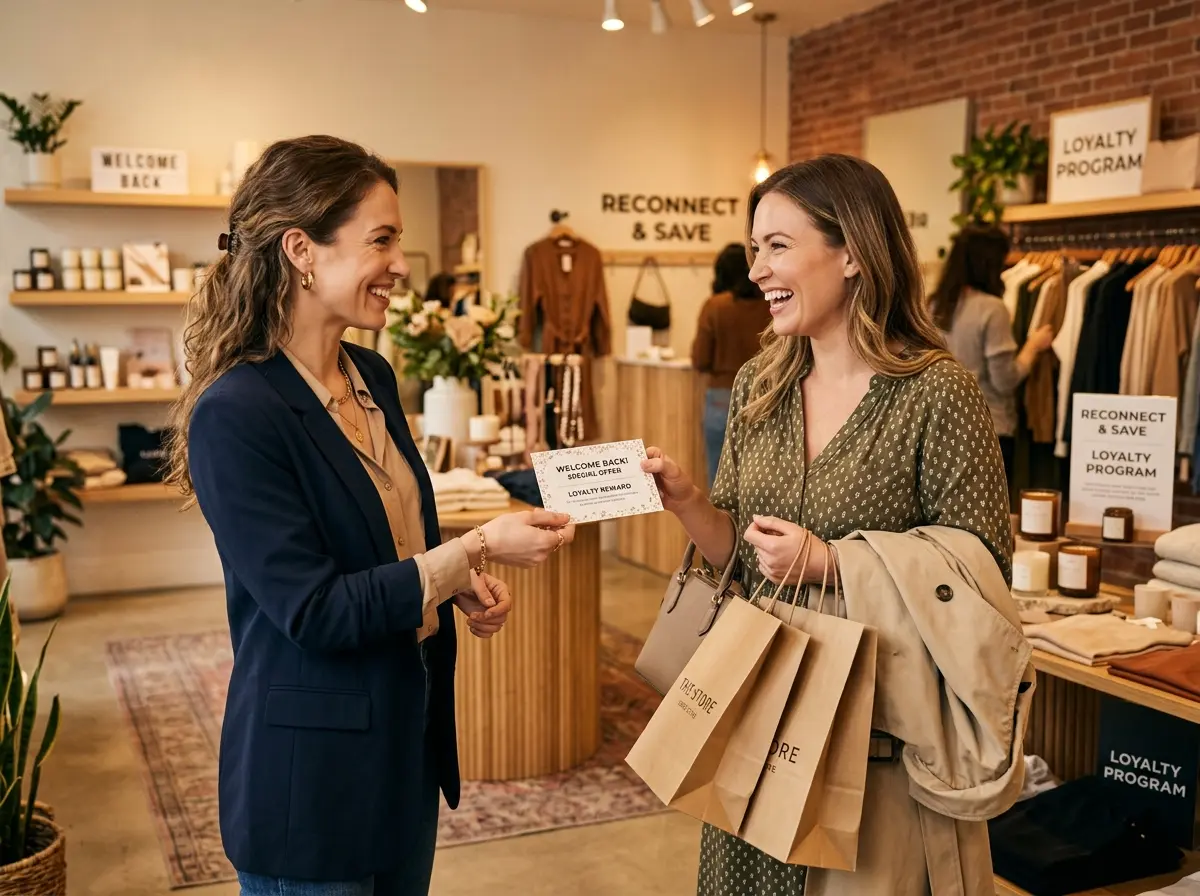
Train your staff to acknowledge returning customers warmly when possible. Ensure the in-store experience reflects any improvements or changes you've made since their last visit. Follow up after their return visit with a genuine thank-you and an invitation to join a loyalty program if you have one. Small gestures of recognition — remembering what they purchased, asking how a previous product worked out — go an enormous way toward rebuilding the relationship.
Beyond the individual customer, use your win-back campaign results to inform your broader retention strategy. Which segments responded best? Which offers drove the most conversions? What did the survey feedback reveal about why customers left? This data is a goldmine for preventing the next wave of lapsed customers before it happens.
The businesses that retain customers most effectively aren't necessarily the ones with the best products or the lowest prices. They're the ones that make every customer feel like they'd genuinely be missed if they left — because the truth is, they would be. You just have to say so before it's been a year.