When Your Phone Won't Stop Ringing (And That's Actually the Problem)
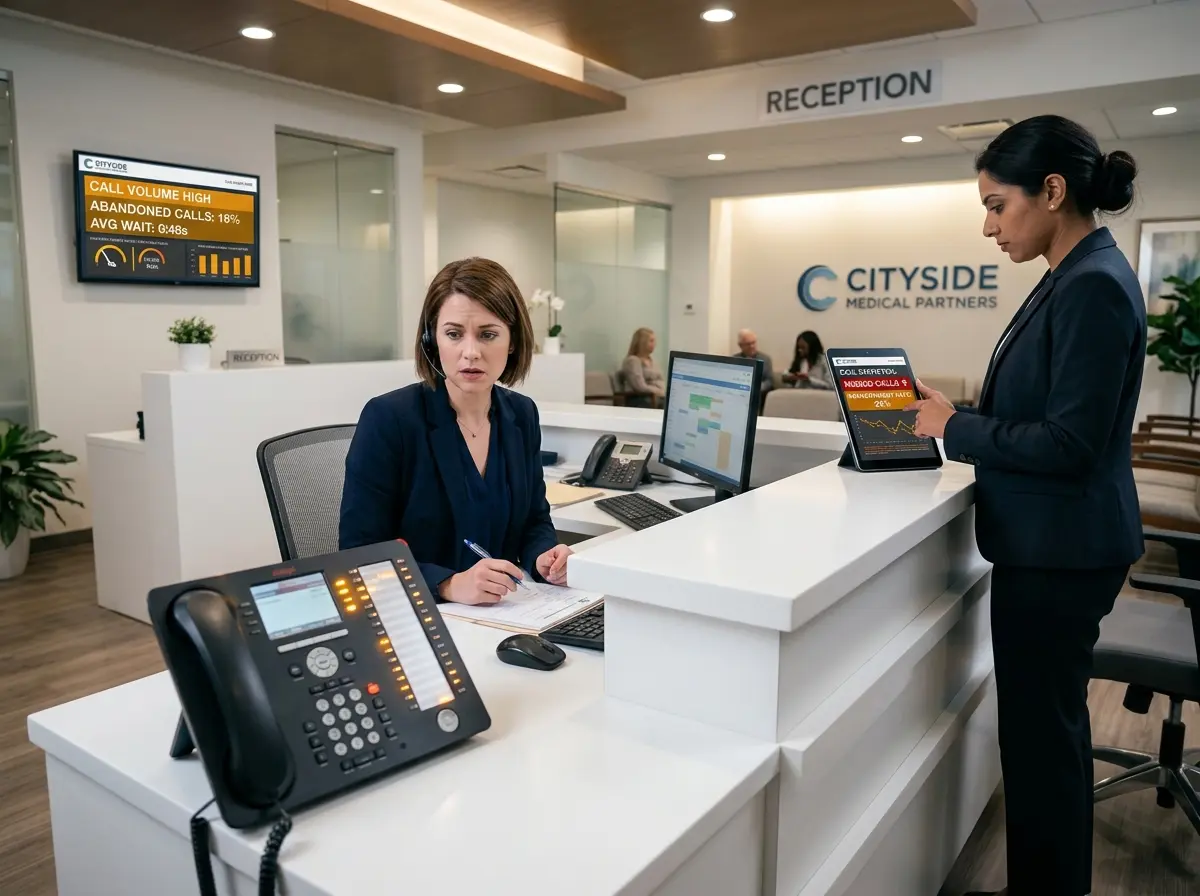
There's a particular kind of chaos that franchise restaurant groups know all too well. It's a Tuesday afternoon. Location A is slammed with lunch rush. Location B just ran out of a menu item and customers are calling to ask if you have it. Location C's staff is trying to take orders, prep food, and answer seventeen phone calls asking what time you close — information that's been on your website since 2019. Multiply this across ten, twenty, or fifty locations, and suddenly you don't have a restaurant business. You have a call center that occasionally serves food.
High-volume inquiry calls are one of the most underestimated operational headaches in the franchise restaurant world. They're not dramatic enough to make it onto a crisis meeting agenda, but they quietly drain staff productivity, increase error rates, and — here's the kicker — they actively hurt the customer experience for people who are already inside your restaurant, waiting to be helped by a person who is currently explaining your hours to a caller for the fourth time today.
The good news? This is a very solvable problem. And a growing number of franchise restaurant groups are figuring that out by turning to AI to handle the load.
The Real Cost of High-Volume Inquiry Calls at Scale
It's Not Just Annoying — It's Expensive
Let's put some numbers to this. Studies on restaurant operations consistently show that front-of-house staff can spend anywhere from 20 to 35 percent of their shift handling phone inquiries — the majority of which are repetitive questions about hours, menu items, specials, reservations, and location-specific policies. In a single-location independent restaurant, that's manageable. In a franchise group with dozens of locations, that inefficiency compounds into a very real labor cost problem.
Consider a conservative estimate: if each location loses just one hour of productive staff time per day to routine inquiry calls, and your labor cost averages $15 per hour across those roles, a 20-location group is burning through $109,500 per year on calls that could largely be automated. That's before you factor in the secondary costs — longer wait times for in-person customers, increased order errors made by distracted staff, and the steady erosion of morale that comes with answering the same question on loop.
The Consistency Problem Across Locations
Franchise restaurants have a brand promise baked into their entire identity: consistency. Customers expect the same experience whether they're visiting your location in Phoenix or Pittsburgh. But phone interactions? Those are notoriously inconsistent. The tone, accuracy, and helpfulness of a phone call depends entirely on who picks up, how busy they are, and whether they've been there long enough to actually know the answer.
New hires give wrong hours. Busy staff give curt answers. Overwhelmed managers let calls go to voicemail — where they often die quietly, never to be returned. This inconsistency doesn't just frustrate customers; it actively undermines the brand equity that franchises spend significant resources building. A customer who gets a rude or unhelpful phone experience doesn't separate "that location" from the brand. They just decide the brand isn't for them.
Scaling Without Scaling Your Headcount
Here's the operational paradox franchise groups face: as you add locations, your call volume scales with your growth, but your ability to manage it doesn't. You can't simply hire a centralized phone team and have them answer knowledgeably for fifty different locations with different hours, different specials, and different menu availabilities. And you certainly can't ask each location's staff to absorb more call volume as the business grows.
This is why the smartest franchise operators aren't solving this problem by throwing more people at it. They're solving it by rethinking who — or what — should be answering the phone in the first place.
Where AI Phone Receptionists Fit Into the Franchise Model
One Solution, Deployed Across Every Location
The appeal of an AI phone receptionist for franchise groups isn't just about answering calls — it's about answering them consistently, accurately, and at scale. Tools like Stella, an AI robot employee and phone receptionist, are designed to handle exactly this kind of high-volume, multi-location challenge. Each location can have its own configuration — its own hours, specials, menu items, and policies — while the core experience remains professional and on-brand across the board.
For franchise restaurants specifically, this means a caller asking about today's lunch special at your downtown location gets an accurate, friendly, up-to-date answer. A caller asking about allergen information gets a consistent, reliable response. And a caller who actually needs to speak with a manager gets routed appropriately — without tying up a team member who's currently managing a line of in-person customers. Stella also handles voicemails with AI-generated summaries and push notifications to managers, so nothing falls through the cracks during peak hours. For franchise groups that also use her in-store kiosk presence, she can proactively greet walk-in customers and promote current deals — turning a customer service tool into an active revenue driver.
Implementing AI Call Handling Across Multiple Locations Without Losing Your Mind
Start With a Call Audit Before You Automate Anything
The biggest mistake franchise operators make when implementing AI phone tools is jumping straight to deployment without understanding what they're actually automating. Before you configure anything, spend one to two weeks logging the types of calls each location receives. You'll almost certainly find that 60 to 80 percent of calls fall into a small handful of categories: hours, menu questions, specials, order status, directions, and reservation or catering inquiries.
This audit does two things. First, it tells you exactly what your AI receptionist needs to know to handle the overwhelming majority of calls without human intervention. Second, it helps you define the escalation conditions — the specific triggers that should route a call to a human staff member. Complex complaints, large catering orders, and calls from known VIP accounts are good candidates for human escalation. "Are you open on Christmas?" is not.
Configure Location-Specific Knowledge Without Creating a Management Nightmare
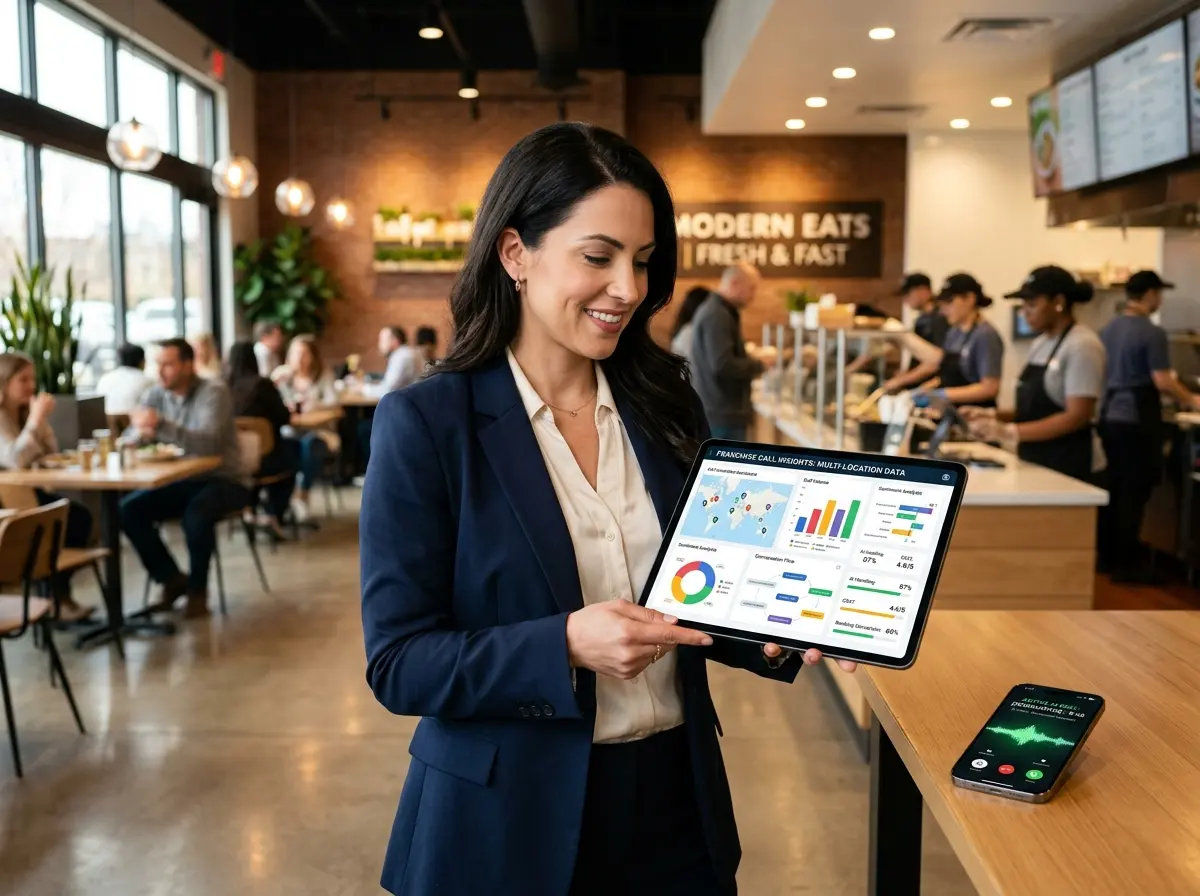
One of the genuine operational concerns with deploying AI across a franchise group is the maintenance burden. If updating hours or specials for each location requires logging into fifty separate systems, you've just created a new problem to replace the old one. The key is choosing a solution with centralized management capabilities that still allow for location-level customization.
Practically speaking, this means your AI receptionist should be able to handle a core knowledge base that applies across all locations — brand information, standard menu items, general policies — while allowing location managers to update location-specific details like holiday hours, limited-time offers, or temporary closures. When this is done well, the corporate team maintains brand consistency while location managers retain the autonomy they need to keep information accurate in real time.
Train Your Staff on the New Workflow, Not Just the Technology
AI call handling only works as well as the human processes built around it. Your staff needs to understand what the AI is handling, what will be escalated to them and why, and how to act on AI-generated voicemail summaries and call logs. This isn't a heavy lift — it's more of a fifteen-minute orientation than a training program — but skipping it leads to confusion, duplicate call handling, and staff who work around the system instead of with it.
Franchisees and location managers should also be looped into the rollout with clear communication about what the tool does, what it doesn't do, and how it's going to make their day easier. People are much more likely to embrace a new system when they understand it's there to absorb the calls that were driving them crazy, not to replace the interactions that require genuine human judgment and hospitality.
Quick Reminder About Stella
Stella is an AI robot employee and phone receptionist designed for businesses of all sizes — including multi-location franchise groups. She answers calls 24/7, handles routine inquiries, routes escalations, and maintains a consistent, professional presence across every location she's deployed in. At $99/month per location with no upfront hardware costs, she's the rare operational upgrade that pays for itself before the end of the first billing cycle.
Your Next Move: Quieter Phones, Happier Staff, Better Guest Experiences
The franchise restaurant groups that are winning on operational efficiency right now aren't doing anything magical. They've simply decided that their trained, experienced staff shouldn't be spending a third of their shift reciting their hours to callers who could get that answer automatically, instantly, and more reliably from an AI.
If you're ready to start reducing call-related friction across your locations, here's a practical path forward:
- Run a two-week call audit at two or three locations to categorize your inquiry volume and identify your top recurring call types.
- Define your escalation conditions — what calls should always reach a human, and under what circumstances.
- Pilot AI call handling at one or two locations before rolling out system-wide. Measure call handle time, staff interruption frequency, and customer satisfaction before and after.
- Brief your franchisees and location managers on the workflow changes before go-live so adoption is smooth and enthusiasm is high.
- Review and refine your AI's knowledge base monthly, especially around seasonal menu changes, updated hours, and new promotions.
The phones are going to keep ringing. The question is whether your staff is the one answering every single one of them — or whether you've built a smarter system that lets them focus on the customers who are already standing in front of them, ready to order. That second option tends to produce better food, better service, and significantly less mutual frustration for everyone involved.