Introduction: Because "Winging It" Is Not a Spa Treatment
Imagine this: It's a busy Saturday morning at your spa. One esthetician thinks there's a 20% off facial promotion running. Another has no idea. Your massage therapist is double-booked because someone forgot to mention the new scheduling policy. And your front desk is fielding three phone calls while trying to check in a walk-in who just heard about a deal that apparently no one else has heard of. Sounds relaxing, right?
Running a spa is an art form — but behind the serene music and eucalyptus-scented air, there's a business that demands real operational discipline. One of the most underrated tools in a spa owner's arsenal isn't a new booking software or a viral Instagram post. It's something far simpler: a formal staff huddle before every shift.
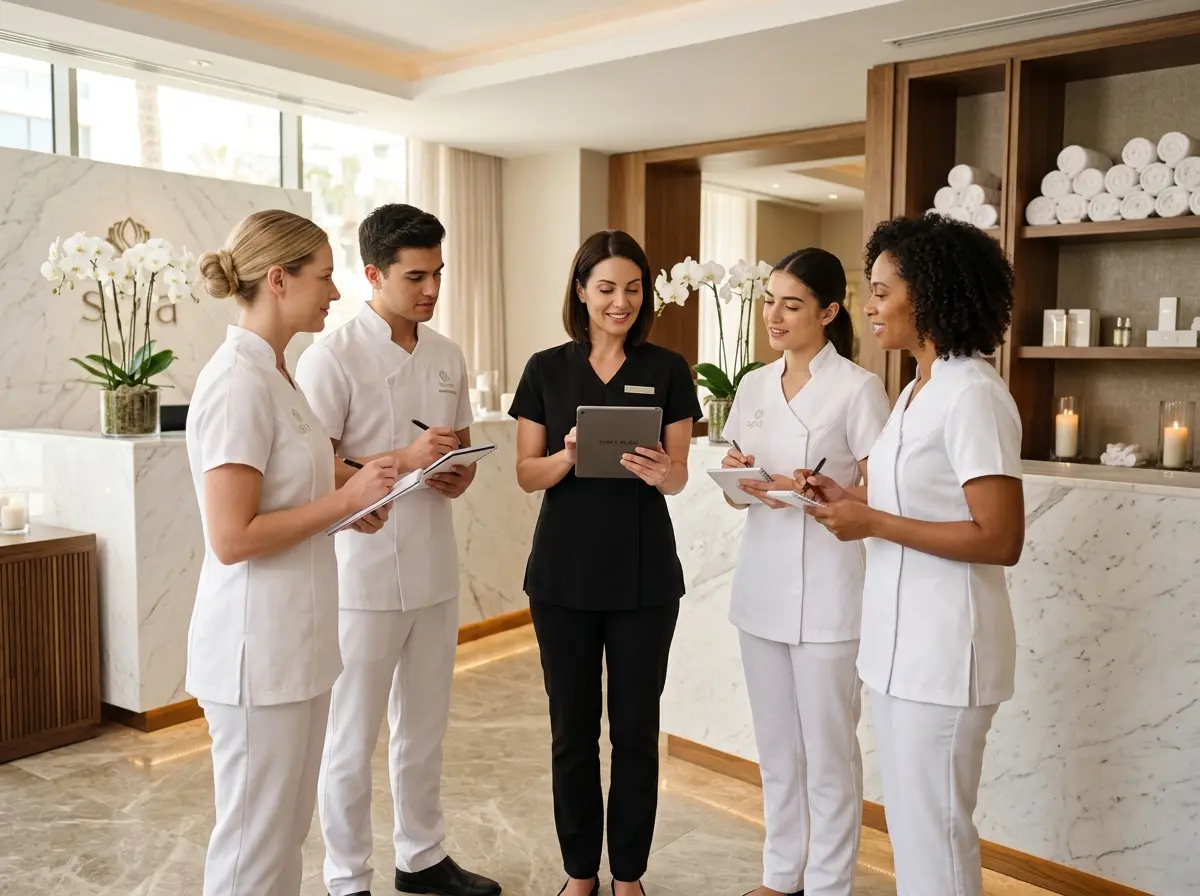
A pre-shift huddle is a short, structured team meeting — typically 10 to 15 minutes — held before the first client walks through the door. Done right, it aligns your team on daily goals, promotions, scheduling nuances, and expectations. Done wrong (or skipped entirely), it leaves your staff operating like a group of people who all got different memos — or no memo at all. This article will walk you through why huddles matter, what to cover, and how to build a routine that actually sticks.
The Real Cost of Skipping the Huddle
Miscommunication Is Costing You More Than You Think
It's tempting to assume your team is on the same page because they've been working together for months. But the research tells a different story. Studies consistently show that miscommunication costs businesses of all sizes thousands of dollars per year in lost productivity, errors, and employee friction. For a spa — where the client experience is everything — a single miscommunication can translate into a bad review, a refund request, or worse, a lost loyal customer.
When staff aren't briefed before a shift, you get inconsistencies: different employees quoting different prices, promoting different packages, or giving conflicting information about availability. Clients notice. And in the spa industry, trust and professionalism are the entire product.
Your Team Can't Hit Goals They Don't Know About
Here's a hard truth: if your team doesn't know today's revenue goal, they can't help you hit it. If they don't know which service you're trying to push this week, they won't recommend it. If they're unaware of a client's special occasion — say, a birthday or anniversary noted in the booking — they'll miss an easy opportunity to create a memorable moment (and earn a glowing review).
Pre-shift huddles are how you turn a group of individual service providers into a cohesive, goal-oriented team. When everyone knows the targets, the specials, and the priorities, they can work toward them together — proactively, not reactively.
Low Morale Hides in the Gaps Between Shifts
There's another, softer benefit to huddles that often gets overlooked: team culture. Employees who feel informed and included are more engaged. A quick huddle where the manager acknowledges yesterday's wins, introduces any new information, and sets a positive tone for the day does wonders for morale. It signals that leadership is organized, communicative, and invested in the team's success. In an industry with notoriously high turnover, that matters enormously.
How Stella Can Help You Stay Ahead While the Huddle Happens
Let AI Handle the Floor While You Lead the Team
One of the most common reasons spa owners skip the huddle is simple: someone always needs to be available. A client might walk in early. The phone might ring. And suddenly your 10-minute alignment session becomes a 2-minute scramble that helps no one.
This is where Stella comes in. Stella is an AI robot employee and phone receptionist designed to hold down the fort so your human team can focus on what matters — including a proper pre-shift huddle. While your staff is gathered in the back for those 10 to 15 minutes, Stella greets any early arrivals at the kiosk, answers their questions about services and pricing, and promotes current specials with the same knowledge your best front desk employee would. Simultaneously, she's answering incoming phone calls, handling inquiries, and even collecting client information through conversational intake forms — all without missing a beat. Your huddle happens uninterrupted, and your clients never feel unattended.
Running a Huddle That Actually Works
Keep It Short, Structured, and Standing
The fastest way to kill a huddle's effectiveness is to let it drag on. Fifteen minutes is your ceiling — ten is even better. The standing huddle (yes, literally standing) is a well-documented productivity technique that naturally keeps meetings brief and focused. No chairs, no laptops, no scrolling through phones. Just the team, the manager, and the agenda.
A reliable huddle structure for spas might look like this:
- Today's schedule overview — who's in, who's booked, any VIP clients or special occasions to note
- Promotions and upsells — what's being featured today and how staff should present it
- Daily goal — a specific, achievable revenue or service target the team is working toward
- Operational updates — any policy changes, product restocks, equipment issues, or staff coverage notes
- Quick win from yesterday — a shoutout, a positive review, or a team achievement to start on a high note
Consistency is everything. When the huddle happens at the same time, in the same place, with the same format every day, it becomes a habit — and habits don't require motivation to maintain.
Assign a Rotating Huddle Leader
If you're running the huddle yourself every day, you're creating a single point of failure. What happens on your day off? What happens when you're on a call or dealing with a vendor? Consider rotating the huddle leadership among senior staff members. This builds ownership, develops leadership skills within your team, and ensures the huddle happens whether you're there or not.
Give the rotating leader a simple one-page template or checklist so they're never starting from scratch. The agenda shouldn't change much from day to day — only the content within it.
Measure What You Communicate
If you announce a daily goal in the huddle, track it — and report back on it. At the end of the shift (or in the next morning's huddle), share how the team performed against the target. Did you hit the upsell goal? Did the featured add-on service get recommended consistently? This closes the feedback loop and makes the huddle feel meaningful rather than ceremonial. Accountability doesn't have to be punitive — it can simply be honest, transparent, and motivating when framed the right way.
Over time, you'll start to see patterns. Maybe Tuesday morning huddles result in stronger retail sales because that's when you talk about product recommendations. Maybe the weeks you set specific upsell goals outperform the weeks you don't. Data from your own operation is some of the most valuable data you'll ever have — and the huddle is where you start putting it to work.
Quick Reminder About Stella
Stella is an AI robot employee and phone receptionist available for just $99/month with no upfront hardware costs. She greets customers at your kiosk, promotes your current deals, answers phone calls 24/7, and handles intake and inquiries so your human staff can focus on delivering exceptional service. She's the kind of reliable, always-on team member who never needs to be included in the huddle — but always makes the rest of the team's job easier.
Conclusion: Small Ritual, Big Results
The pre-shift huddle is one of those deceptively simple practices that separates well-run spas from chaotic ones. It takes 10 to 15 minutes. It costs nothing. And when done consistently, it pays dividends in team alignment, client satisfaction, upsell performance, and staff morale.
Here's how to get started this week:
- Pick a time and stick to it. Set the huddle for 15 minutes before your first scheduled appointment every day.
- Create a simple agenda template. Use the structure outlined above and customize it for your spa's priorities.
- Assign a backup leader. Identify one or two senior staff members who can lead the huddle when you're unavailable.
- Track your daily goals. Make the goal-setting real by measuring and reporting on results.
- Protect the time. Use tools — including AI solutions like Stella — to ensure the huddle isn't interrupted by phones and walk-ins.
Your clients come to your spa to escape the chaos of their lives. The least you can do is make sure there's no chaos behind the curtain. A 10-minute huddle each morning is a small investment with an outsized return — for your team, your clients, and your bottom line. Start Monday. Your future self (and your estheticians) will thank you.