When a Nail Salon Figured Out What the Rest of Us Forgot
Let's be honest — most businesses treat customer personalization like a gym membership in January. Everyone's excited about it, very few follow through, and by March it's completely forgotten. Meanwhile, a nail salon in a strip mall somewhere figured out that knowing your clients' preferences isn't just a nice touch — it's the difference between a one-time visitor and a loyal customer who books every three weeks and refers her entire book club.
The concept is deceptively simple: client preference cards. You ask customers what they like, what they don't, what they're allergic to, and what makes their experience feel special. Then you actually use that information. Revolutionary, right? And yet most businesses are still asking repeat customers the same questions they asked them the first time, treating every interaction like it's starting from zero.
This post is for nail salon owners — and honestly, any service business owner — who wants to understand how preference cards work, why they matter, and how to actually build a system that makes hyper-personalization sustainable rather than a chaotic sticky-note situation on the receptionist's desk.
What Client Preference Cards Are (and Why They Work)
The Basic Idea Behind Preference Cards
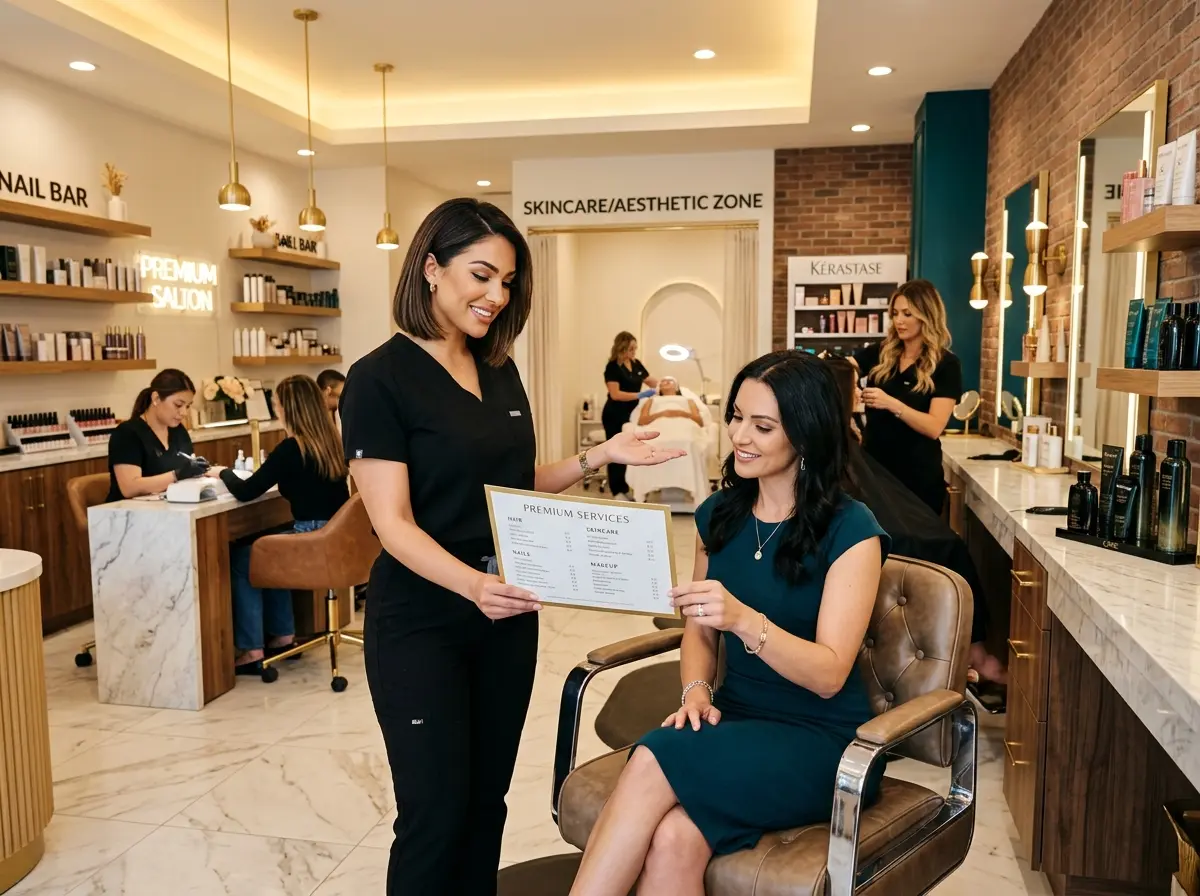
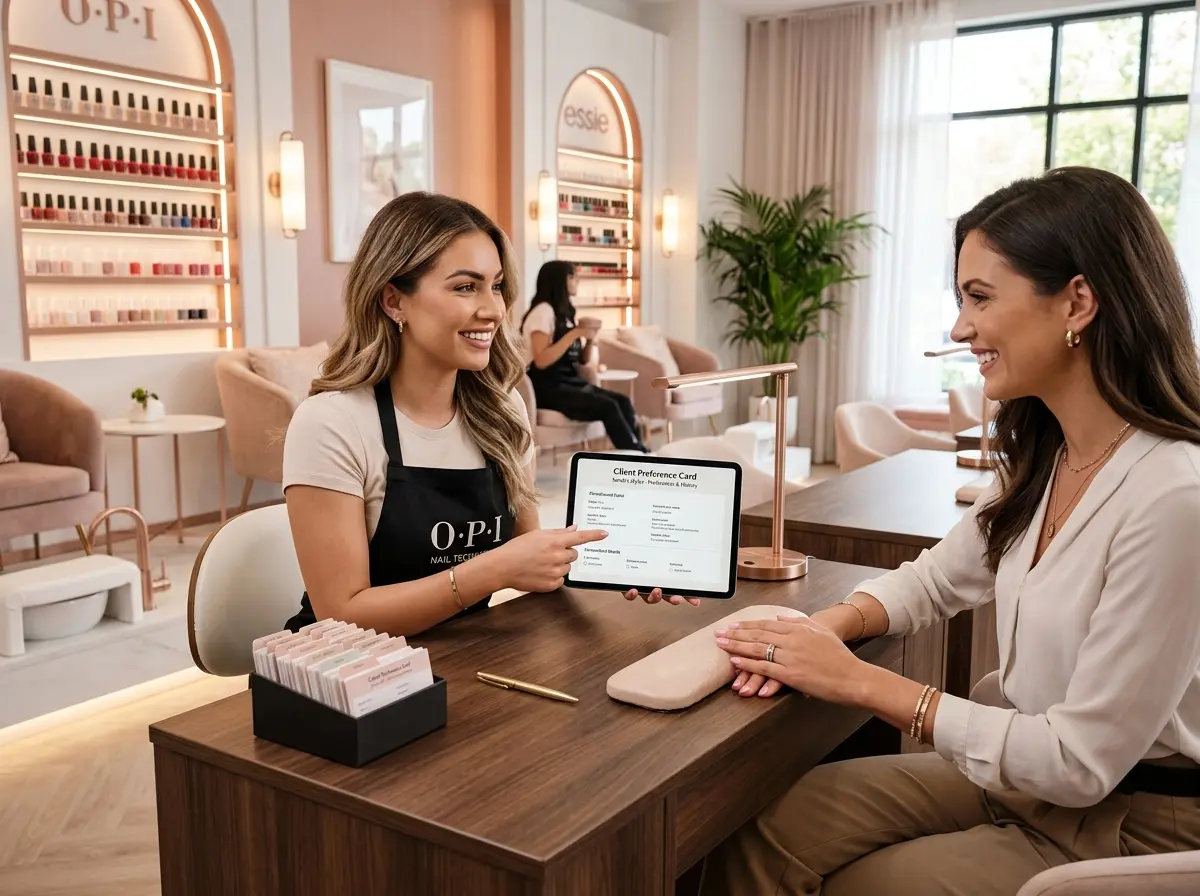
A client preference card is essentially a curated profile of everything a customer wants you to know about them. In a nail salon context, this might include their favorite nail shapes, preferred polish brands, sensitivity to certain chemicals, whether they prefer a quiet appointment or love to chat, their go-to technician, and even personal details like upcoming events they're getting their nails done for.
This isn't new technology. High-end hotels have been doing this for decades — that's how the front desk "magically" knows you prefer a high floor and an extra pillow. The difference is that small businesses have historically lacked the systems to do it consistently. A great technician might remember that Sarah hates the smell of acrylic, but what happens when Sarah books with someone new? Or calls to reschedule and whoever answers the phone has no idea who she is?
Why Clients Actually Love This
According to research by McKinsey, 71% of consumers expect personalized interactions, and 76% get frustrated when they don't receive them. People are no longer impressed by personalization — they expect it. When your salon remembers that a client prefers gel over dip powder and always wants a top coat with extra shine, she doesn't just feel like a valued customer. She feels like she'd be crazy to go anywhere else.
There's also a real business case here. Loyal customers visit more frequently, spend more per visit, and are far more likely to refer new clients. A small investment in capturing and using preference data pays back in spades — particularly when you stop relying on individual staff members to hold all that information in their heads.
What Good Preference Cards Actually Include
The most effective preference cards strike a balance between thoroughness and simplicity. You want enough information to personalize meaningfully, but not so much that filling it out feels like applying for a mortgage. For a nail salon, consider capturing the following categories:
- Service preferences: Favorite nail shape, length, finish, and service type (gel, acrylic, dip, natural)
- Product preferences: Preferred brands, any sensitivities or allergies to ingredients
- Experience preferences: Preferred technician, music preferences, chat vs. quiet, beverage of choice if offered
- Occasion notes: Upcoming events, seasonal preferences, style inspiration they tend to gravitate toward
- Practical details: Best contact method, preferred appointment times, how they heard about you
The goal is that any staff member — even someone brand new — can look at a client's card and deliver a familiar, personalized experience from minute one.
Building a System That Actually Holds Together
Moving Beyond Paper and Good Intentions
Paper preference cards are a fine starting point, but they have a critical flaw: they depend entirely on humans to file, retrieve, and remember to consult them. That's not a sustainable system — it's a system that works great until it doesn't, usually at the worst possible moment.
This is where Stella becomes genuinely useful for salons. Stella is an AI robot employee and phone receptionist designed for businesses exactly like yours. Her built-in CRM supports custom fields, tags, and AI-generated client profiles — which means your preference data lives in one organized place, accessible by any staff member, at any time. When a client calls to book, Stella can collect intake information conversationally over the phone — capturing preferences, updating profiles, and making sure nothing falls through the cracks. In-store, her kiosk presence lets new clients complete a preference intake naturally, without anyone having to chase them down with a clipboard. It's the preference card system you always meant to have, minus the chaos.
Turning Preference Data Into Real Business Results
Personalizing Every Touchpoint, Not Just the Appointment
Once you have preference data, the magic is in how you use it — and not just during the service itself. Personalization opportunities exist at every touchpoint in the client journey. When a client books, confirm her appointment with a message that references her usual service. When she arrives, greet her by name and have her favorite music already playing. When she's due for a rebooking, send a reminder that mentions the occasion she mentioned last time ("Your sister's wedding is coming up — ready to book?").
These small moments of recognition are disproportionately powerful. Clients don't need grand gestures. They need to feel seen. A staff member who glances at the preference card before a client sits down and says, "I know you prefer quiet appointments, so I'll let you relax today," has just created a memory that's worth more than any loyalty points program.
Using Preferences to Upsell Without Being Pushy
Preference data also creates natural, non-awkward upselling opportunities. If you know a client always books a standard manicure but has mentioned she loves nail art, a gentle mention of a new design you're offering feels like a recommendation, not a sales pitch. If her profile notes she has an anniversary coming up, suggesting a spa package becomes thoughtful rather than transactional.
The same logic applies to product recommendations. If her profile shows she has sensitive skin, and you've just brought in a new hypoallergenic cuticle oil, she's the first person you should be telling. Done right, upselling from preference data increases revenue while simultaneously making clients feel more cared for — which is a genuinely rare combination.
Measuring the Impact So You Can Improve
Preference-based personalization is only as good as your ability to evaluate it. Track metrics like rebooking rate, average spend per visit, and client retention over time. Compare clients who have completed preference cards against those who haven't — you'll likely see a measurable difference in loyalty and lifetime value. Use that data to refine what you're capturing and how you're using it.
The businesses that treat personalization as a living, evolving system — rather than a one-time setup — are the ones that consistently outperform their competitors. Your preference cards from two years ago should look different from the ones you use today, because you've learned what actually moves the needle for your specific clientele.
Quick Reminder About Stella
Stella is an AI robot employee and phone receptionist built for businesses like nail salons, spas, retail shops, and beyond. She greets clients at the kiosk, answers phones 24/7, collects intake information, and manages client profiles through a built-in CRM — all for $99/month with no upfront hardware costs. If you're building a preference card system and want it to actually work consistently, she's worth a serious look.
Your Next Steps Toward a More Personal Salon Experience
Client preference cards aren't complicated, but they do require intention. The salons that do this well don't do it perfectly on the first try — they start simple, stay consistent, and build the system out over time. Here's a practical path forward:
- Design your preference card. Start with the essentials — service preferences, sensitivities, experience preferences, and one or two personal details. Keep it short enough that clients will actually complete it.
- Choose where you'll capture it. At booking confirmation, at the first appointment, over the phone — ideally all three, with a system that stores everything in one place.
- Train your team to use it. A preference card no one looks at is just a form. Make consulting the client profile a non-negotiable part of appointment prep.
- Personalize at every touchpoint. Greetings, service conversations, rebooking reminders, product recommendations — let the data do the work.
- Review and iterate. Check your retention and rebooking numbers quarterly. Refine your questions based on what's actually being used.
The nail salon that inspired this post didn't do anything extraordinary. They just paid attention, wrote it down, and showed up prepared. That's it. And in an industry where the difference between a loyal client and a lost one can be something as small as remembering she hates the smell of acrylic, paying attention is everything.
Your clients want to feel like regulars, not strangers. Give them a reason to keep coming back — and make it embarrassingly easy for your team to deliver that experience every single time.