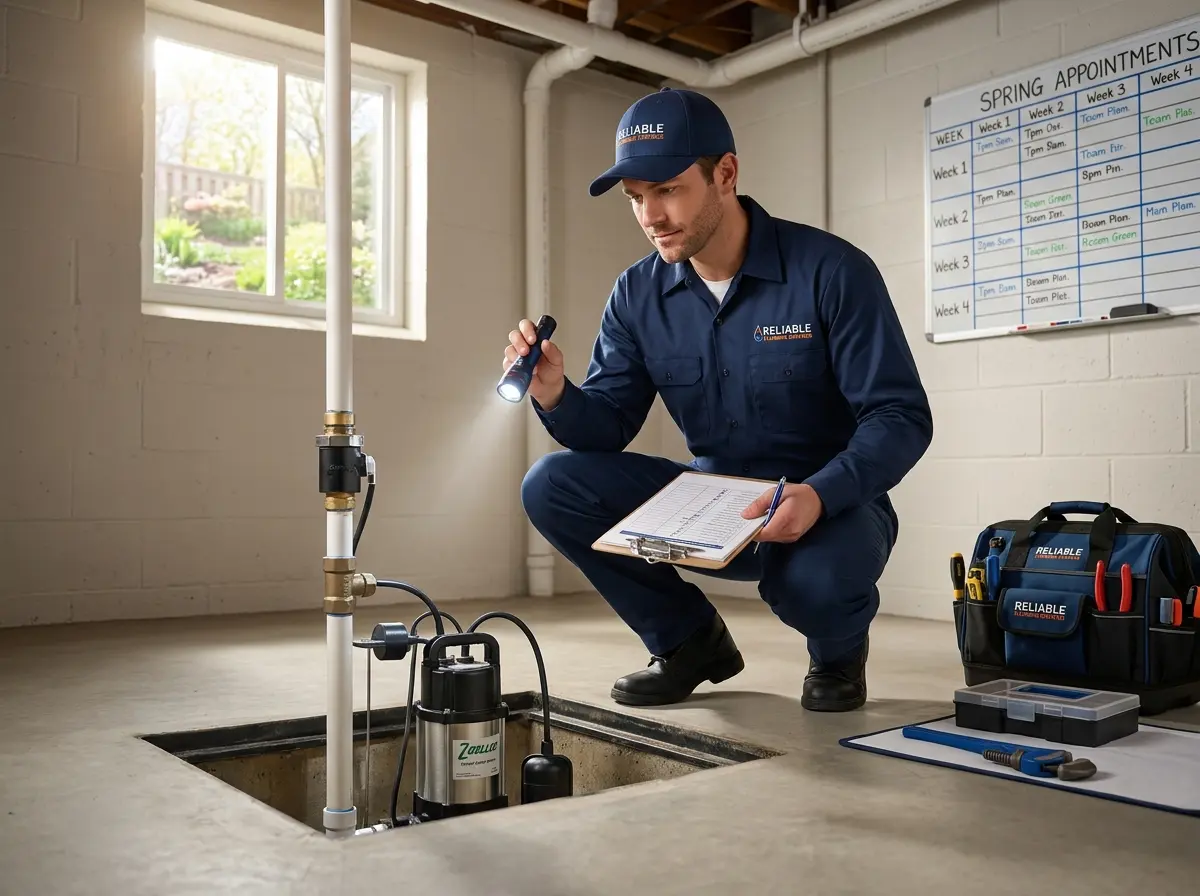
Spring Is Coming — And So Is the Silence
Every plumber knows the rhythm. Winter brings frozen pipes, burst mains, and emergency calls at 2 a.m. Summer brings outdoor projects, new construction, and irrigation installs. But spring? Spring brings birds chirping, flowers blooming, and your phone going suspiciously quiet for three to four weeks while your technicians stare at the ceiling wondering what to do with themselves.
It doesn't have to be this way. While your competitors are passive-aggressively waiting for the phone to ring, you could be running a proactive sump pump inspection campaign that turns those slow weeks into a steady stream of booked appointments — and positions your business as the go-to plumber before the rainy season hits in full force.
Sump pump inspections are the perfect spring service offering. They're fast, they're valuable to homeowners, they create natural upsell opportunities, and — most importantly — they give customers a reason to call you before something goes wrong in their basement at midnight. This guide will walk you through building a campaign that actually works, from crafting your offer to following up like a pro.
Building Your Sump Pump Inspection Offer
Before you can market anything, you need something worth marketing. A generic "we inspect sump pumps" message will get you exactly as far as you'd expect — nowhere fast. The businesses that win during slow seasons are the ones that build a compelling, clearly defined offer and communicate it with confidence.
Package It Like a Product, Not a Service Call
Homeowners love knowing exactly what they're getting. Instead of offering a vague inspection, create a named package with a checklist of what's included. Something like a "Spring Ready Sump Pump Tune-Up" that covers pump operation testing, float switch inspection, discharge line check, backup battery condition review, and pit cleaning. List it out. Give it a price. Put it on your website and marketing materials as if it's a product sitting on a shelf.
This approach does two things: it makes the offer feel more tangible and trustworthy, and it makes it significantly easier for your staff — or your AI receptionist — to describe it clearly and consistently to every person who asks. When the offer is well-defined, it practically sells itself.
Price It Strategically to Drive Volume and Upsells
The inspection itself doesn't need to be your profit center — it just needs to get a technician into the home. Pricing your spring inspection in the $79–$149 range (depending on your market) is attractive enough to generate real interest while still covering your labor. The real revenue comes from what the technician finds: aging pumps that need replacement, failed battery backups, corroded discharge lines, or a pit that looks like it belongs in a horror film.
According to industry data, sump pump replacements average between $500 and $1,200 installed. If even one in four inspections converts to a replacement or upgrade, your campaign pays for itself many times over. Build that math into your team's mindset from day one.
Set a Clear Campaign Window
Urgency is your friend. Don't run an open-ended promotion that customers can mentally shelve for "someday." Instead, set a specific window — for example, "Book your Spring Ready inspection between March 15th and April 30th and save $30." A defined end date creates a reason to act now rather than later, and it gives your marketing a natural arc with a beginning, middle, and end.
Getting the Word Out (Without Sounding Desperate)
You've got a great offer. Now you need people to actually know about it. The good news is that you don't need a Super Bowl budget — you need a multi-channel approach that reaches homeowners where they already are and gives them a frictionless way to book.
How Stella Can Help You Book More Inspections
This is where Stella — the AI robot employee and phone receptionist — becomes genuinely useful for a plumbing business. When your spring campaign drives inbound calls and inquiries, Stella answers every single one of them, 24 hours a day, seven days a week, with complete knowledge of your inspection package, pricing, and availability. No missed calls while your office manager is at lunch. No fumbled explanations from a technician who'd rather be fixing pipes than talking on the phone.
For plumbers with a physical showroom or supply area, Stella's in-store kiosk presence means she can engage walk-in customers proactively, explain your spring promotion, and even collect their contact information on the spot using conversational intake forms. Her built-in CRM stores customer details, tags contacts by service interest, and generates AI-powered summaries so your team knows exactly who called, what they needed, and when to follow up — without anyone lifting a finger to take notes. At $99/month, she costs less than a single missed service call.
Executing the Campaign Like a Pro
A good campaign idea with poor execution is just a good story you'll tell at a trade show. Here's how to actually run this thing from start to finish without losing momentum halfway through.
Start With Your Existing Customer List
Your easiest bookings are going to come from people who already know and trust you. Before you spend a single dollar on advertising, email and text your existing customer database with your spring inspection offer. These are homeowners who've already let you in their house — they're warm, they're familiar with your brand, and they're statistically more likely to book again.
Segment your outreach if you can. Customers who had plumbing work done in their basement or utility area in the last two to three years are especially strong targets. A personalized message that references their previous service will outperform a generic blast every time. Keep it short, friendly, and direct: here's what we're offering, here's the price, here's how to book.
Use Social Media and Google to Reach New Customers
Facebook and Instagram ads targeting homeowners within your service area are remarkably affordable for local service businesses. A campaign budget of $300–$500 spread over four to six weeks can generate meaningful reach and solid lead volume when the creative is clear and the offer is compelling. Use real photos of your technicians at work, keep the copy benefit-focused ("Don't wait for a flooded basement to find out your sump pump is failing"), and send all clicks to a simple landing page with a single call to action: book the inspection.
Don't overlook Google Local Services Ads, either. These appear at the very top of search results for queries like "sump pump inspection near me" and include your business rating and a "Google Guaranteed" badge. During a campaign push, having this visibility can dramatically increase inbound call volume — which is all the more reason to make sure someone (or something) reliable is answering those calls.
Follow Up Without Being Annoying About It
Not everyone who expresses interest will book on the first contact, and that's normal. Build a simple two-step follow-up sequence: a reminder message three days after initial outreach, and a final "last chance before the promotion ends" message one week before your campaign window closes. Keep the tone helpful and light — you're reminding a neighbor about a useful service, not chasing a debt. Most plumbing businesses that build in follow-up sequences see a 20–30% lift in bookings compared to single-touch outreach. That's not nothing when you're trying to fill a slow month.
Quick Reminder About Stella
Stella is an AI robot employee and phone receptionist built for businesses exactly like yours — affordable at $99/month, easy to set up, and always ready to greet customers, answer calls, and promote your current offers without ever taking a sick day. Whether you need someone handling inbound calls during your spring campaign or proactively engaging customers at your location, she's built for it.
Make Spring Your Busiest Season Yet
The slow spring weeks don't have to be slow. With a well-packaged inspection offer, a clear campaign window, smart multi-channel outreach, and a reliable system for answering inquiries and following up, you can turn the quietest stretch of your year into a consistent revenue driver that also builds long-term customer relationships.
Here's your action plan to get started:
- Define your package. Name it, price it, and write out exactly what's included so anyone — human or AI — can explain it clearly.
- Set your campaign window. Pick your start and end dates now, before the season sneaks up on you.
- Pull your existing customer list and send your first outreach before you spend anything on advertising.
- Set up at least one paid channel — Facebook ads or Google LSAs — to reach new homeowners in your service area.
- Build your follow-up sequence so leads don't fall through the cracks after the first touch.
- Make sure your phones are covered. A campaign is only as good as your ability to capture the leads it generates.
The plumbers who thrive during shoulder seasons aren't the ones with the biggest trucks or the fanciest logos — they're the ones who plan ahead, show up proactively, and make it easy for homeowners to say yes. Go be that plumber.