Introduction: The Open House Follow-Up Problem Nobody Wants to Talk About
Picture this: It's Sunday afternoon. Your real estate team just wrapped up a packed open house — forty visitors, a stack of sign-in sheets, and enough business cards to paper a small bathroom. Everyone's exhausted. The weekend is basically gone. And somewhere in the back of your mind, you know that a significant chunk of those warm leads are about to go stone cold because nobody has the time or energy to follow up with all forty of them by Monday morning.
This is the dirty little secret of open house marketing. Teams spend enormous resources staging homes, running ads, and attracting visitors — then fumble the follow-up because it's manual, tedious, and wildly inconsistent. Research from the National Association of Realtors consistently shows that most buyers choose the first agent who follows up with them. The first one. Not the most experienced. Not the one with the fanciest listings. The first.
So what happens when a real estate team decides to stop leaving follow-up to chance and starts automating it intelligently? Let's walk through exactly how one team did it — and what you can steal from their playbook.
The Open House Follow-Up Challenge (And Why Manual Systems Always Fail)
The Sign-In Sheet Is a Graveyard for Leads
Most open houses still rely on the humble sign-in sheet — a clipboard, a pen, and the honor system. The problems are obvious in retrospect. Visitors scribble illegible handwriting, enter fake phone numbers, or leave half their information blank. By the time an agent gets back to the office and squints at the paper, half the data is unusable and the other half still needs to be manually typed into a CRM. That's assuming anyone actually does the data entry, which — let's be honest — often doesn't happen until Thursday.
Even when the data is clean, assigning follow-up tasks, tracking who's been contacted, and personalizing outreach based on what a visitor actually expressed interest in is a logistical nightmare for busy agents juggling listings, showings, and closings simultaneously.
How One Team Redesigned Their Intake Process
A mid-sized residential real estate team operating across three markets decided enough was enough. Instead of relying on paper sign-ins, they implemented a digital intake system that collected visitor information conversationally — capturing not just name, phone, and email, but also buyer intent signals: timeline, pre-approval status, neighborhood preferences, and price range. Visitors filled this out at a kiosk as they entered the open house.
The moment a visitor submitted their information, it flowed directly into the team's CRM with auto-generated contact profiles, tags based on buyer readiness, and notes summarizing their stated preferences. No manual entry. No clipboard archaeology. Just clean, organized, actionable data waiting for the automation to kick in.
The Automation Sequence That Changed Everything
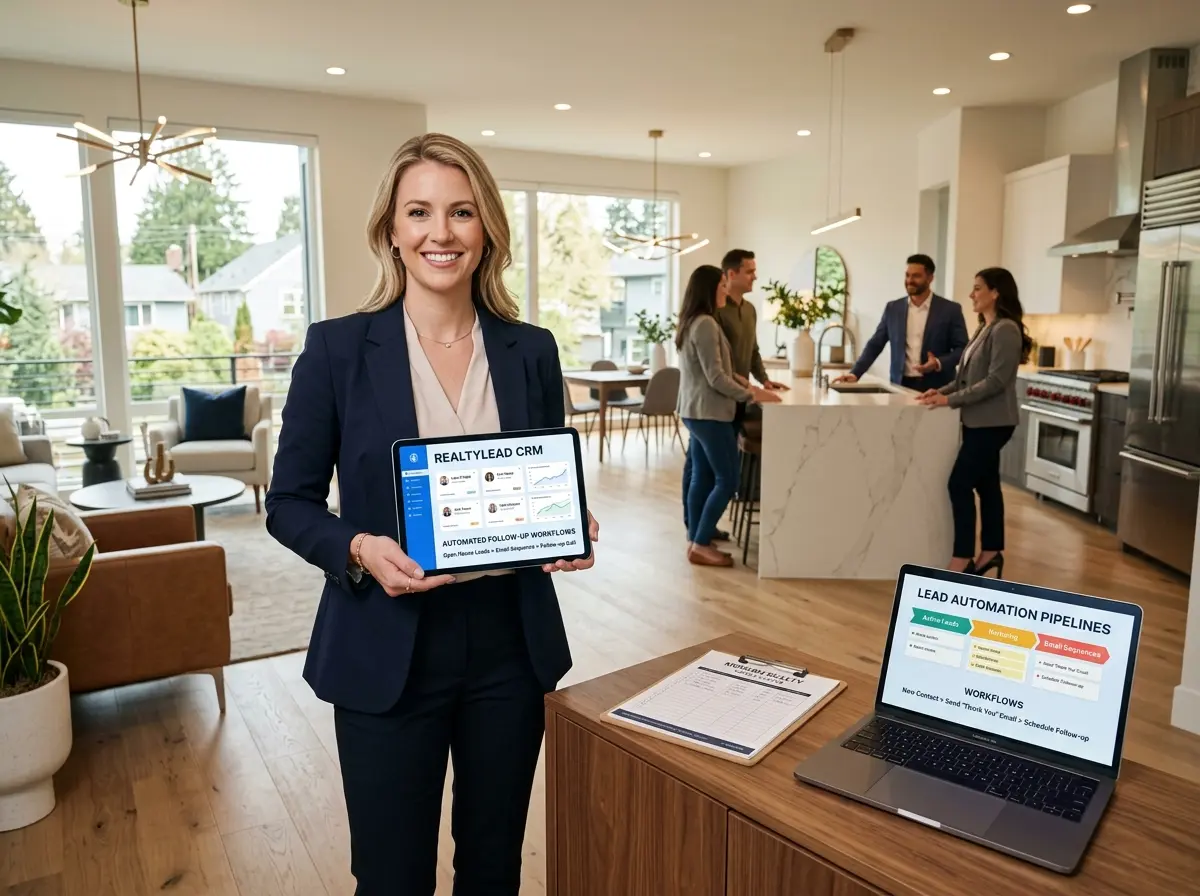
With structured data in the CRM, the team built a tiered follow-up automation:
- Immediate (within 5 minutes): A personalized text message thanking the visitor for attending, referencing the specific property address, and offering a direct link to schedule a call.
- Day 1: A follow-up email with the property listing details, comparable sales in the area, and an invitation to ask questions.
- Day 3: A check-in from the assigned agent, triggered only if the contact hadn't already responded or booked a call.
- Day 7: A curated list of similar active listings based on the preferences captured at intake.
The result? Their contact-to-conversation rate from open house leads jumped by over 60% in the first quarter. More importantly, agents were no longer spending Sunday evenings doing data entry — they were spending Monday mornings having actual conversations with people who were already warmed up.
How Tools Like Stella Fit Into This Picture
Capturing Leads and Managing Contacts Without the Chaos
For real estate teams — or frankly any business that meets customers in person — the gap between "someone expressed interest" and "that interest is actually tracked somewhere useful" is where revenue goes to die. This is exactly the kind of problem that Stella, the AI robot employee and phone receptionist, is built to solve.
At a physical location like an open house or a real estate office, Stella's in-store kiosk presence handles conversational intake — collecting visitor information naturally, the way a front desk person would, but without the distraction, inconsistency, or end-of-shift burnout. That information feeds directly into Stella's built-in CRM, complete with custom fields, tags, AI-generated contact profiles, and notes. When someone walks in curious and walks out with their information properly captured and categorized, the automation can do its job. And when someone calls the office after hours to ask about a listing, Stella answers the phone, gathers their information, and makes sure nothing falls through the cracks — even at 10pm on a Sunday.
Building a CRM Automation Strategy That Actually Scales
Segmenting Contacts So Your Follow-Up Feels Personal
The biggest mistake teams make with CRM automation is treating every lead the same. A first-time buyer who just started looking at homes has completely different needs than a relocating executive who needs to close in 45 days. When your intake process captures intent signals — and your CRM tags contacts accordingly — your automation can branch into genuinely relevant sequences rather than blasting everyone with the same generic drip campaign.
Good segmentation might look like this: contacts tagged as "early research" get educational content about the buying process and neighborhood guides. Contacts tagged as "ready to move" get faster, more direct outreach with scheduling links and agent introductions. The content is different. The timing is different. The tone is different. And because it's all automated based on data the contact themselves provided, it doesn't require an agent to manually decide what to send to whom.
Keeping Humans in the Loop Without Making Them Do Everything
Automation skeptics often worry that removing manual steps means losing the personal touch. The opposite is actually true when automation is designed well. The goal isn't to replace human connection — it's to make sure humans show up at the right moment, with the right context, instead of spending their time on administrative busywork.
The team in our example configured their CRM so that agents received a push notification the moment a high-priority lead (tagged as pre-approved and ready within 60 days) submitted their open house intake form. The agent knew exactly who to call first, what they were looking for, and what they'd seen at the open house — all before picking up the phone. That's not impersonal. That's actually more personal, because the agent shows up to the conversation prepared rather than fumbling through notes.
Measuring What's Working and Iterating Relentlessly
No automation strategy survives first contact with reality unchanged. The team tracked open rates, response rates, and conversion rates at every stage of their follow-up sequences. They discovered their Day 3 check-in email performed significantly better when sent in the late morning rather than early morning. They found that text messages outperformed emails for initial contact but that buyers preferred email for detailed property information. These aren't revolutionary insights — but they're only discoverable when you're actually measuring what's happening rather than just hoping the follow-up is working.
Commit to reviewing your automation performance monthly. Kill sequences that aren't converting. Double down on what is. Treat your follow-up system like a living document, not a set-it-and-forget-it machine.
Quick Reminder About Stella
Stella is an AI robot employee and phone receptionist built for businesses of all types — she greets customers in person at a kiosk, answers phone calls 24/7, collects lead information through conversational intake forms, and manages contacts through a built-in CRM with AI-generated profiles and tags. She runs on a straightforward $99/month subscription with no upfront hardware costs and is designed to be up and running quickly. Whether your business has a physical location or operates entirely by phone, Stella makes sure no customer interaction — and no lead — gets lost in the shuffle.
Conclusion: Stop Letting Warm Leads Go Cold
The real estate team in this story didn't do anything magical. They didn't hire a team of ten follow-up specialists or build a custom software platform from scratch. They simply made a decision to stop relying on manual processes for something that could be systematized — and then they built that system thoughtfully, starting with better data capture and ending with smarter automation.
If you're running open houses (or any kind of in-person lead generation event) and your follow-up process still depends on a clipboard and someone's good intentions, here's your actionable starting point:
- Audit your current intake process. How much data are you actually capturing? How clean is it? How fast does it get into your CRM?
- Define your lead segments. What signals indicate a buyer is ready now versus just browsing? Build your tags and custom fields around those signals.
- Map out a tiered follow-up sequence. What should happen in the first five minutes? The first 24 hours? The first week? Write it out before you build anything.
- Automate the routine and reserve the human touch for high-value moments. Let the system handle the predictable — and make sure your agents show up prepared when it's time to actually connect.
- Measure, review, and adjust. Automation isn't a one-time project. It's an ongoing process of refinement.
The leads are already walking through your door. The question is whether you have a system worthy of them — or whether you're still hoping someone remembers to send that follow-up email on Monday morning.