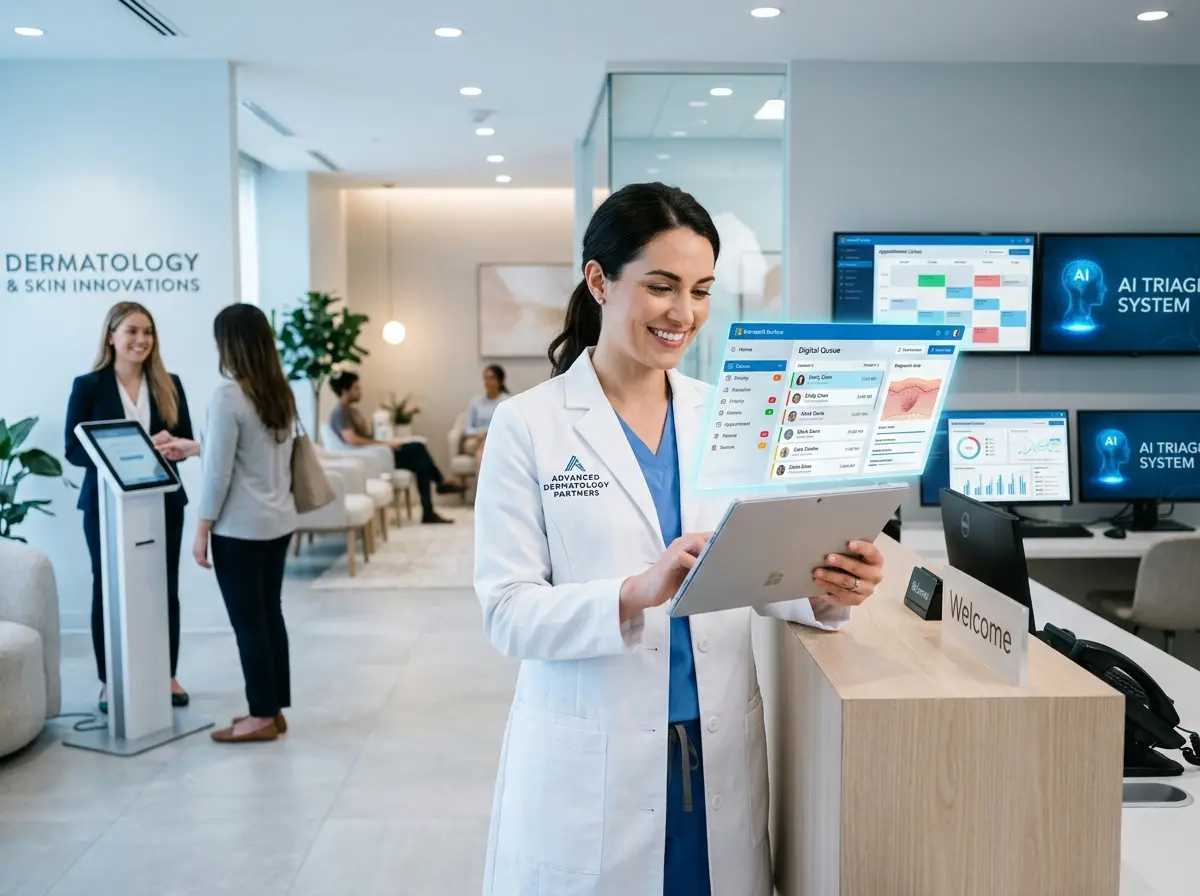
When Your Waiting Room Is Full but Your Phone Won't Stop Ringing
Let's paint a familiar picture: It's a Tuesday morning. Your dermatology practice has a packed schedule, three patients waiting to be checked in, and a phone that hasn't stopped ringing since 8:02 AM. Your front desk staff — who are, by some miracle, still smiling — are simultaneously verifying insurance, answering questions about whether a mole "looks weird," and trying to explain your cancellation policy to someone who has called four times this week. Sound familiar? Congratulations, you're running a thriving dermatology practice. Now let's talk about how to make it slightly less chaotic.
AI-powered patient triage and scheduling tools are no longer the stuff of sci-fi medical dramas. They're real, they're practical, and dermatology practices across the country are using them to reduce administrative burden, improve patient experience, and — perhaps most importantly — give their front desk staff a reason to actually enjoy their jobs again. This post breaks down how it all works, what the real-world benefits look like, and what you should consider before diving in.
What AI Triage and Scheduling Actually Looks Like in a Dermatology Practice
Intelligent Patient Intake Before They Ever Walk Through the Door
Traditional patient intake looks something like this: patient calls, staff answers (or doesn't), patient leaves a voicemail, someone calls back, the patient describes their symptoms vaguely, and an appointment gets booked based largely on guesswork. AI changes this dynamic significantly. Modern AI systems can conduct conversational intake over the phone or online, collecting structured information about a patient's concern — duration of symptoms, location on the body, prior diagnoses, medications, insurance information — before anyone on your clinical team has to get involved.
For dermatology specifically, this matters a great deal. A patient calling about a suspicious lesion has very different urgency than someone asking about cosmetic Botox touch-ups. AI intake systems can ask the right qualifying questions to surface that urgency automatically, so your staff isn't triaging blind. According to a 2022 survey by the American Academy of Dermatology, wait times for new patient appointments average 34.5 days nationally — intelligent pre-triage that routes patients appropriately can meaningfully reduce that bottleneck.
Smarter Scheduling That Reduces No-Shows and Double-Booking Nightmares
No-show rates in dermatology hover around 10–15%, and every empty appointment slot is money and clinical capacity walking out the door. AI scheduling tools can integrate with your existing practice management software to book appointments based on real availability, automatically send reminders, and even flag patients who have a history of canceling last-minute. Some systems can offer dynamic rescheduling — if a patient cancels, the AI can reach out to waitlisted patients to fill the slot without any human intervention required.
Beyond no-shows, AI can help match appointment types to appropriate time slots. A full-body skin cancer screening shouldn't be squeezed into a 15-minute window, and a quick acne follow-up doesn't need an hour. AI that understands your appointment types can schedule more intelligently, keeping your day flowing instead of perpetually running 45 minutes behind.
After-Hours Coverage Without the After-Hours Staffing Costs
Here's a fun fact: patients do not stop having skin concerns at 5 PM. They get sunburned on Saturday. They notice a new spot on Sunday evening. They want to book a consultation at 11 PM because that's when they finally have five minutes to themselves. Without AI handling after-hours inquiries, all of those potential appointments either get dropped or flood your voicemail with messages that nobody gets to until Monday morning — at which point the patient has already booked with another practice.
AI phone and intake systems can handle those after-hours contacts, collect all the relevant information, and have a neatly organized summary ready for your staff first thing in the morning. No lost leads. No frustrated patients. No Monday morning voicemail triage marathon.
How AI Front Desk Tools Like Stella Fit Into This Picture
A Receptionist Who Never Calls in Sick (or Quits for a Job That Pays $2 More Per Hour)
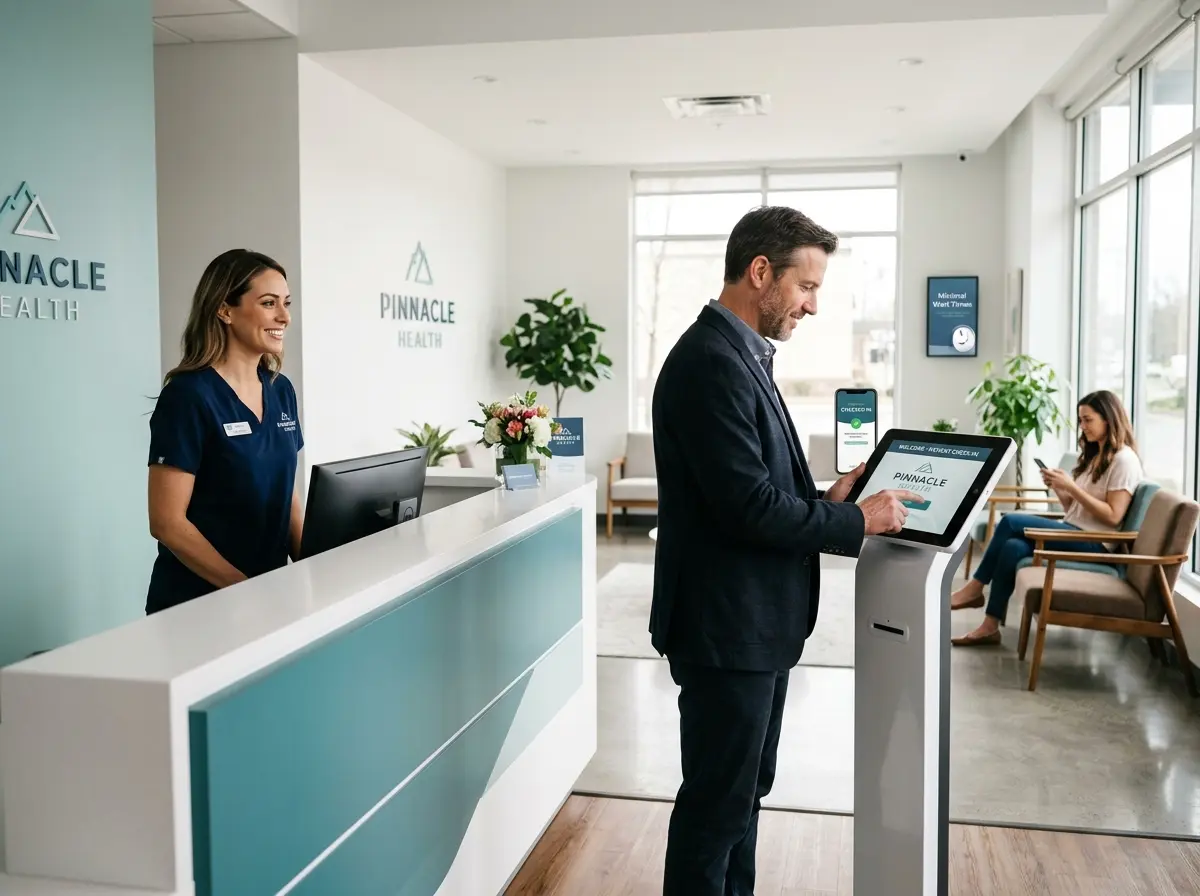
While many AI scheduling tools operate in the background through integrations with your practice management software, some practices are also turning to AI-powered reception tools to handle the front-facing communication layer — both in person and over the phone. Stella is one such tool: an AI robot employee and phone receptionist that can greet patients at your front desk kiosk, answer questions about your services and policies, collect patient intake information through conversational forms, and answer calls around the clock.
For a dermatology practice, Stella's built-in CRM and intake form capabilities are particularly useful. Patient contact information, reason for visit, and other intake details collected during a phone call or in-person interaction can be stored, tagged, and reviewed — reducing the manual data entry burden on your staff and keeping patient records organized without extra effort. At $99/month, it's also considerably less expensive than a staffing crisis.
Real Benefits Dermatology Practices Are Seeing in the Field
Reduced Administrative Burden on Clinical Staff
One of the most consistent findings from practices that have implemented AI scheduling and triage tools is that clinical staff — including nurses and medical assistants — spend less time fielding administrative questions. When patients can get answers about appointment availability, prep instructions, or billing policies through an AI system, those questions stop landing in the lap of someone who should be focused on patient care. A dermatology practice in Dallas reported a 40% reduction in front-desk call volume after implementing AI-assisted scheduling, allowing their team to focus on in-office patient experience rather than phone queue management.
This matters more than it might seem on the surface. Staff burnout is a serious issue in medical practices, and a significant driver of that burnout is the relentless volume of repetitive administrative tasks. Tools that handle those tasks automatically don't just improve efficiency — they improve staff retention, which in dermatology (where skilled front-office staff are genuinely hard to replace) is a meaningful financial win.
Better Patient Experience and Higher Conversion on New Patient Inquiries
First impressions count, even in healthcare. When a prospective patient calls a dermatology practice and gets a prompt, knowledgeable response — whether from a human or an AI — they are far more likely to book than if they're sent to voicemail or put on hold. Studies suggest that 85% of callers who can't reach a business on the first try will not call back. For a new patient inquiry, that's not a missed call; it's a missed relationship and potentially significant lifetime revenue.
AI systems that answer immediately, collect intake information, and confirm appointment bookings on the spot convert inquiries at a dramatically higher rate. For cosmetic dermatology in particular — where patients are often comparison-shopping between multiple providers — responsiveness is a genuine competitive differentiator.
Compliance and Documentation Considerations Worth Knowing
Before you get too excited and hand your entire front desk over to a robot (tempting, we know), it's worth acknowledging that healthcare AI comes with compliance responsibilities. Any AI system handling patient information in a medical context needs to be evaluated for HIPAA compliance. This means understanding how data is stored, who has access to it, whether it's encrypted, and what your business associate agreement situation looks like with the vendor.
The good news is that most reputable AI tools designed for medical practices are built with these considerations in mind. The due diligence step is making sure you ask the right questions during vendor evaluation — specifically around data handling, breach notification protocols, and audit trails. Practices that take this seriously from the start avoid the very unpleasant experience of retrofitting compliance after the fact.
Quick Reminder About Stella
Stella is an AI robot employee and phone receptionist built for businesses of all kinds — including medical offices like dermatology practices. She can stand in your office as a friendly kiosk, greet patients, answer their questions, and collect intake information, while simultaneously handling phone calls 24/7 with full knowledge of your services, policies, and scheduling details. At $99/month with no upfront hardware costs, she's an accessible first step into AI-assisted patient communication for practices of any size.
Where to Start If You're Ready to Make the Leap
AI triage and scheduling isn't an all-or-nothing proposition. You don't have to overhaul your entire practice management system next week to start seeing benefits. Here's a practical approach to getting started without losing your mind in the process.
Start with your biggest pain point. Is it after-hours missed calls? No-show rates? Intake inefficiency? Identify the single most frustrating administrative problem in your practice and find an AI tool that addresses it specifically. A focused implementation is far more likely to succeed than a sweeping overhaul.
Involve your staff early. Front-office staff who feel like AI is being imposed on them — rather than introduced to help them — will resist it. Bring them into the conversation, get their input on what's most painful about their daily workflow, and position the technology as something that makes their jobs easier, not a threat to their jobs.
Measure what matters. Before you implement anything, document your current call volume, no-show rate, new patient conversion rate, and average wait time for a new appointment. Then measure those same numbers 60 and 90 days after implementation. Concrete data is what will tell you whether the investment is working — and it's what will convince your partners or practice manager if they're skeptical.
The dermatology practices that are getting ahead right now aren't necessarily the ones with the best clinical outcomes alone — they're the ones creating a patient experience that's seamless from the very first phone call. AI is a big part of how that's happening. The technology is mature enough to be reliable, affordable enough to be accessible, and practical enough to make a real difference starting on day one. Your waiting room is full. Your schedule is packed. The only question is whether your administrative infrastructure is keeping up with your clinical success — and increasingly, the answer to that question involves AI.